On This Page
Description
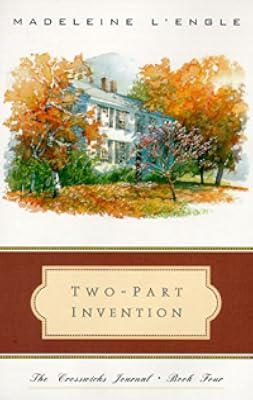
In the final memoir of her Crosswicks Journals, the author of A Wrinkle in Time paints an intimate portrait of her forty-year marriage. A long-term marriage has to move beyond chemistry to compatibility, to friendship, to companionship. As Newbery Medal winner Madeleine L'Engle describes a relationship characterized by compassion, respect, and growth, as well as challenge and conflict, she beautifully evokes the life she and her husband, actor Hugh Franklin, built and the family they show more cherished. Beginning with their very different childhoods, L'Engle chronicles the twists and turns that led two young artists to New York City in the 1940s, where they were both pursuing careers in theater. While working on a production of Anton Chekov's The Cherry Orchard, they sparked a connection that would endure until Franklin's death in 1986. L'Engle recalls years spent raising their children at Crosswicks, the Connecticut farmhouse that became an icon of family, and the support she and her husband drew from each other as artists struggling-separately and together-to find both professional and personal fulfillment. At once heartfelt and heartbreaking, Two-Part Invention is L'Engle's most personal work-the revelation of a marriage and the exploration of intertwined lives inevitably marked by love and loss. show lessTags
Recommendations




Member Reviews
Two-Part Invention is L'Engle's recounting of her courtship and marriage with Hugh Franklin. L'Engle wrote the book as Hugh was dying of cancer. Her reflections on the past are woven together with her reflections on the uncertain present as future. Madeleine and Hugh had been married 40 years, and the book shows the depth of their love and commitment.
L'Engle does not sugar coat her marriage. Marriage never acts as the romantic melding of souls some people want it to be. Madeleine and Hugh retained their individual identities even as they shared a long and joyous marriage. My favorite passage sums this all up:
L'Engle does not sugar coat her marriage. Marriage never acts as the romantic melding of souls some people want it to be. Madeleine and Hugh retained their individual identities even as they shared a long and joyous marriage. My favorite passage sums this all up:
I learned fairly early in my relationship that I did not have to confide everything in my husband; this would be putting on himshow more
burdens which I was supposed to carry myself. When a bride insists on telling her lover everything, I suspect she is looking for a father, not a husband. Some of my life was mine to be known by me alone. But our marriage was ours, belonged to the two of us, and was full of wonderful things, terrible things, joyous things, grievous things, but ours.show less
On the surface, this book covers a lot of the same ground as "The Year of Magical Thinking" -- a wife looks back on her long-lived marriage when she's faced with the death of her husband. Like TYOMT, it even contains a lot of "name-dropping," mainly from within the theater world but also within the literary one, although most of the references in both books were totally lost on me.
Still, this book was infinitely more moving to me, probably because Madeleine L'Engle maintains a certain humility through it all, whereas Joan Didion's tone came across as self-important. There's a "down-to-earthness" about Madeleine that makes her story very relateable -- yes, she was married to a man who became a quite recognized actor, and yes her book show more became a classic of science fiction and children's literature, but she talks very little about those aspects of their lives. Instead, she dwells on the hardest times, the times that forged the marriage most of all--the times when there was no money, when their work kept them apart for weeks or months at a time, when they weren't sure where they belonged, when Madeleine suffered years of rejections on her writing and the loss of confidence that comes with it. Although at times it felt like she romanticized or aggrandized her marriage, for the most part it felt real, complete with times of admitted anger, loneliness, and alienation. Much of the book was actually written the summer Hugh was dying, since at that time Madeleine had trouble focusing on writing fiction (the same thing happens to me when I'm going through a big transition). So the book has a certain immediacy and intimacy that might have been lost otherwise, and its in these regards that the book really shines. Beyond just being a memoir of marriage, it's also a reflection on faith, and I have a deep admiration for Madeleine L'Engle's spiritual beliefs, and knowing that that which she illustrates in her fiction she also lived in her life.
This wasn't a perfect book; I never felt like I got a really good grasp on what Hugh was like as a person, and I thought the opening section was more drawn out than it needed to be. Still, it's worth sticking with this one -- as long as you have plenty of tissues nearby as you draw toward the end. show less
Still, this book was infinitely more moving to me, probably because Madeleine L'Engle maintains a certain humility through it all, whereas Joan Didion's tone came across as self-important. There's a "down-to-earthness" about Madeleine that makes her story very relateable -- yes, she was married to a man who became a quite recognized actor, and yes her book show more became a classic of science fiction and children's literature, but she talks very little about those aspects of their lives. Instead, she dwells on the hardest times, the times that forged the marriage most of all--the times when there was no money, when their work kept them apart for weeks or months at a time, when they weren't sure where they belonged, when Madeleine suffered years of rejections on her writing and the loss of confidence that comes with it. Although at times it felt like she romanticized or aggrandized her marriage, for the most part it felt real, complete with times of admitted anger, loneliness, and alienation. Much of the book was actually written the summer Hugh was dying, since at that time Madeleine had trouble focusing on writing fiction (the same thing happens to me when I'm going through a big transition). So the book has a certain immediacy and intimacy that might have been lost otherwise, and its in these regards that the book really shines. Beyond just being a memoir of marriage, it's also a reflection on faith, and I have a deep admiration for Madeleine L'Engle's spiritual beliefs, and knowing that that which she illustrates in her fiction she also lived in her life.
This wasn't a perfect book; I never felt like I got a really good grasp on what Hugh was like as a person, and I thought the opening section was more drawn out than it needed to be. Still, it's worth sticking with this one -- as long as you have plenty of tissues nearby as you draw toward the end. show less
Madeleine L'Engle has been one of my favorite authors since I read A Wrinkle in Time when I was about nine or ten. This memoir of her marriage is poignant, moving, and profound. L'Engle's story time-travels between past and present: she remembers the challenges of weaving two artistic careers into the fabric of family life--or maybe vice-versa; and she tenderly and painfully relates the last chapter of her marriage during her husband's illness. L'Engle's spiritual insights and reflections on love and life add value beyond the telling of the story of a remarkable marriage.
As a confirmed atheist, I find it odd to say that I found this book intensely spiritual; but, that is the truth. It was easy to identify with L'Engle's joy and subsequent loss - and the strength she had in letting go reminds me of the death of my grandfather, when at the end I just wanted him to have peace.
A powerful book.
A powerful book.
I don't know if it's a similarity of mind or simply the sheer number of her words that I've read, but Madeleine L'Engle's writing feels like home.
This book is her memoir of her marriage.
"After I had declined to be my Hungarian friend's mistress, I was more than ever convinced that marriage was not going to be part of my pattern. I would write, see friends, write, go to the theatre, write, but ultimately I was going to walk alone." (p42)
"Love of music, of sunsets and sea; a liking for the same kind of people; political opinions that are not radically divergent; a similar stance as we look at the stars and think of the marvelous strangeness of this universe -- these are what build a marriage." (p77)
"Our love has been anything but perfect show more and anything but static. Inevitably there have been times when one of us has outrun the other and has had to wait patiently for the other to catch up. There have been times when we have misunderstood each other, demanded too much of each other, been insensitive to the other's needs. I do not believe there is any marriage where this does not happen. The growth of love is not a straight line, but a series of hills and valleys. I suspect that in every good marriage there are times when love seems to be over. Sometimes these desert lines are simply the only way to the next oasis, which is far more lush and beautiful after the desert crossing than it could possibly have been without it." (p100)
"If we are not willing to fail we will never accomplish anything. All creative acts involve the risk of failure. Marriage is a terrible risk. So is having children. So is giving a performance in the theatre, or the writing of a book. Whenever something is completed successfully, then we must move on, and that is again to risk failure." (p173) show less
This book is her memoir of her marriage.
"After I had declined to be my Hungarian friend's mistress, I was more than ever convinced that marriage was not going to be part of my pattern. I would write, see friends, write, go to the theatre, write, but ultimately I was going to walk alone." (p42)
"Love of music, of sunsets and sea; a liking for the same kind of people; political opinions that are not radically divergent; a similar stance as we look at the stars and think of the marvelous strangeness of this universe -- these are what build a marriage." (p77)
"Our love has been anything but perfect show more and anything but static. Inevitably there have been times when one of us has outrun the other and has had to wait patiently for the other to catch up. There have been times when we have misunderstood each other, demanded too much of each other, been insensitive to the other's needs. I do not believe there is any marriage where this does not happen. The growth of love is not a straight line, but a series of hills and valleys. I suspect that in every good marriage there are times when love seems to be over. Sometimes these desert lines are simply the only way to the next oasis, which is far more lush and beautiful after the desert crossing than it could possibly have been without it." (p100)
"If we are not willing to fail we will never accomplish anything. All creative acts involve the risk of failure. Marriage is a terrible risk. So is having children. So is giving a performance in the theatre, or the writing of a book. Whenever something is completed successfully, then we must move on, and that is again to risk failure." (p173) show less
I don't know if it's a similarity of mind or simply the sheer number of her words that I've read, but Madeleine L'Engle's writing feels like home.
This book is her memoir of her marriage.
"After I had declined to be my Hungarian friend's mistress, I was more than ever convinced that marriage was not going to be part of my pattern. I would write, see friends, write, go to the theatre, write, but ultimately I was going to walk alone." (p42)
"Love of music, of sunsets and sea; a liking for the same kind of people; political opinions that are not radically divergent; a similar stance as we look at the stars and think of the marvelous strangeness of this universe -- these are what build a marriage." (p77)
"Our love has been anything but perfect show more and anything but static. Inevitably there have been times when one of us has outrun the other and has had to wait patiently for the other to catch up. There have been times when we have misunderstood each other, demanded too much of each other, been insensitive to the other's needs. I do not believe there is any marriage where this does not happen. The growth of love is not a straight line, but a series of hills and valleys. I suspect that in every good marriage there are times when love seems to be over. Sometimes these desert lines are simply the only way to the next oasis, which is far more lush and beautiful after the desert crossing than it could possibly have been without it." (p100)
"If we are not willing to fail we will never accomplish anything. All creative acts involve the risk of failure. Marriage is a terrible risk. So is having children. So is giving a performance in the theatre, or the writing of a book. Whenever something is completed successfully, then we must move on, and that is again to risk failure." (p173) show less
This book is her memoir of her marriage.
"After I had declined to be my Hungarian friend's mistress, I was more than ever convinced that marriage was not going to be part of my pattern. I would write, see friends, write, go to the theatre, write, but ultimately I was going to walk alone." (p42)
"Love of music, of sunsets and sea; a liking for the same kind of people; political opinions that are not radically divergent; a similar stance as we look at the stars and think of the marvelous strangeness of this universe -- these are what build a marriage." (p77)
"Our love has been anything but perfect show more and anything but static. Inevitably there have been times when one of us has outrun the other and has had to wait patiently for the other to catch up. There have been times when we have misunderstood each other, demanded too much of each other, been insensitive to the other's needs. I do not believe there is any marriage where this does not happen. The growth of love is not a straight line, but a series of hills and valleys. I suspect that in every good marriage there are times when love seems to be over. Sometimes these desert lines are simply the only way to the next oasis, which is far more lush and beautiful after the desert crossing than it could possibly have been without it." (p100)
"If we are not willing to fail we will never accomplish anything. All creative acts involve the risk of failure. Marriage is a terrible risk. So is having children. So is giving a performance in the theatre, or the writing of a book. Whenever something is completed successfully, then we must move on, and that is again to risk failure." (p173) show less
This is fourth in the 'Crosswicks Journals' - Madeleine L'Engle's reflections and musings about life and faith, based on her personal journals. In this volume she describes her first meeting with her husband Hugh, their courtship and marriage, right up to the time when, after forty years of married life, he loses his fight with cancer following some difficult and painful months.
I love the rather rambling style, the digressions into other topics, and also the way that we're allowed so much insight into this very special relationship. In places it's quite moving, despite knowing all along what the ending would be. Recommended to anyone who's read others in the Crosswicks series, or who likes fairly unstructured autobiographical writing.
I love the rather rambling style, the digressions into other topics, and also the way that we're allowed so much insight into this very special relationship. In places it's quite moving, despite knowing all along what the ending would be. Recommended to anyone who's read others in the Crosswicks series, or who likes fairly unstructured autobiographical writing.
Members
- Recently Added By
Lists

Newbery Adjacent
747 works; 3 members
Author Information

122+ Works 129,085 Members
Author Madeleine L'Engle was born in New York City on November 29, 1918. She graduated from Smith College. She is best known for A Wrinkle in Time (1962), which won the 1963 Newbery Medal for best American children's book. While many of her novels blend science fiction and fantasy, she has also written a series of autobiographical books, including show more Two Part Invention: The Story of a Marriage, which deals with the illness and death of her husband, soap opera actor Hugh Franklin. In 2004, she received a National Humanities Medal from President George W. Bush. She died on September 6, 2007 of natural causes. Since 1976, Wheaton College in Illinois has maintained a special collection of L'Engle's papers, and a variety of other materials, dating back to 1919. (Bowker Author Biography) show less
Series

Work Relationships
Is contained in
Common Knowledge
- Canonical title
- Two-Part Invention: The Story of a Marriage
- Original publication date
- 1988
- Dedication
- for Hugh
- First words
- Crosswicks is a typical New England farmhouse, built sometime in the middle of the eighteenth century, so it is well over two hundred years old.
- Last words
- (Click to show. Warning: May contain spoilers.)Yes. And always will be.
Classifications
Statistics
- Members
- 1,204
- Popularity
- 20,757
- Reviews
- 14
- Rating
- (4.13)
- Languages
- English
- Media
- Paper, Audiobook, Ebook
- ISBNs
- 9
- ASINs
- 10