On This Page
Description
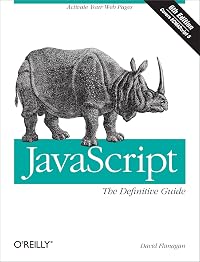
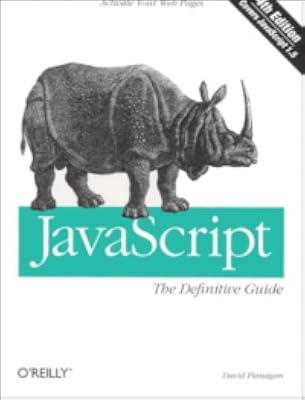
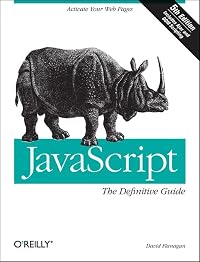
JavaScript is the programming language of the web and is used by more software developers today than any other programming language. For nearly 25 years this best seller has been the go-to guide for JavaScript programmers. The seventh edition is fully updated to cover the 2020 version of JavaScript, and new chapters cover classes, modules, iterators, generators, Promises, async/await, and metaprogramming. You’ll find illuminating and engaging example code throughout. This book is for show more programmers who want to learn JavaScript and for web developers who want to take their understanding and mastery to the next level. It begins by explaining the JavaScript language itself, in detail, from the bottom up. It then builds on that foundation to cover the web platform and Node.js. Topics include: Types, values, variables, expressions, operators, statements, objects, and arrays Functions, classes, modules, iterators, generators, Promises, and async/await JavaScript’s standard library: data structures, regular expressions, JSON, i18n, etc. The web platform: documents, components, graphics, networking, storage, and threads Node.js: buffers, files, streams, threads, child processes, web clients, and web servers Tools and language extensions that professional JavaScript developers rely on show lessTags
Recommendations
Member Recommendations
timspalding JavaScript: The Definitive Gudie is an invaluable reference, but The Good Parts is more necessary. Without it, you'll be writing bad JavaScript forever.
30
Member Reviews
I was provided access by O'Reilly Publishing to an electronic copy of this book for review purposes.
This is an updated edition to the classic reference book on Javascript to include new information on new standards (such as HTML5 and CSS3), conventions, and frameworks. Although it is possible to learn Javascript from this book, its really meant more as a reference guide and an explanation of how and why Javascript works the way it does. For example, the 1st chapter explains in some detail how Javascript works on the client side and how each of the following chapters will relate to this. The book includes numerous examples of codes to illustrate the concepts and explains the concepts in a clear, easy to follow fashion that doesn't show more require a degree in astrophysics to understand.
As I said it's not really a book to learn Javascript from, for that I would recommend something like "Head First JavaScript" (also by O'Reilly press.) What I do really like about this book is that it is comprehensive in what is possible with Javascript. While it may not cover the concept in depth, such as the chapter on Jquery, it does give a starting point to the concept. I know it sounds odd, but I really liked the index. It is completely through and easy to find the concept or word that I need to make something work correctly in whatever I'm writing. It's even better with the book because of the hyperlinks that take you right to the section.
My advice? Buy the ebook version, it's much easier to search and to follow to specific links vs. trying to find the stuff in the print edition. Even better, O'Reilly provides multiple formats of the book to suit your needs. Overall, it's a good handy reference to have around to answer questions and introduce new concepts. show less
This is an updated edition to the classic reference book on Javascript to include new information on new standards (such as HTML5 and CSS3), conventions, and frameworks. Although it is possible to learn Javascript from this book, its really meant more as a reference guide and an explanation of how and why Javascript works the way it does. For example, the 1st chapter explains in some detail how Javascript works on the client side and how each of the following chapters will relate to this. The book includes numerous examples of codes to illustrate the concepts and explains the concepts in a clear, easy to follow fashion that doesn't show more require a degree in astrophysics to understand.
As I said it's not really a book to learn Javascript from, for that I would recommend something like "Head First JavaScript" (also by O'Reilly press.) What I do really like about this book is that it is comprehensive in what is possible with Javascript. While it may not cover the concept in depth, such as the chapter on Jquery, it does give a starting point to the concept. I know it sounds odd, but I really liked the index. It is completely through and easy to find the concept or word that I need to make something work correctly in whatever I'm writing. It's even better with the book because of the hyperlinks that take you right to the section.
My advice? Buy the ebook version, it's much easier to search and to follow to specific links vs. trying to find the stuff in the print edition. Even better, O'Reilly provides multiple formats of the book to suit your needs. Overall, it's a good handy reference to have around to answer questions and introduce new concepts. show less
JavaScript is the programming language of the web and is used by more software developers today than any other programming language. For nearly 25 years this best seller has been the go-to guide for JavaScript programmers. The seventh edition is fully updated to cover the 2020 version of JavaScript, and new chapters cover classes, modules, iterators, generators, Promises, async/await, and metaprogramming. You’ll find illuminating and engaging example code throughout.
This book is for programmers who want to learn JavaScript and for web developers who want to take their understanding and mastery to the next level. It begins by explaining the JavaScript language itself, in detail, from the bottom up. It then builds on that foundation to show more cover the web platform and Node.js.
Topics include:
* Types, values, variables, expressions, operators, statements, objects, and arrays
* Functions, classes, modules, iterators, generators, Promises, and async/await
* JavaScript’s standard library: data structures, regular expressions, JSON, i18n, etc.
* The web platform: documents, components, graphics, networking, storage, and threads
* Node.js: buffers, files, streams, threads, child processes, web clients, and web servers
* Tools and language extensions that professional JavaScript developers rely on show less
This book is for programmers who want to learn JavaScript and for web developers who want to take their understanding and mastery to the next level. It begins by explaining the JavaScript language itself, in detail, from the bottom up. It then builds on that foundation to show more cover the web platform and Node.js.
Topics include:
* Types, values, variables, expressions, operators, statements, objects, and arrays
* Functions, classes, modules, iterators, generators, Promises, and async/await
* JavaScript’s standard library: data structures, regular expressions, JSON, i18n, etc.
* The web platform: documents, components, graphics, networking, storage, and threads
* Node.js: buffers, files, streams, threads, child processes, web clients, and web servers
* Tools and language extensions that professional JavaScript developers rely on show less
Ratings
Members
- Recently Added By
Author Information

35 Works 5,502 Members
David Flanagan graduated from the Massachusetts Institute of Technology. He is a consulting computer programmer, user interface designer and trainer. His books include X Toolkit Intrinsics Reference Manual and Motif Tools: Streamlined GUI Design and Programming with the Xmt Library. (Bowker Author Biography)
Series

Common Knowledge
- Canonical title
- JavaScript: The Definitive Guide [6th edition]
- Original publication date
- 2011 (6th edition) (6th edition)
- Blurbers
- Eich, Brendan
- Disambiguation notice
- This is the 6th edition. It should not be combined with previous editions as the content is different.
Classifications
- Genres
- Technology, Nonfiction, General Nonfiction
- DDC/MDS
- 005.2762 — Computer science, information & general works Computer science, knowledge & systems Artificial Intelligence/Virtual Reality Programming for Specific Environments Processing modes Distributed computing; see also 006.76 for web
- LCC
- QA76.73 .J39 .F53 — Science Mathematics Mathematics Instruments and machines Calculating machines Electronic computers. Computer science
- BISAC
Statistics
- Members
- 398
- Popularity
- 77,402
- Reviews
- 2
- Rating
- (3.75)
- Languages
- 6 — Czech, English, French, German, Italian, Spanish
- Media
- Paper, Ebook
- ISBNs
- 24
- UPCs
- 1
- ASINs
- 2