On This Page
Tags
Member Reviews
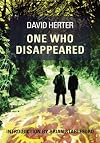
Without giving too much away, this third book begins in 1949 with Pavel Haas, his brother and their families comfortably ensconced in Hollywood, yet haunted by things past. A mysterious telegram arrives, and a subsequent meeting, (and with the help of a "stave flower") sends Pavel back to 1929, where the maestro, the Capek brothers and others are unaware of the impending war. Running against the clock, can Pavel enlist their help and change history?
What I said about previous book: He [Herter] has created a sense of place and character and atmosphere rich with period details, musical details, historical details... still holds true for this "gripping, fantastical" installment, which is more complex than the previous two. Again, one is show more drawn and immersed in this story with its whirlwind setting and pervading atmosphere of urgency. And music seems to pervade it all, so that even the earth itself is moved by it.
Things mysterious in the previous two installments are understood fully in this third, but when I finished it, I still found myself wanting to go back and start the whole trilogy over again. show less
What I said about previous book: He [Herter] has created a sense of place and character and atmosphere rich with period details, musical details, historical details... still holds true for this "gripping, fantastical" installment, which is more complex than the previous two. Again, one is show more drawn and immersed in this story with its whirlwind setting and pervading atmosphere of urgency. And music seems to pervade it all, so that even the earth itself is moved by it.
Things mysterious in the previous two installments are understood fully in this third, but when I finished it, I still found myself wanting to go back and start the whole trilogy over again. show less
[One Who Disappeared]
The First Republic is the Czechoslovak state that existed from 1918 until 1938 when it was subsumed by Nazi Occupation. David Herter’s trilogy delves into the cultural richness of this period as it is overshadowed by the looming evil of the times. His characters are historical figures, artists – most notably, the composers Leoš Janáček, Pavel Haas, Igor Stravinsky and Gideon Klein; the writers, Franz Kafka, Karel Čapek and Max Brod; the brothers of Čapek and Haas, the artist Joseph Čapek and the Hollywood actor and director Hugo Haas; and a mysterious flautist named Magdalena.
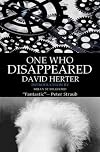
The critic, Brian Stableford, who wrote the introduction to [One Who Disappeared], describes the books as belonging to a show more heterocosmic tradition that realism rejected, but which has emerged not only in genre fiction but the wider scope of magical realism. Rather than try to summarize or analyze the trilogy, I would simply like to express my appreciation for Herter’s fascinating introduction to this time and these people in dazzling series of books that teases the imagination and provides a rich and strange exploration.
Herter’s own description of his experience in Brno during the festival that celebrated the birth of Janáček in 2004 (while he was working on the trilogy) is evocative of some of the magic produced by his books: http://www.locusmag.com/2004/Features/06_HerterLetter.html
Listening Guide to the connection between the city of Brno and Janacek’s Sinfonietta https://www.youtube.com/watch?v=uciNH5hCCvI
https://en.wikipedia.org/wiki/On_an_Overgrown_Path
https://www.youtube.com/watch?v=WHEk9Iemd5s show less
The First Republic is the Czechoslovak state that existed from 1918 until 1938 when it was subsumed by Nazi Occupation. David Herter’s trilogy delves into the cultural richness of this period as it is overshadowed by the looming evil of the times. His characters are historical figures, artists – most notably, the composers Leoš Janáček, Pavel Haas, Igor Stravinsky and Gideon Klein; the writers, Franz Kafka, Karel Čapek and Max Brod; the brothers of Čapek and Haas, the artist Joseph Čapek and the Hollywood actor and director Hugo Haas; and a mysterious flautist named Magdalena.
The critic, Brian Stableford, who wrote the introduction to [One Who Disappeared], describes the books as belonging to a show more heterocosmic tradition that realism rejected, but which has emerged not only in genre fiction but the wider scope of magical realism. Rather than try to summarize or analyze the trilogy, I would simply like to express my appreciation for Herter’s fascinating introduction to this time and these people in dazzling series of books that teases the imagination and provides a rich and strange exploration.
Herter’s own description of his experience in Brno during the festival that celebrated the birth of Janáček in 2004 (while he was working on the trilogy) is evocative of some of the magic produced by his books: http://www.locusmag.com/2004/Features/06_HerterLetter.html
Listening Guide to the connection between the city of Brno and Janacek’s Sinfonietta https://www.youtube.com/watch?v=uciNH5hCCvI
https://en.wikipedia.org/wiki/On_an_Overgrown_Path
https://www.youtube.com/watch?v=WHEk9Iemd5s show less
Members
- Recently Added By
Author Information
10+ Works 307 Members

David Herter is a LibraryThing Author, an author who lists their personal library on LibraryThing.
Series

Common Knowledge
- Canonical title
- One Who Disappeared
Classifications
Statistics
- Members
- 18
- Popularity
- 1,382,724
- Reviews
- 2
- Rating
- (4.50)
- Languages
- English
- Media
- Paper, Ebook
- ISBNs
- 2
- ASINs
- 1