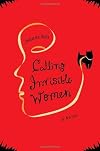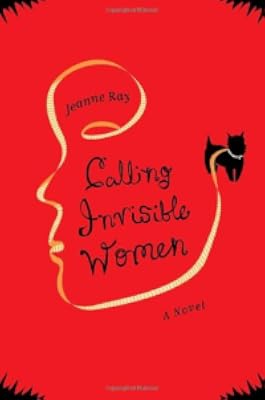
Calling Invisible Women
by Jeanne Ray
On This Page
Description
A delightfully funny novel packing a clever punch, from the author of the New York Times bestselling Julie and RomeoA mom in her early fifties, Clover knows she no longer turns heads the way she used to, and she's only really missed when dinner isn't on the table on time. Then Clover wakes up one morning to discover she's invisible—truly invisible. She panics even more when her family doesn't notice a thing. Her best friend immediately observes the change, which relieves Clover show more immensely—she's not losing her mind after all!—but she is crushed by the realization that neither her husband nor her children ever truly look at her. She was invisible even before she knew it.
Clover discovers that there are others like her, women of a certain age who seem to have disappeared. As she uses her invisibility to get to know her family and her town better, Clover leads the way in helping invisible women become recognized and appreciated no matter what their role. Smart and hilarious, with indomitable female characters, Calling Invisible Women will appeal to anyone who has ever felt invisible. show less
Tags
Recommendations










































Member Reviews
Clever and crafty, but definitely needs a dose of indulgence when it comes to believability. Still, the basic premise - that women, especially over the age of 50 are invisible - is worth exploring. The heroine, Clover Hobart, 54 (same!) literally becomes invisible due to a circumstance she deduces after encountering other invisible women. Turns out there is quite a league of them in her Ohio environs, and even more beyond those borders. Sadly, her family (20-something son, Nick, pediatrician husband Arthur, college-age daughter Evie) don't even notice, so pre-occupied are they with their own lives and so used to the role she fills for them. To be fair, she can be felt by them and her clothes suggest a person within, but how much do we show more truly pay attention to those in our daily lives? Her best friend/neighbor Glinda, and her m-i-l, Irene do notice and they give Clover the support she needs to figure out her altered life. The fellowship of the other women and the commonality that caused their invisibility becomes a crusade to do right by women everywhere in all circumstances. Here, here! They also learn how to use their invisibility to their advantage, acting as consciences and deterrents to much of the small scale bad behavior in their spheres of influence: bullying at schools, a bank robbery, bad teenage choices, etc. - all to humorous effect. "I'm starting to think we need invisible women everywhere, not just for protection but to give people a nudge to be their better selves." (95) Clover also gains insight into her family's lives that dinner conversation just doesn't provide. "It's possible that hat's the lesson in all of this is, not who sees you but who you can learn to see." (107) Capers and hijinks result and energy is channeled to make a difference and lessons are learned. Clover uses her dormant skills as a journalist to break the story and create awareness. Women are empowered and appreciated. "We've got to starting thinking about what makes us light. Simply put, invisible women need to work a lot harder to be seen....So we've got to figure out who we are. We've got to stop standing around in the corner wondering if anybody is missing us. We have to find our light so people still know that we're here." (128) All this is, of course, a stretch. But it is entertaining and thought-provoking and while it resolves quickly at the end, it leaves a 'what if?' sentiment behind. "The truth, we realize as we get older, is a very complicated pastiche of feelings and facts, of what can and cannot be said. It is different for everyone." (156) Our challenge is to find our truth and live by it, and this may only be do-able when we reach a certain age and maturity. show less
Who among us hasn't felt her contributions to family life or work or both haven't gone completely unnoticed at times. If dinner is on the table, laundry is washed and folded, reports signed off on, and emails sent is there any reason for those around us to look at us carefully enough to actually see us? Or is the presence of the expected enough that those providing the service are invisible to those around them?
When Clover, the main character in Jeanne Ray's Calling Invisible Women, wakes up invisible one morning, she is horrified to discover that neither her overworked and exhausted pediatrician husband nor her unemployed and depressed post-college aged son, nor her self-obsessed college cheerleader daughter notice that she is in fact show more invisible. As long as all the things she does around the house continue to be accomplished and she wears clothing on her invisible body, they do not notice that she in fact entirely lacking a visible presence. For them, it's life as usual. But for Clover, well and truly invisible, life is nothing like usual.
As she tries to navigate life even more invisible than she had been (because what woman of a certain age doesn't feel invisible in so many small ways already), she realizes that she can use her invisibility for the good of society. Putting her journalism background to use, she researches invisibility whenever it is mentioned although she realizes that few pop culture nods to invisibility are realistic or quite like what she is facing. And when she spots a personal ad in her own paper, "Calling invisible women" to come to a meeting at the local Sheraton, mustering up the courage to attend, she will find a group of women all suffering from true invisibility like she is and she will find that even without being able to see her body, she can let her inner light shine and make a real difference with the help of these women. Being invisible also allows her to see the true emotional needs of her own family, the things that she was too wrapped up to see about them just as they have so long been too wrapped up to properly see her.
Accessible and engrossing, this is storytelling the way it should be. It is appealing, straightforward, eminently relatable, and by turns humorous and sad. The characters are well-rounded, sympathetic (yes, even though many of them don't notice Clover's invisibility, they are still sympathetic), and very realistic. Clover herself is a wonderful character, discovering hidden strengths she never suspected, changing, and being empowered. The pace of the book builds as Clover comes to terms with her situation and builds again as the invisible women plan their campaign. Although this book posits actual invisibility (and there is a legitimate cause behind the actual invisibility) instead of just using it as a metaphor, anyone who has ever felt unappreciated or invisible to family or society will definitely appreciate this thoughtful and entertaining novel. I have already recommended it to many of my friends, all women of a certain age who have, without exception, said, "I'm definitely invisible. I need to read that." show less
When Clover, the main character in Jeanne Ray's Calling Invisible Women, wakes up invisible one morning, she is horrified to discover that neither her overworked and exhausted pediatrician husband nor her unemployed and depressed post-college aged son, nor her self-obsessed college cheerleader daughter notice that she is in fact show more invisible. As long as all the things she does around the house continue to be accomplished and she wears clothing on her invisible body, they do not notice that she in fact entirely lacking a visible presence. For them, it's life as usual. But for Clover, well and truly invisible, life is nothing like usual.
As she tries to navigate life even more invisible than she had been (because what woman of a certain age doesn't feel invisible in so many small ways already), she realizes that she can use her invisibility for the good of society. Putting her journalism background to use, she researches invisibility whenever it is mentioned although she realizes that few pop culture nods to invisibility are realistic or quite like what she is facing. And when she spots a personal ad in her own paper, "Calling invisible women" to come to a meeting at the local Sheraton, mustering up the courage to attend, she will find a group of women all suffering from true invisibility like she is and she will find that even without being able to see her body, she can let her inner light shine and make a real difference with the help of these women. Being invisible also allows her to see the true emotional needs of her own family, the things that she was too wrapped up to see about them just as they have so long been too wrapped up to properly see her.
Accessible and engrossing, this is storytelling the way it should be. It is appealing, straightforward, eminently relatable, and by turns humorous and sad. The characters are well-rounded, sympathetic (yes, even though many of them don't notice Clover's invisibility, they are still sympathetic), and very realistic. Clover herself is a wonderful character, discovering hidden strengths she never suspected, changing, and being empowered. The pace of the book builds as Clover comes to terms with her situation and builds again as the invisible women plan their campaign. Although this book posits actual invisibility (and there is a legitimate cause behind the actual invisibility) instead of just using it as a metaphor, anyone who has ever felt unappreciated or invisible to family or society will definitely appreciate this thoughtful and entertaining novel. I have already recommended it to many of my friends, all women of a certain age who have, without exception, said, "I'm definitely invisible. I need to read that." show less
Calling Invisible Women
By Jeanne Ray
Broadway Paperbacks, 255 pgs
978-0-307-39506-1
Submitted by Random House
Rating: 3
Well, this was disturbing at best, terrifying at times. I thought it was just going to be an allegory on the idea that women, once we reach a certain age, become socially invisible. I've heard this theory before and was prepared for that. I wasn't prepared for actual, physical invisibility, and people who still DID NOT NOTICE.
Clover Hobart wakes up one morning, glances into the bathroom mirror while brushing her teeth, and sees a toothbrush and a bathrobe. She does not see her face or her hand holding the toothbrush. Clover has a husband (a very busy pediatrician), a son (living at home again after a lay-off) and a show more daughter (at college). She used to be a reporter but has gradually devolved into a gardening columnist at the local newspaper. None of them notice. Her mother-in-law, a yoga-teaching hippie, notices. I have always had a soft spot for hippies.
A few days later, Clover sees an ad in the newspaper: "Calling Invisible Women, Downtown Sheraton, Wednesday at 10:00 a.m. Bring a Kleenex." Clover goes to the meeting, after wondering rather comically what to wear (how dressy is a meeting of invisible women? are there wigs involved?) and discovers a dozen more women who are also invisible. And they're all naked. Clover finds out that they have tried various remedies: vitamin D, wheat grass juice, ashrams, all to little effect. One of the women bemoans the fact that they aren't even covered by the Americans With Disabilities Act.
Several adventures ensue in which Clover intervenes and saves the day: an abusive husband in the supermarket parking lot; a bank robbery; every-day high school peccadilloes; infiltrating an international pharmaceutical behemoth. At least these women use their invisibility to accomplish something beneficial. Anyone remember that horrible Kevin Bacon movie a few years back? He used his time being invisible to be a total perv. Clover learns how to reassert herself while invisible, dealing handily with abusers, criminals, algebra-test-cheaters and chemists. She and her fellow invisibles figure out what's causing their condition and set out to right a monstrous wrong.
I buy all of this. What I don't get is how quickly and seemingly easily Clover lets her husband and family off the hook. Because it takes months for them to notice she's gone. MONTHS. I'd be damned if any of them would get another meal or ironed shirt from me. Clover becomes an activist, fighting for the human rights of women that the world has deemed expendable, their condition considered an acceptable risk, but she's a cream-puff when it comes to her family. Her excuse for them is that she's so familiar that they have ceased to actually see her. My understanding of this situation is that her family is so spoiled by her that her presence is taken for granted to the degree that Clover is the equivalent of the mechanical systems in your house. You only notice that something's wrong with the HVAC when you get cold or that something is wrong with the water when it ceases to flow from the faucets. Geez.
Calling Invisible Women reminded me of Mexico's tradition of magical realism. I did enjoy this book, a bit of fairly light reading, a nice diversion from my usual fare, but still with something to say. Clover begins as a well-developed character and is afforded the opportunity to continue to grow. The people around her are also individuals, complete and differentiated characters. I was aggravated at some of them but they are not ill-intentioned. They are all appropriately abashed and ashamed when they figure it out. The plot moves right along, the pacing is pleasing, no lag-time. Clover's adventures are fun, just don't think too hard about, say, the bank robbery. When I began that chapter I started rolling my eyes and groaning. But it's a mistake to attempt to impose too much literalism on a book about invisible women. That's not what this book is for. This book is for tapping you on the shoulder to get your attention, or poking you playfully in the gut to make its point, not for bashing you over the head. However, you may find yourself itching to picket, say, Pfizer, when you're done with this one.
Jeanne Ray is a bestselling author and has written four other novels. She worked as a nurse for forty years before she wrote her first book. She lives in Nashville with her husband. show less
By Jeanne Ray
Broadway Paperbacks, 255 pgs
978-0-307-39506-1
Submitted by Random House
Rating: 3
Well, this was disturbing at best, terrifying at times. I thought it was just going to be an allegory on the idea that women, once we reach a certain age, become socially invisible. I've heard this theory before and was prepared for that. I wasn't prepared for actual, physical invisibility, and people who still DID NOT NOTICE.
Clover Hobart wakes up one morning, glances into the bathroom mirror while brushing her teeth, and sees a toothbrush and a bathrobe. She does not see her face or her hand holding the toothbrush. Clover has a husband (a very busy pediatrician), a son (living at home again after a lay-off) and a show more daughter (at college). She used to be a reporter but has gradually devolved into a gardening columnist at the local newspaper. None of them notice. Her mother-in-law, a yoga-teaching hippie, notices. I have always had a soft spot for hippies.
A few days later, Clover sees an ad in the newspaper: "Calling Invisible Women, Downtown Sheraton, Wednesday at 10:00 a.m. Bring a Kleenex." Clover goes to the meeting, after wondering rather comically what to wear (how dressy is a meeting of invisible women? are there wigs involved?) and discovers a dozen more women who are also invisible. And they're all naked. Clover finds out that they have tried various remedies: vitamin D, wheat grass juice, ashrams, all to little effect. One of the women bemoans the fact that they aren't even covered by the Americans With Disabilities Act.
Several adventures ensue in which Clover intervenes and saves the day: an abusive husband in the supermarket parking lot; a bank robbery; every-day high school peccadilloes; infiltrating an international pharmaceutical behemoth. At least these women use their invisibility to accomplish something beneficial. Anyone remember that horrible Kevin Bacon movie a few years back? He used his time being invisible to be a total perv. Clover learns how to reassert herself while invisible, dealing handily with abusers, criminals, algebra-test-cheaters and chemists. She and her fellow invisibles figure out what's causing their condition and set out to right a monstrous wrong.
I buy all of this. What I don't get is how quickly and seemingly easily Clover lets her husband and family off the hook. Because it takes months for them to notice she's gone. MONTHS. I'd be damned if any of them would get another meal or ironed shirt from me. Clover becomes an activist, fighting for the human rights of women that the world has deemed expendable, their condition considered an acceptable risk, but she's a cream-puff when it comes to her family. Her excuse for them is that she's so familiar that they have ceased to actually see her. My understanding of this situation is that her family is so spoiled by her that her presence is taken for granted to the degree that Clover is the equivalent of the mechanical systems in your house. You only notice that something's wrong with the HVAC when you get cold or that something is wrong with the water when it ceases to flow from the faucets. Geez.
Calling Invisible Women reminded me of Mexico's tradition of magical realism. I did enjoy this book, a bit of fairly light reading, a nice diversion from my usual fare, but still with something to say. Clover begins as a well-developed character and is afforded the opportunity to continue to grow. The people around her are also individuals, complete and differentiated characters. I was aggravated at some of them but they are not ill-intentioned. They are all appropriately abashed and ashamed when they figure it out. The plot moves right along, the pacing is pleasing, no lag-time. Clover's adventures are fun, just don't think too hard about, say, the bank robbery. When I began that chapter I started rolling my eyes and groaning. But it's a mistake to attempt to impose too much literalism on a book about invisible women. That's not what this book is for. This book is for tapping you on the shoulder to get your attention, or poking you playfully in the gut to make its point, not for bashing you over the head. However, you may find yourself itching to picket, say, Pfizer, when you're done with this one.
Jeanne Ray is a bestselling author and has written four other novels. She worked as a nurse for forty years before she wrote her first book. She lives in Nashville with her husband. show less
from James:
Real men read chick lit. I mean, is this chick lit? Really, what is chick lit? A book cover? A female protagonist with a contemporary problem?
In any case...what would you do if you woke up one morning invisible, but your family doesn't seem to notice? Sure, it's a metaphor for women of a certain age in our society, but Jeanne Ray handles it with deft and humor and not so much a social justice tome.
Calling Invisible Women is a quick and enjoyable read. Clover, our invisible Mom, navigates her way through her new condition with purpose and a new found determination to be seen again. To answer the question: what would you do if you woke up invisible? Become a super hero, of course!
If you like Ray's other titles or books by Julia show more Stuart, you'll enjoy this one. show less
Real men read chick lit. I mean, is this chick lit? Really, what is chick lit? A book cover? A female protagonist with a contemporary problem?
In any case...what would you do if you woke up one morning invisible, but your family doesn't seem to notice? Sure, it's a metaphor for women of a certain age in our society, but Jeanne Ray handles it with deft and humor and not so much a social justice tome.
Calling Invisible Women is a quick and enjoyable read. Clover, our invisible Mom, navigates her way through her new condition with purpose and a new found determination to be seen again. To answer the question: what would you do if you woke up invisible? Become a super hero, of course!
If you like Ray's other titles or books by Julia show more Stuart, you'll enjoy this one. show less
“I first noticed I was missing on a Thursday.”
― Jeanne Ray, Calling Invisible Women
I loved "Calling Invisible Women". I first heard about this book when I read a review on it and it just looked so good. So I got my hands on a copy.
Imagine just waking up one morning and realizing nobody can see you? How scary that must be? And that is exactly what happens to Clover.
I will not reveal how or why until I get into spoilers which I will in a moment. But I just want to comment on how fresh and really FUN this book was. I could not get enough of it. It really lived up to the hype.
OK..Now..SPOILERS:
I have to do spoilers because I want to talk about how some people falsely labeled this "fluff". Nothing could be further from the truth. This show more book may APPEAR to be light and breezy and some parts are, (as well as really witty). But this isn't sweetness and light. It covers so much ground, from our roles as Women to unemployment to becoming a scathing indictment on the Pharmaceutical industry. I think both sexes can enjoy this. It is not and will never be chick lit.
I would give it 5 of 5 stars. show less
― Jeanne Ray, Calling Invisible Women
I loved "Calling Invisible Women". I first heard about this book when I read a review on it and it just looked so good. So I got my hands on a copy.
Imagine just waking up one morning and realizing nobody can see you? How scary that must be? And that is exactly what happens to Clover.
I will not reveal how or why until I get into spoilers which I will in a moment. But I just want to comment on how fresh and really FUN this book was. I could not get enough of it. It really lived up to the hype.
OK..Now..SPOILERS:
I have to do spoilers because I want to talk about how some people falsely labeled this "fluff". Nothing could be further from the truth. This show more book may APPEAR to be light and breezy and some parts are, (as well as really witty). But this isn't sweetness and light. It covers so much ground, from our roles as Women to unemployment to becoming a scathing indictment on the Pharmaceutical industry. I think both sexes can enjoy this. It is not and will never be chick lit.
I would give it 5 of 5 stars. show less
It was that phrase “invisible women” that made you pick up this book, wasn’t it? Yes, and I suspect that you know what that means. I do. I think all of us women of a certain age knows what it is like to be visible and then slowly become invisible. It’s difficult. So much of what we as women are is what we appear to be. And that will inevitably fade. Sigh.
But there are consolations, and this book is one of them. Quietly, without anyone seeing us do so (of course), we can read this little book and wash ourselves in the knowledge that, though we may be invisible, and we can silently, invisibly, laugh at it all.
But there are consolations, and this book is one of them. Quietly, without anyone seeing us do so (of course), we can read this little book and wash ourselves in the knowledge that, though we may be invisible, and we can silently, invisibly, laugh at it all.
I liked this book because I have been invisible my whole life. First as a fat child, adolescent and adult. Now I am also old. I love it when people gaze just over my shoulder looking for some better company.
Members
- Recently Added By
Author Information

12+ Works 2,555 Members
Work Relationships
Is abridged in
Common Knowledge
- Canonical title
- Calling Invisible Women
- Original title
- Calling Invisible Women
Classifications
Statistics
- Members
- 342
- Popularity
- 92,182
- Reviews
- 49
- Rating
- (3.48)
- Languages
- English
- Media
- Paper, Audiobook, Ebook
- ISBNs
- 6
- ASINs
- 3