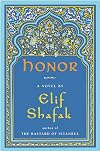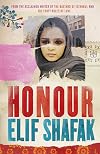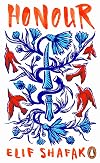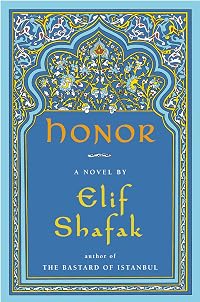
Honour
by Elif Shafak
On This Page
Description
Leaving her twin sister behind, Pembe leaves Turkey for love, following her husband Adem to London. There the Topraks hope to make new lives for themselves and their children. Yet, no matter how far they travel, the traditions and beliefs the Topraks left behind stay with them carried in the blood.Tags
Recommendations












Member Reviews
Enthralling, deftly written novel of a Turkish/Kurdish family through several generations and their immigrant experience in England dealing with attempting to adapt to English society, still holding on to their culture. They face prejudice from the English and the oldest son, Iskender, perpetrates an "honor killing" after his mother, abandoned by her weak, feckless husband, enters into a platonic relationship with a middle-aged man. This has repercussions that affect the whole family.
We follow the narrative from several family members' viewpoints; the story doesn't follow a linear path but moves from different family members and different years. It took me awhile to get used to this, but chapter headings did make the time periods and show more locations evident. In this thoughtful novel, we discover the nature of love, guilt, shame, misunderstanding, repentance, and forgiveness. One character expresses the thought that "honor lies in the heart, not in the bedroom." The author evokes vividly Turkey, the small Kurdish village near Syria, and blue-collar London. Highly recommended. show less
We follow the narrative from several family members' viewpoints; the story doesn't follow a linear path but moves from different family members and different years. It took me awhile to get used to this, but chapter headings did make the time periods and show more locations evident. In this thoughtful novel, we discover the nature of love, guilt, shame, misunderstanding, repentance, and forgiveness. One character expresses the thought that "honor lies in the heart, not in the bedroom." The author evokes vividly Turkey, the small Kurdish village near Syria, and blue-collar London. Highly recommended. show less
The novel begins with a woman driving to pick up her brother on his release from prison. She's deeply ambivalent, and the novel then goes back in time; to Iskander's time in prison, to the months before he commits the crime, and farther back to the childhoods of their parents in Turkey, especially that of his mother, Pembe, who grows up in a small Kurdish village with her twin sister, who doesn't emigrate to England, but remains behind, unmarried and respected as being the closest thing that area has to a doctor.
Şafak varies the writing in the novel, with the Kurdish and Turkish portions reading like unfamiliar folktales and the parts set in London written in a more straightforward style. This is a novel about immigrants and their show more children, how they change in response to their new home and how they refuse to change, and how their children juggle two very different worlds.
This was an interesting and thought-provoking book. At times I was frustrated with the hypocrisy built into the patriarchal society the characters come from, but the writing was lovely and the issues and questions raised never took precedence over the characters. show less
Şafak varies the writing in the novel, with the Kurdish and Turkish portions reading like unfamiliar folktales and the parts set in London written in a more straightforward style. This is a novel about immigrants and their show more children, how they change in response to their new home and how they refuse to change, and how their children juggle two very different worlds.
This was an interesting and thought-provoking book. At times I was frustrated with the hypocrisy built into the patriarchal society the characters come from, but the writing was lovely and the issues and questions raised never took precedence over the characters. show less
Passo da anni molto del mio tempo a chiedermi perché per la maggior parte degli uomini, intere culture e molti che di quelle culture non fanno parte, la capacità di camminare a testa alta non risieda in se stessi ma nel vessare le proprie donne imponendo loro codici di comportamento degradanti. Come se, data per assodata la propria inferiorità spirituale, potessero sopravvivere solo imponendo alle donne una ancora maggiore inferiorità, spirituale e fisica.
D'altra parte gli uomini sono figli delle donne, che quindi non sono esenti da colpe, soprattutto quando invece di sollevarsi a vicenda diventano complici della perversione maschile e privano altre donne della loro crescita spirituale, della felicità, e in fin dei conti della show more vita.
Questo scontro tra sessi, più che tra culture, è a parer mio la linea conduttrice di questo libro, che per altri versi contiene un certo numero di stereotipi (le gemelle, il carcerato maestro di vita, la ballerina russa, e via steretipando). show less
D'altra parte gli uomini sono figli delle donne, che quindi non sono esenti da colpe, soprattutto quando invece di sollevarsi a vicenda diventano complici della perversione maschile e privano altre donne della loro crescita spirituale, della felicità, e in fin dei conti della show more vita.
Questo scontro tra sessi, più che tra culture, è a parer mio la linea conduttrice di questo libro, che per altri versi contiene un certo numero di stereotipi (le gemelle, il carcerato maestro di vita, la ballerina russa, e via steretipando). show less
Quite an extraordinary book. The books by Turkish authors that I've read before have had such an overlay of melancholy that it was difficult to differentiate between one person'a misery and another. Ms Shafak is several tiers higher in talent. Each of her characters, however mystical or alien to my background, is clearly delineated and understandable in the context of his or her life. Occasional gems of close to perfect descriptions of a movement only add to the overall mood. The core of this history of three generations of one family is the women -- how they live and die -- and how one is killed by a male relative for honor. Altho I doubt I will ever sympathize with that motivation, I now believe I understand it at least a bit better. show more I look forward to reading this author's other books over time. show less
I thoroughly enjoyed this book which offers insight into an important and timely topic. Here in Canada we’ve recently had the Shafia case involving the “honour” killings of four female members by the family patriarch, his wife, and the eldest son; but Canada is not alone among western nations in having to confront such incidents.
The story revolves around the Toprak family, a Kurdish-Turkish family of immigrants in London. The family consists of Adem, the father; Pembe, the mother; and their three children: Iskender, the eldest son; Esma, the only daughter; and Yunus, the youngest child. The novel begins in London in 1992 with Iskender’s release from prison after serving a fourteen-year sentence for the “honour” killing of show more his mother. Most of the book is a series of flashbacks spanning the years 1945 to 1992 as we learn about Pembe’s parents, Pembe’s upbringing (along with that of her twin sister Jamila and her six other sisters) in a small Kurdish village near the Euphrates River, Adem’s childhood and family life in Istanbul, and the lives of the Toprak family members in London after their emigration in 1970.
From the beginning, the differences between males and females are emphasized. The difference begins with the names given to sons and daughters: “Male names embodied power, ability and authority. . . . Female names, however, reflected a delicate daintiness . . . [since] women were decorations for this world, pretty trimmings on the side, but not too essential.” Pembe is born into a world where “’honour’ was more than a word. It was also a name. You could call your child ‘Honour’, as long as it was a boy. Men had honour. Old men, middle-aged men, even schoolboys so young that they still smelled of their mother’s milk. Women did not have honour. Instead, they had shame.”
The honour code of Islamic culture is outlined, a code that states that “the honour of the family is deemed to be more important than the happiness of its individuals.” That code is enforced by women as well as men. It is Pembe’s mother who asserts that she would never accept a daughter’s shaming the family by leaving a husband, even if he was abusive; she says, “’No daughter of mine will abandon her husband. If she does, I’ll beat the hell out of her, even if I’m dead by then. I’ll come back as a ghost.’” Women are obsessed with bearing sons, and those that do, dote on them as Pembe does on her eldest, “Her sultan, her lion, the apple of her eye.”
Men have much more latitude in their behaviour. In the novel, a dishonourable man who abandons his family for life with an exotic dancer goes unpunished, yet a young woman who attempts to elope is given a rope with the unspoken order to do what is “honourable.” A young Muslim man may flirt publicly and have extra-marital sex with a non-Muslim girl, but can insist that his own mother not work outside the home and certainly not have even a chaste friendship with a man. A man who should provide guidance to a young man instead incites him to violence against a woman, in part because his family was disgraced by the abandonment of his mother; the fact that his father was a drunk and physically abusive is dismissed.
There are some weaknesses in the novel. In particular, there are the coincidences, too many for my liking. The delinquent son of Esma’s favourite primary-school teacher crosses paths with Yunus and in the end both mother and son play a pivotal role in the future of both of the younger Toprak children? Adem curiously encounters Iskender’s radical mentor who ends up impacting Adem’s life as well as influencing that of his son? There is also some plot manipulation: the introduction of the Amber Concubine seems contrived, and the plot twist near the end stretches credibility, although the enigmatic opening and the comedy of errors during Adem’s first visit to the Kurdish village do function as foreshadowing. The relationship between the 7-year-old Yunus and the 20-year-old Tobiko is unrealistic, and Pembe’s lack of supervision of her youngest son’s activities is also unbelievable.
Despite these flaws, the novel is certainly a good read, and its strengths far outweigh its weaknesses. It deals with serious issues and has some heartbreaking scenes, but it is ultimately hopeful: “In this world every creature was made to challenge, to change” and it is possible to find a man “who believes that honour has got to do with people’s hearts rather than their bedrooms.” I will definitely be recommending this book and seeking out Shafak’s other novels in English.
Note: I received a pre-release copy of the book from the publisher via NetGalley. show less
The story revolves around the Toprak family, a Kurdish-Turkish family of immigrants in London. The family consists of Adem, the father; Pembe, the mother; and their three children: Iskender, the eldest son; Esma, the only daughter; and Yunus, the youngest child. The novel begins in London in 1992 with Iskender’s release from prison after serving a fourteen-year sentence for the “honour” killing of show more his mother. Most of the book is a series of flashbacks spanning the years 1945 to 1992 as we learn about Pembe’s parents, Pembe’s upbringing (along with that of her twin sister Jamila and her six other sisters) in a small Kurdish village near the Euphrates River, Adem’s childhood and family life in Istanbul, and the lives of the Toprak family members in London after their emigration in 1970.
From the beginning, the differences between males and females are emphasized. The difference begins with the names given to sons and daughters: “Male names embodied power, ability and authority. . . . Female names, however, reflected a delicate daintiness . . . [since] women were decorations for this world, pretty trimmings on the side, but not too essential.” Pembe is born into a world where “’honour’ was more than a word. It was also a name. You could call your child ‘Honour’, as long as it was a boy. Men had honour. Old men, middle-aged men, even schoolboys so young that they still smelled of their mother’s milk. Women did not have honour. Instead, they had shame.”
The honour code of Islamic culture is outlined, a code that states that “the honour of the family is deemed to be more important than the happiness of its individuals.” That code is enforced by women as well as men. It is Pembe’s mother who asserts that she would never accept a daughter’s shaming the family by leaving a husband, even if he was abusive; she says, “’No daughter of mine will abandon her husband. If she does, I’ll beat the hell out of her, even if I’m dead by then. I’ll come back as a ghost.’” Women are obsessed with bearing sons, and those that do, dote on them as Pembe does on her eldest, “Her sultan, her lion, the apple of her eye.”
Men have much more latitude in their behaviour. In the novel, a dishonourable man who abandons his family for life with an exotic dancer goes unpunished, yet a young woman who attempts to elope is given a rope with the unspoken order to do what is “honourable.” A young Muslim man may flirt publicly and have extra-marital sex with a non-Muslim girl, but can insist that his own mother not work outside the home and certainly not have even a chaste friendship with a man. A man who should provide guidance to a young man instead incites him to violence against a woman, in part because his family was disgraced by the abandonment of his mother; the fact that his father was a drunk and physically abusive is dismissed.
There are some weaknesses in the novel. In particular, there are the coincidences, too many for my liking. The delinquent son of Esma’s favourite primary-school teacher crosses paths with Yunus and in the end both mother and son play a pivotal role in the future of both of the younger Toprak children? Adem curiously encounters Iskender’s radical mentor who ends up impacting Adem’s life as well as influencing that of his son? There is also some plot manipulation: the introduction of the Amber Concubine seems contrived, and the plot twist near the end stretches credibility, although the enigmatic opening and the comedy of errors during Adem’s first visit to the Kurdish village do function as foreshadowing. The relationship between the 7-year-old Yunus and the 20-year-old Tobiko is unrealistic, and Pembe’s lack of supervision of her youngest son’s activities is also unbelievable.
Despite these flaws, the novel is certainly a good read, and its strengths far outweigh its weaknesses. It deals with serious issues and has some heartbreaking scenes, but it is ultimately hopeful: “In this world every creature was made to challenge, to change” and it is possible to find a man “who believes that honour has got to do with people’s hearts rather than their bedrooms.” I will definitely be recommending this book and seeking out Shafak’s other novels in English.
Note: I received a pre-release copy of the book from the publisher via NetGalley. show less
Definitely liked this better than The Bastard of Istanbul, although I still do need to reread that one to remember. Honor was completely engrossing, except for some parts toward the end that were needlessly descriptive and a little boring. In the last third of the book the plot has really sped up, we've been given most of the pieces and are starting to see how they fit together, and it doesn't make sense to spend entire lengthy paragraphs detailing the contents of Jamila's cellar.
This is a book about misogyny, so for me there was no happy ending, though the plot itself resolved in a mostly satisfying way. I hated most of the main characters, basically the whole family except Esma and Yunus. That's not fair of me, because I know show more perfectly well how patriarchy controls people, how you internalize those beliefs when you grow up in that system. My head doesn't blame them for how their culture shaped them, but my gut can't help hating them for embodying it. I do appreciate Shafak's straightforward portrayal of it all. You never get the sense that she's excusing or vilifying anyone; she presents patriarchy as it exists, so people who feel differently about it than I do would probably read this and have a different experience. show less
This is a book about misogyny, so for me there was no happy ending, though the plot itself resolved in a mostly satisfying way. I hated most of the main characters, basically the whole family except Esma and Yunus. That's not fair of me, because I know show more perfectly well how patriarchy controls people, how you internalize those beliefs when you grow up in that system. My head doesn't blame them for how their culture shaped them, but my gut can't help hating them for embodying it. I do appreciate Shafak's straightforward portrayal of it all. You never get the sense that she's excusing or vilifying anyone; she presents patriarchy as it exists, so people who feel differently about it than I do would probably read this and have a different experience. show less
Honor tells the story of several members of a Turkish-Kurdish family, extending over several generations and taking place in Turkey, the UK, and Abu Dhabi. It centers around Iskender, a man about to be released from an English prison. His crime: the honor killing of his mother when he was a teenager. The novel weaves back and forth through time: from the birth of his mother, Pembe, and her twin, Jamila; to Iskandar's fleeing from his circumcision; to Pembe's marriage to Adem in a Kurdish village and their early years in London; to the youngest son Yunus's infatuation with a punk girl; to Adem's drinking, gambling, and eventual desertion; to Pembe's meetings with Elias; to young Adem's memories of his depressed mother; to Iskender's show more prison experiences; and finally to a rather surprising conclusion.
If this sounds a bit complex and confusing, well, yes, it is at first. So many voices, so many stories, so much jumping around in time. But I got used to it and eventually sorted everyone out. Part of the reason for the odd chronology is, I'm sure, to make the point that events have an impact on future generations. For example, Adem was excessively indulged by his mother, and so was Iskender, and both turned out to have little regard for the feelings of others. Pembe had seen a sister literally die of shame, yet she finds herself the object of an honor killing. The family has moved from Turkey to London, and the children live very modern lives, yet Iskender gets caught up in the Muslim traditionalist movement. Once I sorted out the initial complications, I enjoyed making the connections in the various sections.
While I agree with other reviewers who found that the plot relies a little too heavily on coincidence at times, nevertheless, I found the characters unique and compelling and got caught up in their stories. I'm looking forward to reading more by Elif Shafak. show less
If this sounds a bit complex and confusing, well, yes, it is at first. So many voices, so many stories, so much jumping around in time. But I got used to it and eventually sorted everyone out. Part of the reason for the odd chronology is, I'm sure, to make the point that events have an impact on future generations. For example, Adem was excessively indulged by his mother, and so was Iskender, and both turned out to have little regard for the feelings of others. Pembe had seen a sister literally die of shame, yet she finds herself the object of an honor killing. The family has moved from Turkey to London, and the children live very modern lives, yet Iskender gets caught up in the Muslim traditionalist movement. Once I sorted out the initial complications, I enjoyed making the connections in the various sections.
While I agree with other reviewers who found that the plot relies a little too heavily on coincidence at times, nevertheless, I found the characters unique and compelling and got caught up in their stories. I'm looking forward to reading more by Elif Shafak. show less
Members
- Recently Added By
Published Reviews
ThingScore 75
With Honour, her ninth novel, her fourth written in English and her first set in London, Shafak joins the growing canon of authors who chart the rich imagined routes of a nomadic city formed by global power-shifts, and the ebbs and flows of human traffic passing through London. She joins writers such as Hanif Kureishi, Zadie Smith, Monica Ali, Aamer Hussein, Andrea Levy, Hanan al-Shakyh and show more Leila Aboulela, who offer us fictional glimpses of London's Others......A whole host of minor characters appear, from zany Caribbean hairdresser Rita to Zeeshan the mystic; too many for much more than broad-brush characterisation. There are a few minor historical glitches in Shafak's portrait of 1970s subcultural life, but only picky Londoners of a certain age will notice.Inconsistencies in characterisation are more troubling than those in historical research. show less
added by vancouverdeb
Shafak is an extremely popular novelist in Turkey, particularly loved by young, educated and newly independent women who appreciate her fusion of feminism and Sufism, her disarmingly quirky characters and the artful twists and turns of her epic romances.... In everything she writes, she sets out to dissolve what she regards as false narratives. In this one, it's the story of the "honour show more killing" as we know it from those shock headlines. The book calls to mind The Color Purple in the fierceness of its engagement with male violence and its determination to see its characters to a better place. But Shafak is closer to Isabel Allende in spirit, confidence and charm. Her portrayal of Muslim cultures, both traditional and globalising, is as hopeful as it is politically sophisticated. This alone should gain her the world audience she has long deserved. show less
added by vancouverdeb
Lists

Favourite books from the 2013 Women's Prize for Fiction (Orange Prize) long
20 works; 17 members

Favourite Women's Prize for Fiction, Orange & Bailey's Prize contenders
132 works; 52 members

IMPAC Dublin Literary Award 2014 longlist
150 works; 3 members

H
177 works; 2 members
Author Information

37+ Works 12,478 Members
Elif Shafak is an assistant professor of Near Eastern Studies at the University of Arizona.
Some Editions
Awards and Honors
Common Knowledge
- Canonical title
- Honour
- Original title
- Honour
- Original publication date
- 2012; 2013 (Nederlands) (Nederlands)
- Original language*
- Engels
- Canonical DDC/MDS
- 813.6
- Canonical LCC
- PS3619.H328
*Some information comes from Common Knowledge in other languages. Click "Edit" for more information.
Classifications
Statistics
- Members
- 624
- Popularity
- 46,917
- Reviews
- 28
- Rating
- (3.91)
- Languages
- 15 — Bosnian, Catalan, Danish, Dutch, English, Finnish, French, German, Italian, Polish, Romanian, Russian, Spanish, Swedish, Turkish
- Media
- Paper, Audiobook, Ebook
- ISBNs
- 39
- ASINs
- 10