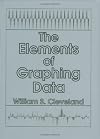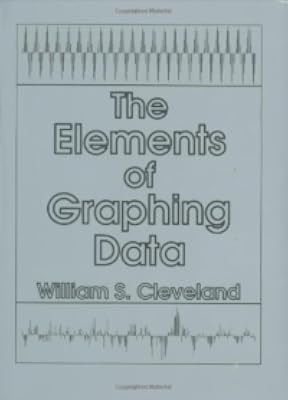
The Elements of Graphing Data
by William S. Cleveland
On This Page
Description
Contains graphical methods and principles for visualizing data in science and technology. Emphasizes the basic ideas, methods, and principles for creating readable graphs through an understanding of human visual and graphical perception, with a small section on computer graphics. Covers graphical methods, such as logarithms, visual reference grids, and statistical variation, and issues in graphical perception, including superposed curves, color encoding, and graphing along a common scale. show more Annotation copyright by Book News, Inc., Portland, OR show lessTags
Recommendations









Member Reviews
Review is for the 1994 revised edition. Cleveland is referenced all over the place, almost as much as Tufte, so I decided I should read it. After the title, it aims to be the plotting version of Strunk and White. The strongest sections are the criticism and evaluation of charts, e.g., one from Sagan's The Dragon's of Eden, the notorious O-ring chart, etc. Also strong in getting at the root of the visual task a chart is asking a viewer to perform and what techniques assist that process.
Many of the suggestions are a product of the technology available at the time. Much of the practical advice relates to print and fixed media with what I'd consider pretty skimpy amounts of data today, i.e., only in the hundreds of data points at most show more (though most of the charts have barely a dozen data points.) Other advice would seem to be irrelevant when interactive searching, sorting, highlighting, visibility on mouse hover, etc., is available. On the other hand, a techniques like banking to 45 degrees should be even easier in a digital context because of less restriction on aspect ratio and the potential to zoom in and out of a plot. show less
Many of the suggestions are a product of the technology available at the time. Much of the practical advice relates to print and fixed media with what I'd consider pretty skimpy amounts of data today, i.e., only in the hundreds of data points at most show more (though most of the charts have barely a dozen data points.) Other advice would seem to be irrelevant when interactive searching, sorting, highlighting, visibility on mouse hover, etc., is available. On the other hand, a techniques like banking to 45 degrees should be even easier in a digital context because of less restriction on aspect ratio and the potential to zoom in and out of a plot. show less
Where Tufte gives you a good high-level view about displaying info through graphics, Cleveland gets into the nuts and bolts of the issue. This work is actually more useful than Tufte's book, as it gives a lot more practical advice on how to organize your graphs to convey the right level of information.
Ratings
Members
- Recently Added By
Lists

Bret Victor's Five-Star List
46 works; 5 members
Author Information
3 Works 347 Members
Common Knowledge
- Canonical title
- The Elements of Graphing Data
- Original publication date
- 1985
Classifications
- Genres
- Nonfiction, General Nonfiction, Art & Design
- DDC/MDS
- 001.4 — Computer science, information & general works Computer science, knowledge & systems Knowledge and learning in general Research; Evaluation research, works discussing what research is
- LCC
- QA90 .C54 — Science Mathematics Mathematics Instruments and machines
Statistics
- Members
- 187
- Popularity
- 174,912
- Reviews
- 2
- Rating
- (4.36)
- Languages
- English
- Media
- Paper
- ISBNs
- 4
- ASINs
- 1