On This Page
Description
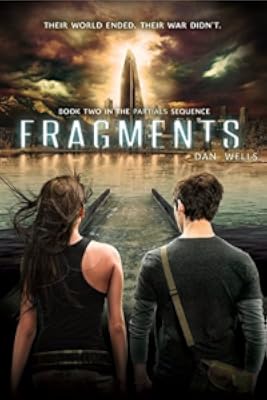
Author Dan Wells is back with the sequel to the sci-fi blockbuster Partials, which Pittacus Lore called a "thrilling sci-fi adrenaline rush, with one of the most compelling and frightening visions of Earth's future I've seen yet."After discovering the cure for RM, Kira Walker sets off on a terrifying journey into the ruins of postapocalyptic America and the darkest desires of her heart in order to uncover the means--and a reason--for humanity's survival.
Dan Wells extends his richly show more imagined, gritty world and introduces new memorable characters in this second installment in the Partials Sequence.
. show less
Tags
Recommendations


























Member Reviews
[Cross-posted to Knite Writes]
This was a journey book. I don’t really like journey books because they quickly start to feel repetitive to me. And that’s exactly what happened in the middle of Fragments. Kira and the gang, traveling along…and traveling along…and traveling along. They faced the same dangers over and over and over again. That always annoys me. Thankfully, the beginning and the end of this really long sequel were quite exciting, and I feel that Wells has set up the series for an amazing third installment. There is a lot going on.
I mean, we’ve got a Partial virus, a nuke, a war, a cure for human RM, our protagonists split up all across the country…man, something will be going down in the next Partials book, show more that’s for sure. If Dan Wells is an expert at anything, it’s juggling a lot of complex plot elements. He managed to give answers to a number of questions from Book 1 while simultaneously introducing many more questions within those answers–perfectly setting the stage for an exciting Book 3.
I also greatly appreciate the subtle romantic elements. I’ve read so much YA lately where the teen romance overpowers the actual dramatic sci-fi plot that the entire dystopian/apocalyptic YA genre is starting to grate on my nerves. But Wells is fantastic at keeping the romance as an undertone while having the protagonists focus on the actual issues at hand. Samm and Kira don’t get a romantic moment until the very end of the book–and it’s a long book. So, hats off to Dan Wells, who manages to cover YA issues while actually keeping a strong post-apocalyptic plot going! Yay!
Anyway, this book does have its issues. I mentioned the whole drawn-out journey thing. That was my biggest issue. I also think Wells needs to work a bit on POV. The Partial sequence is written in close third, and for the majority of this story, Wells switches back and forth between two POV characters, Kira and Marcus. But every now and then, he randomly throws in another character (Ariel, a few times, and Samm…once, for a part of a chapter). This is slightly irritating to me because it comes off as sloppy. Wells needs to introduce information, but he can’t do it without adding more POV characters? Seems he wrote himself into a corner.
Other than that, I enjoyed this installment, and I feel it has a great setup for Book 3. show less
This was a journey book. I don’t really like journey books because they quickly start to feel repetitive to me. And that’s exactly what happened in the middle of Fragments. Kira and the gang, traveling along…and traveling along…and traveling along. They faced the same dangers over and over and over again. That always annoys me. Thankfully, the beginning and the end of this really long sequel were quite exciting, and I feel that Wells has set up the series for an amazing third installment. There is a lot going on.
I mean, we’ve got a Partial virus, a nuke, a war, a cure for human RM, our protagonists split up all across the country…man, something will be going down in the next Partials book, show more that’s for sure. If Dan Wells is an expert at anything, it’s juggling a lot of complex plot elements. He managed to give answers to a number of questions from Book 1 while simultaneously introducing many more questions within those answers–perfectly setting the stage for an exciting Book 3.
I also greatly appreciate the subtle romantic elements. I’ve read so much YA lately where the teen romance overpowers the actual dramatic sci-fi plot that the entire dystopian/apocalyptic YA genre is starting to grate on my nerves. But Wells is fantastic at keeping the romance as an undertone while having the protagonists focus on the actual issues at hand. Samm and Kira don’t get a romantic moment until the very end of the book–and it’s a long book. So, hats off to Dan Wells, who manages to cover YA issues while actually keeping a strong post-apocalyptic plot going! Yay!
Anyway, this book does have its issues. I mentioned the whole drawn-out journey thing. That was my biggest issue. I also think Wells needs to work a bit on POV. The Partial sequence is written in close third, and for the majority of this story, Wells switches back and forth between two POV characters, Kira and Marcus. But every now and then, he randomly throws in another character (Ariel, a few times, and Samm…once, for a part of a chapter). This is slightly irritating to me because it comes off as sloppy. Wells needs to introduce information, but he can’t do it without adding more POV characters? Seems he wrote himself into a corner.
Other than that, I enjoyed this installment, and I feel it has a great setup for Book 3. show less
Since I adored Partials my expectations for this one were huge! Thankfully Dan Wells wrote an amazing sequel which I loved from the very beginning.
Kira is so my kind of protagonist! She is strong, but sensitive. She sticks to her opinions and isn't afraid of being herself. She's also very independent but she's getting better at letting other people have a say. She goes through a lot in Fragments and starts doubting herself at some point, but still manages to keep her integrity and her hopes intact. I simple love her. Her journey with Afa, Heron and Samm is super exciting and shows the reader just how screwed up the world has gotten.
Both Kira's journey and Marcus' battle 'back home' has surprises and twist I did not anticipate, but it show more was awesome! If a writer knows how to surprise the reader, I'm a fan! The humor in the story is just as great as the last one and especially Marucs was hilarious (I may be biased, since I really like him and his part in the story).
Marcus froze, suddenly realizing why the voice sounded so familiar. "Kira?" "Hey, babe," said Kira. "Miss me?" "What?" Marcus stumbled for words. "Where are you? What's going on? Why is Dr. Morgan looking for me?" "Probably because she wants me," said Kira. "The good news is, she has no idea where I am." "Well that's a relief," said Haru derisevely. "I'm so glad Kira's safe." Marcus thumbed the radio button. "Haru says hi."
The entire story is intriguing and even though a lot of questions are answered, just as many new ones pop up - it left me wanting more. The pace is a bit slow at times without the story being boring. The story is, however, a bit more detailed and thorough about the science and the reasons behind the crisis than most in the YA dystopian genre, but that only made me love it more.
The Partials series is quickly becoming one of my favorites! show less
Kira is so my kind of protagonist! She is strong, but sensitive. She sticks to her opinions and isn't afraid of being herself. She's also very independent but she's getting better at letting other people have a say. She goes through a lot in Fragments and starts doubting herself at some point, but still manages to keep her integrity and her hopes intact. I simple love her. Her journey with Afa, Heron and Samm is super exciting and shows the reader just how screwed up the world has gotten.
Both Kira's journey and Marcus' battle 'back home' has surprises and twist I did not anticipate, but it show more was awesome! If a writer knows how to surprise the reader, I'm a fan! The humor in the story is just as great as the last one and especially Marucs was hilarious (I may be biased, since I really like him and his part in the story).
Marcus froze, suddenly realizing why the voice sounded so familiar. "Kira?" "Hey, babe," said Kira. "Miss me?" "What?" Marcus stumbled for words. "Where are you? What's going on? Why is Dr. Morgan looking for me?" "Probably because she wants me," said Kira. "The good news is, she has no idea where I am." "Well that's a relief," said Haru derisevely. "I'm so glad Kira's safe." Marcus thumbed the radio button. "Haru says hi."
The entire story is intriguing and even though a lot of questions are answered, just as many new ones pop up - it left me wanting more. The pace is a bit slow at times without the story being boring. The story is, however, a bit more detailed and thorough about the science and the reasons behind the crisis than most in the YA dystopian genre, but that only made me love it more.
The Partials series is quickly becoming one of my favorites! show less
Since this is the second book in the series, proceed with caution. This review may contain minor spoilers.
Now that Kira has a better understanding of the RM virus, she has left home in search of answers to who/what she is, and to figure out why the cure to RM lives inside of the Partials. With the Partials expiration date growing ever closer, Kira must find a way to permanently cure RM, or once the Partials go extinct, so will the human race.
As Kira searches for answers, she is joined by Samm and Heron, two Partials she isn’t sure she can fully trust, as well as Afa, a mentally troubled man who used to work for ParaGen, the company responsible for manufacturing the Partials. As the group searches for answers far from home, a new war show more threatens to break out in East Meadows. There are people who desperately want Kira, and they’ll stop at nothing to get her back.
In the first book, the story takes place primarily in and around a dystopian New York. In this installment, the author takes us across a desolate and dangerous USA, from New York, to Chicago to Denver.
While I liked the characters in the first book, the only one I really connected with was Kira. I liked her determination and drive, but there was something lacking. After reading Fragments, I feel like I know her so much better. She’s strong and smart and totally selfless. What made me really happy was that we get a lot more Samm development in this story. I was intrigued by Samm in book one, and after this book I am a total Samm fan. Herron is interesting, and while not especially likable at first glance, she grew on me. I think my favorite new character by far had to be Afa — the gentle giant with the broken mind who may know how to help Kira find the answers she is looking for.
Mr. Wells does a wonderful job of creating tension and moving the story forward at a decent pace. I remember feeling like the first book dragged, and I was afraid that would be the same here. This book is MUCH longer than the first, and despite a couple of slower areas, I felt it moved a lot faster than the first book. There’s a lot going on and plenty of twists and turns that Mr. Wells handles like a pro.
Action-packed and full of surprises, Fragments is even better than its predecessor. I was glued to the pages for about the last quarter of the book, and while the ending left me scratching my head a bit, it definitely has me wanting the next book in the series. show less
Now that Kira has a better understanding of the RM virus, she has left home in search of answers to who/what she is, and to figure out why the cure to RM lives inside of the Partials. With the Partials expiration date growing ever closer, Kira must find a way to permanently cure RM, or once the Partials go extinct, so will the human race.
As Kira searches for answers, she is joined by Samm and Heron, two Partials she isn’t sure she can fully trust, as well as Afa, a mentally troubled man who used to work for ParaGen, the company responsible for manufacturing the Partials. As the group searches for answers far from home, a new war show more threatens to break out in East Meadows. There are people who desperately want Kira, and they’ll stop at nothing to get her back.
In the first book, the story takes place primarily in and around a dystopian New York. In this installment, the author takes us across a desolate and dangerous USA, from New York, to Chicago to Denver.
While I liked the characters in the first book, the only one I really connected with was Kira. I liked her determination and drive, but there was something lacking. After reading Fragments, I feel like I know her so much better. She’s strong and smart and totally selfless. What made me really happy was that we get a lot more Samm development in this story. I was intrigued by Samm in book one, and after this book I am a total Samm fan. Herron is interesting, and while not especially likable at first glance, she grew on me. I think my favorite new character by far had to be Afa — the gentle giant with the broken mind who may know how to help Kira find the answers she is looking for.
Mr. Wells does a wonderful job of creating tension and moving the story forward at a decent pace. I remember feeling like the first book dragged, and I was afraid that would be the same here. This book is MUCH longer than the first, and despite a couple of slower areas, I felt it moved a lot faster than the first book. There’s a lot going on and plenty of twists and turns that Mr. Wells handles like a pro.
Action-packed and full of surprises, Fragments is even better than its predecessor. I was glued to the pages for about the last quarter of the book, and while the ending left me scratching my head a bit, it definitely has me wanting the next book in the series. show less
Review courtesy of All Things Urban Fantasy
How does an almost 600 page book end up feeling too short? Masterful plotting, harrowing danger, meticulously detailed worldbuilding with a complex history, and truly human characters even when they aren’t actually human.
I called PARTIALS, the first book in the Partials Sequence, ‘the first truly great dystopian debut of the year!’ in 2012, and FRAGMENTS is even better. So much so that I’m calling the Partials Sequence one of the best dystopian series since The Hunger Games. The medical thriller elements are just as prominent as in the debut, and while the concepts became necessarily more complex, I found them to be more easily comprehended this time. We learn more about the geneticists show more who created the Partials, how and why they were made, and how the RM virus that attacks humans is connected to the expiration date for Partials. Not to mention Kira’s unique role and explanation for her existence.
Books with amazing concepts often fall into a rut with their sequels either regurgitating essentially the same story or breaking so far from their original premise that they alienate fans of the debut. FRAGMENTS neatly sidesteps both common pitfalls. Author Dan Wells has carried over his brilliant balance of characters who possess opposing viewpoints and has still made them all sympathetic to readers. He raises numerous ethical quandaries in FRAGMENTS and Mr. Wells respects both his characters and his readers enough not to give them easy answers. At the same time, he forces his characters into new environments and drops MIND ALTERING revelations that we rarely see in middle books for trilogies.
The beginning of FRAGMENTS was a little slow, and I did prefer the chapters with Kira more than Marcus back on Long Island (fortunately the ratio is 3:1 so most of the book follows Kira). The plot is crazy dense and amazingly well paced, but it didn’t leave a lot of room for character development until the showstopping end (which will leave readers breathless). But those criticisms are so minor in the face of everything that this book gets so right. The conclusion to the Partials Sequence can’t come soon enough.
Sexual Content:
Kissing show less
How does an almost 600 page book end up feeling too short? Masterful plotting, harrowing danger, meticulously detailed worldbuilding with a complex history, and truly human characters even when they aren’t actually human.
I called PARTIALS, the first book in the Partials Sequence, ‘the first truly great dystopian debut of the year!’ in 2012, and FRAGMENTS is even better. So much so that I’m calling the Partials Sequence one of the best dystopian series since The Hunger Games. The medical thriller elements are just as prominent as in the debut, and while the concepts became necessarily more complex, I found them to be more easily comprehended this time. We learn more about the geneticists show more who created the Partials, how and why they were made, and how the RM virus that attacks humans is connected to the expiration date for Partials. Not to mention Kira’s unique role and explanation for her existence.
Books with amazing concepts often fall into a rut with their sequels either regurgitating essentially the same story or breaking so far from their original premise that they alienate fans of the debut. FRAGMENTS neatly sidesteps both common pitfalls. Author Dan Wells has carried over his brilliant balance of characters who possess opposing viewpoints and has still made them all sympathetic to readers. He raises numerous ethical quandaries in FRAGMENTS and Mr. Wells respects both his characters and his readers enough not to give them easy answers. At the same time, he forces his characters into new environments and drops MIND ALTERING revelations that we rarely see in middle books for trilogies.
The beginning of FRAGMENTS was a little slow, and I did prefer the chapters with Kira more than Marcus back on Long Island (fortunately the ratio is 3:1 so most of the book follows Kira). The plot is crazy dense and amazingly well paced, but it didn’t leave a lot of room for character development until the showstopping end (which will leave readers breathless). But those criticisms are so minor in the face of everything that this book gets so right. The conclusion to the Partials Sequence can’t come soon enough.
Sexual Content:
Kissing show less
4.5/5 stars!
While I do think that there was a nice chunk that wasn't really quite needed (or needed to be edited out) in this follow-up to "Partials", I really, really, really enjoyed "Fragments". Seriously. This is some bold biopunk YA going on right here - daring to bring issues like apartheid, slavery, bioethics, and other such matters to the table when most YA is still stuck in contemporary or PNR-only zones. The "Partials Sequence" series is definitely in the realm of the next frontier for me when it comes to thinking of the future of YA, so I can only hope that we get more authors to be just as daring. If you liked "Partials", you're definitely going to love "Fragments" if just for Wells getting bolder in his storytelling.
Okay, so show more biggest issue with this installment: one, the editing. I feel like a lot of the journey across the country could have been cut down a fair amount (at least 50 pages) and the book wouldn't have suffered for it. While I do understand the need to show the external journey to Chicago/Denver and the internal journey that Heron, Afa, Samm, and Kira are making within themselves, I just feel like there was too much of the external journey to deal with.
Two: Afa. I'm not sure if he's supposed to be autistic (somewhere on the spectrum, since he was high-functioning enough to run ParaGen's IT department at one point, or if he's supposed to be a regular guy with some severe PTSD issues, or if he's a savant. Or all of the above? He was a bit hard to get a read on, and while I do feel he was very important to the story, I wish we could have gotten a bit more detail on him. What hinted that he might be autistic was the thing about touch and the savantism re: IT and computers, but at the same time, he obviously was pretty damaged (but wasn't everyone?) after the Break. So I wished Wells would have made him a little bit more declared/obvious in his description of Afa, since it was starting to gnaw at me after awhile. Maybe we'll get a late reference to him in book three? I hope so.
The other technical areas in this book were more or less flawless, so I won't be examining them too much instead in favor of exploring some of the themes that Wells more heavily asserted in this installment of the "Partials Sequence".
I literally could not put this book down. There are so many issues (and two main storylines eventually converging into one) that are talked about in here, all very mature and serious - apartheid (kids, look it up on wikipedia if you don't know what it is), bioethics, slavery, self-identity and more. There's also the question of can these two species co-exist, or if one needs to die so that the other can live, which is pretty heavy stuff. To put it one way, this is not the light, fluffy feel-good book of the year. There's a lot of heavy issues which overcome the "tough stuff" genre of YA (more like blows it out of the water), but it does come around to one of the most common themes of YA books: who am I? What am I? Am I human? What makes me human? All of these are explored slowly but surely throughout the book, mostly throughout the journey to Chicago/Denver, by a lot of internal reflection on Kira's part, and through talking with everyone else on the journey along the way.
There's also the very important question for all literature that's hidden in here that works so easily within the sci-fi genre as a whole - what makes us human in a post-human age? What does it mean to be human in a post-human age? I can safely say that with the ridiculously explosive growth of the internet and devices post-year 2000, we're in a post-human age, and Wells really digs into these questions, using them as a large part of the heart of the "Partials Sequence" series as a way to really explore the idea of humanity in the face of something perfectly engineered and synthetic, and to compare the two. The answers that come up in "Fragments" specifically may really surprise you - I know I was really surprised by some of the Big Reveals in that arena of humanity versus "the other" throughout the book. And while there were some Big Reveals I saw coming thanks to some very heavy foreshadowing at the end of book one, when you gather them all together as a whole, it makes for not only very compelling reading, but a good reason for navel-gazing (a negative term, usually, but here it needs to be used) for humans right now as a whole. We're growing and evolving at such a rate digitally right now...well, I'm not sure we were ever made to go this fast in all areas of life. We text people, but not call them. Email but not write. We're forgetting the old ways of things, and "Fragments" asks us through comparing us to the Partials, talking about the Partial War and the Break itself - is this for the best? Is growing so digital and so...well, almost arrogant with our hold over nature for our greater good?
Or, instead, is Wells warning us - with our pride comes our fall, just like the RM plague (which we'll be getting some very interesting answers about in this book) and the Break itself? Is it time we get "reset" as a society, a planet, a species as a whole?
So, yeah. A lot of thinky-stuff in this book, though there is romance (and very well done - light, gentle, and almost sneaky until it hits us at the end), and other stuff. There were times where I was wondering if Wells was channeling James Kirk through Samm's views on "no-win" scenarios, and that was a nice little surprise that made my fangirl heart skip with glee. This is a compulsively readable sci-fi piece, but it's also a very philosophical bit of YA that seems almost too mature for the genre - but that's not a bad thing. We definitely need more books in this vein, and soon.
Final verdict? Definitely a must-read for 2013, I can't wait to see where Wells goes with this series next. I'm definitely dying for book 3 now, and hopefully we'll get another novella thrown in the mix soon, too. "Fragments" will drop in North American stores February 26, 2013, so be sure to check it out when you get the chance!
(posted to goodreads, shelfari, librarything, and birthofanewwitch.wordpress.com) show less
While I do think that there was a nice chunk that wasn't really quite needed (or needed to be edited out) in this follow-up to "Partials", I really, really, really enjoyed "Fragments". Seriously. This is some bold biopunk YA going on right here - daring to bring issues like apartheid, slavery, bioethics, and other such matters to the table when most YA is still stuck in contemporary or PNR-only zones. The "Partials Sequence" series is definitely in the realm of the next frontier for me when it comes to thinking of the future of YA, so I can only hope that we get more authors to be just as daring. If you liked "Partials", you're definitely going to love "Fragments" if just for Wells getting bolder in his storytelling.
Okay, so show more biggest issue with this installment: one, the editing. I feel like a lot of the journey across the country could have been cut down a fair amount (at least 50 pages) and the book wouldn't have suffered for it. While I do understand the need to show the external journey to Chicago/Denver and the internal journey that Heron, Afa, Samm, and Kira are making within themselves, I just feel like there was too much of the external journey to deal with.
Two: Afa. I'm not sure if he's supposed to be autistic (somewhere on the spectrum, since he was high-functioning enough to run ParaGen's IT department at one point, or if he's supposed to be a regular guy with some severe PTSD issues, or if he's a savant. Or all of the above? He was a bit hard to get a read on, and while I do feel he was very important to the story, I wish we could have gotten a bit more detail on him. What hinted that he might be autistic was the thing about touch and the savantism re: IT and computers, but at the same time, he obviously was pretty damaged (but wasn't everyone?) after the Break. So I wished Wells would have made him a little bit more declared/obvious in his description of Afa, since it was starting to gnaw at me after awhile. Maybe we'll get a late reference to him in book three? I hope so.
The other technical areas in this book were more or less flawless, so I won't be examining them too much instead in favor of exploring some of the themes that Wells more heavily asserted in this installment of the "Partials Sequence".
I literally could not put this book down. There are so many issues (and two main storylines eventually converging into one) that are talked about in here, all very mature and serious - apartheid (kids, look it up on wikipedia if you don't know what it is), bioethics, slavery, self-identity and more. There's also the question of can these two species co-exist, or if one needs to die so that the other can live, which is pretty heavy stuff. To put it one way, this is not the light, fluffy feel-good book of the year. There's a lot of heavy issues which overcome the "tough stuff" genre of YA (more like blows it out of the water), but it does come around to one of the most common themes of YA books: who am I? What am I? Am I human? What makes me human? All of these are explored slowly but surely throughout the book, mostly throughout the journey to Chicago/Denver, by a lot of internal reflection on Kira's part, and through talking with everyone else on the journey along the way.
There's also the very important question for all literature that's hidden in here that works so easily within the sci-fi genre as a whole - what makes us human in a post-human age? What does it mean to be human in a post-human age? I can safely say that with the ridiculously explosive growth of the internet and devices post-year 2000, we're in a post-human age, and Wells really digs into these questions, using them as a large part of the heart of the "Partials Sequence" series as a way to really explore the idea of humanity in the face of something perfectly engineered and synthetic, and to compare the two. The answers that come up in "Fragments" specifically may really surprise you - I know I was really surprised by some of the Big Reveals in that arena of humanity versus "the other" throughout the book. And while there were some Big Reveals I saw coming thanks to some very heavy foreshadowing at the end of book one, when you gather them all together as a whole, it makes for not only very compelling reading, but a good reason for navel-gazing (a negative term, usually, but here it needs to be used) for humans right now as a whole. We're growing and evolving at such a rate digitally right now...well, I'm not sure we were ever made to go this fast in all areas of life. We text people, but not call them. Email but not write. We're forgetting the old ways of things, and "Fragments" asks us through comparing us to the Partials, talking about the Partial War and the Break itself - is this for the best? Is growing so digital and so...well, almost arrogant with our hold over nature for our greater good?
Or, instead, is Wells warning us - with our pride comes our fall, just like the RM plague (which we'll be getting some very interesting answers about in this book) and the Break itself? Is it time we get "reset" as a society, a planet, a species as a whole?
So, yeah. A lot of thinky-stuff in this book, though there is romance (and very well done - light, gentle, and almost sneaky until it hits us at the end), and other stuff. There were times where I was wondering if Wells was channeling James Kirk through Samm's views on "no-win" scenarios, and that was a nice little surprise that made my fangirl heart skip with glee. This is a compulsively readable sci-fi piece, but it's also a very philosophical bit of YA that seems almost too mature for the genre - but that's not a bad thing. We definitely need more books in this vein, and soon.
Final verdict? Definitely a must-read for 2013, I can't wait to see where Wells goes with this series next. I'm definitely dying for book 3 now, and hopefully we'll get another novella thrown in the mix soon, too. "Fragments" will drop in North American stores February 26, 2013, so be sure to check it out when you get the chance!
(posted to goodreads, shelfari, librarything, and birthofanewwitch.wordpress.com) show less
Note: There are some spoilers for Book One in this series, Partials, but none for this book which is Book Two.
This book is the second in a post-apocalyptic dystopian trilogy, the first of which is Partials. I enjoyed the first book, and eagerly picked up the second.
In Partials, we learned that eleven years have passed since the last war and the release of a devastating virus known as “RM.” Only some 40,000 people are left in the world, but there are also a a million or so “Partials,” biosynthetic soldiers created by the U.S. Government (contracting with the biotech company ParaGen) to fight in the great Isolation War. The Partials were genetically programmed to be stronger and faster, and to have an enhanced ability to show more communicate through pheremones called “The Link.” [In real life, humans have pheromones mainly associated with sexual attraction. They are naturally occurring odorless substances the body excretes, conveying an airborne signal that provides information to, and triggers responses from, the opposite sex of the same species.] In this future world (around the year 2075), the function of pheromones has been enhanced; Partials can sense each other’s presence through this link, and detect, for example, whether or not one of them is in danger. This aids both reaction time and stealth, not to mention survival.
After the Isolation War, the Partials were kept on in a subservient position, and they rebelled. In the meantime, the RM virus was released, and the human population was decimated. Not only were most humans killed, but no baby is able to live, since it succumbs within 3 days to the RM virus. Humans have not been able to come up with a cure, and in the first book, Kira, a budding scientist, decides the key to the cure is kidnapping a Partial to find out how and why they are immune to the virus.
But in the first book we also learn that the Partials are dying too. Apparently they were constructed with an expiration date, and after twenty years, they quickly deteriorate and die. They too are desperate to find the key to survival, and so they want to capture a human. At the end of Book One, we are left at an impasse between the two groups.
In Fragments, the heroine, sixteen-year-old Kira Walker, sets off across the country to locate the headquarters of ParaGen, because it is there, she believes, the answers will be found. Kira is determined to save the world - a little naive, you might think, except that she happens to be in a unique and believable position to think this way. She is also struggling to figure out just who and what she is: is she a human or a Partial, and with which group do her loyalties lie? She is accompanied on her journey to ParaGen by two Partials: Samm (of possible romantic interest) and Heron (a female who is possibly untrustworthy). Meanwhile, back home in Long Island, her sort-of-boyfriend Marcus is on his own campaign to save the world. Time is running out though; both the humans and Partials are dying at a rapid rate, not only for biological reasons, but because each group is also at war with themselves and with one another.
Discussion: This book has a lot in common with at least a big chunk of Stephen King’s The Stand. Much of the story consists of a challenging journey across what is left of a country devastated by war, disease, and toxic waste.
The characters are a veritable U.N. of diversity, representing many races, including Indian, Chinese, and Hispanic, and yet there is still one group that serves as a target for all the prejudice and hate mankind usually has to offer. This offers a rich mine for thought and discussion.
There is also an interesting complication discussed in this book about a modification made to the Partials, so that they would have overactive consciences. Understanding why that was so, and what the repercussions are, is also an intriguing addition to the story.
Evaluation: This series is quite thought-provoking, as the characters struggle with issues that concern us all, viz.: How do we determine what makes us human? How do we define morality in a complex world? How do you draw the line between “leadership” and “dictatorship”? And perhaps most importantly, how do we rein in our short-term desires in favor of the long-term good of humanity and of the planet that harbors us? I liked this book, but I would definitely recommend waiting to read this until all three books are out. It’s a good middle child, but it is just that; it doesn’t actually end at all, and will probably be deemed unsatisfactory to readers without the third on hand. show less
This book is the second in a post-apocalyptic dystopian trilogy, the first of which is Partials. I enjoyed the first book, and eagerly picked up the second.
In Partials, we learned that eleven years have passed since the last war and the release of a devastating virus known as “RM.” Only some 40,000 people are left in the world, but there are also a a million or so “Partials,” biosynthetic soldiers created by the U.S. Government (contracting with the biotech company ParaGen) to fight in the great Isolation War. The Partials were genetically programmed to be stronger and faster, and to have an enhanced ability to show more communicate through pheremones called “The Link.” [In real life, humans have pheromones mainly associated with sexual attraction. They are naturally occurring odorless substances the body excretes, conveying an airborne signal that provides information to, and triggers responses from, the opposite sex of the same species.] In this future world (around the year 2075), the function of pheromones has been enhanced; Partials can sense each other’s presence through this link, and detect, for example, whether or not one of them is in danger. This aids both reaction time and stealth, not to mention survival.
After the Isolation War, the Partials were kept on in a subservient position, and they rebelled. In the meantime, the RM virus was released, and the human population was decimated. Not only were most humans killed, but no baby is able to live, since it succumbs within 3 days to the RM virus. Humans have not been able to come up with a cure, and in the first book, Kira, a budding scientist, decides the key to the cure is kidnapping a Partial to find out how and why they are immune to the virus.
But in the first book we also learn that the Partials are dying too. Apparently they were constructed with an expiration date, and after twenty years, they quickly deteriorate and die. They too are desperate to find the key to survival, and so they want to capture a human. At the end of Book One, we are left at an impasse between the two groups.
In Fragments, the heroine, sixteen-year-old Kira Walker, sets off across the country to locate the headquarters of ParaGen, because it is there, she believes, the answers will be found. Kira is determined to save the world - a little naive, you might think, except that she happens to be in a unique and believable position to think this way. She is also struggling to figure out just who and what she is: is she a human or a Partial, and with which group do her loyalties lie? She is accompanied on her journey to ParaGen by two Partials: Samm (of possible romantic interest) and Heron (a female who is possibly untrustworthy). Meanwhile, back home in Long Island, her sort-of-boyfriend Marcus is on his own campaign to save the world. Time is running out though; both the humans and Partials are dying at a rapid rate, not only for biological reasons, but because each group is also at war with themselves and with one another.
Discussion: This book has a lot in common with at least a big chunk of Stephen King’s The Stand. Much of the story consists of a challenging journey across what is left of a country devastated by war, disease, and toxic waste.
The characters are a veritable U.N. of diversity, representing many races, including Indian, Chinese, and Hispanic, and yet there is still one group that serves as a target for all the prejudice and hate mankind usually has to offer. This offers a rich mine for thought and discussion.
There is also an interesting complication discussed in this book about a modification made to the Partials, so that they would have overactive consciences. Understanding why that was so, and what the repercussions are, is also an intriguing addition to the story.
Evaluation: This series is quite thought-provoking, as the characters struggle with issues that concern us all, viz.: How do we determine what makes us human? How do we define morality in a complex world? How do you draw the line between “leadership” and “dictatorship”? And perhaps most importantly, how do we rein in our short-term desires in favor of the long-term good of humanity and of the planet that harbors us? I liked this book, but I would definitely recommend waiting to read this until all three books are out. It’s a good middle child, but it is just that; it doesn’t actually end at all, and will probably be deemed unsatisfactory to readers without the third on hand. show less
The story beginning in Partials continues a few months down the road with Kira searching for the Trust and trying to come to terms with what is must mean that she is a Partial who ages. Samm still searches for an answer to the expiration date that has been killing off Partials after 20 years. And Marcus is left behind in the human community on Long Island dealing with the political aftermath of Kira's dealings with Samm and a Partial invasion.
As the second book in a trilogy this book definitely does not stand alone, and it took me about a hundred pages to feel invested in the story. Once I reached that point, however, everything suddenly clicked and I was carried along by the fast pace and the ethical dilemmas with which the characters show more are faced as they search for a cure for both humans and Partials. A lot of revelations make the story complex and compelling. Though the idea of Partials - genetically engineered beings intended as perfect fighters - and the virus created seem potentially far-fetched, the very human actions and reactions make for believable scenarios. show less
As the second book in a trilogy this book definitely does not stand alone, and it took me about a hundred pages to feel invested in the story. Once I reached that point, however, everything suddenly clicked and I was carried along by the fast pace and the ethical dilemmas with which the characters show more are faced as they search for a cure for both humans and Partials. A lot of revelations make the story complex and compelling. Though the idea of Partials - genetically engineered beings intended as perfect fighters - and the virus created seem potentially far-fetched, the very human actions and reactions make for believable scenarios. show less
Members
- Recently Added By
Lists

Books Read in 2015
3,299 works; 129 members

Books Read in 2023
5,638 works; 147 members
Author Information

33+ Works 8,246 Members
Series

Work Relationships
Common Knowledge
- Canonical title
- Fragments
- Original title
- Fragments
- Original publication date
- 2013-02-26
- People/Characters
- Kira Walker; Marcus Valencio; Madison Sato; Haru Sato; Xochi Kessler; Nandita Merchant (show all 41); Samm; Hector; Wallace; Hobb; Erin Kessler; Owen Tovar; Isolde; Cameron Weist; Marisol Delarosa; Asher Woolf; Arwen Sato; Sandy; Heron; Skousen; Afa Demoux; Grant; Hartley; Bryan; Izzy; Kioni Trimble; Bobo; Oddjob; Dug; McKenna Morgan; Ariel McAdams; Mkele; Kabza; Vinci; Diadem; Galen; Bayley; Calix; Laura; Cronus Vale; Phan
- Important places
- East Meadow, New York, USA; New York, New York, USA; Chicago, Illinois, USA; Denver, Colorado, USA; Ottumwa, Iowa, USA; White Plains, New York, USA (show all 7); Arvada, Colorado, USA
Classifications
- Genres
- Teen, Fiction and Literature, Science Fiction, Young Adult
- DDC/MDS
- 823.92 — Literature & rhetoric English & Old English literatures English fiction 1900- 2000-
- LCC
- PZ7 .W4637 .F — Language and Literature Fiction and juvenile belles lettres Fiction and juvenile belles lettres Juvenile belles lettres
- BISAC
Statistics
- Members
- 780
- Popularity
- 36,025
- Reviews
- 37
- Rating
- (3.90)
- Languages
- English, French, German, Spanish
- Media
- Paper, Audiobook, Ebook
- ISBNs
- 13
- ASINs
- 4