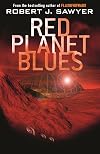
Red Planet Blues
by Robert J. Sawyer
On This Page
Description
"Robert J. Sawyer, the author of such 'revelatory and thought-provoking'* novels as Triggers and The WWW Trilogy, presents a noir mystery expanded from his Hugo and Nebula Award-nominated novella 'Identity Theft' and his Aurora Award-winning short story 'Biding Time,' and set on a lawless Mars in a future where everything is cheap, and life is even cheaper... Alex Lomax is the one and only private eye working the mean streets of New Klondike, the Martian frontier town that sprang up forty show more years ago after Simon Weingarten and Denny O'Reilly discovered fossils on the Red Planet. Back on Earth, where anything can be synthesized, the remains of alien life are the most valuable of all collectibles, so shiploads of desperate treasure hunters stampeded to Mars in the Great Martian Fossil Rush. Trying to make an honest buck in a dishonest world, Lomax tracks down killers and kidnappers among the failed prospectors, corrupt cops, and a growing population of transfers--lucky stiffs who, after striking paleontological gold, upload their minds into immortal android bodies. But when he uncovers clues to solving the decades-old murders of Weingarten and O'Reilly, along with a journal that may lead to their legendary mother lode of Martian fossils, God only knows what he'll dig up... "The Globe and Mail"-- show lessTags
Recommendations














































Member Reviews
[a:Robert J. Sawyer|25883|Robert J. Sawyer|https://d202m5krfqbpi5.cloudfront.net/authors/1224975910p2/25883.jpg] makes writing good science fiction look so damned easy. His stories just flow along without being forced or contrived (even when they have all sorts of plot twists) and are inhabited by interesting characters. [b:Red Planet Blues|15808746|Red Planet Blues|Robert J. Sawyer|https://d202m5krfqbpi5.cloudfront.net/books/1356119599s/15808746.jpg|19070382] is a perfect example of this. Sawyer captures some of the tropes and the general feeling of the pulp-noir stories of the 1940s, without being trite or rote about it. Neither does RPB feel like parody or pastiche. Sawyer hits just the right notes. I also appreciate the fact that he show more is one of the few authors to set a story on Mars (or other body here in the Solar system) and consistently remember the difference in gravity, the air pressure and temperature differences, and how all these things affect humans living there. He doesn't just remember these things when it serves some convenient plot point. show less
I shall try to be constructive.
As both a Sci-Fi lover and a *huge* Raymond Chandler fan, this seemed right down my alley. However, I struggled mightily with this book which is hugely disappointing given such an appealing premise. A pulp story like this should have been a quick read, but instead, was a tough slog that left my mind rebelling and silently screaming for the end.
I don't know if the book was self-published or was just let down by really poor editing, but it reads like a first draft. I'm astounded given the author has a number of books published.
Firstly, I assume the title is a riff on Chandler's Bay City Blues, and if that was obvious enough, the opening scene is derived from the old cliches in a paint by numbers manner, show more down to the "My fee is XX a day, plus expenses". Anyone wishing for a fresh perspective will be sorely disappointed.
We have all the common tropes in exactly the same positioning. Down on his luck wise-cracking private eye scratching out a meager existence in his spartan office and a sucker for a dame with a sob story. What has the author added here? Nothing. Changed the view out of the window, I guess; It's not 'Frisco, it's Mars, I tells you!
The second, much larger failing is that the story sets up situation that plays itself out within 6 chapters before starting out on a totally new investigation. I had to check the table of contents to make sure I wasn't reading a short story anthology. This totally kills the momentum of the story. Once the early issue is resolved, what reason did I have to read further?
The third failing is poor writing. This should have been rectified during editing. The book is unfortunately riddled with issues that I found completely mind-bending.
1. Show, Don't tell. Example "Mac and I walked stealthily down the corridor, me true gumshoe fashion and him in flatfoot mode. We soon heard voices up ahead and made an effort to be even quieter".
2. Poor sentence construction. Example "Mac and I were still on the same radio frequency, and I spoke to him."
3. Confusing and irrelevant detail. Example: "I thought about kicking the door in, but that's actually hard to do, and my ankle couldn't be fixed as easily as Pickover's had been. And, anyway, I didn't have to do it."
Throughout the story, the main character feels it necessary to state the bleeding obvious and explain every single reference he makes. He's like that annoying guy at work that explains all his own jokes. Anyway, this constantly interrupts the flow of the narrative and deprives the reader from reaching their own conclusion. There's also irrelevant exposition breaking everything up.
Lastly, and my most hated issue with the book, is the author's really bad habit during action scenes of doing this: "...I'd kick myself for letting Ernie know where the Alpha was, and -
and there it was..."
Repetitively breaking paragraphs like I'm listening to sports commentary. Towards the end of the novel this happens on almost on every page. O.M.G. I'll buy a coffee for the person who can tell me how many times that occurs in the novel as a whole, but it was way way way too many. If it was intentional, it loses impact and tests the readers patience very quickly. I also think it displays weak skill in writing transitions.
All of this is depressingly terminal IMHO. A shame as in addition to a good premise, the scenes about martian archaeologically I found really engaged my interest and were well done. Unfortunately, the rest of the time I was just crying into my drink in sheer frustration.
With some honest words from an Editor, and further redrafts, this could be a solid story. In its current form, I don't feel it's fit for publication.
EDIT: I also forgot to mention that the author has taken that other leaf out of Chandler's book - If your stuck, have someone come through the door with a gun. show less
As both a Sci-Fi lover and a *huge* Raymond Chandler fan, this seemed right down my alley. However, I struggled mightily with this book which is hugely disappointing given such an appealing premise. A pulp story like this should have been a quick read, but instead, was a tough slog that left my mind rebelling and silently screaming for the end.
I don't know if the book was self-published or was just let down by really poor editing, but it reads like a first draft. I'm astounded given the author has a number of books published.
Firstly, I assume the title is a riff on Chandler's Bay City Blues, and if that was obvious enough, the opening scene is derived from the old cliches in a paint by numbers manner, show more down to the "My fee is XX a day, plus expenses". Anyone wishing for a fresh perspective will be sorely disappointed.
We have all the common tropes in exactly the same positioning. Down on his luck wise-cracking private eye scratching out a meager existence in his spartan office and a sucker for a dame with a sob story. What has the author added here? Nothing. Changed the view out of the window, I guess; It's not 'Frisco, it's Mars, I tells you!
The second, much larger failing is that the story sets up situation that plays itself out within 6 chapters before starting out on a totally new investigation. I had to check the table of contents to make sure I wasn't reading a short story anthology. This totally kills the momentum of the story. Once the early issue is resolved, what reason did I have to read further?
The third failing is poor writing. This should have been rectified during editing. The book is unfortunately riddled with issues that I found completely mind-bending.
1. Show, Don't tell. Example "Mac and I walked stealthily down the corridor, me true gumshoe fashion and him in flatfoot mode. We soon heard voices up ahead and made an effort to be even quieter".
2. Poor sentence construction. Example "Mac and I were still on the same radio frequency, and I spoke to him."
3. Confusing and irrelevant detail. Example: "I thought about kicking the door in, but that's actually hard to do, and my ankle couldn't be fixed as easily as Pickover's had been. And, anyway, I didn't have to do it."
Throughout the story, the main character feels it necessary to state the bleeding obvious and explain every single reference he makes. He's like that annoying guy at work that explains all his own jokes. Anyway, this constantly interrupts the flow of the narrative and deprives the reader from reaching their own conclusion. There's also irrelevant exposition breaking everything up.
Lastly, and my most hated issue with the book, is the author's really bad habit during action scenes of doing this: "...I'd kick myself for letting Ernie know where the Alpha was, and -
and there it was..."
Repetitively breaking paragraphs like I'm listening to sports commentary. Towards the end of the novel this happens on almost on every page. O.M.G. I'll buy a coffee for the person who can tell me how many times that occurs in the novel as a whole, but it was way way way too many. If it was intentional, it loses impact and tests the readers patience very quickly. I also think it displays weak skill in writing transitions.
All of this is depressingly terminal IMHO. A shame as in addition to a good premise, the scenes about martian archaeologically I found really engaged my interest and were well done. Unfortunately, the rest of the time I was just crying into my drink in sheer frustration.
With some honest words from an Editor, and further redrafts, this could be a solid story. In its current form, I don't feel it's fit for publication.
EDIT: I also forgot to mention that the author has taken that other leaf out of Chandler's book - If your stuck, have someone come through the door with a gun. show less
I collect detective novels and mars novels, and to me it seemed like the two genres kept getting in one another's way. Some of the story was pretty good, but some of it just didn't fit the humorous tone of the narrator. And I felt the whole "transfers" thing was a little too easy a device to keep bringing people back from the dead. A decent read but it didn't add up for me.
Disclosure: I received this book as a Review Copy. Some people think this may bias a reviewer so I am making sure to put this information up front. I don't think it biases my reviews, but I'll let others be the judge of that.
Red Planet Blues is a noir-ish science fiction novel clearly inspired by the works of Dashiell Hammett and Raymond Chandler. Set on Mars and featuring Alex Lomax, the red planet's only private investigator, the novel presents a set of interconnected mysteries involving murder, money, and insanity with a healthy dose of alien artifacts and imaginative technology to complicate matters. The novel winds through a series of smaller mysteries, that are threaded together by the facts that almost everyone on Mars lives in show more one relatively small settlement and Lomax is really the only option people have to turn to when they need a crime solved.
Alex Lomax lives in New Klondike, a domed city on the surface of Mars (which is also the only city on Mars), exiled from Earth for somewhat mysterious reasons that are only revealed near the very end of the book. Without much in the way of technical skills, Lomax plies his trade as a private investigator, filling in for the mostly disinterested local police force. The fictional future world Sawyer created for him lives in is dominated by the technology of identity transfer, a development managed by the "NewYou" corporation, and which allows people to move their consciousness into a new and usually much improved body that is often stronger, more durable, and can be made more attractive, even to the point of changing one's appearance to match that of a well-known celebrity. "Transfers" as individuals who have undergone the process are called, also don't need to eat, sleep, or breathe, can comfortably work unprotected on the surface of Mars, and are exempt from certain life-support related taxes, which quite understandably makes transferring quite popular among the denizens of New Klondike. Despite some legal controls, in short order it becomes relatively obvious that this technology, if abused by someone with nefarious intent, can be used to hide one's identity, and make it very difficult to identify who is actually in a particular body.
It should be noted that the first ten chapters of this novel are a moderately rewritten version of the previously published novella Identity Theft, and they work pretty much as a stand-alone story. This is not to say that the first section is disconnected from the rest of the novel, but if one were to read through to the end of chapter ten and stop, one would have read a reasonably satisfying complete story. The novella (and thus, the novel) opens up like most hard-boiled detective stories do: When a beautiful woman named Cassandra shows up in Lomax's office asking him to find her missing husband. Both Cassandra and her missing husband Joshua are not only transfers, they own the local NewYou franchise. Cassandra's missing husband is located in relatively short order, but that only causes the mystery to deepen and the tale of greed, kidnapping, and murder ensues that takes a couple of interesting twists and turns and hinges on the use (or rather misuse) of identity transfer technology and the attendant difficulties that logically ensue concerning how do you prove who someone actually is, or how one proves which one the "real" version of someone is. By the end of the opening novella, the villains have been foiled, the innocent have been vindicated, and at least some modicum of justice has been served.
Even though the remaining plot of the novel is something of a "fix-up", Sawyer is a skillful storyteller, which means that he is able to pick up the slender threads left by these opening chapters and build the rest of the novel upon them to create a coherent whole. The mystery that runs through every section of the book concerns the Alpha Deposit, a legendary find that kicked off the Great Martian Fossil Rush as hungry fortune seekers flocked to the planet hoping to find alien fossils they could ship to collectors back on Earth for huge profits. The location of the Alpha Deposit, and the fate of Weingarten and O'Reilly - the two explorers who found it - is unknown, and, given the fact that anyone who could answer these unknowns would find themselves immensely wealthy, there is keen interest in being the person who can answer them. There is a further mystery involving a notorious passenger ship and the horrors that took place upon it that wraps into the narrative, adding still more intrigue to the story. Everything is told in Sawyer's extremely readable style, and the text of the entire book just flows smoothly. I have always found Sawyer's prose to be extremely enjoyable and capable of being consumed at a rapid clip, and this book is no exception.
There are only a couple of minor flaws to Red Planet Blues. The first concerns the identity transfer technology, which is described as being a well-established technology that has been in use for decades and so well-entrenched in society that only adherents to fringe religious groups object to its use. Despite this, the inhabitants in the story seem to be frequently surprised or unprepared for the realities of dealing with "transfers". For example, Lomax carries a handgun, which is pretty much useless against transfers due to their incredibly durable artificial bodies, but he seems to act like the weapon should serve as protection in such cases, even while simultaneously pointing out that it won't be. Many of the twists in the story turn on people being caught off-guard by what should be pretty routine ways of exploiting transfer technology, and so on. One is also left wondering why everyone who can doesn't simply transfer - as presented in the book, transferring makes one younger, stronger, and essentially immortal. Given the fact that everyone who isn't regarded as a crackpot holds the opinion that identity transfer is a safe and proven process, there doesn't really seem to be a reason for anyone to not do it.
The second flaw concerns the women in the book. Pretty much everyone who shows up in the story gets involved in the deadly hunt for the Alpha Deposit from geologists to down-on-their-luck thugs, to housewives to writers in residence to police officers, each of whom plays a part. While the men are described as coming in all shapes and sizes, almost all of the women are described as various stripes of beautiful with the one notable exception being a woman who is described as looking like an ape - if a woman isn't sexy, apparently the only other option is for her to look simian. Lomax spends his internal monologue leering at and salivating over these women no matter what circumstances he encounters them under, which serves to make him seem kind of sleazy and unlikable.. Further, this collection of women seem to find Alex improbably attractive, even the ones who would seem to have no real reason to. To a certain extent, this is probably an effort to mimic the noir detective stories that inspired Red Planet Blues, after all, beautiful women who fall for hard-boiled detectives are kind of a staple of such novels. The problem is, the trope sticks out like a sore thumb when imported into this novel, and doesn't really do much other than give the story some uncomfortably creepy segments.
Despite these small missteps, Red Planet Blues is a good science fiction detective story. Lomax is a flawed but ultimately engaging and enjoyable character who inhabits a world that is both interesting and plausible. The mysteries that he is confronted with are just cryptic enough to keep the reader guessing but still sufficiently well-laid out that it feels like the author is playing fair. In the end, anyone looking for something akin to The Maltese Falcon on Mars is likely to come away from this book feeling like they got what they came for. If a noir-era mystery in a science fiction setting sounds like something you would enjoy, this is pretty much exactly what you need to scratch that itch.
This review has also been posted to my blog Dreaming About Other Worlds. show less
Red Planet Blues is a noir-ish science fiction novel clearly inspired by the works of Dashiell Hammett and Raymond Chandler. Set on Mars and featuring Alex Lomax, the red planet's only private investigator, the novel presents a set of interconnected mysteries involving murder, money, and insanity with a healthy dose of alien artifacts and imaginative technology to complicate matters. The novel winds through a series of smaller mysteries, that are threaded together by the facts that almost everyone on Mars lives in show more one relatively small settlement and Lomax is really the only option people have to turn to when they need a crime solved.
Alex Lomax lives in New Klondike, a domed city on the surface of Mars (which is also the only city on Mars), exiled from Earth for somewhat mysterious reasons that are only revealed near the very end of the book. Without much in the way of technical skills, Lomax plies his trade as a private investigator, filling in for the mostly disinterested local police force. The fictional future world Sawyer created for him lives in is dominated by the technology of identity transfer, a development managed by the "NewYou" corporation, and which allows people to move their consciousness into a new and usually much improved body that is often stronger, more durable, and can be made more attractive, even to the point of changing one's appearance to match that of a well-known celebrity. "Transfers" as individuals who have undergone the process are called, also don't need to eat, sleep, or breathe, can comfortably work unprotected on the surface of Mars, and are exempt from certain life-support related taxes, which quite understandably makes transferring quite popular among the denizens of New Klondike. Despite some legal controls, in short order it becomes relatively obvious that this technology, if abused by someone with nefarious intent, can be used to hide one's identity, and make it very difficult to identify who is actually in a particular body.
It should be noted that the first ten chapters of this novel are a moderately rewritten version of the previously published novella Identity Theft, and they work pretty much as a stand-alone story. This is not to say that the first section is disconnected from the rest of the novel, but if one were to read through to the end of chapter ten and stop, one would have read a reasonably satisfying complete story. The novella (and thus, the novel) opens up like most hard-boiled detective stories do: When a beautiful woman named Cassandra shows up in Lomax's office asking him to find her missing husband. Both Cassandra and her missing husband Joshua are not only transfers, they own the local NewYou franchise. Cassandra's missing husband is located in relatively short order, but that only causes the mystery to deepen and the tale of greed, kidnapping, and murder ensues that takes a couple of interesting twists and turns and hinges on the use (or rather misuse) of identity transfer technology and the attendant difficulties that logically ensue concerning how do you prove who someone actually is, or how one proves which one the "real" version of someone is. By the end of the opening novella, the villains have been foiled, the innocent have been vindicated, and at least some modicum of justice has been served.
Even though the remaining plot of the novel is something of a "fix-up", Sawyer is a skillful storyteller, which means that he is able to pick up the slender threads left by these opening chapters and build the rest of the novel upon them to create a coherent whole. The mystery that runs through every section of the book concerns the Alpha Deposit, a legendary find that kicked off the Great Martian Fossil Rush as hungry fortune seekers flocked to the planet hoping to find alien fossils they could ship to collectors back on Earth for huge profits. The location of the Alpha Deposit, and the fate of Weingarten and O'Reilly - the two explorers who found it - is unknown, and, given the fact that anyone who could answer these unknowns would find themselves immensely wealthy, there is keen interest in being the person who can answer them. There is a further mystery involving a notorious passenger ship and the horrors that took place upon it that wraps into the narrative, adding still more intrigue to the story. Everything is told in Sawyer's extremely readable style, and the text of the entire book just flows smoothly. I have always found Sawyer's prose to be extremely enjoyable and capable of being consumed at a rapid clip, and this book is no exception.
There are only a couple of minor flaws to Red Planet Blues. The first concerns the identity transfer technology, which is described as being a well-established technology that has been in use for decades and so well-entrenched in society that only adherents to fringe religious groups object to its use. Despite this, the inhabitants in the story seem to be frequently surprised or unprepared for the realities of dealing with "transfers". For example, Lomax carries a handgun, which is pretty much useless against transfers due to their incredibly durable artificial bodies, but he seems to act like the weapon should serve as protection in such cases, even while simultaneously pointing out that it won't be. Many of the twists in the story turn on people being caught off-guard by what should be pretty routine ways of exploiting transfer technology, and so on. One is also left wondering why everyone who can doesn't simply transfer - as presented in the book, transferring makes one younger, stronger, and essentially immortal. Given the fact that everyone who isn't regarded as a crackpot holds the opinion that identity transfer is a safe and proven process, there doesn't really seem to be a reason for anyone to not do it.
The second flaw concerns the women in the book. Pretty much everyone who shows up in the story gets involved in the deadly hunt for the Alpha Deposit from geologists to down-on-their-luck thugs, to housewives to writers in residence to police officers, each of whom plays a part. While the men are described as coming in all shapes and sizes, almost all of the women are described as various stripes of beautiful with the one notable exception being a woman who is described as looking like an ape - if a woman isn't sexy, apparently the only other option is for her to look simian. Lomax spends his internal monologue leering at and salivating over these women no matter what circumstances he encounters them under, which serves to make him seem kind of sleazy and unlikable.. Further, this collection of women seem to find Alex improbably attractive, even the ones who would seem to have no real reason to. To a certain extent, this is probably an effort to mimic the noir detective stories that inspired Red Planet Blues, after all, beautiful women who fall for hard-boiled detectives are kind of a staple of such novels. The problem is, the trope sticks out like a sore thumb when imported into this novel, and doesn't really do much other than give the story some uncomfortably creepy segments.
Despite these small missteps, Red Planet Blues is a good science fiction detective story. Lomax is a flawed but ultimately engaging and enjoyable character who inhabits a world that is both interesting and plausible. The mysteries that he is confronted with are just cryptic enough to keep the reader guessing but still sufficiently well-laid out that it feels like the author is playing fair. In the end, anyone looking for something akin to The Maltese Falcon on Mars is likely to come away from this book feeling like they got what they came for. If a noir-era mystery in a science fiction setting sounds like something you would enjoy, this is pretty much exactly what you need to scratch that itch.
This review has also been posted to my blog Dreaming About Other Worlds. show less
Warning: this review contains spoilers.
****
This book's tagline is "Murder on the mean streets of Mars". Our hero is Alex Lomax, a PI who models himself on Sam Spade and other classics of the genre as he investigates cases in the city of New Klondike. A missing persons case quickly embroils him in an investigation into the city's past as a fossil boom town, specifically the deaths of two noted fossil hunters, Simon Weingarten and Denny O'Reilly, which occurred forty years previously.
The tagline was difficult for this noir and sci-fi enthusiast to resist. Overall, the book proved fairly enjoyable, although more for the sci-fi than for the mystery itself. Sometimes I felt like Lomax was trying too hard to demonstrate his noir credentials, show more for example quoting (possibly) obscure movies and using Peter Lorre's voice as his GPS system. (Could you even make a GPS with Peter Lorre's voice, considering that he's not available to record one?)He was also a bit sexist: at one point he deduces that a female android actually has a male consciousness because of how she plunks herself down into a chair (instead of sitting down elegantly) and doesn't bother wearing makeup. By those criteria, I would be a man! It took me a while to forgive him for that set of deductions.
But Sawyer's vision of New Klondike proved interesting, especially the divide between "biologicals" (normal humans) and "transfers" (androids that have had human consciousnesses uploaded into them and the biological bodies destroyed), and the problems of food supply and communications with Earth. And I am always amused by talking shipboard computers. So I'd suggest reading this primarily as a sci-fi novel and treating the mystery as purely incidental. show less
****
This book's tagline is "Murder on the mean streets of Mars". Our hero is Alex Lomax, a PI who models himself on Sam Spade and other classics of the genre as he investigates cases in the city of New Klondike. A missing persons case quickly embroils him in an investigation into the city's past as a fossil boom town, specifically the deaths of two noted fossil hunters, Simon Weingarten and Denny O'Reilly, which occurred forty years previously.
The tagline was difficult for this noir and sci-fi enthusiast to resist. Overall, the book proved fairly enjoyable, although more for the sci-fi than for the mystery itself. Sometimes I felt like Lomax was trying too hard to demonstrate his noir credentials, show more for example quoting (possibly) obscure movies and using Peter Lorre's voice as his GPS system. (Could you even make a GPS with Peter Lorre's voice, considering that he's not available to record one?)
But Sawyer's vision of New Klondike proved interesting, especially the divide between "biologicals" (normal humans) and "transfers" (androids that have had human consciousnesses uploaded into them and the biological bodies destroyed), and the problems of food supply and communications with Earth. And I am always amused by talking shipboard computers. So I'd suggest reading this primarily as a sci-fi novel and treating the mystery as purely incidental. show less
Robert Lomax is the only P.I. on Mars in a future where there has been a "gold rush" to find ancient alien fossils buried under the sand and rock of the red planet. But pickings have been drying up and the gold rush town of Klondike is becoming more and more of a backwater than it already was. Amidst this setting Lomax gets a case when, in true time-tested noir fashion, a beautiful woman walks in to his office looking to hire him to find her missing husband.
The author blurb at the back of the book notes that Robert J. Sawyer has won more awards than any other author in the fields of science fiction and fantasy. I suppose I shouldn't be as surprised by this than I was. I suspect what makes Sawyer so popular is the same reason I usually show more pick up his books, which is that I can count on something reasonably entertaining written in reasonably fluid prose that will not be too taxing on the ole gray matter. Red Planet Blues seems to fit that bill. Its a murder mystery told with humour and action, with plenty of twists and turns and a gumshoe detective and femme fatales and betrayals and people who are not who they first appear to be and so forth. At no point was I bored. But I can't say it was anything more than frothy entertainment. The novel itself had started out as a novella - which makes up the first 90 or so pages of the book. And these probably make up the best and most tightly written part of the novel. The story expands after this but one can't help but feel, particular in the last quarter of the book or so that the plot starts to meander a bit and the narrative starts becoming flabby. Still there is a satisfying conclusion to it all and at the end of the day I was entertained. show less
The author blurb at the back of the book notes that Robert J. Sawyer has won more awards than any other author in the fields of science fiction and fantasy. I suppose I shouldn't be as surprised by this than I was. I suspect what makes Sawyer so popular is the same reason I usually show more pick up his books, which is that I can count on something reasonably entertaining written in reasonably fluid prose that will not be too taxing on the ole gray matter. Red Planet Blues seems to fit that bill. Its a murder mystery told with humour and action, with plenty of twists and turns and a gumshoe detective and femme fatales and betrayals and people who are not who they first appear to be and so forth. At no point was I bored. But I can't say it was anything more than frothy entertainment. The novel itself had started out as a novella - which makes up the first 90 or so pages of the book. And these probably make up the best and most tightly written part of the novel. The story expands after this but one can't help but feel, particular in the last quarter of the book or so that the plot starts to meander a bit and the narrative starts becoming flabby. Still there is a satisfying conclusion to it all and at the end of the day I was entertained. show less
Alex Lomax, the only private detective on Mars, finds himself caught up first in a bizarre case of identity theft, and then in complicated attempts by various people to either find or protect a site full of incredibly valuable ancient Martian fossils.
Like other novels of Sawyer's that I've read, this one features a bit too much in the way of unbelievable exposition-laden dialog, and, except for the protagonist, the characters are mostly pretty flat. I also could really have done without the seemingly endless parade of gorgeous and often scantily-clad women for our hero to shamelessly ogle. (Seriously, do men ever realize how off-putting that sort of thing can get for the female portions of their audience? Do they even care? No, wait, show more don't answer that.)
Fortunately, however, none of those flaws prevents this from being a really enjoyable story. The plot is engaging and full of a lot of twists and turns. (Maybe almost too many twists and turns, but what the heck, it's fun.) The Martian setting, with its frontier Gold Rush-style sensibility, is nicely realized. And the narrative voice is entertaining; Lomax clearly enjoys giving off that smart-alecky gumshoe vibe, and he's equally as amusing when he does it well and when he does it badly.
Great literature it ain't, but it's a quick, pleasant read that should appeal to both SF and detective fans. show less
Like other novels of Sawyer's that I've read, this one features a bit too much in the way of unbelievable exposition-laden dialog, and, except for the protagonist, the characters are mostly pretty flat. I also could really have done without the seemingly endless parade of gorgeous and often scantily-clad women for our hero to shamelessly ogle. (Seriously, do men ever realize how off-putting that sort of thing can get for the female portions of their audience? Do they even care? No, wait, show more don't answer that.)
Fortunately, however, none of those flaws prevents this from being a really enjoyable story. The plot is engaging and full of a lot of twists and turns. (Maybe almost too many twists and turns, but what the heck, it's fun.) The Martian setting, with its frontier Gold Rush-style sensibility, is nicely realized. And the narrative voice is entertaining; Lomax clearly enjoys giving off that smart-alecky gumshoe vibe, and he's equally as amusing when he does it well and when he does it badly.
Great literature it ain't, but it's a quick, pleasant read that should appeal to both SF and detective fans. show less
Members
- Recently Added By
Lists

Books Read in 2015
3,299 works; 126 members

Paranormal investigators and space detectives
274 works; 9 members

Book Worlds We'd Like To Visit
322 works; 158 members
Author Information

107+ Works 20,046 Members
Robert J. Sawyer was born in Ottawa on April 29, 1960, but raised in Toronto. In 1980, while still in high school, Sawyer submitted a short story to the the Rochester Museum and Science Center, which was running a contest for light show ideas. Sawyer didn't win, but the Museum purchased his story Motive anyway and it ran for 192 performances. show more Sawyer went on to attend Toronto's Ryerson Polytechnical Institute, majoring in Radio and Television Arts. In September 1979, he had his first piece of fiction published at the end of his first year, in Ryerson's literary annual, White Wall Review. Sawyer graduated from Ryerson in 1982. Sawyer was hired back the following semester to teach television studio production techniques to second- and third-year students. In the four months interim, he worked for minimum wage at the local SF bookstore, spending all his earnings on books. From 1984 to 1992, while teaching, Sawyer also coordinated a social group of Toronto-area science-fiction writers founded by SF editor Judith Merril. He established a Canadian region of the Science Fiction and Fantasy Writers of America; and in 1998, served as that organization's president. Sawyer also retained freelance nonfiction writing contracts, writing articles for newspapers and magazines, press releases and brochures for corporations, newsletters for government departments. He churned out vast amounts of promotional materials and over 200 articles for computing and personal-finance magazines in a span of five years. But in that time, his only really significant publication was the novelette Golden Fleece, which appeared as the cover story in the September 1988 edition of Amazing Stories. The novel-length Golden Fleece was sold to Warner Books a year later in 1989. The sales of his first five books were uninspiring and Sawyer faced being dropped by his publisher. Sawyer decided to take the time to write a book, without a contract, take as long as necessary, and produce a blockbuster. He also wanted to tackle a controversial issue and deal with it head on. With that in mind, Sawyer wrote The Terminal Experiment, about abortion and the soul. His publisher rejected it on grounds of controversy. HarperPrism then bought the book and serialization rights were sold to Analog, the number-one best-selling English-language SF magazine. The Terminal Experiment went on to win the Science Fiction and Fantasy Writers of America's Nebula Award for Best Novel of 1995. His novel Frameshift was his first book published in hardcover, and was nominated for the Hugo Award, and won Japan's Seiun Award for best foreign novel of the year. (Bowker Author Biography) show less
Awards and Honors
Series
Belongs to Publisher Series
Science Fiction Book Club (1369497)
Work Relationships
Is contained in
Common Knowledge
- Canonical title
- Red Planet Blues
- Original publication date
- 2013-03
- People/Characters
- Alex Lomax
- Important places
- New Klondike, Mars
Classifications
Statistics
- Members
- 339
- Popularity
- 93,672
- Reviews
- 20
- Rating
- (3.42)
- Languages
- English, Hungarian, Italian
- Media
- Paper, Audiobook, Ebook
- ISBNs
- 14
- ASINs
- 5