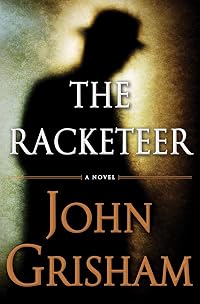
The Racketeer
by John Grisham
On This Page
Description
Given the importance of what they do, and the controversies that often surround them, and the violent people they sometimes confront, it is remarkable that in the history of this country only four active federal judges have been murdered. Judge Raymond Fogletree just became number five. His body was found in the basement of a lakeside cabin he had built himself and frequently used on weekends. When he did not show up for a trial on Monday morning, his law clerks panicked, called the FBI, and show more in due course the agents found the crime scene. There was no forced entry, no struggle, just two dead bodies, Judge Fogletree and his young secretary. I did not know Judge Fogletree, but I know who killed him, and why. I am a lawyer, and I am in prison. It's a long story. show lessTags
Recommendations




Member Recommendations
Member Reviews
The Racketeer is classic John Grisham. Featuring a main character who plans a long shot scheme while putting his thumb in the eye of the Federal government, it provides twists, turns and surprises galore. If you are a fan of John Grisham, you are going to love this one.
Malcolm Bannister is serving time in a federal camp for a crime he didn’t commit. A one time small town lawyer, he spends his time taking long walks, working in the camp’s library and dreaming of the day he will walk out a free man. One day he discovers the news of a murdered federal judge and his dreams start to come true. Freed under an agreement with the Attorney General, Malcolm, now Max Baldwin, begins a life in witness protection. Always looking over his show more shoulder, he plots and plans to truly become a free man.
The Racketeer is a puzzle. The main character, Malcolm Bannister, may or may not be a reliable narrator. There also seems to be plenty of shady characters all asserting their innocence, but in this novel there are few who can be characterized as not guilty. I listened to the audiobook version and am glad. There were so many surprises, I would have been tempted to skip to the end to find out just what was going on! The narration is also excellent, probably the best I have encountered so far in listening to audiobooks.
While there are instances of profanity and adult situations and a loose moral code (this is NOT a Christian book), I enjoyed The Racketeer. If you like legal suspense, puzzling mysteries or any John Grisham novel, I recommend The Racketeer. show less
Malcolm Bannister is serving time in a federal camp for a crime he didn’t commit. A one time small town lawyer, he spends his time taking long walks, working in the camp’s library and dreaming of the day he will walk out a free man. One day he discovers the news of a murdered federal judge and his dreams start to come true. Freed under an agreement with the Attorney General, Malcolm, now Max Baldwin, begins a life in witness protection. Always looking over his show more shoulder, he plots and plans to truly become a free man.
The Racketeer is a puzzle. The main character, Malcolm Bannister, may or may not be a reliable narrator. There also seems to be plenty of shady characters all asserting their innocence, but in this novel there are few who can be characterized as not guilty. I listened to the audiobook version and am glad. There were so many surprises, I would have been tempted to skip to the end to find out just what was going on! The narration is also excellent, probably the best I have encountered so far in listening to audiobooks.
While there are instances of profanity and adult situations and a loose moral code (this is NOT a Christian book), I enjoyed The Racketeer. If you like legal suspense, puzzling mysteries or any John Grisham novel, I recommend The Racketeer. show less
“Perhaps in another era, a trial was an exercise in the presentation of facts, the search for truth, and the finding of justice. Now a trial is a contest in which one side will win and the other side will lose. Each side expects the other to bend the rules or to cheat, so neither side plays fair. The truth is lost in the melee.”
I have been a fan of John Grisham's work for quite a few years and have always preferred his legal novels over his other pieces of work. This novel is somewhat unusual in that Grisham does not write about a victim of the law as he normally does put instead concentrates on someone who is hell bent on flouting the law. There is no soapbox for him to stand on in this one even though it does open with a disbarred show more lawyer who finds himself in legal trouble.
Malcolm Bannister, an ex-Marine and former lawyer was a small fish in a large haul undertaken by the FBI in an attempt to catch a bigger fish and is half-way through a 10-year sentence for violations he never knowingly committed. This novel revolves around one particular legal loophole called Rule 35 which allows a convicted felon to have his sentence commuted in return for “substantial assistance in investigating or prosecuting another person.” in doing so helping the authorities to solve an even bigger crime. This then is not a story about a miscarriage of courtroom justice, rather it is the story of a smart man who after spending five years honing his skills as a jail-house lawyer concocts an ingenious plot to get back at the legal establishment. Enter Raymond Fawcett, a federal judge who is murdered at his isolated weekend home along with his 'secretary' and their bodies found near to a large empty well-concealed safe which had mysterious contents.
Now this is not a novel that will give the reader some earth shattering insight into the American legal system even though it does offer a potted guided tour of the various dubious tax havens dotted around the Caribbean. Instead it is a fast pace whodunit told from the point of the villain with the question being 'will he manage to get away with it?' That said it is well written and good to see Grisham return at least in part to his roots. A fast paced enjoyable read. show less
I have been a fan of John Grisham's work for quite a few years and have always preferred his legal novels over his other pieces of work. This novel is somewhat unusual in that Grisham does not write about a victim of the law as he normally does put instead concentrates on someone who is hell bent on flouting the law. There is no soapbox for him to stand on in this one even though it does open with a disbarred show more lawyer who finds himself in legal trouble.
Malcolm Bannister, an ex-Marine and former lawyer was a small fish in a large haul undertaken by the FBI in an attempt to catch a bigger fish and is half-way through a 10-year sentence for violations he never knowingly committed. This novel revolves around one particular legal loophole called Rule 35 which allows a convicted felon to have his sentence commuted in return for “substantial assistance in investigating or prosecuting another person.” in doing so helping the authorities to solve an even bigger crime. This then is not a story about a miscarriage of courtroom justice, rather it is the story of a smart man who after spending five years honing his skills as a jail-house lawyer concocts an ingenious plot to get back at the legal establishment. Enter Raymond Fawcett, a federal judge who is murdered at his isolated weekend home along with his 'secretary' and their bodies found near to a large empty well-concealed safe which had mysterious contents.
Now this is not a novel that will give the reader some earth shattering insight into the American legal system even though it does offer a potted guided tour of the various dubious tax havens dotted around the Caribbean. Instead it is a fast pace whodunit told from the point of the villain with the question being 'will he manage to get away with it?' That said it is well written and good to see Grisham return at least in part to his roots. A fast paced enjoyable read. show less
Malcolm Bannister has lost it all.
He was once a small town lawyer, happily married with a young son. Now his is divorced, disbarred and a resident at the Federal Prison Camp near Frostburg, Maryland for a 10 years sentence, 5 of them still to come.
What did he do? Well, he says that he was only guilty of taking on the wrong client and being a bit naive as to what was going on. But when the client came under federal investigation for some very bad deeds, the feds cast a very wide net and poor Malcolm was caught up in it, charge with money laundering, along with the guilty. Five years later, the appeals are over, there is nothing left to do, except the rest of his time.
Until a federal judge and his girlfriend are tortured and killed in a show more secluded lakeside cabin, leaving two bodies and an empty safe and not one other clue. The FBI is investigating but every lead quickly goes cold and they are desperate for a break in the case. And then Malcolm steps forward.
He claims to know who killed the judge and what the motive was. And he will be happy to tell the feds in return for them invoking Rule 35, a federal rule that allow a prisoner's sense to be reduced if they provide “substantial assistance in investigating or prosecuting another person.” And Malcolm is the man who know the truth and in return he wants his conviction thrown out, he wants out of jail and he wants a new start in the Federal Witness Protection Program.
And maybe he wants a tiny bit of revenge against the system as well.
That would be all well and interesting, but folks, that is just the first step. Very shortly, after Malcolm's release and the start of his new life, it become apparent that something much bigger and much more complicated is going on, with Malcolm in the lead. And I dare say, until it starts to unroll, you will not have a clue what it is!
I saw one description of this book as wicked clever...and that describes it perfectly.
I will warn you that at times, things will happen, things will be said, people will do things, that you don't understand. Please, don't worry, it will all become clear soon enough. You just need to see the BIG picture and that will be reveled to the reader, bit by bit, until it all makes sense. Clever, entertaining sense. show less
He was once a small town lawyer, happily married with a young son. Now his is divorced, disbarred and a resident at the Federal Prison Camp near Frostburg, Maryland for a 10 years sentence, 5 of them still to come.
What did he do? Well, he says that he was only guilty of taking on the wrong client and being a bit naive as to what was going on. But when the client came under federal investigation for some very bad deeds, the feds cast a very wide net and poor Malcolm was caught up in it, charge with money laundering, along with the guilty. Five years later, the appeals are over, there is nothing left to do, except the rest of his time.
Until a federal judge and his girlfriend are tortured and killed in a show more secluded lakeside cabin, leaving two bodies and an empty safe and not one other clue. The FBI is investigating but every lead quickly goes cold and they are desperate for a break in the case. And then Malcolm steps forward.
He claims to know who killed the judge and what the motive was. And he will be happy to tell the feds in return for them invoking Rule 35, a federal rule that allow a prisoner's sense to be reduced if they provide “substantial assistance in investigating or prosecuting another person.” And Malcolm is the man who know the truth and in return he wants his conviction thrown out, he wants out of jail and he wants a new start in the Federal Witness Protection Program.
And maybe he wants a tiny bit of revenge against the system as well.
That would be all well and interesting, but folks, that is just the first step. Very shortly, after Malcolm's release and the start of his new life, it become apparent that something much bigger and much more complicated is going on, with Malcolm in the lead. And I dare say, until it starts to unroll, you will not have a clue what it is!
I saw one description of this book as wicked clever...and that describes it perfectly.
I will warn you that at times, things will happen, things will be said, people will do things, that you don't understand. Please, don't worry, it will all become clear soon enough. You just need to see the BIG picture and that will be reveled to the reader, bit by bit, until it all makes sense. Clever, entertaining sense. show less
When we first meet Malcolm (“Mal”) Bannister, the “hero” of this novel, he is a small-town black lawyer who has been convicted of a RICO violation and is serving the fifth year of his ten year prison sentence. (RICO, or the Racketeer Influenced and Corrupt Organizations Act, provides for extended criminal penalties for acts associated with "racketeering," a concept that is so broadly defined that it can sweep up people who have only a very tangential relationship with any serious wrongdoing.
Mal, disbarred, divorced by his wife, and losing his son, firmly believes he is innocent of any wrongdoing, and Grisham lays out a plausible scenario about how a naïve lawyer might be caught up in a scheme that results in serious prison show more time. Bannister has exhausted his appeals and knows enough law to realize that he has virtually no chance of an early release through normal channels. However, when he learns that a local federal district judge has been murdered, he concocts a scheme that employs Rule 35 of the Federal Rules of Criminal Procedure that just may procure his freedom. (Rule 35 provides that “Upon the government's motion…the court may reduce a sentence if the defendant, after sentencing, provided substantial assistance in investigating or prosecuting another person….”)
What follows is a very complicated concatenation of events that gets Bannister released and temporarily enrolled in the Federal Witness Protection Program. In the process, Grisham - through Bannister, has the opportunity to inveigh against the sometimes unfair abuse of power by federal authorities. He also describes the details of some very effective interrogation techniques used to educe confessions and gives us a glimpse of the very unpleasant realities of incarceration.
This is not a mystery novel in the classic sense where the investigator-narrator shares his thoughts with the reader as he (the narrator) gradually uncovers information that allows him to solve the crime. Instead, Grisham’s narrator tells us what he is doing, but seldom tells us why he is doing it. In addition, Grisham sometimes switches from using Bannister as narrator to an omniscient narrator to fill in facts of which Bannister would not be aware. The result is that the reader is left for 150 pages or so (out of 338) thinking that the protagonist is engaged in some very odd behavior. It all gets untangled in the end, although it takes about thirty pages of dialog for Bannister to explain his actions to some of the other characters, including the FBI agents.
Evaluation: The whole series of events is highly implausible, but who cares? The writing is clear and fast-paced, and even though Grisham “unfairly” hides some valuable information from the reader, the ending is pleasantly surprising.
(JAB) show less
Mal, disbarred, divorced by his wife, and losing his son, firmly believes he is innocent of any wrongdoing, and Grisham lays out a plausible scenario about how a naïve lawyer might be caught up in a scheme that results in serious prison show more time. Bannister has exhausted his appeals and knows enough law to realize that he has virtually no chance of an early release through normal channels. However, when he learns that a local federal district judge has been murdered, he concocts a scheme that employs Rule 35 of the Federal Rules of Criminal Procedure that just may procure his freedom. (Rule 35 provides that “Upon the government's motion…the court may reduce a sentence if the defendant, after sentencing, provided substantial assistance in investigating or prosecuting another person….”)
What follows is a very complicated concatenation of events that gets Bannister released and temporarily enrolled in the Federal Witness Protection Program. In the process, Grisham - through Bannister, has the opportunity to inveigh against the sometimes unfair abuse of power by federal authorities. He also describes the details of some very effective interrogation techniques used to educe confessions and gives us a glimpse of the very unpleasant realities of incarceration.
This is not a mystery novel in the classic sense where the investigator-narrator shares his thoughts with the reader as he (the narrator) gradually uncovers information that allows him to solve the crime. Instead, Grisham’s narrator tells us what he is doing, but seldom tells us why he is doing it. In addition, Grisham sometimes switches from using Bannister as narrator to an omniscient narrator to fill in facts of which Bannister would not be aware. The result is that the reader is left for 150 pages or so (out of 338) thinking that the protagonist is engaged in some very odd behavior. It all gets untangled in the end, although it takes about thirty pages of dialog for Bannister to explain his actions to some of the other characters, including the FBI agents.
Evaluation: The whole series of events is highly implausible, but who cares? The writing is clear and fast-paced, and even though Grisham “unfairly” hides some valuable information from the reader, the ending is pleasantly surprising.
(JAB) show less
As suspenseful as ever, Grisham's most recent book delivers on plot, but left a sour aftertaste. In contrast with Grisham's often-idealistic protagonists, the title character is bitterly (and correctly) convinced that the only person interested in seeing justice served on his behalf is himself. A fantastic plot, but a depressing portrait of the American justice system. An energetic disclaimer of any relation to real persons or events did nothing to dispel this impression.
Grisham's novels were beginning to become formulaic, but this is a comeback in terms of originality. An unfairly imprisoned black lawyer finds a way to to get himself released early from his term. "Rule 35" says a prisoner may be released if he turns in another prisoner and that prisoner is subsequently indicted . Malcolm Bannister is released for turning in a big mobster, but that's only the beginning of Malcolm's life on the run from the mob that wants revenge. Malcolm is clever at avoiding capture, but it appears that the same human naiveté that landed him in jail in the first place makes him more complex and fallible. But then, maybe he's not so naive after all ... Very satisfying. Grisham is back.
For the last several years I've stuck to literary and highly reviewed books of any genre because there are just too many great books out there and not enough time to read them all. This time though, I felt like a nice, easy paperback. John Grisham is not a hack (A Time to Kill and The Firm were brilliant), and not as much of a sell-out as James Patterson (at least he writes his own books), so I thought that The Racketeer might be a quick weekend read.
It wasn't the worst book ever written but it wasn't great either. The writing was okay, the plot was creative but not in the least bit believable, and, as Grisham himself admits, the research was nonexistent.
There’s no need to go over the plot again since it’s been done many times show more over on this site and elsewhere. But I feel an overwhelming need to point out the plot holes, absurd generalizations and utter impossibilities in this book.
Spoilers to follow.
A black drug trafficker, from a black drug trafficking family, that is caught with a van-load of pure cocaine, does NOT end up in a federal “day spa” for white collar criminals. Never.
Quinn’s sister who has stayed away from the family business her entire life, does not decide to embark upon a criminal conspiracy to kidnap and rob a meth dealer/killer after making eye contact with a prison inmate from across the room.
Max/Malcolm slipped four kilos of coke into Nathan Cooley’s backpack. FOUR KILOS! One does not simply slip four kilos of coke anywhere. A few ounces would have done the job. Four kilos would have cost $80 to $120 thousand dollars. Nobody, and I mean nobody, has four kilos of pure cocaine lying around in case somebody needs to be framed.
When they land in Jamaica with Nathan’s ninety kilos, an AK-47 , a grenade launcher and a harem of white women to be sold into slavery, the Jamaican authorities let Max/Malcolm walk away. They detain the pilots and the plane because something something Caribbean corruption but they have no interest in the man who chartered the flight. Max/Malcolm even gets to visit Cooley in jail because… Jamaica.
The best line of the book. A Jamaican authority interviewing Nathan Cooley asks him about the FOUR KILOS of pure cocaine, “Was it all for personal consumption or did you intend to sell some of it to other rich Americans?” –That line sums up this books for me.
Bannister had extensive plastic surgery to change his appearance to the point that he is no longer recognizable to anyone from his old life, including people he lived with in prison. BUT… he was able to enter the country with his old passport because a white customs officer thinks “we all look the same.”
I have to stop there before my head explodes. But I can’t, not yet.
Grisham’s other huge mistake was introducing Nathan Cooley as a sympathetic character. You feel bad for him from the beginning. He had little choice in the life he lived. His family pushed him into a lifestyle and that was all he knew. Then his brother was murdered and he went to jail. When we met Cooley he had actually turned his life around and was doing well. In the last couple pages we learn that he killed the judge and his girlfriend. That does little to avoid the human empathy that a normal person (or a fleshed out character) would feel for someone that did absolutely nothing to them personally. That’s just not how human nature works. If Grisham’s Max/Bannister has no empathy or compassion for a man whom he just kidnapped, set up, had tortured for his own personal gain, and then sold to the US for immunity (and gold, gold I say) once again, then Max/Bannister is the worst monster in this book by far. I don’t’ believe that was the protagonist Grisham was going for.
Grisham’s best books worked for two reasons. They were written with a tremendous amount of heart and they relied upon his expertise as a lawyer. I believe he wrote this book because his agent told him to and to make more money. Probably even enough money to buy four kilos of cocaine and enjoy a fun-filled weekend in the sun. show less
It wasn't the worst book ever written but it wasn't great either. The writing was okay, the plot was creative but not in the least bit believable, and, as Grisham himself admits, the research was nonexistent.
There’s no need to go over the plot again since it’s been done many times show more over on this site and elsewhere. But I feel an overwhelming need to point out the plot holes, absurd generalizations and utter impossibilities in this book.
Spoilers to follow.
A black drug trafficker, from a black drug trafficking family, that is caught with a van-load of pure cocaine, does NOT end up in a federal “day spa” for white collar criminals. Never.
Quinn’s sister who has stayed away from the family business her entire life, does not decide to embark upon a criminal conspiracy to kidnap and rob a meth dealer/killer after making eye contact with a prison inmate from across the room.
Max/Malcolm slipped four kilos of coke into Nathan Cooley’s backpack. FOUR KILOS! One does not simply slip four kilos of coke anywhere. A few ounces would have done the job. Four kilos would have cost $80 to $120 thousand dollars. Nobody, and I mean nobody, has four kilos of pure cocaine lying around in case somebody needs to be framed.
When they land in Jamaica with Nathan’s ninety kilos, an AK-47 , a grenade launcher and a harem of white women to be sold into slavery, the Jamaican authorities let Max/Malcolm walk away. They detain the pilots and the plane because something something Caribbean corruption but they have no interest in the man who chartered the flight. Max/Malcolm even gets to visit Cooley in jail because… Jamaica.
The best line of the book. A Jamaican authority interviewing Nathan Cooley asks him about the FOUR KILOS of pure cocaine, “Was it all for personal consumption or did you intend to sell some of it to other rich Americans?” –That line sums up this books for me.
Bannister had extensive plastic surgery to change his appearance to the point that he is no longer recognizable to anyone from his old life, including people he lived with in prison. BUT… he was able to enter the country with his old passport because a white customs officer thinks “we all look the same.”
I have to stop there before my head explodes. But I can’t, not yet.
Grisham’s other huge mistake was introducing Nathan Cooley as a sympathetic character. You feel bad for him from the beginning. He had little choice in the life he lived. His family pushed him into a lifestyle and that was all he knew. Then his brother was murdered and he went to jail. When we met Cooley he had actually turned his life around and was doing well. In the last couple pages we learn that he killed the judge and his girlfriend. That does little to avoid the human empathy that a normal person (or a fleshed out character) would feel for someone that did absolutely nothing to them personally. That’s just not how human nature works. If Grisham’s Max/Bannister has no empathy or compassion for a man whom he just kidnapped, set up, had tortured for his own personal gain, and then sold to the US for immunity (and gold, gold I say) once again, then Max/Bannister is the worst monster in this book by far. I don’t’ believe that was the protagonist Grisham was going for.
Grisham’s best books worked for two reasons. They were written with a tremendous amount of heart and they relied upon his expertise as a lawyer. I believe he wrote this book because his agent told him to and to make more money. Probably even enough money to buy four kilos of cocaine and enjoy a fun-filled weekend in the sun. show less
Members
- Recently Added By
Published Reviews
Grisham’s novel has been hanging around the best-seller lists for a few weeks now. It’s easy to see why. Grisham is the master of the school of telling the readers what happens rather than showing them, and there’s a huge market for that kind of thing.
In the new book, an Afro-American lawyer is sentenced to prison for a white collar crime he didn’t commit. He sets out to get even with show more the FBI, the prosecutors and everybody else who locked him up. In ways that might baffle even the Perry Masons of the world, the jailed lawyer succeeds. show less
In the new book, an Afro-American lawyer is sentenced to prison for a white collar crime he didn’t commit. He sets out to get even with show more the FBI, the prosecutors and everybody else who locked him up. In ways that might baffle even the Perry Masons of the world, the jailed lawyer succeeds. show less
added by VivienneR
Lists

Books Read in 2013
1,630 works; 51 members

Jarett's Books
86 works; 1 member

To Read
617 works; 7 members
Author Information

323+ Works 291,413 Members
John Grisham was born in Jonesboro, Arkansas on February 8, 1955. He received a bachelor's degree in accounting from Mississippi State University. He was admitted to the bar in Mississippi in 1981 after receiving a law degree from the University of Mississippi, specializing in criminal law. While a lawyer in private practice in Southaven, show more Mississippi, Grisham served as a Democrat in the Mississippi House of Representatives from 1983 until 1990. He left the law and politics to become a full-time author. His first novel, A Time to Kill, was published in 1989. His other novels include The Partner, The Street Lawyer, The Testament, The Brethren, The Summons, The King of Torts, Bleachers, The Last Juror, The Broker, Playing for Pizza, The Appeal, Calico Joe, The Racketeer, Gray Mountain, Rogue Lawyer, The Confession, The Litigators, The Whistler, Camino Island, The Rooster Bar, and the Theodore Boone series. Several of his novels were adapted into films including The Firm, The Pelican Brief, The Client, A Time to Kill, The Rainmaker, The Chamber, A Painted House, The Runaway Jury, and Skipping Christmas. (Bowker Author Biography) show less
Some Editions
Awards and Honors
Distinctions
Series
Belongs to Publisher Series
Work Relationships
Common Knowledge
- Canonical title*
- Das Komplott
- Original title
- The Racketeer
- Original publication date
- 2012
- People/Characters
- Malcolm Bannister; Vanessa Young; Nathaniel Cooley; Quinn Rucker; Dee Ray Rucker; Victor Westlake (show all 11); Raymond Fawcett; Naomi Clary; Dusty Shiver; Stanley Mumphrey; George McTavey
- Important places
- Frostburg, Maryland, USA; Miami, Florida, USA; Roanoke, Virginia, USA; Jamaica; Neptune Beach, Florida, USA; Richmond, Virginia, USA (show all 8); Washington, D.C., USA; Antigua
- First words
- I am a lawyer, and I am in prison. It's a long story.
- Last words*
- (Click to show. Warning: May contain spoilers.)Als alles im Haus ist, klatschen wir triumphierend ab und springen ins Meer.
- Original language
- English
*Some information comes from Common Knowledge in other languages. Click "Edit" for more information.
Classifications
Statistics
- Members
- 4,503
- Popularity
- 3,262
- Reviews
- 137
- Rating
- (3.66)
- Languages
- 16 — Danish, Dutch, English, Estonian, Finnish, French, German, Greek, Hebrew, Hungarian, Italian, Polish, Portuguese, Spanish, Swedish, Vietnamese
- Media
- Paper, Audiobook, Ebook
- ISBNs
- 87
- UPCs
- 1
- ASINs
- 20