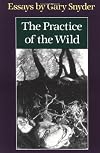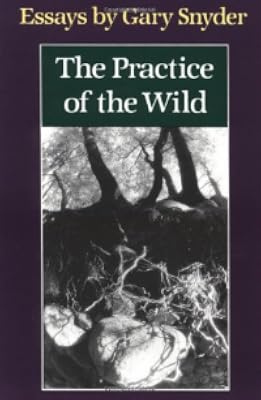
The Practice of the Wild
by Gary Snyder
On This Page
Description
Gary Snyder has been a major cultural force in America for five decades. Future readers will come to see this book as one of the central texts on wilderness and the interaction of nature and culture. The nine essays in The Practice of the Wild reveal why Snyder has gone on to become one of America's cultural leaders, comprehending things about our world before they were ever discussed in public. With thoughts ranging from political and spiritual matters to those regarding the environment and show more the art of becoming native to this continent, this collection of essays, first published in 1990, reflect the mature centerpiece of the author's work and thought. show lessTags
Recommendations































Member Reviews
Gary Snyder was part of the beat generation, but unlike his contemporaries who gravitated more towards fiction, throughout his life, he wrote poetry and essays reflecting on nature, and has worked as an activist attempting to preserve the forest for our bodies and minds. Snyder's story is unusual, because before he became an eco-activist and poet, he worked in logging, fastening cables to pre-cut logs in order to remove them from the forest. It is because of his perspective that Snyder's arguments in Practice of the Wild is so grounded. Using a combination of Zen Buddhism and his background studying ecology and anthropology he argues for the love of nature and issues a warning in terms of population growth, deforestation, and pollution, show more and states the spirit of man lies in nature. From the viewpoint of conservatives, many of his opinions may come off as hippie-dippie, but being someone who is often skeptical of radical perspectives, I have to say that his arguments come off as well-researched, from the soul, and fairly level-headed. I would recommend educators to use this book within the canon of the beat generation though it was published rather later (around 1990). It serves as a great non-fiction supplemental reading to some of the more abstract works made the beats such as Ginsberg and Ferlinghetti's poetry and Kerouac and Burroughs' stream-of-consciousness and cut-up, respectively, novels. show less
Been on an little enviro-lit kick lately - mainly because I've been thinking about plants a lot. With growing season being here in force on the East Coast, I've been trying to convert my yard into a lawnless native oasis.
Anyway, Gary Snyder doesn't have too much to say about that here in this collection of essays on various nature-related topics. He does have plenty of opinions about other stuff though - I felt that the writing in this book was weakest when is was most preachy. Snyder often wades into overtly political topics, something I'm not opposed to on principal, but Snyder doesn't really offer much of an alternative to the destructive society he criticizes. At one point, he seems to suggest that human beings would do well to show more reduce our population to 10% of what is was at the time of writing (5 billion). Snyder doesn't explain how this would be accomplished, and the blank is filled with thoughts of plague, nuclear war, and genocide. I'm sure Snyder would be against all of these, but you can't just throw out a kooky figure like that without explaining. This is par for the course for old-school environmental types who mostly lack (or ignore) the theoretical framwork to diagnose the systemic issues that cause degradation.
I liked this book best when Snyder was describing some of the beautiful landscapes he has visited, or describing the schools of thought he has learned about. show less
Anyway, Gary Snyder doesn't have too much to say about that here in this collection of essays on various nature-related topics. He does have plenty of opinions about other stuff though - I felt that the writing in this book was weakest when is was most preachy. Snyder often wades into overtly political topics, something I'm not opposed to on principal, but Snyder doesn't really offer much of an alternative to the destructive society he criticizes. At one point, he seems to suggest that human beings would do well to show more reduce our population to 10% of what is was at the time of writing (5 billion). Snyder doesn't explain how this would be accomplished, and the blank is filled with thoughts of plague, nuclear war, and genocide. I'm sure Snyder would be against all of these, but you can't just throw out a kooky figure like that without explaining. This is par for the course for old-school environmental types who mostly lack (or ignore) the theoretical framwork to diagnose the systemic issues that cause degradation.
I liked this book best when Snyder was describing some of the beautiful landscapes he has visited, or describing the schools of thought he has learned about. show less
This book of essays is both indispensable and somehow grating . . . it is not Snyder's fault that what he has to teach comes so crossgrained into these times.
That said, read it. Snyder may be an axegrinder . . . but his axe is good and sharp by now. It's a useful tool.
That said, read it. Snyder may be an axegrinder . . . but his axe is good and sharp by now. It's a useful tool.
We humans are part of nature. We are part of the wild. Wilderness is different, and hard to find. Snyder believes a sense of place and a feeling towards home is important.
Both a poet and a philosopher, Snyder has proved to be a find and a keeper!
Starting into poerty in the 1950's Beatnik Movement, Snyder, in the '60s, studied Zen-Buddism for several years in Japan and returned to the US to homestead in the Sierra Nevadas of California.
In short, he was always out to discover just how to be in the world,
and succeded, to the benefit of many readers here and in other countries.
Starting into poerty in the 1950's Beatnik Movement, Snyder, in the '60s, studied Zen-Buddism for several years in Japan and returned to the US to homestead in the Sierra Nevadas of California.
In short, he was always out to discover just how to be in the world,
and succeded, to the benefit of many readers here and in other countries.
More good advice. Unfortunately things have not improved since 1990. Needed more than ever. Inscribed copy, purchased used at Powell's.
Re-read July 2024 after seeing Snyder as guest of honor for the California Book Club last month.
An American ethic, building on Thoreau and Leopold with some Zen.
Re-read July 2024 after seeing Snyder as guest of honor for the California Book Club last month.
An American ethic, building on Thoreau and Leopold with some Zen.
Really great. "An ethical life is one that is mindful, mannerly, and has style."
Members
- Recently Added By
Author Information

150+ Works 6,218 Members
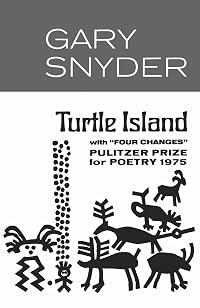
Gary Snyder was born in San Francisco, California on May 8, 1930. He received a B.A. in anthropology at Reed College in 1951. Between working as a logger, a trail-crew member, and a seaman on a Pacific tanker, he was associated with Beat poets such as Allen Ginsberg and Gregory Corso and studied in a Zen monastery in Japan. He wrote numerous books show more of poetry and prose including Danger on Peaks, Mountains and Rivers Without End, No Nature: New and Selected Poems, The Practice of the Wild, Regarding Wave, and Myths and Texts. He received an American Book Award for Axe Handles and the Pulitzer Prize for poetry for Turtle Island. He has also received an American Academy of Arts and Letters award, the Bollingen Prize, the Bess Hokin Prize, the Levinson Prize from Poetry, the Ruth Lilly Poetry Prize, and the Shelley Memorial Award. In 2012, he received the Wallace Stevens Award for lifetime achievement by the Academy of American Poets. (Bowker Author Biography) show less
Some Editions
Awards and Honors
Common Knowledge
- Canonical title
- The Practice of the Wild
- Original title
- The Practice of the Wild; The Practice of the Wild: Essays
- Original publication date
- 1990
- Dedication
- This book is for Carole on the trail
- First words
- One June afternoon in the early seventies I walked through the crackly gold grasses to a neat but unpainted cabin at the back end of a ranch near the drainage of the South Yuba in northern California.
- Last words
- (Click to show. Warning: May contain spoilers.)Sarvamangalam, Good Luck to All.
Classifications
Statistics
- Members
- 686
- Popularity
- 41,704
- Reviews
- 8
- Rating
- (4.06)
- Languages
- 7 — English, Finnish, French, German, Italian, Portuguese, Spanish
- Media
- Paper, Audiobook, Ebook
- ISBNs
- 15
- ASINs
- 4