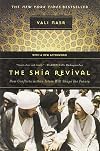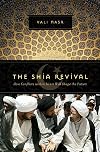
The Shia Revival: How Conflicts within Islam Will Shape the Future
by Vali Nasr
On This Page
Description
Considers the ways in which struggles between the Shia and Sunni in the Middle East will affect the region's future, offering insight into the power conflicts between Iran and Saudi Arabia for political and spiritual leadership of the Muslim world.Tags
Recommendations

























Member Reviews
Conflict and instability in Iraq have shaken the delicate balance of power between Sunni and Shia throughout the wider region. In Shia Revival, Professor Nasr’s account begins with a cogent, engrossing introduction to the history and theology of Shia Islam, encapsulating the intellectual and political trends that have shaped the faith and its relations with the dominant Sunni strain. He argues that the Shia Crescent—stretching from Lebanon and Syria through the Gulf to Iraq and Iran, finally terminating in Pakistan and India—is gathering strength in the aftermath of Saddam's fall. This wave of Shia strength is cementing linkages that transcend political and linguistic borders and could lead to a new map of the Middle East.
I bit dated at this point, but still a highly readable basic background of the conflicts between Shia and Sunni branches of Islam. I hadn't realized the level of enmity between the two branches and Vali Nasr's suggestions on how to frame US policy towards the region are interesting. Perhaps it is due to my being raised with Western media, but I left with the impression that Mr. Nasr was a bit to optimistic concerning the rise of the Shia following decades of Sunni oppression. I don't think the region would transform to the model of peace and prosperity if the Shia were allowed escape the domineering Sunni.
Every once in a while an author writes a book that challenges the foundation of all of one’s thinking.
Vali Nasr is such an author. “The Shia Revival” is such a book. Reading it will leave you questioning the value taxpayers have reaped from the billions invested in diplomacy and intelligence. His thesis is clear and obvious; yet, it pales one’s imagination that it never exposed before this.
Nasr, a professor at the Naval Post Graduate School in Monterey, CA argues convincingly that Saddam Hussein’s removal from power in Iraq has changed the Mid-east, but in ways never conceived by President Bush and his neo-con advisors. By removing Iraq’s Sunni dominated dictatorship, he argues, and replacing it with the Shiite majority, the show more United States has destroyed the buffer that has held the Shia in Iran in check.
This will play out, he argues, with increasing confrontations between Sunnis and Shiites throughout the region starting in Iraq and then spreading from Lebanon, Pakistan and Saudi Arabia.
This divide will have serious consequences for United States’ foreign policy. By creating the first Shiite-led state in the Arab world since the rise of Islam, we have ignited hopes among the region’s 150 million Shiites. Yet, our policy still operates under the old assumptions of Sunni dominance.
It never fails that actions often lead to unintended consequences. In this case, however, Nasr clearly lays out a case that there will be no quick fixes.
This is a book you owe it to yourself to read. Individuals who can look at the same set of facts and come up with a unique insight and analysis of them are to be celebrated.
Too bad no one in the diplomatic and intelligence bureaucracy had heard of him before 2001.
Penned by the Pointed Pundit
August 5, 2006, 10:12:35 AM show less
Vali Nasr is such an author. “The Shia Revival” is such a book. Reading it will leave you questioning the value taxpayers have reaped from the billions invested in diplomacy and intelligence. His thesis is clear and obvious; yet, it pales one’s imagination that it never exposed before this.
Nasr, a professor at the Naval Post Graduate School in Monterey, CA argues convincingly that Saddam Hussein’s removal from power in Iraq has changed the Mid-east, but in ways never conceived by President Bush and his neo-con advisors. By removing Iraq’s Sunni dominated dictatorship, he argues, and replacing it with the Shiite majority, the show more United States has destroyed the buffer that has held the Shia in Iran in check.
This will play out, he argues, with increasing confrontations between Sunnis and Shiites throughout the region starting in Iraq and then spreading from Lebanon, Pakistan and Saudi Arabia.
This divide will have serious consequences for United States’ foreign policy. By creating the first Shiite-led state in the Arab world since the rise of Islam, we have ignited hopes among the region’s 150 million Shiites. Yet, our policy still operates under the old assumptions of Sunni dominance.
It never fails that actions often lead to unintended consequences. In this case, however, Nasr clearly lays out a case that there will be no quick fixes.
This is a book you owe it to yourself to read. Individuals who can look at the same set of facts and come up with a unique insight and analysis of them are to be celebrated.
Too bad no one in the diplomatic and intelligence bureaucracy had heard of him before 2001.
Penned by the Pointed Pundit
August 5, 2006, 10:12:35 AM show less
Dan Mayland's assignation for the second annual Men's Book Club is this staggeringly tedious account of the history and politics of the Shia branch of Islam, unreadable except by specialists, academics, and people with seriously way too much time on their hands. A particularly irritating choice given that my father and I, like all educated, middle-class liberals, are in theory in favor of learning about different cultures, religions, blah blah blah, and are thus trapped by our own good consciences into this mind-numbing endurance test. As Melanie's father says, "no good deed goes unpunished." Prof. Nasr, meanwhile, seems like a good egg, and he sure seems to know a lot about religion and the Middle East; I guess someone has to. show more Meanwhile, watch this space for a possible opening slot in the roster of the Men's Book Club, pending the result of Mayland's probationary period. show less
I loved this book. This is a really good way to help an American understand exactly what is going on in the Middle East.
I read bits of it for class in 2009 but I finally got a chance to read it for fun this year and I was thrilled I did. I enjoyed the CRAP out of this book.
Thanks Dr. Weinberg, as always, books you assign are more informative and helpful than I could have ever predicted. I actually was able to lead a discussion on Islam because of this book.
I read bits of it for class in 2009 but I finally got a chance to read it for fun this year and I was thrilled I did. I enjoyed the CRAP out of this book.
Thanks Dr. Weinberg, as always, books you assign are more informative and helpful than I could have ever predicted. I actually was able to lead a discussion on Islam because of this book.
A must read book for those interested in understanding more about the conflicts in the Middle East, including the Iraq War, and politics in Muslim countries. Nasr provides an succinct yet nuanced analysis of the differences between Shi'ism and Sunnism and how conflicts between these two Muslim groups have affected politics in the past. In addition, he explains how the rise of a Shia ruling majority in Iraq will likely produce conflict and controversy in other Muslim countries.
Very informative if you are interested in learning the historical and cultural differeces between Sunni and Shia. This background serves as an excellent context for understanding the political siuation today in the Muslim world. This relatively short book is easy to read.
Members
- Recently Added By
Lists

The Emergence of the Modern Middle East
289 works; 13 members

LtGen James Mattis' Reading List
58 works; 2 members
Author Information

16 Works 1,094 Members
Vali Nasr is dean and professor of international affairs at Johns Hopkins University's Paul H. Nitze School of Advanced International Studies.
Awards and Honors
Common Knowledge
- Canonical title*
- La rivincita sciita: Iran, Iraq, Libano : la nuova mezzaluna
- Original title
- The Shia Revival: How Conflicts within Islam Will Shape the Future
- Original publication date
- 2006-08-05
- Important places
- Iran; Iraq
*Some information comes from Common Knowledge in other languages. Click "Edit" for more information.
Classifications
- Genres
- Religion & Spirituality, Nonfiction, History, General Nonfiction, Politics and Government
- DDC/MDS
- 297.8 — Religion Other religions Islam By Division, Sect, or Movement
- LCC
- BP194.185 .N37 — Philosophy, Psychology and Religion Islam. Bahaism. Theosophy, etc. Islam. Bahai Faith. Theosophy, etc. Branches, sects, etc.
- BISAC
Statistics
- Members
- 693
- Popularity
- 41,259
- Reviews
- 10
- Rating
- (3.74)
- Languages
- English, Hebrew, Italian
- Media
- Paper, Audiobook, Ebook
- ISBNs
- 7
- ASINs
- 9