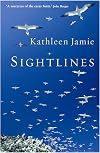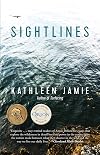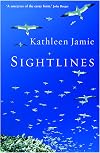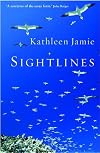
Sightlines
by Kathleen Jamie
On This Page
Description
In Sightlines, Kathleen Jamie reports from the field-from her native Scottish "byways and hills" to the frigid Arctic in fourteen enthralling essays. She dissects whatever her gaze falls upon-vistas of cells beneath a hospital microscope, orcas rounding a headland, the aurora borealis lighting up the frozen sea. In so doing, she questions what, exactly, constitutes "nature," and upends the idea that it is always picturesque. Written with precision, subtlety, and wry humor, Sightlines urges show more the listener: "Keep looking, even when there's nothing much to see.". show lessTags
Recommendations




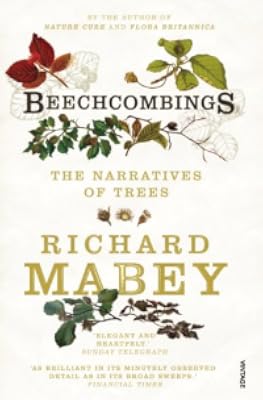

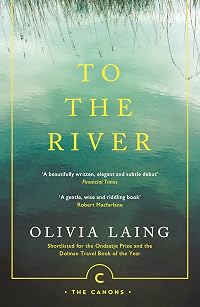
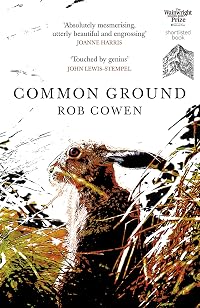
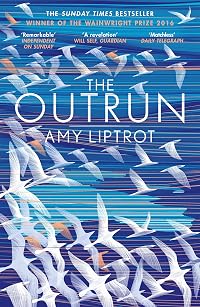


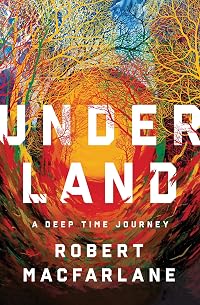
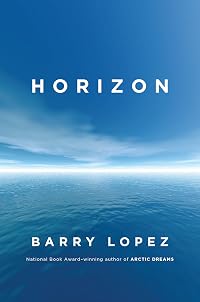
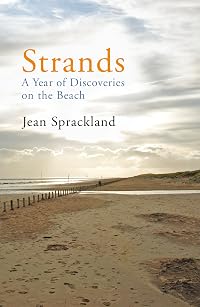
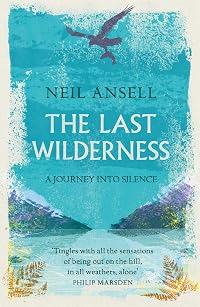



Member Recommendations
Member Reviews
I enjoyed 'Sightlines' more than [b:Findings|895779|Findings|Kathleen Jamie|https://i.gr-assets.com/images/S/compressed.photo.goodreads.com/books/1507565933l/895779._SY75_.jpg|880973]. The writing is equally beautiful and lyrical in both, but this collection is longer, feels more cohesive, and includes more archaeology. Somehow it connected for me on an emotional level more than the first collection, which is a reflection both on the content and my mood while reading each book, I suspect. The essays in 'Sightlines' discourse upon seabirds, remote Hebridean islands, orcas, and the excavation of an ancient burial site, among other topics. My favourite chapter concerned the Hvalsalen, a collection of whale skeletons in Bergen Natural show more History Museum. Jamie writes in beguiling detail of the whale bones in the process of cleaning and restoration. Whales are inherently fascinating creatures and she approaches them with wonder and measured consideration. Throughout the book, I appreciated how thoughtfully she reflects upon her fascination with nature, wildness, and the place of humans within it. I liked the balance between humans-as-animals and our tendency to anthropomorphise animals; Jamie sees no contradiction between the two, nor makes any judgement as to their correctness.
More prosaically, I enjoyed taking trips to vividly described and stunningly isolated islands without risk of seasickness. 'Sightlines' is an escapist read, as it transports you to new places, while also inviting reflection. The essay on a lunar eclipse reminded me of how profoundly I appreciated an eclipse, although it can't have been the same one, during my PhD. I stood out on my flat's balcony for at least an hour from about 3am watching the moon turn red. Somehow this calmed my mind, which was at the time buzzing relentlessly with the stress of writing my thesis. Jamie captures the same sense of perspective that I remember feeling, a profound reminder that we live on a ball of rock in space. Another essay on the wonder of excavating history reminded me of a childhood phase of wanting to be an archaeologist. I am definitely too much of an indoor person for archeology, but I can certainly understand the fascination of painstakingly uncovering the past. It was very pleasant to have these memories reawakened. The second essay, however, is quite different to the rest and not calming or escapist to read, as it concerns pathology. That one I could perhaps have done without at this time of profound health anxiety. show less
More prosaically, I enjoyed taking trips to vividly described and stunningly isolated islands without risk of seasickness. 'Sightlines' is an escapist read, as it transports you to new places, while also inviting reflection. The essay on a lunar eclipse reminded me of how profoundly I appreciated an eclipse, although it can't have been the same one, during my PhD. I stood out on my flat's balcony for at least an hour from about 3am watching the moon turn red. Somehow this calmed my mind, which was at the time buzzing relentlessly with the stress of writing my thesis. Jamie captures the same sense of perspective that I remember feeling, a profound reminder that we live on a ball of rock in space. Another essay on the wonder of excavating history reminded me of a childhood phase of wanting to be an archaeologist. I am definitely too much of an indoor person for archeology, but I can certainly understand the fascination of painstakingly uncovering the past. It was very pleasant to have these memories reawakened. The second essay, however, is quite different to the rest and not calming or escapist to read, as it concerns pathology. That one I could perhaps have done without at this time of profound health anxiety. show less
http://wineandabook.com/2014/05/14/review-sightlines-by-kathleen-jamie-readwomen...
“That’s what we see. What we listen to, though, is silence. Slowly we enter the most extraordinary silence, a radiant silence. It radiates from the mountains, and the ice and the sky, a mineral silence which presses powerfully on our bodies, coming from very far off. It’s deep and quite frightening, and makes my mind seem clamorous as a goose. I want to quell my mind, but I think it would take years.” (4)
I love reading about nature and the environment, but I’m fairly hopeless when it comes to the complexities of the sciences. Math has never been my strong suit, and as soon as any scientific article veers into the land of formulas and equations, show more I can already feel my heart start racing and the tears welling up in my eyes. When my high school physics teacher announced to my class one day that most people did OK one our latest assignment save a few who, in his opinion, had the scientific insight of a pile of leaves waiting to be raked in his backyard, he was referring to me (unfortunately, a true story). For these reasons, I tend to gravitate toward more lyrical than strictly academic writing on the sciences, which is why I love Kathleen Jamie.
Jamie’s work reminds me a lot of the work of Elizabeth Kolbert, whose environmental journalism strikes the perfect balance between the narrative and the academic. In Sightlines, Jamie is able to take us to parts of the global off-limits to those of us who happen to not be field-biologists, archeologists, or millionaire travel enthusiasts. Within the span of 300+ pages, Jamie takes us to see the Aurora Borealis, to the remote archipelago of St. Kilda off the coast of Scotland, to the Hvalsalen (or Whale Hall) in the Bergen Natural History Museum of Norway. With each page and each essay, I kept thinking to myself “I absolutely picked the wrong career. I want to have that experience and write about that!”
What really drew me in to Jamie’s work was her gift for descriptive language. She has an ability to really paint a clear, vibrant, vivid picture of these amazing, remote places…and her prose! Perfect balance between the poetic and the academic. Comme ça:
“Gannets glitter. They’re made for vision, shine in any available light, available to see and be seen. Their eyes are round and fierce, with a rim of weird blue, and they are adapted to see down through the surface reflections of the sea. There, they take what they need–and what they don’t. Less patrician poet, more bargain-hunter. ‘A butter scoop, a battle-door, a golf-ball, some toy whips, some little baskets and a net- makers needle’ are just some of the oddities found in gannets’ nests,–but that quaint list was compiled a century ago, when an ornithologist called J.H. Gurney published an earnest, learned book called simply The Gannet. All that was then known of the bird’s history and natural history is there. A battledoor is a sort of tennis racket, and what would a gannet want with one of those? But the acquisitive habit continues, hence the shredded polyprop rope and nylon net. Sometimes the youngsters get entangled in this stuff, and die like that, hanged from their natal cliffs before they can fly.” (82-83)
Rubric rating: 8.5. Absolutely picking up Findings, Jamie’s other collection of environmentally/travel-themed essay collection. show less
“That’s what we see. What we listen to, though, is silence. Slowly we enter the most extraordinary silence, a radiant silence. It radiates from the mountains, and the ice and the sky, a mineral silence which presses powerfully on our bodies, coming from very far off. It’s deep and quite frightening, and makes my mind seem clamorous as a goose. I want to quell my mind, but I think it would take years.” (4)
I love reading about nature and the environment, but I’m fairly hopeless when it comes to the complexities of the sciences. Math has never been my strong suit, and as soon as any scientific article veers into the land of formulas and equations, show more I can already feel my heart start racing and the tears welling up in my eyes. When my high school physics teacher announced to my class one day that most people did OK one our latest assignment save a few who, in his opinion, had the scientific insight of a pile of leaves waiting to be raked in his backyard, he was referring to me (unfortunately, a true story). For these reasons, I tend to gravitate toward more lyrical than strictly academic writing on the sciences, which is why I love Kathleen Jamie.
Jamie’s work reminds me a lot of the work of Elizabeth Kolbert, whose environmental journalism strikes the perfect balance between the narrative and the academic. In Sightlines, Jamie is able to take us to parts of the global off-limits to those of us who happen to not be field-biologists, archeologists, or millionaire travel enthusiasts. Within the span of 300+ pages, Jamie takes us to see the Aurora Borealis, to the remote archipelago of St. Kilda off the coast of Scotland, to the Hvalsalen (or Whale Hall) in the Bergen Natural History Museum of Norway. With each page and each essay, I kept thinking to myself “I absolutely picked the wrong career. I want to have that experience and write about that!”
What really drew me in to Jamie’s work was her gift for descriptive language. She has an ability to really paint a clear, vibrant, vivid picture of these amazing, remote places…and her prose! Perfect balance between the poetic and the academic. Comme ça:
“Gannets glitter. They’re made for vision, shine in any available light, available to see and be seen. Their eyes are round and fierce, with a rim of weird blue, and they are adapted to see down through the surface reflections of the sea. There, they take what they need–and what they don’t. Less patrician poet, more bargain-hunter. ‘A butter scoop, a battle-door, a golf-ball, some toy whips, some little baskets and a net- makers needle’ are just some of the oddities found in gannets’ nests,–but that quaint list was compiled a century ago, when an ornithologist called J.H. Gurney published an earnest, learned book called simply The Gannet. All that was then known of the bird’s history and natural history is there. A battledoor is a sort of tennis racket, and what would a gannet want with one of those? But the acquisitive habit continues, hence the shredded polyprop rope and nylon net. Sometimes the youngsters get entangled in this stuff, and die like that, hanged from their natal cliffs before they can fly.” (82-83)
Rubric rating: 8.5. Absolutely picking up Findings, Jamie’s other collection of environmentally/travel-themed essay collection. show less
I’ll be honest. The first thing that attracted me to this book when I saw it on NetGalley was the cover. It’s a close up of a whale’s (not sure which kind) eye – it’s like it was made for me! Actually, it looks like Bryant Austin’s work, which is absolutely amazing and should be checked out. (Whoa, just researched and found that the cover image is, in fact, a photo by Austin!)
Sightlines is a book of essays about the natural world – at least, it bills itself as such. There were a few in there that I don’t know if I’d necessarily categorize that way, but overall, I think it meets the description. The book started out strong, with an essay about Jamie traveling in Iceland among the icebergs and catching the Aurora show more Borealis.
- "The next iceberg offers to the ship a ramp as smooth and angled as a ski jump. Just slide right up here, little ship, it seems to say, but the invitation is declined."
- "Another iceberg, and another. Some people say you can smell icebergs, that they smell like cucumbers. You can smell icebergs and hear your own nervous system. I don’t know. Although they pass slowly and very close, I smell nothing but colossal, witless indifference."
I really loved her description of watching the aurora, of the utter silence all around despite the “movement which ought to whoosh.” And the dearth of people despite the awe.
- "But: ‘Where is everyone else?’ I whisper. Aside from those few on the deck, the shapes of a few more people can be seen looking out from the windows of the bridge. The bridge, warm and reassuring with its competent officers and glowing green instruments. Where is everyone? My cabin mate clamps her arms to the sides of her goose-down jacket, stands rigid, and whispers in reply, ‘Perhaps they are asleep.’ She smiles as though she’d looked into the human condition some time ago, but has since moved on."
The next few essays were a little weird to me, not really my style. But her writing style kept me reading. Jamie is a Scottish author, and her essays are peppered with Scottish and English words – I was glad I was reading this on my Kindle because it was so easy to look up those unfamiliar words. Surprisingly, most if not all were in the dictionary as well!
The essays where she explored islands off the coast of Scotland, following birds, following whales, those were where my attention was piqued. And then the chapter on the Bergen Natural History Museum in which she visits the Hvalsalen – Whale Hall – to see the whale bones was my absolute favorite. I wish I could have been there with her, exploring the museum, climbing the skeletons, helping to clean them. I could almost smell the dust, the musty atmosphere, as I read. I usually try to get my favorite quotes, but I was so engrossed with that chapter that I didn’t stop to do that at all.
Overall I really enjoyed this book – it turned out different than I expected but that wasn’t a bad thing. If I had to describe it in one phrase, I’d call it natural history in a book.
A few more of my favorite quotes:
- "Once, I asked my friend John—half in jest—why we are so driven. By day John counsels drug addicts; by night he is a poet. He wrote back, half in jest: ‘You know, my job isn’t to provide answers, only more questions. Like: why are we not more driven? Consider: the atoms of you have been fizzing about for a bit less than five billion years, and for forty-odd of those years, they’ve been pretty well as self-aware as you. But soon enough they’ll go fizzing off again into the grasses and whatever, and they’ll never, ever know themselves as the sum of you again. That’s it. And you ask me why we’re driven? Why aren’t more folk driven? Whatever are they thinking about?’"
- "We know we are a species obsessed with itself and its own past and origins. We know we are capable of removing from the sanctuary of the earth shards and fragments, and gently placing them in museums. Great museums in great cities—the hallmarks of civilisation."
- "The henge is gone, the director’s report is available to read, the photos are filed away, the Bronze Age woman’s bones—well, they’re in a cardboard box in a city store. The food vessel is reunited with its sister, and displayed in the National Museum, and has nothing to do with this place, this here."
On gannets:
- "They held their long beaks at every angle, like—paintings again—those portraits of aristocratic dynastic families, where everyone is elegant and looks into the distance, looks anywhere except at each other."
- "It was probably nothing, so I said nothing, but kept looking. That’s what the keen-eyed naturalists say. Keep looking. Keep looking, even when there’s nothing much to see. That way your eye learns what’s common, so when the uncommon appears, your eye will tell you."
- "The things we deem worth keeping, that is, as we seem to be the arbiters of so many fates. There are only 4000 blue whales alive now. At the time of their deliverance, the moratorium of the 1960s, we had slaughtered our way through 350,000."
- "There was a time—until very recently in the scheme of things—when there were no wild animals, because every animal was wild; and humans were few. Animals, and animal presence over us and around us. Over every horizon, animals. Their skins clothing our skins, their fats in our lamps, their bladders to carry water, meat when we could get it."
- "Stuart often said there was no such thing as ‘natural harmony’. It was a dynamic. Populations expand, then crash. Mysterious things happen—catastrophic things sometimes, on the island, everywhere. Nothing stays the same."
- "Perhaps if you were some sort of purist, if you carried a torch for ‘the wild’ and believed in a pristine natural world over and beyond us, you might consider it an intrusion to catch a bird, and make it wear a ring or a tag. Perhaps you’d consider that their man-made burden violates them in a way. I admit there was something uncomfortable about the metal ring, soldiering on while the bird’s corpse withered. But when I got the chart out, traced the route, measured the distance, and understood that yes, of course, on a southwest bearing, you could swoop via certain channels from the North Sea through to the Atlantic, on small dark wings, it was because this one ringed bird had extended my imagination. The ring showed only that it was wedded to the sea and, if anything, the scale of its journeyings made it seem even wilder than before."
Note: I received a review copy of this book from NetGalley. Quotes may be subject to change in the final version. show less
Sightlines is a book of essays about the natural world – at least, it bills itself as such. There were a few in there that I don’t know if I’d necessarily categorize that way, but overall, I think it meets the description. The book started out strong, with an essay about Jamie traveling in Iceland among the icebergs and catching the Aurora show more Borealis.
- "The next iceberg offers to the ship a ramp as smooth and angled as a ski jump. Just slide right up here, little ship, it seems to say, but the invitation is declined."
- "Another iceberg, and another. Some people say you can smell icebergs, that they smell like cucumbers. You can smell icebergs and hear your own nervous system. I don’t know. Although they pass slowly and very close, I smell nothing but colossal, witless indifference."
I really loved her description of watching the aurora, of the utter silence all around despite the “movement which ought to whoosh.” And the dearth of people despite the awe.
- "But: ‘Where is everyone else?’ I whisper. Aside from those few on the deck, the shapes of a few more people can be seen looking out from the windows of the bridge. The bridge, warm and reassuring with its competent officers and glowing green instruments. Where is everyone? My cabin mate clamps her arms to the sides of her goose-down jacket, stands rigid, and whispers in reply, ‘Perhaps they are asleep.’ She smiles as though she’d looked into the human condition some time ago, but has since moved on."
The next few essays were a little weird to me, not really my style. But her writing style kept me reading. Jamie is a Scottish author, and her essays are peppered with Scottish and English words – I was glad I was reading this on my Kindle because it was so easy to look up those unfamiliar words. Surprisingly, most if not all were in the dictionary as well!
The essays where she explored islands off the coast of Scotland, following birds, following whales, those were where my attention was piqued. And then the chapter on the Bergen Natural History Museum in which she visits the Hvalsalen – Whale Hall – to see the whale bones was my absolute favorite. I wish I could have been there with her, exploring the museum, climbing the skeletons, helping to clean them. I could almost smell the dust, the musty atmosphere, as I read. I usually try to get my favorite quotes, but I was so engrossed with that chapter that I didn’t stop to do that at all.
Overall I really enjoyed this book – it turned out different than I expected but that wasn’t a bad thing. If I had to describe it in one phrase, I’d call it natural history in a book.
A few more of my favorite quotes:
- "Once, I asked my friend John—half in jest—why we are so driven. By day John counsels drug addicts; by night he is a poet. He wrote back, half in jest: ‘You know, my job isn’t to provide answers, only more questions. Like: why are we not more driven? Consider: the atoms of you have been fizzing about for a bit less than five billion years, and for forty-odd of those years, they’ve been pretty well as self-aware as you. But soon enough they’ll go fizzing off again into the grasses and whatever, and they’ll never, ever know themselves as the sum of you again. That’s it. And you ask me why we’re driven? Why aren’t more folk driven? Whatever are they thinking about?’"
- "We know we are a species obsessed with itself and its own past and origins. We know we are capable of removing from the sanctuary of the earth shards and fragments, and gently placing them in museums. Great museums in great cities—the hallmarks of civilisation."
- "The henge is gone, the director’s report is available to read, the photos are filed away, the Bronze Age woman’s bones—well, they’re in a cardboard box in a city store. The food vessel is reunited with its sister, and displayed in the National Museum, and has nothing to do with this place, this here."
On gannets:
- "They held their long beaks at every angle, like—paintings again—those portraits of aristocratic dynastic families, where everyone is elegant and looks into the distance, looks anywhere except at each other."
- "It was probably nothing, so I said nothing, but kept looking. That’s what the keen-eyed naturalists say. Keep looking. Keep looking, even when there’s nothing much to see. That way your eye learns what’s common, so when the uncommon appears, your eye will tell you."
- "The things we deem worth keeping, that is, as we seem to be the arbiters of so many fates. There are only 4000 blue whales alive now. At the time of their deliverance, the moratorium of the 1960s, we had slaughtered our way through 350,000."
- "There was a time—until very recently in the scheme of things—when there were no wild animals, because every animal was wild; and humans were few. Animals, and animal presence over us and around us. Over every horizon, animals. Their skins clothing our skins, their fats in our lamps, their bladders to carry water, meat when we could get it."
- "Stuart often said there was no such thing as ‘natural harmony’. It was a dynamic. Populations expand, then crash. Mysterious things happen—catastrophic things sometimes, on the island, everywhere. Nothing stays the same."
- "Perhaps if you were some sort of purist, if you carried a torch for ‘the wild’ and believed in a pristine natural world over and beyond us, you might consider it an intrusion to catch a bird, and make it wear a ring or a tag. Perhaps you’d consider that their man-made burden violates them in a way. I admit there was something uncomfortable about the metal ring, soldiering on while the bird’s corpse withered. But when I got the chart out, traced the route, measured the distance, and understood that yes, of course, on a southwest bearing, you could swoop via certain channels from the North Sea through to the Atlantic, on small dark wings, it was because this one ringed bird had extended my imagination. The ring showed only that it was wedded to the sea and, if anything, the scale of its journeyings made it seem even wilder than before."
Note: I received a review copy of this book from NetGalley. Quotes may be subject to change in the final version. show less
Read this in the right place - a log cabin miles from Roy Bridge, which is miles from anywhere, with a log burning stove and dogs to walk. Borrowed it from the library for holiday reading and will probably have to buy myself a copy although the writing is so sharp that I can almost imagine I know some of the pieces by heart. Every page is interesting and both brings something new and joins it to my own experience.
A luminously reflective book, which brings together some fairly disparate subject matter into a unified whole. Jamie recounts a variety of experiences - an archaeological dig, various trips to remote Scottish islands such as St Kilda and Rona, a visit to a pathology department and an extraordinary section on the Hvalsalen (whale hall) of Bergen museum. She finds startlingly new and perceptive observations on all of these. A memorable and deeply rewarding read.
Read this in the right place - a log cabin miles from Roy Bridge, which is miles from anywhere, with a log burning stove and dogs to walk. Borrowed it from the library for holiday reading and will probably have to buy myself a copy although the writing is so sharp that I can almost imagine I know some of the pieces by heart. Every page is interesting and both brings something new and joins it to my own experience.
Such good writing, painting pictures with simple evocative words. Absolutely loved Sightlines.
Members
- Recently Added By
Lists

Recommended Nature Writing
346 works; 180 members

Nature Writing
33 works; 3 members

Club Read's Recommended Nonfiction Written by Women
618 works; 30 members

Books Read in 2020
4,379 works; 124 members
Author Information

34+ Works 1,682 Members
Kathleen Jamie is a part-time lecturer in creative writing at St. Andrews University.
Some Editions
Awards and Honors
Awards
Notable Lists
Common Knowledge
- Original publication date
- 2012
- Important places
- St Kilda, Na h-Eileanan Siar, Scotland, UK; North Rona, Na h-Eileanan Siar, Scotland, UK; Bergen, Western Norway, Norway
- Dedication
- For the island-goers
- First words
- There's no swell to speak of, just little lapping waves, so landing is just a matter of running the Zodiacs up onto the stony beach, allowing us to jump ashore.
- Last words
- (Click to show. Warning: May contain spoilers.)A wing's beat and it's gone.
- Blurbers
- Berger, John
Classifications
- Genres
- Science & Nature, Nonfiction, Travel
- DDC/MDS
- 914.110486 — History & geography Geography & travel Geography of and travel in Europe British Isles, UK, Great Britain, Scotland, Ireland Scotland subdivisions and modified standard subdivisions Travel; guidebooks 1837-, Victoria and House of Windsor 2000-
- LCC
- PR6060 .A477 .S54 — Language and Literature English English Literature 1961-2000
- BISAC
Statistics
- Members
- 332
- Popularity
- 95,762
- Reviews
- 12
- Rating
- (4.28)
- Languages
- English, French, Spanish
- Media
- Paper, Audiobook, Ebook
- ISBNs
- 9
- ASINs
- 6