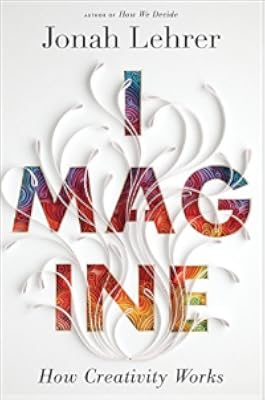
Imagine: How Creativity Works
by Jonah Lehrer
On This Page
Description
"New York Times"-bestselling author Lehrer ("How We Decide") introduces readers to musicians, graphic artists, poets, and bartenders to show how they can use science to be more imaginative and make their cities, their companies, and their culture more creative.Tags
Recommendations





Member Reviews
I liked this one so much I blew through it in 2.5 days. It's an easy read and it kept me thinking all the way through. I liked how it was divided into two main sections. The first section is about the creativity of the lone individual and the second section is concerned with the creativity of groups. Inspiring and thought provoking stuff. It compelled me to get up and meditate this morning. How's that for influence?
"Procter and Gamble had a problem: it needed a new floor cleaner." Has there ever been a more off-putting opening sentence in the history of publishing? Why the fuck should I care about some corporation's business difficulties? This book is supposed to be about imagination and creativity, not entrepreneurship and marketplace success. But in Jonah Lehrer's mind, those are not two separate arenas:
Lehrer made his show more name with books popularizing research in cognitive science and neuroscience, and the first half of Imagine sticks to that territory. While he mixes examples from artistic and scientific kinds of creativity, it's all about individual brains and which areas light up with activity when we're confronting problems. But that's a problem right there: noting that an area of the brain lights up with activity doesn't tell you a damn thing about what that activity is—about what kind of thinking results in "creativity." Lehrer also fails to adequately distinguish between innovation (the introduction of a new idea, extending a domain), problem-solving (overcoming an obstacle within an existing domain), and puzzle-solving (finding an answer which you know already exists, because it's been prepared and presented to you as a puzzle). I'd expect these to have some distinct cognitive characteristics, far sooner than I'd assume them to be identical and interchangeable.
And then the second half of the book, about the social conditions of creativity, goes off the rails. Lehrer has strayed outside his comfortable sandbox of brainstuff and into the territory of [a:Malcolm Gladwell|1439|Malcolm Gladwell|http://photo.goodreads.com/authors/1224601838p2/1439.jpg] and [a:Steven Johnson|1563|Steven Johnson|http://photo.goodreads.com/authors/1209398919p2/1563.jpg], with some [a:Ken Robinson|43940|Ken Robinson|http://photo.goodreads.com/authors/1269246424p2/43940.jpg] mixed in and a bit of [a:Lewis Hyde|31918|Lewis Hyde|http://www.goodreads.com/assets/nophoto/nophoto-U-50x66.jpg] as a lagniappe. And they've already been here, and in some cases reported the same stories. Yes, new ideas are fed by density and serendipity and time to practice, and creativity is the fuel of the future and gosh it's great, isn't it? I slogged through 110 pages and learned nothing new.
The lack of content, though, gave me time to appreciate Lehrer's insipid writing in this half of the book. I lost count of the number of sentences and paragraphs beginning with "The point is" or some variation thereof. If you have to point out what the point is, then your subject and argument are not clear enough to begin with. I grew resentful of continual instructions to "Consider" or "Recall the example of": I thought that was the author's job in writing the book, and I was reading it to reap the benefit of his consideration and recall. This no longer bears any resemblance to an essay of ideas (the kind of book Lewis Hyde always writes, and Steven Johnson sometimes does): this is feature-page journalism at the commodity level.
There was a point early in the book, when Lehrer was talking about puzzle-solving and bringing up the idea that applying constraints to a problem can actually increase the range of ideas generated, when I thought the book might actually be really good—but nah. I'm hoping some real insight into the cognitive character of constraint will come from the next book I'm (over)due to read, [a:Daniel Levin Becker|5408960|Daniel Levin Becker|http://www.goodreads.com/assets/nophoto/nophoto-U-50x66.jpg]'s [b:Many Subtle Channels: In Praise of Potential Literature|13300433|Many Subtle Channels In Praise of Potential Literature|Daniel Levin Becker|http://photo.goodreads.com/books/1327924280s/13300433.jpg|18505750], but at least I'm sure he won't approach the subject like a journalist. As for the cognition of puzzle-solving, I guess that's still my own book to write. show less
We think of entrepreneurs, after all, as creative individuals. If someone has a brilliant idea for a new company, we assume that he or she is inherently more creative than the rest of us. This is why we idolize people like Bill Gates and Richard Branson and Oprah Winfrey. [page 204]Watch who you're calling "we," there, Lehrer.
Lehrer made his show more name with books popularizing research in cognitive science and neuroscience, and the first half of Imagine sticks to that territory. While he mixes examples from artistic and scientific kinds of creativity, it's all about individual brains and which areas light up with activity when we're confronting problems. But that's a problem right there: noting that an area of the brain lights up with activity doesn't tell you a damn thing about what that activity is—about what kind of thinking results in "creativity." Lehrer also fails to adequately distinguish between innovation (the introduction of a new idea, extending a domain), problem-solving (overcoming an obstacle within an existing domain), and puzzle-solving (finding an answer which you know already exists, because it's been prepared and presented to you as a puzzle). I'd expect these to have some distinct cognitive characteristics, far sooner than I'd assume them to be identical and interchangeable.
And then the second half of the book, about the social conditions of creativity, goes off the rails. Lehrer has strayed outside his comfortable sandbox of brainstuff and into the territory of [a:Malcolm Gladwell|1439|Malcolm Gladwell|http://photo.goodreads.com/authors/1224601838p2/1439.jpg] and [a:Steven Johnson|1563|Steven Johnson|http://photo.goodreads.com/authors/1209398919p2/1563.jpg], with some [a:Ken Robinson|43940|Ken Robinson|http://photo.goodreads.com/authors/1269246424p2/43940.jpg] mixed in and a bit of [a:Lewis Hyde|31918|Lewis Hyde|http://www.goodreads.com/assets/nophoto/nophoto-U-50x66.jpg] as a lagniappe. And they've already been here, and in some cases reported the same stories. Yes, new ideas are fed by density and serendipity and time to practice, and creativity is the fuel of the future and gosh it's great, isn't it? I slogged through 110 pages and learned nothing new.
The lack of content, though, gave me time to appreciate Lehrer's insipid writing in this half of the book. I lost count of the number of sentences and paragraphs beginning with "The point is" or some variation thereof. If you have to point out what the point is, then your subject and argument are not clear enough to begin with. I grew resentful of continual instructions to "Consider" or "Recall the example of": I thought that was the author's job in writing the book, and I was reading it to reap the benefit of his consideration and recall. This no longer bears any resemblance to an essay of ideas (the kind of book Lewis Hyde always writes, and Steven Johnson sometimes does): this is feature-page journalism at the commodity level.
There was a point early in the book, when Lehrer was talking about puzzle-solving and bringing up the idea that applying constraints to a problem can actually increase the range of ideas generated, when I thought the book might actually be really good—but nah. I'm hoping some real insight into the cognitive character of constraint will come from the next book I'm (over)due to read, [a:Daniel Levin Becker|5408960|Daniel Levin Becker|http://www.goodreads.com/assets/nophoto/nophoto-U-50x66.jpg]'s [b:Many Subtle Channels: In Praise of Potential Literature|13300433|Many Subtle Channels In Praise of Potential Literature|Daniel Levin Becker|http://photo.goodreads.com/books/1327924280s/13300433.jpg|18505750], but at least I'm sure he won't approach the subject like a journalist. As for the cognition of puzzle-solving, I guess that's still my own book to write. show less
“Imagine,” besides being a terrific John Lennon song, is a great book about creativity, insight, imagination and how we get and develop ideas. If you ever have had an “ah-ha” moment, if the solution to some problem you have been thinking about for some time suddenly comes to you or if you have come up with an idea that is new, original an exciting, this book explains how that happens in your brain, how the brain’s two hemispheres work together to solve problems and provide insight.
This book has to talk about the brain, parts of the brain and how the brain functions, but since it is written by a lay man instead of a scientist or professor, it is written so that anyone can understand it.
The book deals with all types of creative show more thought, both on a personal and individual basis, or a small group basis, in larger groups and communities and even in whole cities and nations. It tell how minds work together to create unique new ideas and how even bustling cities contribute to creative thought under the right circumstances.
Moreover, it gives guidance in how to put the tools it discusses to good use.
Sometimes I struggle to keep going with some books of non-fiction and sometimes I take far too long to read them, “attacking” them in small chunks over long periods of time. That was not the case with this book. It grabbed me from the start, used stories and anecdotal information to keep me going and fascinating me with its often counterintuitive research-based conclusions,
It is an interesting read and will leave any reader better informed and more able to use his/her own creative powers by applying ideas fro this book.
It is a “good read.” show less
This book has to talk about the brain, parts of the brain and how the brain functions, but since it is written by a lay man instead of a scientist or professor, it is written so that anyone can understand it.
The book deals with all types of creative show more thought, both on a personal and individual basis, or a small group basis, in larger groups and communities and even in whole cities and nations. It tell how minds work together to create unique new ideas and how even bustling cities contribute to creative thought under the right circumstances.
Moreover, it gives guidance in how to put the tools it discusses to good use.
Sometimes I struggle to keep going with some books of non-fiction and sometimes I take far too long to read them, “attacking” them in small chunks over long periods of time. That was not the case with this book. It grabbed me from the start, used stories and anecdotal information to keep me going and fascinating me with its often counterintuitive research-based conclusions,
It is an interesting read and will leave any reader better informed and more able to use his/her own creative powers by applying ideas fro this book.
It is a “good read.” show less
Offers intriguing insights into the psychology of creativity based on an exploration of academic research and case studies of innovative individuals and companies, including Bob Dylan, Milton Glaser, David Byrne, 3M and Pixar. Lehrer succeeds in bringing together a wide assortment of information from disparate sources into a cohesive and easily comprehensible narrative. The book stops short of offering a formula for generating creativity, but provides evidence-based direction for those who seek to foster creative thinking in themselves and others. While not everyone may agree with some of his generalizations, he does a great service by bringing together evidence from hard-core research and illustrative examples that make the concepts he show more discusses accessible to a general audience. show less
Imagine: How Creativity Works by Jonah Lehrer is an excellent examination of the creative process. I started this book with more than a little hesitancy. As a writer, I felt concerned it would negatively affect my creativity kind of like how seeing how special effects are done tends to ruin a movie for me. Instead, my creativity sparked almost every time I read it. Imagine sparked my creativity to the point that I mentioned it in a blog post, Nudges From the Law of Attraction, while I was still reading it. Lehrer explains how creativity works by studying its effects on real creative people. While he talks about the chemical processes in the brain and the parts of the brain that are directly involved in creative endeavors, he focuses show more most of his attention on expressions of creativity. The book examines everything from why solitude can help or hurt creativity to why people use drugs to free their creative urges. Imagine goes into the minds of creative people like Bob Dylan and Shakespeare but also talks about building creative atmospheres such as the ones at Pixar Studios and 3M. He explains why talking to people outside our "circles" can spark our creativity while hours spent talking to those within our circles only seem to revolve around the same thoughts. Lehrer makes imagination and creativity accessible to all. Imagine is a book for anyone who is interested in the creative process or even anyone who knows someone interested in the creative process. show less
07/30/12 -- I forgave Lehrer for basically recycling his own works. But then to find out he MADE STUFF UP in this book...not OK. So my four star rating is going down to a three for now. It might go lower if we learn that more than just the Bob Dylan quotes were fabrications.
Listened to from Jul 2-11, 2012
07/11/12 -- I feel like I should begin by saying I started listening to this after listening to Scott Brick narrate The Passage and SB is pretty much the greatest narrator on the planet (or so I've been told). When I started listening, I was not pleased. Jonah Lehrer narrates his own book, which can be a lot of fun. However, Mr. Lehrer is not a professional narrator like Mr. Brick, so I'm trying not to be too harsh. But here's the show more thing, at times it felt like maybe he had a cold or forgot to swallow so he simply had excess saliva in his mouth. Eventually I got past that because the content really was interesting.
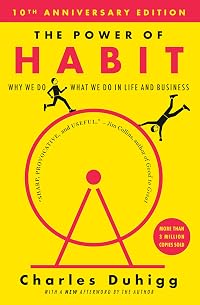
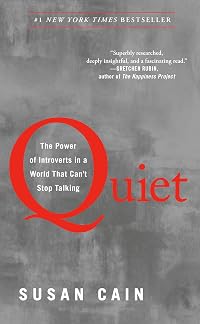
My favorite chapter was definitely the one about excess genius (which we DO NOT have in Phoenix), Shakespeare (a genius that had opportunity to be a genius), and patents/copyright (Shakespeare didn't have to worry about no freakin' Mickey Mouse law). Perhaps I enjoyed this chapter so much because I despise our current copyright situation and it was nice to hear someone who agrees that it's stifling creativity. Or perhaps because it got me thinking about "excess genius" in certain fields of study. Honestly, I think it just brought the entire book together for me. This definitely fits right in with the other nonfiction with a side of self-help books I've listened to lately. So if you enjoyed Quiet or The Power of Habit then I think you'll enjoy this one, too.
(And the last bit in the acknowledgments made me tear up a little...I'm such a sap.) show less
Listened to from Jul 2-11, 2012
07/11/12 -- I feel like I should begin by saying I started listening to this after listening to Scott Brick narrate The Passage and SB is pretty much the greatest narrator on the planet (or so I've been told). When I started listening, I was not pleased. Jonah Lehrer narrates his own book, which can be a lot of fun. However, Mr. Lehrer is not a professional narrator like Mr. Brick, so I'm trying not to be too harsh. But here's the show more thing, at times it felt like maybe he had a cold or forgot to swallow so he simply had excess saliva in his mouth. Eventually I got past that because the content really was interesting.
My favorite chapter was definitely the one about excess genius (which we DO NOT have in Phoenix), Shakespeare (a genius that had opportunity to be a genius), and patents/copyright (Shakespeare didn't have to worry about no freakin' Mickey Mouse law). Perhaps I enjoyed this chapter so much because I despise our current copyright situation and it was nice to hear someone who agrees that it's stifling creativity. Or perhaps because it got me thinking about "excess genius" in certain fields of study. Honestly, I think it just brought the entire book together for me. This definitely fits right in with the other nonfiction with a side of self-help books I've listened to lately. So if you enjoyed Quiet or The Power of Habit then I think you'll enjoy this one, too.
(And the last bit in the acknowledgments made me tear up a little...I'm such a sap.) show less
I bought the audiobook version of IMAGINE, read by the author. It was a really pleasant, enjoyable way to digest the material but makes it hard to write a very detailed critique, since I don't have notes or bookmarks or text to refer to.
The early sections of this book, first about how to nourish creativity in individuals and then in a group, are pretty amazing. Lehrer divides creativity into two basic modes, the "insight" mode and the "revision" mode. The basic idea is that coming up with a great idea is very different from figuring out how to refine that great idea into a workable, perfected final form - and that the practices that enhance insight are radically different from those best suited to revision. He mixes up real-world show more examples with neurobiology and science, corporate examples with artistic examples, famous examples with surprising examples. I loved everything about these chapters.
The last section of the book - I noticed the shift when he started talking about Shakespeare - changes gears a bit. Whereas before he'd build to his conclusions piece by piece, laying down one example, fleshing it out with scientific data, pointing out exceptions and counter-examples, in the final section he starts launching into sweeping conclusions after much less consideration. He chatters a bit about how people might start by borrowing or stealing ideas and then move on to creating really unique, new work but then launches into a pretty ham-handed discussion of education reform and patents and copyright law. Less detail, less nuance, less interesting conclusions.
The first two-thirds or so were super compelling to me and I recommend IMAGINE on that basis alone. The last section had me shaking my head a few too many times, but I didn't mind listening to it, either. show less
The early sections of this book, first about how to nourish creativity in individuals and then in a group, are pretty amazing. Lehrer divides creativity into two basic modes, the "insight" mode and the "revision" mode. The basic idea is that coming up with a great idea is very different from figuring out how to refine that great idea into a workable, perfected final form - and that the practices that enhance insight are radically different from those best suited to revision. He mixes up real-world show more examples with neurobiology and science, corporate examples with artistic examples, famous examples with surprising examples. I loved everything about these chapters.
The last section of the book - I noticed the shift when he started talking about Shakespeare - changes gears a bit. Whereas before he'd build to his conclusions piece by piece, laying down one example, fleshing it out with scientific data, pointing out exceptions and counter-examples, in the final section he starts launching into sweeping conclusions after much less consideration. He chatters a bit about how people might start by borrowing or stealing ideas and then move on to creating really unique, new work but then launches into a pretty ham-handed discussion of education reform and patents and copyright law. Less detail, less nuance, less interesting conclusions.
The first two-thirds or so were super compelling to me and I recommend IMAGINE on that basis alone. The last section had me shaking my head a few too many times, but I didn't mind listening to it, either. show less
Members
- Recently Added By
Published Reviews
ThingScore 25
The goal of “Imagine,” according to its subtitle, is to tell us “how creativity works” — to offer a scientific, mechanistic account of a seemingly ineffable phenomenon. And what distinguishes the scientific from other modes of thinking is not its technology, level of detail or even subject matter, but its ability to discover reliable cause-and-effect relationships. The clarity of show more physics and chemistry is rare in social science, but this is no license for presenting interesting speculations as settled truths.
The best way to think about “Imagine” is as a collection of interesting stories and studies to ponder and research further. Use it as a source of inspiration, but make your own careful choices about whether to believe what it says about the science of creativity. show less
The best way to think about “Imagine” is as a collection of interesting stories and studies to ponder and research further. Use it as a source of inspiration, but make your own careful choices about whether to believe what it says about the science of creativity. show less
added by rybie2
Author Information

9+ Works 4,934 Members
Jonah Lehrer is a Contributing Editor at Wired and the author of How We Decide, Proust Was a Neuroscientist, and Imagine: How Creativity Works. Jonah is also a frequent contributor to The New Yorker, Radiolab, and the Wall Street Journal. (Bowker Author Biography)
Common Knowledge
- Canonical title
- Imagine: How Creativity Works
- Original title
- Imagine: How Creativity Works
- Alternate titles
- Imagine
- Original publication date
- 2012
- Epigraph
- Hell is a place where nothing connects with nothing.
—T. S. Eliot, Introduction to Dante's Inferno - Dedication
- For Sarah and Rose
- Blurbers
- Gladwell, Malcolm; Foer, Joshua
- Original language
- English
Classifications
Statistics
- Members
- 1,240
- Popularity
- 19,836
- Reviews
- 59
- Rating
- (3.53)
- Languages
- 8 — Dutch, English, German, Italian, Lithuanian, Russian, Spanish, Turkish
- Media
- Paper, Audiobook, Ebook
- ISBNs
- 23
- ASINs
- 10