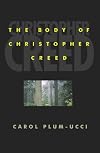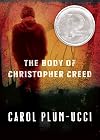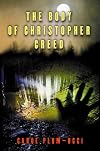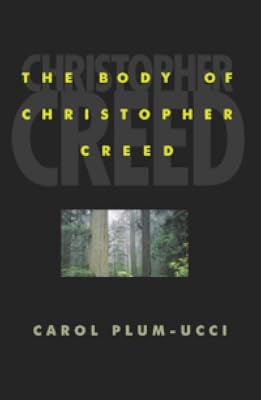
The Body of Christopher Creed
by Carol Plum-Ucci
On This Page
Description
Torey Adams, a high school junior with a seemingly perfect life, struggles with doubts and questions surrounding the mysterious disappearance of the class outcast.Tags
Recommendations





Member Recommendations
Member Reviews
I've always liked reading mysteries, and this one did not disappoint - in fact, I stayed up late to finish it because I had to know how it ended. The plot centers on the disappearance of Christopher Creed, an unpopular "weirdo" and longtime classmate of the main character, Torey Adams, in the town of Steepleton. Though Creed's parents insist at first that he has run away, soon rumors that he has been murdered begin to swirl around the school. The way that the topic is treated casually bothers Torey, who seems to have more of a conscience - a more developed sense of empathy - than his friends. Torey has to know what happened to Chris Creed, and he slowly pulls away from his popular friends and begins to hang out with those on the fringes show more - who, he discovers, are not at all the way their reputations led him to believe they would be.
Torey muses a lot about the nature of popularity and friendship, the role that rumors and gossip play in the town (both in high school and among grown-ups), truth and lies and hypocrisy:
"It was easier to point the finger at somebody else. If Creed had written that note, we would have had to point the finger at ourselves, or at least take a good long look at our ways and agonize over questions. Like, could we have played it out differently? Could we have been nicer? Do we have a heartless streak, and can we be bastards?....Maybe it was my time in life, or maybe it was this whole thing with Creed. But something inside of me felt totally ready to be completely nice to the rejects - people like Creed, the boons - and to be somebody who's not so drowning in surface junk." (59)
"This weird kid leaves, but the weirdness stays. It starts coming out of everybody else. I felt like Chris's ghost was in us, trying to make us understand." (117)
"I wondered if being a geek made you a better, less judgmental person." (130)
"Flocks of kids were all doing their usual homeroom things - talking, laughing, finishing up homework they didn't do before. But they had fangs like snakes that came out when something rubbed them wrong. I knew it. I'd been part of it. They could bite. They could ruin my life..." (130)
"...I felt very close to Creed. I could feel all his confusion over what was real and what was made up in his own head. I felt his wish for make-believe to come alive, for some sort of control over the universe so that if life started to suck, you could just imagine something else into existence." (215)
"This was the most dangerous kind of lying, it struck me, the kind that was happening to me now - where people need the lie so badly they become convinced the lie is true. It's dangerous because they can tell the lie with so much belief that it sounds like the truth, and they can make other people believe it." (216)
"I've stayed awake wondering what people think when they spit out some enormous lie, like, do they even stop to think, Why am I saying this?." (238)
"Some people like to state their opinions as fact. I'm sort of the opposite. I'm afraid of believing some lie for the sake of convenience." (238)
These musings don't slow down the pace of the story, however; this is a book with plot and suspense as well as good characters. Torey tells the story at a slight distance from the events; the reader learns right up front that he has transferred to a boarding school to get away from Steepleton. He is still searching for Creed, via the internet, and at the end of the book there are four responses that he has received: the "most flattering," "most insulting," "mostly likely to be from Chris Creed in disguise," and the "reply that makes me believe totally that Creed is alive." That final reply will most likely convince the reader, as well.
A final note: at one point in the story, Torey suffers some trauma and talks to a therapist afterward. Torey says, "I mean, I just don't understand how people can show all the violence [in visual representations of Jesus]. But they single out [cover up] the nudity. Nudity is a problem, but all the violence isn't. I don't understand people." Dr. Fadhi replies, "We live in a culture that has definite quirks about both sex and violence" (226). This is an insightful observation for a teenage boy to make, but it is true that American morality is much more concerned with sex than with violence. show less
Torey muses a lot about the nature of popularity and friendship, the role that rumors and gossip play in the town (both in high school and among grown-ups), truth and lies and hypocrisy:
"It was easier to point the finger at somebody else. If Creed had written that note, we would have had to point the finger at ourselves, or at least take a good long look at our ways and agonize over questions. Like, could we have played it out differently? Could we have been nicer? Do we have a heartless streak, and can we be bastards?....Maybe it was my time in life, or maybe it was this whole thing with Creed. But something inside of me felt totally ready to be completely nice to the rejects - people like Creed, the boons - and to be somebody who's not so drowning in surface junk." (59)
"This weird kid leaves, but the weirdness stays. It starts coming out of everybody else. I felt like Chris's ghost was in us, trying to make us understand." (117)
"I wondered if being a geek made you a better, less judgmental person." (130)
"Flocks of kids were all doing their usual homeroom things - talking, laughing, finishing up homework they didn't do before. But they had fangs like snakes that came out when something rubbed them wrong. I knew it. I'd been part of it. They could bite. They could ruin my life..." (130)
"...I felt very close to Creed. I could feel all his confusion over what was real and what was made up in his own head. I felt his wish for make-believe to come alive, for some sort of control over the universe so that if life started to suck, you could just imagine something else into existence." (215)
"This was the most dangerous kind of lying, it struck me, the kind that was happening to me now - where people need the lie so badly they become convinced the lie is true. It's dangerous because they can tell the lie with so much belief that it sounds like the truth, and they can make other people believe it." (216)
"I've stayed awake wondering what people think when they spit out some enormous lie, like, do they even stop to think, Why am I saying this?." (238)
"Some people like to state their opinions as fact. I'm sort of the opposite. I'm afraid of believing some lie for the sake of convenience." (238)
These musings don't slow down the pace of the story, however; this is a book with plot and suspense as well as good characters. Torey tells the story at a slight distance from the events; the reader learns right up front that he has transferred to a boarding school to get away from Steepleton. He is still searching for Creed, via the internet, and at the end of the book there are four responses that he has received: the "most flattering," "most insulting," "mostly likely to be from Chris Creed in disguise," and the "reply that makes me believe totally that Creed is alive." That final reply will most likely convince the reader, as well.
A final note: at one point in the story, Torey suffers some trauma and talks to a therapist afterward. Torey says, "I mean, I just don't understand how people can show all the violence [in visual representations of Jesus]. But they single out [cover up] the nudity. Nudity is a problem, but all the violence isn't. I don't understand people." Dr. Fadhi replies, "We live in a culture that has definite quirks about both sex and violence" (226). This is an insightful observation for a teenage boy to make, but it is true that American morality is much more concerned with sex than with violence. show less
I found this book while cleaning my daughters room. It looked good. It's a mystery involving high school students at an upper-class school in Georgia. It really was quite good. The author does well describing Torey's feeling and thoughts about trying to find Chris who may have killed himself. Per a letter to the school principal, Torey and his pals may be partly to blame! Chris was a geeky kid that was always teased and had difficulty making/keeping friends. I liked the book because the story has unexpected events
"The Body of Christopher Creed" is narrated by seventeen year-old, Torey Adams, who is trying to discover the truth about the recent disappearance of a fellow student. As he struggles to find the truth, Torey has to struggle against small town prejudices, stereotypes and deceptions. This book reminded me of "Jasper Jones" by Craig Silvey, which I read earlier this year, but it lacked the humour and charm that was so evident in "Jasper Jones."
What does it say about a community when the least popular boy in school goes missing and no one cares? Christopher Creed wrote a bizarre and mysterious email to the school's principal before he suddenly disappeared; he could have been murdered, committed suicide, or simply run away. But most people are just relieved that he's gone and no-one seems to be really trying to find him.
One guy, alone, feels guilty about the way Christopher Creed was treated and sets out to solve the mystery of what happened to him. Along the way he learns a whole lot more than he bargained for, about the dirty secrets hidden beneath the polished facade of his normal-seeming neighborhood.
One guy, alone, feels guilty about the way Christopher Creed was treated and sets out to solve the mystery of what happened to him. Along the way he learns a whole lot more than he bargained for, about the dirty secrets hidden beneath the polished facade of his normal-seeming neighborhood.
I took a break from my run of Children's Classics to read this teen novel, which I am going to teach starting next week. It was quiet good, as far as teen books go; there was enough language and sexual themes to hook teens into reading, but not too much to make it awkward to discuss is class. It's unfortunate that sex and language is something teenagers look for in novels, but I would do just about anything to get my classes to read and enjoy a novel. More importantly, The Body of Christopher Creed actually has quite a few insightful passages, and explores many important themes.
Our narrator is Torey Adams, a popular football-playing boy in grade 11. He lives in a small, idyllic town where everything is perfect and nothing bad ever show more happens - until the day when Chris Creed, the high school weirdo, disappears. Did Chris run away? Did he kill himself? Did someone else kill him? These are the questions that the townspeople start asking themselves. Though Chris Creed is never actually seen in the novel, his presence hangs over the other characters. As the town tries to deal with what has happened, secrets are revealed, lives are ruined, and answers are never really given.
Heavy issues like stereotyping, bullying, lies vs. truth, and judgements run through The Body of Christopher Creed. Torey is a very intuitive narrator, and his character progresses a lot throughout the novel. He is especially focused on the idea of reality - do adults create their own reality? Do we construct "truth"? Can someone hang onto a lie for so long that it becomes their truth? These ideas are very easily presented for teens, and I am looking forward to discussing them with my class. show less
Our narrator is Torey Adams, a popular football-playing boy in grade 11. He lives in a small, idyllic town where everything is perfect and nothing bad ever show more happens - until the day when Chris Creed, the high school weirdo, disappears. Did Chris run away? Did he kill himself? Did someone else kill him? These are the questions that the townspeople start asking themselves. Though Chris Creed is never actually seen in the novel, his presence hangs over the other characters. As the town tries to deal with what has happened, secrets are revealed, lives are ruined, and answers are never really given.
Heavy issues like stereotyping, bullying, lies vs. truth, and judgements run through The Body of Christopher Creed. Torey is a very intuitive narrator, and his character progresses a lot throughout the novel. He is especially focused on the idea of reality - do adults create their own reality? Do we construct "truth"? Can someone hang onto a lie for so long that it becomes their truth? These ideas are very easily presented for teens, and I am looking forward to discussing them with my class. show less
Reviewed by Me for TeensReadToo.com
Everyone knows someone like Christopher Creed. He is, after all, the kid you love to hate. He'll treat you like his best friend, hanging onto your every word, following you everywhere you go, even as you tell him to go away. He'll get up, smiling, after you've punched him in the mouth after saying something totally inappropriate. He's the kid we see at every high school--the one with no friends, who thinks he knows everything, loathed by all and yet oblivious to our hatred.
Except Christopher Creed wasn't totally oblivious, as shown by the email he sends to the school principal the day he ends up missing. No one seems to be sure whether Creed was contemplating running away or comitting suicide--all they show more know is that he's gone, disappeared as if he'd never lived in the town of Steepleton at all.
For Victor "Torey" Adams, the day Chris Creed drops off the face of the Earth is a defining, and life-altering, day for him. Suddenly confused by the way he's treated Creed in the past, ashamed by the pure glee that his fellow students seem to get out of speculating what happened to the missing teen, Torey is disillusioned with his life--and so sets out to discover what truly happened to Christopher Creed the day he went missing.
Along with two unlikely allies, a once popular girl now considered to be a slut and a "boon" boy from the wrong side of the tracks, Torey has become obsessed with unearthing clues to Creed's mysterious disappearance. As he learns more about the strange happenings in the Creed home, as he becomes convinced that his mother is hiding something, as he wanders the woods looking for a body, Torey learns something about the way the world works--and it isn't pretty.
THE BODY OF CHRISTOPHER CREED is an engaging mystery, but it's also a look into the life and times of every high school in the world. The cliques, the drama, the need to belong. The bullying, the hatred, the intense pressure to fit in. Ms. Plum-Ucci has penned a book that goes straight to the heart of the matter--when things are unbearable in your life, when fiction is preferable to fact, how far are you willing to go to change your destiny?
A real winner, this is definitely a recommended read! show less
Everyone knows someone like Christopher Creed. He is, after all, the kid you love to hate. He'll treat you like his best friend, hanging onto your every word, following you everywhere you go, even as you tell him to go away. He'll get up, smiling, after you've punched him in the mouth after saying something totally inappropriate. He's the kid we see at every high school--the one with no friends, who thinks he knows everything, loathed by all and yet oblivious to our hatred.
Except Christopher Creed wasn't totally oblivious, as shown by the email he sends to the school principal the day he ends up missing. No one seems to be sure whether Creed was contemplating running away or comitting suicide--all they show more know is that he's gone, disappeared as if he'd never lived in the town of Steepleton at all.
For Victor "Torey" Adams, the day Chris Creed drops off the face of the Earth is a defining, and life-altering, day for him. Suddenly confused by the way he's treated Creed in the past, ashamed by the pure glee that his fellow students seem to get out of speculating what happened to the missing teen, Torey is disillusioned with his life--and so sets out to discover what truly happened to Christopher Creed the day he went missing.
Along with two unlikely allies, a once popular girl now considered to be a slut and a "boon" boy from the wrong side of the tracks, Torey has become obsessed with unearthing clues to Creed's mysterious disappearance. As he learns more about the strange happenings in the Creed home, as he becomes convinced that his mother is hiding something, as he wanders the woods looking for a body, Torey learns something about the way the world works--and it isn't pretty.
THE BODY OF CHRISTOPHER CREED is an engaging mystery, but it's also a look into the life and times of every high school in the world. The cliques, the drama, the need to belong. The bullying, the hatred, the intense pressure to fit in. Ms. Plum-Ucci has penned a book that goes straight to the heart of the matter--when things are unbearable in your life, when fiction is preferable to fact, how far are you willing to go to change your destiny?
A real winner, this is definitely a recommended read! show less
Christopher Creed, the class dork who gets beat up by everyone, disappears, leaving only an email. Everyone speculates on what could have happened to him - is he dead, did he run away? Torey Adams and his friends, a popular group, all join in the speculation. Torey gets pulled deeper in to the mystery through his relationship with Ali, a girl he grew up with who has started to develop a reputation and is having troubles at home.
*SPOILERS*
The story is told in flashback. We know at the beginning that the entire case has deeply disturbed Torey, since he's now at a new school, and that he was unable to remain at his old school. That gives a sense of foreboding to the novel, since we know *something* disturbing is going to happen.
While the show more mystery part is fairly standard. The big reveal at the end, where Torey finds a body that burns up before his eyes, is somewhat confusing, although I did like that at the end of the novel we don't entirely know what happened or where Christopher is.
What Plum-Ucci does do well is lay out the striations of high school society, although she lays it on quite thick. There are clear divisions between the regular kids and the "boons" the kids who live near the Pineys. While I can certainly by that kids from the poor side of town will be ostracized, in this story they're almost like an officially persecuted minority - Roma or Jews in a ghetto - to a degree that's not entirely believable. I did like how she showed Torey realizing that his friends' "perfect" lives are not at all perfect, and the despised boons are not all evil (except - Bo beat up his little sister when he thought she was sleeping is proof of his good heart. Um what?) The explanation of how and why Ali has changed is excellent, particularly in a "boy" book, nice to see that explained in a way that doesn't just say "she's trashy" and gives boys a way to cope with it. show less
*SPOILERS*
The story is told in flashback. We know at the beginning that the entire case has deeply disturbed Torey, since he's now at a new school, and that he was unable to remain at his old school. That gives a sense of foreboding to the novel, since we know *something* disturbing is going to happen.
While the show more mystery part is fairly standard. The big reveal at the end, where Torey finds a body that burns up before his eyes, is somewhat confusing, although I did like that at the end of the novel we don't entirely know what happened or where Christopher is.
What Plum-Ucci does do well is lay out the striations of high school society, although she lays it on quite thick. There are clear divisions between the regular kids and the "boons" the kids who live near the Pineys. While I can certainly by that kids from the poor side of town will be ostracized, in this story they're almost like an officially persecuted minority - Roma or Jews in a ghetto - to a degree that's not entirely believable. I did like how she showed Torey realizing that his friends' "perfect" lives are not at all perfect, and the despised boons are not all evil (except - Bo beat up his little sister when he thought she was sleeping is proof of his good heart. Um what?) The explanation of how and why Ali has changed is excellent, particularly in a "boy" book, nice to see that explained in a way that doesn't just say "she's trashy" and gives boys a way to cope with it. show less
Members
- Recently Added By
Lists

Books Read in 2007
326 works; 8 members

Bullies
44 works; 2 members
Author Information

11+ Works 2,316 Members
Awards and Honors
Awards
Distinctions
Common Knowledge
- Original publication date
- 2000-02-29
- Dedication
- To Ellen...And Sara, Colleen, Merc, Nathan, Krystle (rest in peace), Amber, Joey, Dave, Rickey, Jon, Brandon, and all the other teenagers who have so richly blessed my life...
- First words
- I had hoped that a new start away from Steepleton would make my junior year seem like a hundred years ago, rather than just one.
- Last words
- (Click to show. Warning: May contain spoilers.)Yours most truly, Victor Adams
Classifications
Statistics
- Members
- 988
- Popularity
- 26,523
- Reviews
- 37
- Rating
- (3.95)
- Languages
- English
- Media
- Paper, Audiobook, Ebook
- ISBNs
- 27
- UPCs
- 1
- ASINs
- 5