On This Page
Description
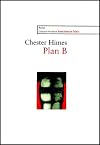
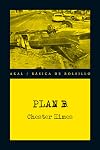
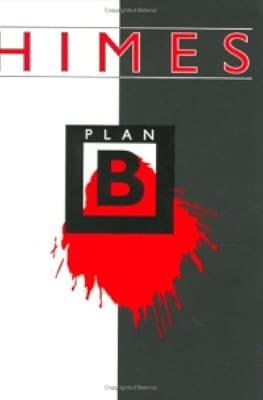
"The final, posthumous installment of the ground-breaking Harlem Detectives series, a novel of explosive, apocalyptic violence, and a startling vision of the effects of racism in America. The roots of racism and persecution in Tomsson Black's ancestry are deep and staggering. In his own lifetime, his misfortunes have become unbearable and, as they mount, serve as an impetus for a final and cataclysmic act of vengeance-the violent overthrow of white society. When acclaimed crime writer show more Chester Himes died in Spain in 1984, it was rumored that an unfinished story in the Harlem Detective series existed that had all but extinguished his heroes and their fraught city in an explosive paroxysm of racial strife. Completed from his notes by Michel Fabre and Robert E. Skinner, Plan B is that harrowing story"-- show lessTags
Recommendations
















Member Reviews
My last one in the series. Kinda bummed about that. Especially after I read it. This is absolutely not part of the Harlem Detectives series. That they are in it at all is almost impossible to remember, except for the terrible last chapter that seems so unlikely to have been written or even suggested by the author that I seriously believe this book cover could be false advertising. Clearly a cash grab by whomever released this. What a disgrace to this series. I give this physical book, and its untruthful claim a one or less star.
--------------------------------------------------
That being said, the real story that is in these covers is indeed interesting!
A man called T-bone Smith is sent an M-14 rifle by messenger from an anonymous show more source with a message for him to learn it and prepare for freedom! And for a race war.
“Tomsson Black told them about his plan, which he called ‘Plan B,’ for ‘Black.’ His plan was to arm all American black males, instruct them in guerrilla warfare, and have them wait until he gave the order to begin waging war against the whites.”
The massacre on Eighth Avenue:
5 police officers killed, 7 wounded
19 police cars damaged
59 blacks killed, 13 wounded
1 tenement building completely destroyed
500 people made homeless
And then there’s a lynching of a black man in the park.
And then the reprisals.
The slaughter at the “unity” parade is particularly nasty, described in unflinching, almost disgusting, detail.
The book turns into a dystopian world for black people, with lynchings, killings, and concentration camps built. Sort of what MAGA would do if they could. Well, they did do the camps... show less
--------------------------------------------------
That being said, the real story that is in these covers is indeed interesting!
A man called T-bone Smith is sent an M-14 rifle by messenger from an anonymous show more source with a message for him to learn it and prepare for freedom! And for a race war.
“Tomsson Black told them about his plan, which he called ‘Plan B,’ for ‘Black.’ His plan was to arm all American black males, instruct them in guerrilla warfare, and have them wait until he gave the order to begin waging war against the whites.”
The massacre on Eighth Avenue:
5 police officers killed, 7 wounded
19 police cars damaged
59 blacks killed, 13 wounded
1 tenement building completely destroyed
500 people made homeless
And then there’s a lynching of a black man in the park.
And then the reprisals.
The slaughter at the “unity” parade is particularly nasty, described in unflinching, almost disgusting, detail.
The book turns into a dystopian world for black people, with lynchings, killings, and concentration camps built. Sort of what MAGA would do if they could. Well, they did do the camps... show less
Himes' last and unfinished novel, Plan B is a stirring, bold, uncompromising, thought-provoking and yet deeply flawed work.
No other book I've encountered (except perhaps Ralph Ellison's [book:Invisible Man]) so excellently captures the political and social conditions of racial oppression and militant response. Much of the African-American literature that preceded and followed it (including the rest of Himes' own work) seems wholly focused on merely reporting the degree of American racism and apartheid, often presented through either broken and victimized narrators or angry, black men who vent their rage wherever they can (Richard Wright's novels). That approach (which either subtly ignores or blatantly rejects the possibility for a show more radical response to racism) is ultimately an ineffective, unrealistic and politically debilitating way of presenting American racial dynamics.
Plan B partially corrects that flaw by presenting one of the most vividly realized literary accounts of racial unrest and revolution ever conceived. The novel is at its best when describing the murder of cops, the massive and genocidal overreaction by police and military to comparatively limited rebellion, the eventual assassination of leaders of the white establishment, and the political and social conditions that caused all this to happen in the first place. What makes the novel so good is that these conditions are pretty exactly the state of American in the late 1960s. You get the sense that a full out race war could have happened so very easily under slightly different circumstances.
Where Plan B fails is in the chapters about a black businessman/philanthropist's ancestry and upbringing, which alternate with the chapters about civil unrest and ultimately make up half the book. While these two strands do unite at the end of the novel (albeit very weakly, as the conclusion of the unfinished novel was cobbled together from sparse notes after Himes' death), it still seems as though Himes was writing two separately stories without really knowing how to best combine them.
Those lesser chapters are somehow more brutal and unsettling than the chapters about full-out race war. In scenes reminiscient of Voltaire's [book:Candide], Himes recounts lynchings and rapes in a way that's supposed to make them cleverly funny. Even though I could see what Himes was trying to accomplish, I had a very hard time stomaching these descriptions. There's something too miniature and personal about this satire, which renders it much more disturbing and unsuccessful than Himes' satire of race relations on the national scale.
Rather than buying a copy of this book, I decided to just photocopy the chapters (roughly half the book) that dealt with rebellion, while doing my best to forget about the other ones. The result is, in my opinion, a much stronger, coherent novel with a clearer and more direct sense of purpose. I'm sure, though, that others would disagree with me.
As far as I know, there's only this one edition of the book in print, which is published by the University Press of Mississippi. That makes it expensive to buy but ultimately more rewarding to read, as UPM has included a lengthy introduction that places this work in context, explains how Himes came to write it and gives a stronger sense of how this unfinished novel would have been completed.
In short, it's an unsettling, uneven, ultimately unsuccessful novel that happens to include the most stirring and radical scenes of rebellion I've ever encountered in liturature and one of the best examples of social satire from the Black Power era ever written. It's an exciting yet troubling artifact from an exciting yet troubling time. show less
No other book I've encountered (except perhaps Ralph Ellison's [book:Invisible Man]) so excellently captures the political and social conditions of racial oppression and militant response. Much of the African-American literature that preceded and followed it (including the rest of Himes' own work) seems wholly focused on merely reporting the degree of American racism and apartheid, often presented through either broken and victimized narrators or angry, black men who vent their rage wherever they can (Richard Wright's novels). That approach (which either subtly ignores or blatantly rejects the possibility for a show more radical response to racism) is ultimately an ineffective, unrealistic and politically debilitating way of presenting American racial dynamics.
Plan B partially corrects that flaw by presenting one of the most vividly realized literary accounts of racial unrest and revolution ever conceived. The novel is at its best when describing the murder of cops, the massive and genocidal overreaction by police and military to comparatively limited rebellion, the eventual assassination of leaders of the white establishment, and the political and social conditions that caused all this to happen in the first place. What makes the novel so good is that these conditions are pretty exactly the state of American in the late 1960s. You get the sense that a full out race war could have happened so very easily under slightly different circumstances.
Where Plan B fails is in the chapters about a black businessman/philanthropist's ancestry and upbringing, which alternate with the chapters about civil unrest and ultimately make up half the book. While these two strands do unite at the end of the novel (albeit very weakly, as the conclusion of the unfinished novel was cobbled together from sparse notes after Himes' death), it still seems as though Himes was writing two separately stories without really knowing how to best combine them.
Those lesser chapters are somehow more brutal and unsettling than the chapters about full-out race war. In scenes reminiscient of Voltaire's [book:Candide], Himes recounts lynchings and rapes in a way that's supposed to make them cleverly funny. Even though I could see what Himes was trying to accomplish, I had a very hard time stomaching these descriptions. There's something too miniature and personal about this satire, which renders it much more disturbing and unsuccessful than Himes' satire of race relations on the national scale.
Rather than buying a copy of this book, I decided to just photocopy the chapters (roughly half the book) that dealt with rebellion, while doing my best to forget about the other ones. The result is, in my opinion, a much stronger, coherent novel with a clearer and more direct sense of purpose. I'm sure, though, that others would disagree with me.
As far as I know, there's only this one edition of the book in print, which is published by the University Press of Mississippi. That makes it expensive to buy but ultimately more rewarding to read, as UPM has included a lengthy introduction that places this work in context, explains how Himes came to write it and gives a stronger sense of how this unfinished novel would have been completed.
In short, it's an unsettling, uneven, ultimately unsuccessful novel that happens to include the most stirring and radical scenes of rebellion I've ever encountered in liturature and one of the best examples of social satire from the Black Power era ever written. It's an exciting yet troubling artifact from an exciting yet troubling time. show less
Ratings
Members
- Recently Added By
Lists

Donald E. Westlake's Top Ten Mystery Books
20 works; 3 members
Author Information

59+ Works 6,150 Members
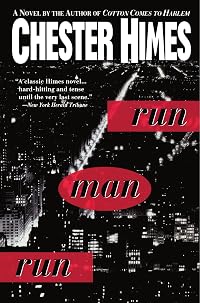
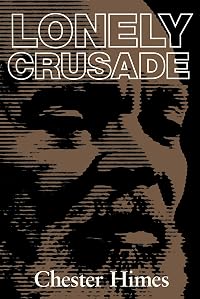
Chester B. Himes was born in Jefferson City, Missouri on July 29, 1909. He attended Ohio State University in Columbus, but was expelled his freshman year for a prank. He began writing short stories and having them published in national magazines such as Abbott's Monthly Magazine and Esquire while in prison for armed robbery. He was paroled after 8 show more years and eventually joined the Works Progress Administration, where he served as a writer with the Ohio Writers' Project. His first novel, If He Hollers Let Him Go, is about the fear, anger, and humiliation of a black employee at a racist defense plant during World War II and was published in 1945. He moved to Paris, France in the 1950s and then to Moraira, Spain in 1969. He was more popular in Europe than in the United States and primarily wrote about black protagonists plagued by white racism and self-hate. His other works include Lonely Crusade, Pinktoes, Black on Black, The Quality of Hurt, and My Life As Absurdity. He also wrote detective novels set in Harlem, New York City including Run Man, Run, The Real Cool Killers, and Blind Man with a Pistol. He won the 1958 Grand Prix de Littérature Policière and the 1982 Columbus Foundation award. He died on November 12, 1984 from Parkinson's Disease. (Bowker Author Biography) show less
Series

Belongs to Publisher Series
Etiqueta Negra (8)
Work Relationships
Is contained in
Common Knowledge
- Canonical title
- Plan B
- Original title
- Plan B
- Original publication date
- 1983
- People/Characters
- Grave Digger Jones; Coffin Ed Johnson; Tomsson Black
Classifications
- Genres
- Fiction and Literature, General Fiction, Mystery, Fantasy, Suspense & Thriller
- DDC/MDS
- 813.54 — Literature & rhetoric American literature in English American fiction in English 1900-1999 1945-1999
- LCC
- PS3515 .I713 .P58 — Language and Literature American literature American literature Individual authors 1900-1960
- BISAC
Statistics
- Members
- 72
- Popularity
- 436,977
- Reviews
- 2
- Rating
- (4.00)
- Languages
- English, French, German, Spanish
- Media
- Paper, Ebook
- ISBNs
- 12
- ASINs
- 2