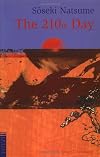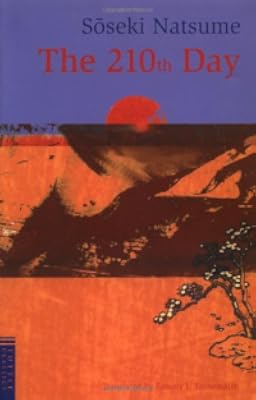
The 210th Day
by Natsume Sōseki
On This Page
Description
First published as Nihyaku Toka in 1906, The 210th Day is published here for the first time in English. Focusing on two strongly contrasting characters, Kei and Roku, as they attempt to climb the rumbling Mount Aso as it threatens to erupt, it is a celebration of personal experience and subjective reaction to an event in the author's life. During their progress up the mountain-where they encounter a storm on the 210th day (the lunar calendar day traditionally associated with typhoons)-and show more during a stopover at an inn along the way, Roku, the main protagonist, banters with Kei about his background, behavior and his reaction to the things they see. Kei surprises his easy-going friend by advocating a radical social agenda. Written almost entirely in the form of an extended dialogue, carried over several episodes, the book reveals Soseki's gift for the striking image and his vivid imagination, as well as his talent for combining Eastern and Western genres-the Western auto-biography and the Japanese traditional literary diary-into a work with a unified theme and atmosphere. In his Introduction to the book, Dr Marvin Marcus, Associate Professor of Japanese Language and Literature at Washington University, provides insight into Soseki's life and work. show lessTags
Recommendations







Member Reviews
This is a short novel ... a really quick read about two guys who climb an active volcano and talk. It’s 90% dialog (based on an actual climb Natsume Soseki did with a friend). It kind of cleansed me of Faulkner’s wordy sentences but did little else. I did find the following amusing:
"What use is this water?" asks Kei, the tofu seller’s son, swirling the water around in the bath.
"What use is it? According to the formula, it should be suitable for everything. But you know, you can go on rubbing it on your navel as long as you like, it still won’t go into your stomach."
"It is extremely clear, " says the man with the prominent navel, taking up some water in his cupped hands and drinking it.
"But it has no taste, " he protests spitting show more it out on to the floor of the bathing establishment.
"It’s drinkable, " Roku says, drinking it greedily.
Kei stops cleaning his navel and looks out through the glass with an absent-minded air while, leaning against the edge of the bath, Roku, up to his neck in the water, is observing the other’s chest.
"You’re well built, you know. Really like someone living in the wild...."
"I’m not a tofu seller’s son for nothing. If one’s not big and strong, on can’t fight the well-born and the wealthy. It’s one against all of them."
"You talk as if you really had an enemy. Who is it at present?"
"Just anybody."
I’m easily amused... show less
"What use is this water?" asks Kei, the tofu seller’s son, swirling the water around in the bath.
"What use is it? According to the formula, it should be suitable for everything. But you know, you can go on rubbing it on your navel as long as you like, it still won’t go into your stomach."
"It is extremely clear, " says the man with the prominent navel, taking up some water in his cupped hands and drinking it.
"But it has no taste, " he protests spitting show more it out on to the floor of the bathing establishment.
"It’s drinkable, " Roku says, drinking it greedily.
Kei stops cleaning his navel and looks out through the glass with an absent-minded air while, leaning against the edge of the bath, Roku, up to his neck in the water, is observing the other’s chest.
"You’re well built, you know. Really like someone living in the wild...."
"I’m not a tofu seller’s son for nothing. If one’s not big and strong, on can’t fight the well-born and the wealthy. It’s one against all of them."
"You talk as if you really had an enemy. Who is it at present?"
"Just anybody."
I’m easily amused... show less
Ratings
Members
- Recently Added By
Author Information

247+ Works 11,588 Members
Natsume Soseki's early education included the study of Chinese classics and architecture, but as an English literature major he found his life's work, as well as the friendship of haiku poet Masaoka Shiki, an important personal and literary influence. Soseki's prose, for example, is often interspersed with his own haiku. In 1900 the Japanese show more government sent Soseki, who was a professor of English literature, to London, but, poorly funded and isolated, he found his years abroad painful and began to exhibit neurotic behavior. On his return, he shocked society by giving up his teaching position at Tokyo University to write fiction for the Asahi newspaper, a profession associated with the world of "entertainers." Despite poor health in the last years of his life, Soseki continued to write an average of one novel a year. (Bowker Author Biography) show less
Common Knowledge
- Canonical title
- The 210th Day
- Original title
- 二百十日
- Original publication date
- 1906
Classifications
- Genres
- Fiction and Literature, General Fiction
- DDC/MDS
- 895.6342 — Literature & rhetoric Literatures of other languages Literatures of East and Southeast Asia Japanese Japanese fiction Meiji/Taishō periods 1868–1945 Meiji period 1868–1912
- LCC
- PL812 .A8 .N4918 — Language and Literature Languages and literatures of Eastern Asia, Africa, Oceania Languages of Eastern Asia, Africa, Oceania Japanese language and literature Japanese literature Individual authors and works
- BISAC
Statistics
- Members
- 61
- Popularity
- 506,760
- Reviews
- 1
- Rating
- (3.17)
- Languages
- English, French, Italian
- Media
- Paper, Ebook
- ISBNs
- 5
- ASINs
- 2