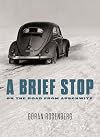
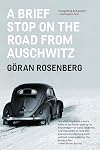
A Brief Stop on the Road from Auschwitz
by Göran Rosenberg
On This Page
Description
A "memoir by a journalist about his father's attempt to survive the aftermath of Auschwitz in a small industrial town in Sweden"--Dust jacket. On August 2, 1947 a young man gets off a train in a small Swedish town to begin his life anew. Having endured the ghetto of Lodz, the death camp at Auschwitz-Birkenau, the slave camps and transports during the final months of Nazi Germany, his final challenge is to survive the survival. Rosenberg returns to his own childhood to tell the story of his show more father; it is also the story of the chasm between the world of the child, permeated by the optimism, progress, and collective oblivion of postwar Sweden, and the world of the father, darkened by the long shadows of the past. show lessTags
Recommendations











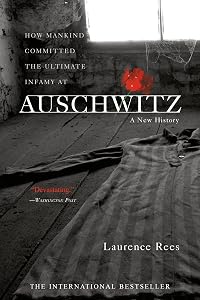


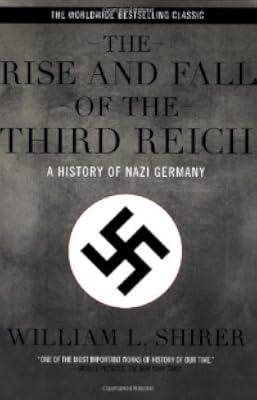




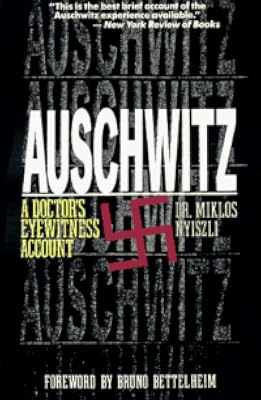


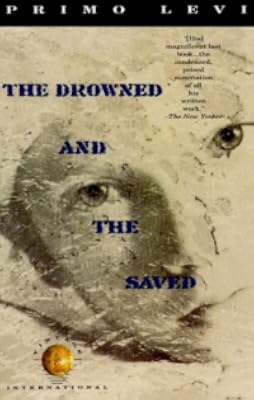












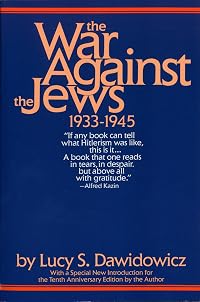
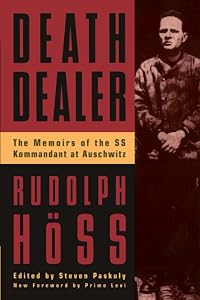
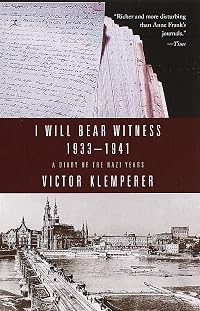


Member Recommendations

Member Reviews
I natt og tåke var benevnelsen på politiske fanger og bygger på et Hitler-direktiv fra 1941, men kan likevel brukes om den reisen David Rosenbergs sønn skildrer på vegne av sin far. De andre - de som ikke hadde Davids erfaringer - opptrådte for David med likegyldighet og motstand mot å forstå hva han bar på. Dette var sterke hindre for at han aldri kom "hjem", men allltid vandret, alltid var urolig, alltid bar på skader - han bar på det som ikke kan bæres alene. Dette er en lærebok om traumer som på svært mange måter forsterkes - særlig ved det grufulle sviket som den tyske staten nok en gang utøvet etter krigen for å hindre rettmessig erstatning for skader (forverret ved amerikansk gjeldsfjerning for Tyskland). Også show more den svenske dobbeltheten kommer tydelig frem og antisemittismen lurer både under og oppå overflaten. Livets smerter finnes i skyggene og disse er vanskelige å se og å tyde. Du David fikk aldri se at din sønn så deg, men mange Davider eller Mohammed-er eller Ali-er kan kanskje se dette og kjenne at det er noen her som har sett og ser - om du har sittet i Abu Ghraib, Guantanemo eller for den saks skyld i flyktningeleire rundt Middelhavet eller som rohingya i Bangla Desh eller i andre traumatiserende leire; "Noen aner noe om livet ditt". show less
Although the post-war fate of Holocaust survivors has been receiving more attention in recent years --- for instance, [[Dan Stone]]'s book on the final days of the camps, [The Liberation of the Camps: The End of the Holocaust and Its Aftermath] or [[Michael Brenner]]'s edited volume of essays and survivors' statements, [After the Holocaust] --- and while many memoirs, including [[Primo Levi]]'s account of his circuitous path to freedom, touch on the days directly following the camps' liberation (often followed by another form of confinement, whether for reasons of quarantine or political reasons), Göran Rosenberg's book is unique in addressing the issue of day-to-day survival in an increasingly "normal" and forgetful world.
Rosenberg is show more a subtle thinker and a skillful narrator. He structures the narrative of his father's survival around the Place --- a small town in Sweden where his father's migratory path came to a stop, where he found a job, settled down with his wife, and had children, that is, where the narrator was born. The Place is a focal point of shared experience, from which the narrator proceeds to try to understand his father's life journey. Seen through the eyes of a child, the Place and its geography, with its factory, its train station, the 26-meter tall bridge over the canal, the pine forest separating the town from the seashore, with its modern housing and rowanberry trees, become almost mythical. At the same time, the Place is also emblematic, a Swedish "Midwest" with its small-town hopes and joys, problems and prejudices; a town that will hardly figure on any political map; the periphery from where to observe events that happen "out there" in the world.
It is starting from this Place that Rosenberg presents his father: we get to him little by little the way he did as a child, gradually learning about the shadows that haunted his existence. Rosenberg writes in second person singular, like a letter to his father, an attempt at dialog. To retrace his father's journey, Rosenberg relies on scraps of memory, his own, and those of surviving relatives, on family letters and documents, and on archival and field research. And so he reconstructs the conditions of the Lodz Ghetto by referencing the miraculously survived Ringelblum archives; or scours any extant transport lists and other documents to pinpoint, as far as it is possible, the dates of his father's "delivery" to Auschwitz, then transfer to the slave labor camp in Braunschweig, and the complicated path, via Ravensbrück and Wöbbeln, to liberation. Rosenberg is keenly aware of the abyss that separates the knowledge we can glean from dates and the experience of a prisoner being transported to the unknown: "On your journey exact dates have no function." Dates are for us, for the researcher; they are like anchors, something concrete to hold on to in our effort to understand; they also counteract "precise figures and arbitrary abbreviations [which] are the crowbars of Nazi euphemism" (p. 60):
“I note down the exact figures and dates, in fact I scour the archives and sources for the exact figures and dates, because I want to reconstruct your world as you see it before it’s liquidated, and I need something to build it with, and I don’t know what else I can understand. But I soon notice that the exact numbers and dates merely reconstruct the widening gulf between what’s happening around you and what can be understood.” (p. 59)
The gulf between the anonymity of the number and the visceral quality of experience must be bridged through narrative and imagination --- contrary to the Nazi effort to employ seemingly precise records in the service of dehumanization and obliteration. The failure to imagine is one of the implicit themes of this book: it is a failure of imagination that is responsible for forgetfulness and for the breakdown of communication between survivors and those who know of concentration camps only second-hand. Göran Rosenberg puts his finger on the paradox of the survivor: in order to live on, the survivor needs to be able to push aside the horror, to "forget" the unforgettable; but in order to be able to repress the dark memories and to live, the survivor needs the world to remember:
"... those of you who have survived have no reason to doubt that the world afterward is no longer the same as the world before. It's impossible to think anything else. It's impossible to think you've all survived in order for the world to forget what it's just been through and to go on as if nothing has happened. There must be some point to the fact that you've survived, since the main point of the event you've survived was that none of you were supposed to survive... ... Why me and not the others? Naturally it's also an unbearable thought, which has to be pushed aside sooner or later if surviving is to turn into living. So I think it's initially pushed aside by the assurance that you haven't survived for yourselves but for others, too; that you're the traces that must not be eradicated, and that you therefore owe a particular duty to the life you've been granted... ... Like Lot's wife, people in your situation can go on living only if they don't turn around and look back, because like Lot's wife, you risk being turned to stone by the sight. Nor, however, can you go on living if nobody sees and understands what it is you've survived and why it is you're still alive, in spite of everything. I think the step from surviving to living demands this apparently paradoxical combination of individual repression and collective remembrance. You can look forward only if the world looks backward and remembers where you come from, and sees the paths you pursue, and understands why you're still living." (pp. 278-9)
I find this to be one of the crucial passages in the book and a key insight into the dysfunction of our own world. The experience of a Holocaust survivor is an extreme experience which, if we accept our responsibility of imagining it, should be a prism through which to view, and relate to, the world. Is not the mistreatment of refugees, for instance, reminiscent of the often-judgmental treatment concentration camp survivors met with in displaced persons' camps? Does not the facility with which business often trumps humanitarian concerns or the xenophobic discourse of individuals or right-wing governments sound all too familiar? Although Rosenberg does not raise these issues directly, it is clear that broader implications of his father's experience are on his mind. He limits his considerations to the Place and evokes what might seem like an unrelated thread in his story: the environmental degradation of this seaside locality through industrial ground pollution and sewage run-off leading to the paving over of what once was a charming beach resort and turning it into an industrial harbor. Like the inhabitants of Wöbbelin or Brauschweig, living their lives next door to Nazi-perpetrated horror, the inhabitants of the Place, and the authorities, chose passivity and inaction allowing, in this case, environmental crimes to be perpetrated. It goes without saying that there is no question of establishing equivalence between the different conducts; however, what is important, I think, is not being afraid to recognize repeating patterns of behavior.
Göran Rosenberg's book is an exemplary effort of imagination: through patient interpretation and piecing together of a network of facts, memories, gestures, he reconstructs his father's harrowing experience and, in a sober, unsentimental narrative, identifies the different forces -- social, political, historical, etc. -- that come together to propel this particular destiny to its particular end.
Some reviewers have remarked on the shortcomings of the translation. My sense was that the translation was well done and if anything perhaps too accurate: I felt that the small grammatical imperfections reflected the translated and re-translated text; they are most often encountered in the narrator's parents' letters, written in Polish, translated by a third party into Swedish, and then, for this edition, into English. It is possible that the Polish is already inflected, imperfect; it is peppered with Yiddish, later Swedish, words whose meanings blur and intertwine. As a Polish speaker, I could sometimes detect the Polish idiom beneath the English translation, and I thought this was the point. There are subtle layers in the prose; it is multi-voiced: there is the perspective of the child, very much focused on sensory imagination; there is the voice of the mature narrator -- a researcher, thinker, who tells the story of his own quest among the vestiges of a vanished world; there are the voices of his parents, speaking in the fragments of correspondence written at different times and in different circumstances; and there is the occasional snippet of officious language of the bureaucracy, Nazi or otherwise. The translator did an excellent job giving each of these voices a unique tonality. That the translator's name is Sarah Death I could not but find symbolic: combining a common Jewish girl's name and the tragic destiny of a nation.
[review cross-posted on amazon.com] show less
Rosenberg is show more a subtle thinker and a skillful narrator. He structures the narrative of his father's survival around the Place --- a small town in Sweden where his father's migratory path came to a stop, where he found a job, settled down with his wife, and had children, that is, where the narrator was born. The Place is a focal point of shared experience, from which the narrator proceeds to try to understand his father's life journey. Seen through the eyes of a child, the Place and its geography, with its factory, its train station, the 26-meter tall bridge over the canal, the pine forest separating the town from the seashore, with its modern housing and rowanberry trees, become almost mythical. At the same time, the Place is also emblematic, a Swedish "Midwest" with its small-town hopes and joys, problems and prejudices; a town that will hardly figure on any political map; the periphery from where to observe events that happen "out there" in the world.
It is starting from this Place that Rosenberg presents his father: we get to him little by little the way he did as a child, gradually learning about the shadows that haunted his existence. Rosenberg writes in second person singular, like a letter to his father, an attempt at dialog. To retrace his father's journey, Rosenberg relies on scraps of memory, his own, and those of surviving relatives, on family letters and documents, and on archival and field research. And so he reconstructs the conditions of the Lodz Ghetto by referencing the miraculously survived Ringelblum archives; or scours any extant transport lists and other documents to pinpoint, as far as it is possible, the dates of his father's "delivery" to Auschwitz, then transfer to the slave labor camp in Braunschweig, and the complicated path, via Ravensbrück and Wöbbeln, to liberation. Rosenberg is keenly aware of the abyss that separates the knowledge we can glean from dates and the experience of a prisoner being transported to the unknown: "On your journey exact dates have no function." Dates are for us, for the researcher; they are like anchors, something concrete to hold on to in our effort to understand; they also counteract "precise figures and arbitrary abbreviations [which] are the crowbars of Nazi euphemism" (p. 60):
“I note down the exact figures and dates, in fact I scour the archives and sources for the exact figures and dates, because I want to reconstruct your world as you see it before it’s liquidated, and I need something to build it with, and I don’t know what else I can understand. But I soon notice that the exact numbers and dates merely reconstruct the widening gulf between what’s happening around you and what can be understood.” (p. 59)
The gulf between the anonymity of the number and the visceral quality of experience must be bridged through narrative and imagination --- contrary to the Nazi effort to employ seemingly precise records in the service of dehumanization and obliteration. The failure to imagine is one of the implicit themes of this book: it is a failure of imagination that is responsible for forgetfulness and for the breakdown of communication between survivors and those who know of concentration camps only second-hand. Göran Rosenberg puts his finger on the paradox of the survivor: in order to live on, the survivor needs to be able to push aside the horror, to "forget" the unforgettable; but in order to be able to repress the dark memories and to live, the survivor needs the world to remember:
"... those of you who have survived have no reason to doubt that the world afterward is no longer the same as the world before. It's impossible to think anything else. It's impossible to think you've all survived in order for the world to forget what it's just been through and to go on as if nothing has happened. There must be some point to the fact that you've survived, since the main point of the event you've survived was that none of you were supposed to survive... ... Why me and not the others? Naturally it's also an unbearable thought, which has to be pushed aside sooner or later if surviving is to turn into living. So I think it's initially pushed aside by the assurance that you haven't survived for yourselves but for others, too; that you're the traces that must not be eradicated, and that you therefore owe a particular duty to the life you've been granted... ... Like Lot's wife, people in your situation can go on living only if they don't turn around and look back, because like Lot's wife, you risk being turned to stone by the sight. Nor, however, can you go on living if nobody sees and understands what it is you've survived and why it is you're still alive, in spite of everything. I think the step from surviving to living demands this apparently paradoxical combination of individual repression and collective remembrance. You can look forward only if the world looks backward and remembers where you come from, and sees the paths you pursue, and understands why you're still living." (pp. 278-9)
I find this to be one of the crucial passages in the book and a key insight into the dysfunction of our own world. The experience of a Holocaust survivor is an extreme experience which, if we accept our responsibility of imagining it, should be a prism through which to view, and relate to, the world. Is not the mistreatment of refugees, for instance, reminiscent of the often-judgmental treatment concentration camp survivors met with in displaced persons' camps? Does not the facility with which business often trumps humanitarian concerns or the xenophobic discourse of individuals or right-wing governments sound all too familiar? Although Rosenberg does not raise these issues directly, it is clear that broader implications of his father's experience are on his mind. He limits his considerations to the Place and evokes what might seem like an unrelated thread in his story: the environmental degradation of this seaside locality through industrial ground pollution and sewage run-off leading to the paving over of what once was a charming beach resort and turning it into an industrial harbor. Like the inhabitants of Wöbbelin or Brauschweig, living their lives next door to Nazi-perpetrated horror, the inhabitants of the Place, and the authorities, chose passivity and inaction allowing, in this case, environmental crimes to be perpetrated. It goes without saying that there is no question of establishing equivalence between the different conducts; however, what is important, I think, is not being afraid to recognize repeating patterns of behavior.
Göran Rosenberg's book is an exemplary effort of imagination: through patient interpretation and piecing together of a network of facts, memories, gestures, he reconstructs his father's harrowing experience and, in a sober, unsentimental narrative, identifies the different forces -- social, political, historical, etc. -- that come together to propel this particular destiny to its particular end.
Some reviewers have remarked on the shortcomings of the translation. My sense was that the translation was well done and if anything perhaps too accurate: I felt that the small grammatical imperfections reflected the translated and re-translated text; they are most often encountered in the narrator's parents' letters, written in Polish, translated by a third party into Swedish, and then, for this edition, into English. It is possible that the Polish is already inflected, imperfect; it is peppered with Yiddish, later Swedish, words whose meanings blur and intertwine. As a Polish speaker, I could sometimes detect the Polish idiom beneath the English translation, and I thought this was the point. There are subtle layers in the prose; it is multi-voiced: there is the perspective of the child, very much focused on sensory imagination; there is the voice of the mature narrator -- a researcher, thinker, who tells the story of his own quest among the vestiges of a vanished world; there are the voices of his parents, speaking in the fragments of correspondence written at different times and in different circumstances; and there is the occasional snippet of officious language of the bureaucracy, Nazi or otherwise. The translator did an excellent job giving each of these voices a unique tonality. That the translator's name is Sarah Death I could not but find symbolic: combining a common Jewish girl's name and the tragic destiny of a nation.
[review cross-posted on amazon.com] show less
An arresting, emotionally powerful Holocaust memoir. Originally published in Swedish.
”I som overlevede Auschwitz er alle skadede, uanset om det kan ses eller ej og uanset om I vil indrømme det eller ej.” (s. 273, min oversættelse)
Sådan skriver Göran Rosenberg til sin far David, der efter en ufattelig rejse fra ghettoen i Lodz over Auschwitz, Braunschweig og Wöbbelin havner i Södertalje syd for Stockholm. Ikke ufattelig fordi den adskilte sig fra andre overlevendes rejse, men fordi nazismens koncentrationslejre er uforståelige og fordi overlevelse var så usandsynligt, at enhver rejse videre er et mirakel – og derfor ufatteligt.
Göran Rosenberg vokser op efter krigen i en ganske almindelig fremstormende svensk provinsby, hvor der var brug for al den arbejdskraft, der kunne skaffes, og hvor David og Hala på show more overfladen lever et normalt liv. De er tilsyneladende kommet sig over holocausts rædsler og har skabt sig en ny tilværelse.
Men nedenunder lurer dæmonerne, og den voksne Göran forsøger mange år senere at finde svaret på, hvorfor det sted, der var hans trygge barndomshjem, i sidste ende var uudholdeligt for faderen.
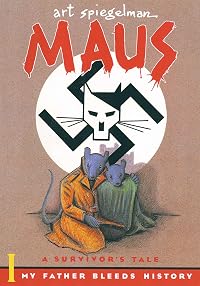
Omhyggeligt trevler han faderens vej gennem lejrsystemet op, og selvom det naturligvis er ubehagelig læsning, så er det ikke den bedste del af bogen. Rosenberg skriver selv, at han har svært ved at sige noget meningsfuldt, fordi den verden er så ufattelig. Hvis man er interesseret i den del af historien, vil jeg anbefale De skæbneløse af Imre Kertesz, Maus af Art Spiegelman eller nogle af de andre gribende vidnesbyrd. (Rosenberg fremhæver selv Primo Levi, som jeg (endnu) ikke har læst.)
Til gengæld er skildringen af kampen for at få en ny tilværelse efter krigen skarp. Der kommer mere kød på beretningen, fordi der nu er adgang til forældrenes breve, og fordi det er en verden, der er til at forholde sig til. I tilbageblik er det klart, at den nye tilværelse er et projekt, og at Göran selv er en vigtig brik i det puslespil, der skal binde forældrene til et nyt sted.
”Barnet skal gøre Stedet til sit, så en ny verden også skal blive mulig for dem.
Hvad Projektet ikke går ud på er at Stedet skal vende Barnet fra dem. Og hvad jeg langt senere har svært ved at forklare er, hvorfor han så let lader det gøre det.” (s. 35, m.o.)
Der er eksempler på antisemitisme i Södertalje, men det er ikke det egentlige problem. Problemet er, at Auschwitz kaster så store og så uforståelige skygger, at det er umuligt at tale med nogen om det. Selv ofrene har svært ved at tale sammen. På et tidspunkt prøver David at få Hala til at åbne op, og det får Göran til at reflektere:
”Jeg tror, at du fortæller for at få hende til at fortælle. Men tænk efter, hvor meget beretter du egentlig selv? Om dagene i Wöbbelin næsten ingenting. I Wöbbelin ’fik vi en ordentlig omgang’, det er så langt du strækker dig i detaljerigdom.” (s. 135, m.o.)
Bogen er skrevet på savn, kærlighed og en god portion vrede. Det er en vrede, der retter sig mod de nazistiske forbrydere og måske især på den vesttyske stat, der var alt for længe om at erkende sit ansvar. Det var ydmygende, at de overlevende i 1950’erne skulle kæmpe for at få erstatning. Det var ikke nok ”bare” at have været i Auschwitz og at have set sin familie blive ’selekteret’ og myrdet. Hvor urimeligt må det ikke være blevet opfattet at få afskrevet sine depressioner og angstanfald og hovedpineproblemer som en ”forsikringsneurose”?
Rosenberg har skrevet en personlig og vedkommende bog om hvor svært det er at overleve katastrofen. Jeg synes han overdriver brugen af bestemte vendinger og stilgreb (Stedet, opholdsmetaforen, den hyppige tiltaleform til den ikke-tilstedeværende far osv.) men det er mindre indvendinger over for en bog, som er med til at fastholde, at vi aldrig må glemme nazismens ufattelige forbrydelser. Det er jo ikke ’Et kort uppehåll’s skyld, at der er skrevet endnu bedre bøger om holocaust. show less
Sådan skriver Göran Rosenberg til sin far David, der efter en ufattelig rejse fra ghettoen i Lodz over Auschwitz, Braunschweig og Wöbbelin havner i Södertalje syd for Stockholm. Ikke ufattelig fordi den adskilte sig fra andre overlevendes rejse, men fordi nazismens koncentrationslejre er uforståelige og fordi overlevelse var så usandsynligt, at enhver rejse videre er et mirakel – og derfor ufatteligt.
Göran Rosenberg vokser op efter krigen i en ganske almindelig fremstormende svensk provinsby, hvor der var brug for al den arbejdskraft, der kunne skaffes, og hvor David og Hala på show more overfladen lever et normalt liv. De er tilsyneladende kommet sig over holocausts rædsler og har skabt sig en ny tilværelse.
Men nedenunder lurer dæmonerne, og den voksne Göran forsøger mange år senere at finde svaret på, hvorfor det sted, der var hans trygge barndomshjem, i sidste ende var uudholdeligt for faderen.
Omhyggeligt trevler han faderens vej gennem lejrsystemet op, og selvom det naturligvis er ubehagelig læsning, så er det ikke den bedste del af bogen. Rosenberg skriver selv, at han har svært ved at sige noget meningsfuldt, fordi den verden er så ufattelig. Hvis man er interesseret i den del af historien, vil jeg anbefale De skæbneløse af Imre Kertesz, Maus af Art Spiegelman eller nogle af de andre gribende vidnesbyrd. (Rosenberg fremhæver selv Primo Levi, som jeg (endnu) ikke har læst.)
Til gengæld er skildringen af kampen for at få en ny tilværelse efter krigen skarp. Der kommer mere kød på beretningen, fordi der nu er adgang til forældrenes breve, og fordi det er en verden, der er til at forholde sig til. I tilbageblik er det klart, at den nye tilværelse er et projekt, og at Göran selv er en vigtig brik i det puslespil, der skal binde forældrene til et nyt sted.
”Barnet skal gøre Stedet til sit, så en ny verden også skal blive mulig for dem.
Hvad Projektet ikke går ud på er at Stedet skal vende Barnet fra dem. Og hvad jeg langt senere har svært ved at forklare er, hvorfor han så let lader det gøre det.” (s. 35, m.o.)
Der er eksempler på antisemitisme i Södertalje, men det er ikke det egentlige problem. Problemet er, at Auschwitz kaster så store og så uforståelige skygger, at det er umuligt at tale med nogen om det. Selv ofrene har svært ved at tale sammen. På et tidspunkt prøver David at få Hala til at åbne op, og det får Göran til at reflektere:
”Jeg tror, at du fortæller for at få hende til at fortælle. Men tænk efter, hvor meget beretter du egentlig selv? Om dagene i Wöbbelin næsten ingenting. I Wöbbelin ’fik vi en ordentlig omgang’, det er så langt du strækker dig i detaljerigdom.” (s. 135, m.o.)
Bogen er skrevet på savn, kærlighed og en god portion vrede. Det er en vrede, der retter sig mod de nazistiske forbrydere og måske især på den vesttyske stat, der var alt for længe om at erkende sit ansvar. Det var ydmygende, at de overlevende i 1950’erne skulle kæmpe for at få erstatning. Det var ikke nok ”bare” at have været i Auschwitz og at have set sin familie blive ’selekteret’ og myrdet. Hvor urimeligt må det ikke være blevet opfattet at få afskrevet sine depressioner og angstanfald og hovedpineproblemer som en ”forsikringsneurose”?
Rosenberg har skrevet en personlig og vedkommende bog om hvor svært det er at overleve katastrofen. Jeg synes han overdriver brugen af bestemte vendinger og stilgreb (Stedet, opholdsmetaforen, den hyppige tiltaleform til den ikke-tilstedeværende far osv.) men det er mindre indvendinger over for en bog, som er med til at fastholde, at vi aldrig må glemme nazismens ufattelige forbrydelser. Det er jo ikke ’Et kort uppehåll’s skyld, at der er skrevet endnu bedre bøger om holocaust. show less
Oct 19, 2012 (Edited)Danish
Viktig tidsskildring om en tid och ett beteende som vi aldrig får glömma. Tyvärr har vi glömt då mycket av det som beskrivs i boken om upplevelserna i Sverige upprepar sig just nu. Saknar den fina prosa som stora författare besitter. Detta är skrivet av en journalist och språket är därefter.
May 12, 2021Swedish
Sorglig och ömsint berättelse om fadern. Märkligt att följa hans väg från gettot i Lódz genom olika koncentrations- och arbetsläger. Den lokalhistoriska berättelsen om Södertälje blir dock en aning tröttande om man inte alls är bekant med platsen.
Apr 27, 2014Swedish
This is a tragic, sad, beautiful book. As soon as it is available in English, German or another language accessible to my non-Swedish-speaking friends, I highly recommend that you read it. My Swedish-speaking friends can read it now! The title in English, roughly (my translation) "A brief stop on the way from Auschwitz".
Jul 25, 2025 (Edited)English (UK)
Members
- Recently Added By
Published Reviews
ThingScore 75
"Written with tender precision, “A Brief Stop on the Road From Auschwitz,” recently published in the United States, is the most powerful account I have read of the other death — the death after the camps"
added by jodi
Author Information

15+ Works 445 Members
Some Editions
Awards and Honors
Common Knowledge
- Canonical title
- A Brief Stop on the Road from Auschwitz
- Original title
- Ett kort uppehåll på vägen från Auschwitz
- Original publication date
- 2012 (1e édition originale suédoise, Albert Bonniers Förlag, Stockholm) (1e é | dition originale sué | doise, Albert Bonniers Fö | rlag, Stockholm); 2014-02-06 (1e traduction et édition française, Seuil) (1e traduction et é | dition franç | aise, Seuil)
- Important places
- Auschwitz concentration camp, Oświęcim, Lesser Poland, Poland; Sweden
- Important events
- World War II, German Occupation of Poland; Holocaust
- First words*
- Le lieu
Je me suis longtemps figuré qu'il était arrivé par le Pont, vu que le Pont est la porte du Lieu, et sa clé, mais c'est évidemment impossible ; il n'a pu arriver par le Pont puisqu'il a dû arriver p... (show all)ar le sud. [...] - Last words*
- (Click to show. Warning: May contain spoilers.)För dig ett kort uppehåll på vägen till Auschwitz.
- Publisher's editor*
- Freyer-Mauthner, Anne
- Original language
- Swedish
*Some information comes from Common Knowledge in other languages. Click "Edit" for more information.
Classifications
- Genres
- Nonfiction, Biography & Memoir, History, General Nonfiction
- DDC/MDS
- 940.5318092 — History & geography History of Europe History of Europe 1918- World War II, 1939-1945 Social, political, economic history; Holocaust Holocaust Standard subdivisions History, geographic treatment, biography Biography
- LCC
- DS135 .S89 .R6713 — History of Europe, Asia, Africa and Oceania Asia History of Asia Israel (Palestine). The Jews Jews outside of Palestine
- BISAC
Statistics
- Members
- 218
- Popularity
- 150,351
- Reviews
- 8
- Rating
- (4.10)
- Languages
- 8 — Danish, Dutch, English, Finnish, French, German, Polish, Swedish
- Media
- Paper, Ebook
- ISBNs
- 21
- ASINs
- 3