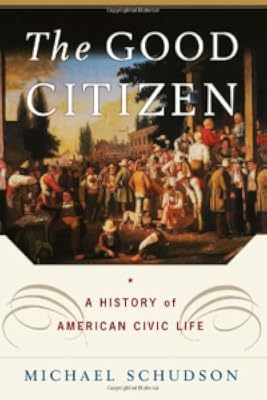
The Good Citizen: A History of American CIVIC Life
by Michael Schudson
113 Members (3.13)
On This Page
Description
In 1996 less than half of all eligible voters even bothered to vote. Fewer citizens each year follow government and public affairs regularly or even think they should. Is popular sovereignty a failure? Not necessarily, argues Michael Schudson in this provocative and unprecedented history of citizenship in America. Measuring voter turnout or attitudes is a poor approximation of citizenship. The meaning of voting -- and what counts as politics -- has changed dramatically over the course of our show more history. We have passed through three distinct eras in the definition and demonstration of good citizenship, and we are now struggling to find a footing in a fourth. When the nation was founded, being a citizen meant little more than for property-owning white males to delegate authority to a local gentleman -- and accept his complimentary glass of rum on election day. This politics of assent gave way early in the nineteenth century to a politics of parties. Parties conducted elaborate campaigns of torchlight processions and monster meetings; voting day was filled with banter, banners, fighting, and drinking. Party ticket peddlers handed voters preprinted tickets to place in the ballot box before stepping over to the tavern for a few dollars' reward from the party. We now call this corruption. At the time, it was called loyalty. The third model of citizenship, ushered in by Progressive reformers, was a politics of information. Campaigning became less emotional and more educational. Voting was by secret ballot. With civil-service reform, parties were limited in the rewards they could bestow. This was the era of the informed voter. Under this scheme, the twentieth century has been ruledby everyone, and no one, all at once. Today, after the rights revolution, political participation takes place in schools, at home, at work, and in the courts. We have made informed citizenship an overwhelming task. Schudson argues that it is time for a new model, in which we stop expecting everyone to do everything. The new citizenship must rest on citizens who are monitors of political danger rather than walking encyclopedias of governmental news. This fascinating tour of the past makes it possible to imagine a very different -- and much more satisfying -- future. show lessTags
Recommendations







Member Reviews
Members
- Recently Added By
Lists

Works Cited in The Life and Death of Democracy by John Keane
278 works; 1 member
Author Information
14+ Works 578 Members
Michael Schudson is Professor of Journalism at Columbia University.
Classifications
- Genres
- Nonfiction, Sociology, History, Politics and Government, General Nonfiction
- DDC/MDS
- 323.6 — Society, government, & culture Political science Civil Rights & Liberties/ Human Rights Citizenship
- LCC
- JK1764 .S37 — Political Science Political institutions and public administration (United States) Political institutions and public administration United States Political rights. Practical politics
- BISAC
Statistics
- Members
- 113
- Popularity
- 285,219
- Rating
- (3.13)
- Languages
- English
- Media
- Paper
- ISBNs
- 3
- ASINs
- 1