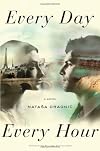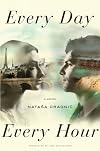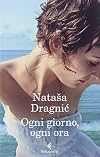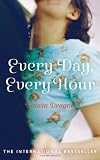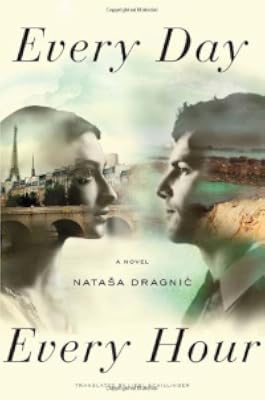
Every Day, Every Hour: A Novel
by Natasa Dragnic
On This Page
Description
Separated after falling in love as children in their seaside hometown in 1960s Croatia, rising artist Luka and successful actress Dora reunite by chance in Paris and struggle against formidable obstacles to be together.Tags
Recommendations






Member Reviews
Such a beautiful book.
Dora and Luka are children together, best friends, soul mates. And then, Dora's family moves away. Years later, after they have both forgotten each other, but not forgotten the connection they shared, they meet again and everything is beautiful and perfect and the world is right.
But, of course, it doesn't stay that way.
For me, this book was about choices. Luka and Dora are pulled apart by choices they have no control over, but their own choices keep them apart and affect all the people around them. It's a beautiful exploration of love and the way it can bring us to life or bury us in misery, but it's also an exploration of how that life or misery is a choice and not out of our control.
I was impressed with the show more direction the author took this story in. She could have left her characters in utter, beautiful misery. But instead, she seems to choose to embrace the beauty in those imperfect lives, in those lives full of disconnect and desperate love.
I wonder what it would be like in its original language. This is a translation, and, as far as I can tell, a well-done translation, so I have no complaints, but I'm curious - is it even more beautiful in its original German? show less
Dora and Luka are children together, best friends, soul mates. And then, Dora's family moves away. Years later, after they have both forgotten each other, but not forgotten the connection they shared, they meet again and everything is beautiful and perfect and the world is right.
But, of course, it doesn't stay that way.
For me, this book was about choices. Luka and Dora are pulled apart by choices they have no control over, but their own choices keep them apart and affect all the people around them. It's a beautiful exploration of love and the way it can bring us to life or bury us in misery, but it's also an exploration of how that life or misery is a choice and not out of our control.
I was impressed with the show more direction the author took this story in. She could have left her characters in utter, beautiful misery. But instead, she seems to choose to embrace the beauty in those imperfect lives, in those lives full of disconnect and desperate love.
I wonder what it would be like in its original language. This is a translation, and, as far as I can tell, a well-done translation, so I have no complaints, but I'm curious - is it even more beautiful in its original German? show less
This book was written in German by a native Croatian and translated into English by Liesl Schillinger. Reviewing a translated book makes me nervous because of all the meta-factors at play: there is the original story, to which I have no access, intellectually or otherwise; there is the issue of how well the translation captures the spirit as well as the letter of the original; and there are cultural questions – for example, if I find the dialogue strange, could it be that this is actually how conversation is made in other countries? A good translation is also an interpretation - sometimes that means it is best to leave in difference to demonstrate the features of a given culture, and sometimes meaning demands a looser show more correspondence.
The upshot is, I'm not sure if my less than enthusiastic response to this book was a reaction to the author's writing, the plot, the quality of the translation, or a result of my own shortcomings as a reader.
The story is about Luka and Dora, who first meet in kindergarten when Luka is five and Dora two. Right away I had problems. Luka sees Dora and is fascinated. He holds his breath and faints. Dora runs to his side, and, kissing him on the lips, whispers to him: "You are my sleeping beauty, only mine, wake up, my prince, you are my prince, only mine…”
That is one precocious two-year-old!
Four years pass, and the two children become inseparable. Everyone in the town of Makarska realizes it:
"There’s something strange in the air when Dora and Luka are together. You can’t call it calm, and you can’t call it storm. It smells of mandarin oranges and roasted almonds, of the sea and fresh-baked cookies, and springtime. As if they were enveloped in a cloud. Some people say the cloud is turquoise, others that it’s orange.”
Very pretty, but what does it mean? Feel free to think of me as coarse and too literal, but those sorts of passages have no meaning for me.
When Dora is six, her family moves to Paris, and she and Luka don’t see each other again. But something is missing in each of their lives. Sixteen years later they unexpectedly meet again, and after what to me is rather disjointed and stilted dialogue, they become lovers. [Caveat: Grammar and sentence construction can be so different in other languages - is the dialogue unsatisfactory to me because the translation was too literal?] But in spite of their passion for one another, the recent past intervenes, and they must part again. And come together and part. And so on.
The crux of the problem is that Luka may have developed into a handsome young man, as well as a painter of some note, but regrettably he never grew a backbone. What Dora sees in him is totally beyond me. But Dora perseveres, and she has an ace in the hole, so to speak. But will she use it? Can she? And most importantly, WHY WOULD SHE WANT TO BECAUSE LUKA IS A TOTAL IDIOT?!!!
Evaluation: Given all these insecurities I have in knowing what I’m reading (see especially the first paragraph on the problems of translations), I hope you take my limitations into account when I say I wasn’t very enamored of this book. I didn’t feel a comfort and ease in the dialogue between the two principals, nor did I sense any “chemistry”. (But maybe that’s how they express themselves in that culture - what do I know?) Additionally, the use of present tense for the past bothered me. I also found both characters irritating.
But don’t take my word for it, please! Rights have been sold in more than twenty countries! show less
The upshot is, I'm not sure if my less than enthusiastic response to this book was a reaction to the author's writing, the plot, the quality of the translation, or a result of my own shortcomings as a reader.
The story is about Luka and Dora, who first meet in kindergarten when Luka is five and Dora two. Right away I had problems. Luka sees Dora and is fascinated. He holds his breath and faints. Dora runs to his side, and, kissing him on the lips, whispers to him: "You are my sleeping beauty, only mine, wake up, my prince, you are my prince, only mine…”
That is one precocious two-year-old!
Four years pass, and the two children become inseparable. Everyone in the town of Makarska realizes it:
"There’s something strange in the air when Dora and Luka are together. You can’t call it calm, and you can’t call it storm. It smells of mandarin oranges and roasted almonds, of the sea and fresh-baked cookies, and springtime. As if they were enveloped in a cloud. Some people say the cloud is turquoise, others that it’s orange.”
Very pretty, but what does it mean? Feel free to think of me as coarse and too literal, but those sorts of passages have no meaning for me.
When Dora is six, her family moves to Paris, and she and Luka don’t see each other again. But something is missing in each of their lives. Sixteen years later they unexpectedly meet again, and after what to me is rather disjointed and stilted dialogue, they become lovers. [Caveat: Grammar and sentence construction can be so different in other languages - is the dialogue unsatisfactory to me because the translation was too literal?] But in spite of their passion for one another, the recent past intervenes, and they must part again. And come together and part. And so on.
The crux of the problem is that Luka may have developed into a handsome young man, as well as a painter of some note, but regrettably he never grew a backbone. What Dora sees in him is totally beyond me. But Dora perseveres, and she has an ace in the hole, so to speak. But will she use it? Can she? And most importantly, WHY WOULD SHE WANT TO BECAUSE LUKA IS A TOTAL IDIOT?!!!
Evaluation: Given all these insecurities I have in knowing what I’m reading (see especially the first paragraph on the problems of translations), I hope you take my limitations into account when I say I wasn’t very enamored of this book. I didn’t feel a comfort and ease in the dialogue between the two principals, nor did I sense any “chemistry”. (But maybe that’s how they express themselves in that culture - what do I know?) Additionally, the use of present tense for the past bothered me. I also found both characters irritating.
But don’t take my word for it, please! Rights have been sold in more than twenty countries! show less
Neste exacto momento terminei a leitura deste livro e não queria ir dormir sem antes expressar a minha opinião sobre ele. Ainda por mim fluem uma enormidade de emoções e por isso espero conseguir dar uma opinião recta acerca deste livro.
A autora trouxe até nós um livro incrível, escrito de uma forma simples mas tão intensa que a certa altura nos perguntamos nos porquês da vida, nos rumos incertos que esta por vezes toma. É uma história de amor que nos faz sonhar e acreditar no destino, num amor tão grande que pode durar uma vida inteira, mas que também nos pode ser arrebatado por terceiros de forma cruel.
Luka e Dora personificam um sem fim de casais apaixonados, que por várias razões se vêm afastados. A autora consegue, show more com alguma facilidade entranhar no leitor do seu livro uma história que pode muito bem ser a nossa. Talvez esse seja o grande trunfo deste livro, ao tornar este amor tão simples, mas ao mesmo tempo tão complicado, este passa a não ser só o amor entre Luka e Dora, mas também começamos a vive-lo como se fosse nosso. Não chorei, mas muitas foram as vezes que dei por mim com sentimentos próximos aos das personagens e por isso, apesar de não ter chegado a vias de facto, cheguei ao ponto de sentir os olhos a arder e também senti por algumas vezes o coração “pesado”. Queria que conseguissem ser felizes, queria que ultrapassassem os obstáculos, que deixassem tudo e todos para viverem aquele amor, mas havia sempre algo que os fazia recuar. A autora conseguiu até ao fim mostrar-se correcta e lutar contra a vontade de escrever o “final feliz” para as suas personagens, na minha opinião tudo isso torna tudo muito mais especial, afinal devemos passar por certas dificuldades para darmos o respectivo valor áquilo que no final iremos ter nas nossas mãos. As coisas não devem ser-nos dadas de mão beijada, devemos lutar para ter aquilo que mais desejamos e o amor não é excepção.
Claro que com estas palavras, só quero dizer que adorei o livro e adorei principalmente as passagens de Pablo Neruda e em como os seus poemas tornam toda a história tão especial. Apesar de fora do vulgar, este é um livro que nos faz pensar na vida e fez-me pensar que vale a pena lutar pela felicidade. Que cada dia, cada hora deve ser repleta de alegria e amor.
http://viv-omundoencantadodoslivros.blogspot.pt/2012/12/porto-editoraopiniao-cad... show less
A autora trouxe até nós um livro incrível, escrito de uma forma simples mas tão intensa que a certa altura nos perguntamos nos porquês da vida, nos rumos incertos que esta por vezes toma. É uma história de amor que nos faz sonhar e acreditar no destino, num amor tão grande que pode durar uma vida inteira, mas que também nos pode ser arrebatado por terceiros de forma cruel.
Luka e Dora personificam um sem fim de casais apaixonados, que por várias razões se vêm afastados. A autora consegue, show more com alguma facilidade entranhar no leitor do seu livro uma história que pode muito bem ser a nossa. Talvez esse seja o grande trunfo deste livro, ao tornar este amor tão simples, mas ao mesmo tempo tão complicado, este passa a não ser só o amor entre Luka e Dora, mas também começamos a vive-lo como se fosse nosso. Não chorei, mas muitas foram as vezes que dei por mim com sentimentos próximos aos das personagens e por isso, apesar de não ter chegado a vias de facto, cheguei ao ponto de sentir os olhos a arder e também senti por algumas vezes o coração “pesado”. Queria que conseguissem ser felizes, queria que ultrapassassem os obstáculos, que deixassem tudo e todos para viverem aquele amor, mas havia sempre algo que os fazia recuar. A autora conseguiu até ao fim mostrar-se correcta e lutar contra a vontade de escrever o “final feliz” para as suas personagens, na minha opinião tudo isso torna tudo muito mais especial, afinal devemos passar por certas dificuldades para darmos o respectivo valor áquilo que no final iremos ter nas nossas mãos. As coisas não devem ser-nos dadas de mão beijada, devemos lutar para ter aquilo que mais desejamos e o amor não é excepção.
Claro que com estas palavras, só quero dizer que adorei o livro e adorei principalmente as passagens de Pablo Neruda e em como os seus poemas tornam toda a história tão especial. Apesar de fora do vulgar, este é um livro que nos faz pensar na vida e fez-me pensar que vale a pena lutar pela felicidade. Que cada dia, cada hora deve ser repleta de alegria e amor.
http://viv-omundoencantadodoslivros.blogspot.pt/2012/12/porto-editoraopiniao-cad... show less
Neste exacto momento terminei a leitura deste livro e não queria ir dormir sem antes expressar a minha opinião sobre ele. Ainda por mim fluem uma enormidade de emoções e por isso espero conseguir dar uma opinião recta acerca deste livro.
A autora trouxe até nós um livro incrível, escrito de uma forma simples mas tão intensa que a certa altura nos perguntamos nos porquês da vida, nos rumos incertos que esta por vezes toma. É uma história de amor que nos faz sonhar e acreditar no destino, num amor tão grande que pode durar uma vida inteira, mas que também nos pode ser arrebatado por terceiros de forma cruel.
Luka e Dora personificam um sem fim de casais apaixonados, que por várias razões se vêm afastados. A autora consegue, show more com alguma facilidade entranhar no leitor do seu livro uma história que pode muito bem ser a nossa. Talvez esse seja o grande trunfo deste livro, ao tornar este amor tão simples, mas ao mesmo tempo tão complicado, este passa a não ser só o amor entre Luka e Dora, mas também começamos a vive-lo como se fosse nosso. Não chorei, mas muitas foram as vezes que dei por mim com sentimentos próximos aos das personagens e por isso, apesar de não ter chegado a vias de facto, cheguei ao ponto de sentir os olhos a arder e também senti por algumas vezes o coração “pesado”. Queria que conseguissem ser felizes, queria que ultrapassassem os obstáculos, que deixassem tudo e todos para viverem aquele amor, mas havia sempre algo que os fazia recuar. A autora conseguiu até ao fim mostrar-se correcta e lutar contra a vontade de escrever o “final feliz” para as suas personagens, na minha opinião tudo isso torna tudo muito mais especial, afinal devemos passar por certas dificuldades para darmos o respectivo valor áquilo que no final iremos ter nas nossas mãos. As coisas não devem ser-nos dadas de mão beijada, devemos lutar para ter aquilo que mais desejamos e o amor não é excepção.
Claro que com estas palavras, só quero dizer que adorei o livro e adorei principalmente as passagens de Pablo Neruda e em como os seus poemas tornam toda a história tão especial. Apesar de fora do vulgar, este é um livro que nos faz pensar na vida e fez-me pensar que vale a pena lutar pela felicidade. Que cada dia, cada hora deve ser repleta de alegria e amor.
http://viv-omundoencantadodoslivros.blogspot.pt/2012/12/porto-editoraopiniao-cad... show less
A autora trouxe até nós um livro incrível, escrito de uma forma simples mas tão intensa que a certa altura nos perguntamos nos porquês da vida, nos rumos incertos que esta por vezes toma. É uma história de amor que nos faz sonhar e acreditar no destino, num amor tão grande que pode durar uma vida inteira, mas que também nos pode ser arrebatado por terceiros de forma cruel.
Luka e Dora personificam um sem fim de casais apaixonados, que por várias razões se vêm afastados. A autora consegue, show more com alguma facilidade entranhar no leitor do seu livro uma história que pode muito bem ser a nossa. Talvez esse seja o grande trunfo deste livro, ao tornar este amor tão simples, mas ao mesmo tempo tão complicado, este passa a não ser só o amor entre Luka e Dora, mas também começamos a vive-lo como se fosse nosso. Não chorei, mas muitas foram as vezes que dei por mim com sentimentos próximos aos das personagens e por isso, apesar de não ter chegado a vias de facto, cheguei ao ponto de sentir os olhos a arder e também senti por algumas vezes o coração “pesado”. Queria que conseguissem ser felizes, queria que ultrapassassem os obstáculos, que deixassem tudo e todos para viverem aquele amor, mas havia sempre algo que os fazia recuar. A autora conseguiu até ao fim mostrar-se correcta e lutar contra a vontade de escrever o “final feliz” para as suas personagens, na minha opinião tudo isso torna tudo muito mais especial, afinal devemos passar por certas dificuldades para darmos o respectivo valor áquilo que no final iremos ter nas nossas mãos. As coisas não devem ser-nos dadas de mão beijada, devemos lutar para ter aquilo que mais desejamos e o amor não é excepção.
Claro que com estas palavras, só quero dizer que adorei o livro e adorei principalmente as passagens de Pablo Neruda e em como os seus poemas tornam toda a história tão especial. Apesar de fora do vulgar, este é um livro que nos faz pensar na vida e fez-me pensar que vale a pena lutar pela felicidade. Que cada dia, cada hora deve ser repleta de alegria e amor.
http://viv-omundoencantadodoslivros.blogspot.pt/2012/12/porto-editoraopiniao-cad... show less
Every Day, Every Hour by Natasa Dragnic is a hyperbolic romance in a small town called Makarska in Croatia that begins from childhood between a shy boy named Luka whose own anxiety causes him to have fainting spells and an extroverted, exuberant girl named Dora whose beauty and demands cause both drama and awe.
The narrative begins in a juvenile tone most probably because the voices speak as young children. But, even as the story progresses and the children grow into young men and women, the language remains for the most part, juvenile. It is difficult to decipher whether this is a hindrance on behalf of the author’s inability to write better, if omissions were made in context by its translation, or if it was indeed intentional in show more order to emphasize the over-sweeping indulgences of romance?
While the story is centred around the two characters, Luka and Dora, they are surrounded by a cast of characters who are mildly amused, if not curious or adamantly vehement and bewildered by their passion and connection to one another.
Zoran, Luka’s father understands the weight of love and the burden of responsibility. Ana, Luka’s sister, whose impatience with the fluttering of romance far outweighs the need to support it due to her firm belief in responsibility and obligation. And Klara, whose blinding love and desperation moves her to succumb to a cold and lifeless marriage.
While the premise of the story is an admirable one—an overpowering love that surpasses other forms of passion, even time itself—the writing fails itself in its over-simplification and cliché, which, rather than fully evoke the empathy of its readers towards the passion of the characters’ romance, may indeed deter them from it due to the tone of its exaggerated melodrama.
The characters themselves are deeply flawed, Luka, more than Dora, in his inability to fester courage to speak, stand for, and affirm his professions of love through a simple act that would undoubtedly free him to do so.
As for Dora, though a much braver spirit than Luka in her ability to go after what she wants with a voracity and fervour, does not, in her desire to claim the love that rightfully belongs to her, ever directly face the obstacle that hinders her freedom from being with her lover.
To read the rest of this review, please visit my blog, The Bibliotaphe's Closet: http://zaraalexis.wordpress.com/2012/07/09/every-day-every-hour-a-review/
Thanks,
Zara show less
The narrative begins in a juvenile tone most probably because the voices speak as young children. But, even as the story progresses and the children grow into young men and women, the language remains for the most part, juvenile. It is difficult to decipher whether this is a hindrance on behalf of the author’s inability to write better, if omissions were made in context by its translation, or if it was indeed intentional in show more order to emphasize the over-sweeping indulgences of romance?
While the story is centred around the two characters, Luka and Dora, they are surrounded by a cast of characters who are mildly amused, if not curious or adamantly vehement and bewildered by their passion and connection to one another.
Zoran, Luka’s father understands the weight of love and the burden of responsibility. Ana, Luka’s sister, whose impatience with the fluttering of romance far outweighs the need to support it due to her firm belief in responsibility and obligation. And Klara, whose blinding love and desperation moves her to succumb to a cold and lifeless marriage.
While the premise of the story is an admirable one—an overpowering love that surpasses other forms of passion, even time itself—the writing fails itself in its over-simplification and cliché, which, rather than fully evoke the empathy of its readers towards the passion of the characters’ romance, may indeed deter them from it due to the tone of its exaggerated melodrama.
The characters themselves are deeply flawed, Luka, more than Dora, in his inability to fester courage to speak, stand for, and affirm his professions of love through a simple act that would undoubtedly free him to do so.
As for Dora, though a much braver spirit than Luka in her ability to go after what she wants with a voracity and fervour, does not, in her desire to claim the love that rightfully belongs to her, ever directly face the obstacle that hinders her freedom from being with her lover.
To read the rest of this review, please visit my blog, The Bibliotaphe's Closet: http://zaraalexis.wordpress.com/2012/07/09/every-day-every-hour-a-review/
Thanks,
Zara show less
This is beautifully written that just made me love love. I loved the author's writing style and just how easily and distinguishable it is when she goes through different POVs.
The first chapter of Every day, every hour by Natasa Dragnic reads like poetry...I'm only 3 chapters in and this book has already taken my breath away....I am in love with the story, with two main characters and with her writing style...can't put it down....
Members
- Recently Added By
Lists

Translingualism
191 works; 4 members
Author Information
7 Works 133 Members
Series
Belongs to Publisher Series
Common Knowledge
- Canonical title*
- Jeden Tag, jede Stunde
- Original title
- Jeden Tag, jede Stunde
- Original publication date
- 2011
- Important places*
- Kroatien; Paris, Frankreich
- Dedication*
- für B.
- First words*
- "Es ist schwer zu glauben."
- Last words*
- (Click to show. Warning: May contain spoilers.)"Lass uns hier verschwinden."
- Original language*
- Deutsch
*Some information comes from Common Knowledge in other languages. Click "Edit" for more information.
Classifications
Statistics
- Members
- 113
- Popularity
- 287,081
- Reviews
- 10
- Rating
- (3.42)
- Languages
- 9 — Czech, Dutch, English, Finnish, French, German, Italian, Portuguese, Spanish
- Media
- Paper, Ebook
- ISBNs
- 22
- ASINs
- 3