On This Page
Description
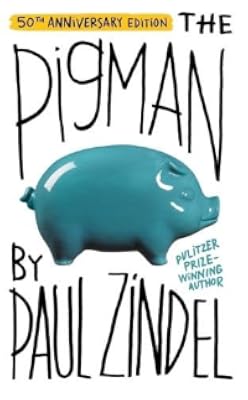
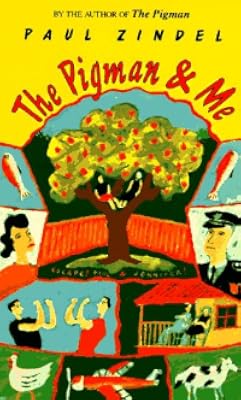
A teenage boy and girl, high school sophomores from unhappy homes, tell of their bizarre relationship with an old man.Tags
Recommendations



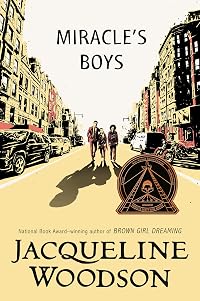
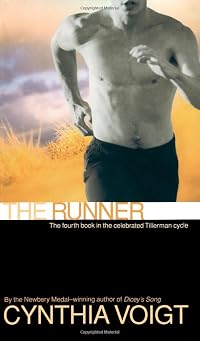
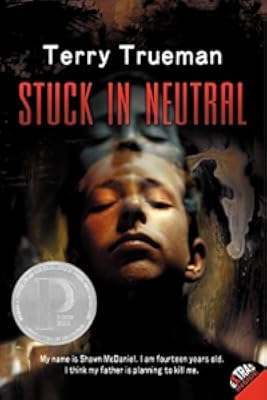
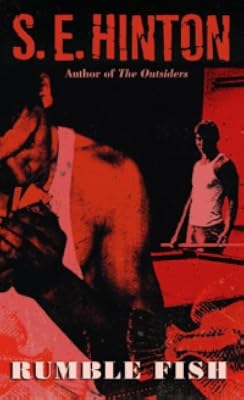






Member Reviews
I read this for Banned Book Week not knowing what to expect and whoa man did I love love love it. It's like Catcher in the Rye only with a girl and less self-obsessed (go figure). It's been challenged because the kids in it drink and smoke and hate school and have awful parents and swear (although the swearing is mostly like "@#$%").
It's amazing how this book manages to be so dark without having any murders or anything in it. The characters were very real to me, especially Mr. Pignati -- I could feel his grief and his loneliness like it was my own. The climax seemed inevitable (which takes a lot more skill than you'd think) and, even more impressive, the book was very timeless. It was written in the 1960s but, except for a few minor details, it could have taken place yesterday. No wonder this is a youth classic.
I'd like it more if I were a fan of Catcher in the Rye. These kids are messed up for not good enough reasons except just the zeitgeist of the era. And the themes of the story are ambiguous. A reviewer that I respect says that the kids are to blame for Pignati's death. I say that his grief, triggered by the death of Bobo, is. The party has nothing to do with Pignati, the loss of the pigs hurts him but he'd get over it. He's just worn down. Note that at least he did have a few months of fun with the kids, and that he did forgive them. The party served to further force maturity on the kids.
I guess that's why it's such a famous book. Very discussable. I identify with Pignati because I'm his age and have no good reason to try to live a lot show more longer. Kids will likely identify with the kids. Hopefully nobody will identify with the parents. And trying to understand the book's popularity by careful reading will enable a reader to see others' points of view... another reason it's been so widely read and taught.
I'm surprised that I've not heard hype this year, its 50th anniversary.
I mean, sure, it's dated in some ways... but that actually adds another layer for a group to discuss. What was it like to live in an era when it was not considered child abuse to encourage your 10 yo to drink the dregs of beer after a party? When a private nurse had only her own resources to discourage sexual harassment from patients and employers? Etc....
I will recommend it, mainly because it's short and because it is a canon touchstone, at least for those of us who were young when it was first published. I esp. recommend it to fans of Salinger. I cannot suggest any of you will actually enjoy it or even feel edified by it, but still I am very glad I *finally* got around to reading and hope you can find time to do so, too.
Btw, it's not your typical YA fare at all, and better for adults. I don't think I would have appreciated at all as a teen, esp. because I had no point of context in common with these kids. show less
I guess that's why it's such a famous book. Very discussable. I identify with Pignati because I'm his age and have no good reason to try to live a lot show more longer. Kids will likely identify with the kids. Hopefully nobody will identify with the parents. And trying to understand the book's popularity by careful reading will enable a reader to see others' points of view... another reason it's been so widely read and taught.
I'm surprised that I've not heard hype this year, its 50th anniversary.
I mean, sure, it's dated in some ways... but that actually adds another layer for a group to discuss. What was it like to live in an era when it was not considered child abuse to encourage your 10 yo to drink the dregs of beer after a party? When a private nurse had only her own resources to discourage sexual harassment from patients and employers? Etc....
I will recommend it, mainly because it's short and because it is a canon touchstone, at least for those of us who were young when it was first published. I esp. recommend it to fans of Salinger. I cannot suggest any of you will actually enjoy it or even feel edified by it, but still I am very glad I *finally* got around to reading and hope you can find time to do so, too.
Btw, it's not your typical YA fare at all, and better for adults. I don't think I would have appreciated at all as a teen, esp. because I had no point of context in common with these kids. show less
“A most unusual friendship” it says on the back cover of Paul Zindel’s The Pigman and indeed it was. It was unusual, crazy, heartbreaking, heartwarming, exciting, and most of all it was absolutely amazing. It was full of ups and downs, twists and turns and there wasn’t one moment that it didn’t make me feel an emotion with such intensity, that I thought I was there.
In the book John and Lorraine, two sophomores decided to play a practical joke on an old man named the Angelo Pignati, but the joke goes differently than the two expected and they be come great friends with the old man. Eventually they become more comfortable around the Mr. Pignati than around their own parents, but only a few months after they met, Mr.Pignati show more dies an unexpected death. So John and Lorraine share the story they don’t want to let go of. They tell the story of the extraordinary friendship they shared with Mr. Pignati. They tell the story of the strong love and compassion they felt towards him and each other. They even tell the story of the secrets they kept from him and the secrets he kept from them. They also tell the story of the backstabbing that caused havoc and a scarred friendship. And I can’t forget the story of baboons and the pigs that he kept close to his heart. And most importantly they tell the story of the Pigman and how he changed their lives forever.
This book was one of the best books I have ever read, it tugged on my heartstrings and my emotions. It also made me feel emotions much deeper than other books I have read. It has such an interesting and crazy plot that with each ending chapter it made me wonder what’s going to happen next, and most of the time it was something that I never expected. Something that was interesting and that made me love the book even more was that John and Lorraine were such different characters that when they switched perspectives each chapter it was like reading a whole different story. But the one thing that really made me love the book, the thing that sealed the deal for me, was that every word, every paragraph, and every chapter was so well written that you felt like you diving into the book and living every moment like you were there. show less
In the book John and Lorraine, two sophomores decided to play a practical joke on an old man named the Angelo Pignati, but the joke goes differently than the two expected and they be come great friends with the old man. Eventually they become more comfortable around the Mr. Pignati than around their own parents, but only a few months after they met, Mr.Pignati show more dies an unexpected death. So John and Lorraine share the story they don’t want to let go of. They tell the story of the extraordinary friendship they shared with Mr. Pignati. They tell the story of the strong love and compassion they felt towards him and each other. They even tell the story of the secrets they kept from him and the secrets he kept from them. They also tell the story of the backstabbing that caused havoc and a scarred friendship. And I can’t forget the story of baboons and the pigs that he kept close to his heart. And most importantly they tell the story of the Pigman and how he changed their lives forever.
This book was one of the best books I have ever read, it tugged on my heartstrings and my emotions. It also made me feel emotions much deeper than other books I have read. It has such an interesting and crazy plot that with each ending chapter it made me wonder what’s going to happen next, and most of the time it was something that I never expected. Something that was interesting and that made me love the book even more was that John and Lorraine were such different characters that when they switched perspectives each chapter it was like reading a whole different story. But the one thing that really made me love the book, the thing that sealed the deal for me, was that every word, every paragraph, and every chapter was so well written that you felt like you diving into the book and living every moment like you were there. show less
I first read this book over 40 years ago when I was a tween and a massive reader. I often sat out on the porch with my face buried in a book, and not very much has changed since the 70s. I loved Paul Zindel and read all his available books at the time, along with Judy Blume.
It is quite a different experience reading the same thing @ age 55. It affected me much more now than then, as now it is very close to the bone, as the "Pigman" is referred to as ' an old man ' when he is in his late 50s, so just a few years older than myself.
I felt so keenly what he must have felt like to see so many of his things and memories destroyed, after being so lonely for so long, by two teens he befriends. He must have felt it was the ultimate betrayal.
The show more ending is very very sad, not because of death, but that one can die and the only friend on earth that the person has is an orangatan at the zoo.
As I have no family, husband or children and at my current age, I bristled a bit, before feeling a few teardrops fall. show less
It is quite a different experience reading the same thing @ age 55. It affected me much more now than then, as now it is very close to the bone, as the "Pigman" is referred to as ' an old man ' when he is in his late 50s, so just a few years older than myself.
I felt so keenly what he must have felt like to see so many of his things and memories destroyed, after being so lonely for so long, by two teens he befriends. He must have felt it was the ultimate betrayal.
The show more ending is very very sad, not because of death, but that one can die and the only friend on earth that the person has is an orangatan at the zoo.
As I have no family, husband or children and at my current age, I bristled a bit, before feeling a few teardrops fall. show less
Read it many years ago and liked it although not nearly as much as My Darling, My hamburger.
It is still a great book though, just really REALLY depressing.
Still Paul Zindel wrote in such a magnificent way and got into his characters heads so magnificently that I have to give credit w here credit's due.
Even if this was not one of my favorites, it is a superb book.
It is still a great book though, just really REALLY depressing.
Still Paul Zindel wrote in such a magnificent way and got into his characters heads so magnificently that I have to give credit w here credit's due.
Even if this was not one of my favorites, it is a superb book.
I had a copy of The Pigman on my bookshelf for years. For some reason, perhaps because it’s a small paperback, easily overlooked, I never got around to reading it. A shame, really, because this is one of the finest books about adolescent pain and confusion I have ever had the pleasure of reading. Zindel’s book tells the story of John Conlan, a brooding, troubled young man with an alcoholic father and a gift for blowing up high school toilets, and his best friend, Lorraine Jensen, an intelligent, somewhat homely girl, whose own mother is largely absent from her life. One night, while making prank calls, they end up on the phone with a weird old neighbor, Mr. Angelo Pignati (the Pigman). A relationship soon develops between the trio show more that is difficult to describe and impossible to forget, which is probably for the best—to reveal more would be giving away too much. One of the first novels to fall squarely into the newly emerging field of Young Adult literature, The Pigman has lost none of its power in the over 40 years since it was published. This short excerpt is a vivid example of Zindel’s gifts as an author fully capable of navigating the complexities of the adolescent mind with great compassion, humor, and insight:
A card she calls me, which sounds ridiculous coming out of the mouth of an old-maid English teacher who’s practically fifty years old. I really hate it when a teacher has to show that she isn’t behind the times by using some expression which sounds so up-to-date you know for sure she’s behind the times...In fact, the thing Lorraine and I liked best about the Pigman was that he didn’t go around saying we were cards or jazzy or cool or hip. He said we were delightful, and if there’s one way to show how much you’re not trying to make believe you’re not behind the times, it’s to go around saying people are delightful (p.14).
I really can’t recommend this book highly enough. show less
A card she calls me, which sounds ridiculous coming out of the mouth of an old-maid English teacher who’s practically fifty years old. I really hate it when a teacher has to show that she isn’t behind the times by using some expression which sounds so up-to-date you know for sure she’s behind the times...In fact, the thing Lorraine and I liked best about the Pigman was that he didn’t go around saying we were cards or jazzy or cool or hip. He said we were delightful, and if there’s one way to show how much you’re not trying to make believe you’re not behind the times, it’s to go around saying people are delightful (p.14).
I really can’t recommend this book highly enough. show less
Members
- Recently Added By
Lists

Elevenses
316 works; 88 members

Most Popular Young Adult Lit on LT
100 works; 4 members

Banned Books Week 2014
268 works; 63 members

Amanda's Guaranteed Books
110 works; 5 members

Mensa for Kids Excellence in Reading Award Program (Grades 7-8)
62 works; 3 members

Mensa for Kids Excellence in Reading Award Program (Grades 7-8)
62 works; 1 member

Banned or Challenged Books
402 works; 43 members
Before Austen Comes Aesop
318 works; 9 members

Books Read in 2022
5,226 works; 115 members

Best Sellers / Popular 1968
237 works; 5 members

Gen X Library
245 works; 4 members
School Made Us Read It
380 works; 197 members

B-B to Get
131 works; 1 member
Author Information

72+ Works 9,283 Members
Paul Zindel Born on Staten Island, New York, Zindel was raised by a single mother who pursued a variety of odd and mostly unsuccessful jobs and took in terminally ill patients to supplement the family income. Due to her eccentricity and restlessness, the mother moved the family from one apartment to another, making it difficult for Zindel to form show more lasting friendships. As a consequence, the boy lived in the world of his imagination, developing interests in both science and writing. Zindel majored in chemistry at Wagner College on Staten Island, completing both bachelors and masters degrees. During this period he also took a creative-writing course offered by the playwright Edward Albee. After college he worked briefly as a technical writer for a chemical company and then discovered a more fulfilling vocation as a teacher of chemistry and physics at a Staten Island high school. It was during this period in the early 1960s that Zindel was able to develop his potential as a playwright by drawing on his own background as well as the experiences of his young students. The Effect of Gamma Rays on Man-in-the-Moon Marigolds premiered at the Alley Theater in Houston in 1965, was presented in a condensed version on television the following year, and finally opened off-Broadway at the Mercer-O'Casey Theater in 1970. Because of a fire in the theater, the play was moved, with a new cast, to the New Theater on Broadway, where it ran for a total of 819 performances. In addition to being enormously popular, Gamma Rays earned in 1970 an Obie Award as the best play of the season, the New York Drama Critics Circle Award as the best American play, and the Vernon Rice Drama Desk Award for most promising playwright. In 1971 the play was awarded the Pulitzer Prize in Drama. Gamma Rays is the story of an embittered, half-mad widow, Beatrice Hunsdorfer; her teenaged daughters, Ruth and Tillie; and Nanny, a decrepit old woman who boards with them. The family lives in chaos, with Beatrice dealing out petty vengeance to everyone. Nanny has been abandoned by her daughter. Ruth is wanton, untidy, and subject to seizures. Tillie, however, has become interested in science and enters her marigold experiment in the science fair; by exposing the marigold seeds to radiation, she shows that some produce normal plants, others produce mutations with beautiful double blooms, while still others die. The metaphor, of course, is that Tillie has emerged from her chaotic environment as a beautiful and whole person, a human "double bloom." Zindel's other plays include And Miss Reardon Drinks a Little (1971), The Secret Affairs of Mildred Wild(1973), Let Me Hear You Whisper (1973), and Ladies at the Alamo(1975). While these plays continue to show Zindel's skill in writing excellent roles for women, none of them have matched the critical and popular success of Gamma Rays. Since the late 1960s, Zindel has also written several novels for young adults. The Pigman (1968), which is about a lonely widower and two destructive teenagers, has sold more than 1 million copies. His other novels include My Darling, My Hamburger (1969), I Never Loved Your Mind (1970), Pardon Me, You're Stepping on My Eyeball (1976), Confessions of a Teenage Baboon (1977), and The Undertaker's Gone Bananas (1978). As in Gamma Rays, these works display not only a penchant for grotesque humor but an uncanny awareness of the problems of teenagers. Zindel's works, which also include several screenplays, explore the themes of loneliness, escapism, and eccentricity. His best works are humorous, perceptive, and warm; they present an affirmation of life emerging from desperate and grotesque circumstances. He is especially noted for his excellent women's roles, which has helped sustain him as a best-selling playwright for school and community groups. (Bowker Author Biography) show less
Some Editions
Awards and Honors
Awards
Notable Lists
Series

Work Relationships
Is contained in
Has as a student's study guide
Has as a teacher's guide
Common Knowledge
- Original publication date
- 1968-10-09
- People/Characters
- John Conlan; Angelo Pignati (Pigman); Lorraine Jensen
- Important places
- Staten Island, New York, New York, USA
- Dedication
- For the Boy and Girl of Stapleton
- First words
- Being of sound mind and body on this 15th day of April in our sophomore year at Franklin High School, let it be known that Lorraine Jensen and John Conlon have decided to record the facts, and only the facts about our experie... (show all)nces with Mr. Angelo Pignati.
- Quotations
- We had trespassed too-been where we didn't belong, and we were being punished for it. Mr. Pignati had paid with his life. But when he died, something in us had died as well.
- Last words
- (Click to show. Warning: May contain spoilers.)They build their own cages, we could almost hear the Pigman whisper, as he took his children with him.
Classifications
- Genres
- Teen, Fiction and Literature, Children's Books, Young Adult
- DDC/MDS
- 813.54 — Literature & rhetoric American literature in English American fiction in English 1900-1999 1945-1999
- LCC
- PZ7 .Z647 .P — Language and Literature Fiction and juvenile belles lettres Fiction and juvenile belles lettres Juvenile belles lettres
- BISAC
Statistics
- Members
- 3,280
- Popularity
- 5,238
- Reviews
- 75
- Rating
- (3.52)
- Languages
- 6 — Czech, Danish, Dutch, English, German, Korean
- Media
- Paper, Audiobook, Ebook
- ISBNs
- 55
- UPCs
- 1
- ASINs
- 28