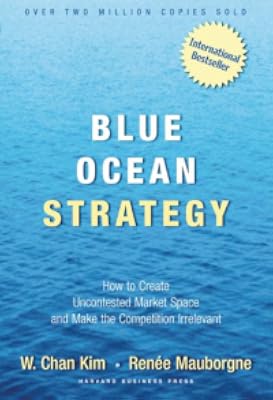
Blue Ocean Strategy: How to Create Uncontested Market Space and Make Competition Irrelevant
by W. Chan Kim (Author), Renée Mauborgne (Author), Renee Mauborgne
On This Page
Description
Business. Nonfiction. Winning by not competing! This international best seller upends traditional thinking with principles and tools to make the competition irrelevant. In an audiobook that challenges everything you thought you knew, W. Chan Kim and Renee Mauborgne assert that tomorrow's leading companies will succeed, not by battling their rivals for market share in the bloody "red ocean" of a shrinking profit pool, but by creating "blue oceans" of untapped new market spaces ripe for show more growth. Based on a study of 150 strategic moves, spanning more than 100 years and 30 industries, they provide a systematic approach that every company can use to render rivals obsolete and unleash new demand: Reconstruct market boundaries Focus on the big picture Reach beyond existing demand Get the strategic sequence right Overcome organizational hurdles Build execution into strategy. show lessTags
Recommendations

Member Reviews
I love this book because it completely reframes how we think about competition and business growth. Blue Ocean Strategy by W. Chan Kim and Renée Mauborgne challenges the traditional notion that companies must fight over existing market share. Instead, it presents a compelling framework for creating “blue oceans”, untapped market spaces where competition is irrelevant. The concepts are backed by extensive research and real-world examples, making the ideas both credible and inspiring.
What stood out to me most was how actionable the book is. The authors introduce tools and strategies, like the Strategy Canvas and the Four Actions Framework, that guide companies in discovering new value propositions and breaking away from crowded show more industries. It’s not just theory; it’s a practical roadmap for innovation that encourages creative thinking, risk-taking, and long-term planning. Reading it made me reflect on how even established businesses can reinvent themselves by looking beyond the obvious competitive battles.
If there’s a minor critique, it’s that some of the case studies are dated or industry-specific, which may feel less relevant to certain sectors today. However, the underlying principles are timeless and widely applicable. I recommend this book to entrepreneurs, managers, and anyone interested in strategic innovation, it’s a must-read for thinking differently about growth and market opportunities. show less
What stood out to me most was how actionable the book is. The authors introduce tools and strategies, like the Strategy Canvas and the Four Actions Framework, that guide companies in discovering new value propositions and breaking away from crowded show more industries. It’s not just theory; it’s a practical roadmap for innovation that encourages creative thinking, risk-taking, and long-term planning. Reading it made me reflect on how even established businesses can reinvent themselves by looking beyond the obvious competitive battles.
If there’s a minor critique, it’s that some of the case studies are dated or industry-specific, which may feel less relevant to certain sectors today. However, the underlying principles are timeless and widely applicable. I recommend this book to entrepreneurs, managers, and anyone interested in strategic innovation, it’s a must-read for thinking differently about growth and market opportunities. show less
A little unrealistic from my perspective. This is in the top echelon of business books, no doubt. However, I thought it was a little idealistic in its portrayal that any business can seek and find a blue ocean strategy, that the concept is original, and somewhat trivializes switching out revenue. I thought the concept of competing against substitutes using a new business model was a recast of Michael Porter, with a dash of the Innovator's Solution by Christensen. It seemed to not be written by CEO's but more like consultants or theoreticians who'd found a trend or phenomenon, rather than how -- if you own or run an existing business - can you rip it toward Blue Ocean. This will be a great book if you like Jim Collins or Christensen or show more generally business books, but moreso if you are aspiring rather than existing CEO. show less
While not terribly robust academically, it illustrates a great framework for thinking about innovation and change in business. This is the best read on that subject that I've seen that really shows what I know to be true in practice. Really explains how to use something old like the Michael Porter structural analysis of industries for inventive creative solutions to transform boring dumb industries.
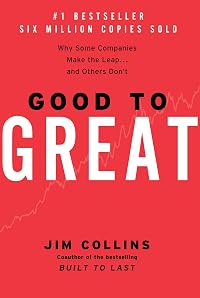
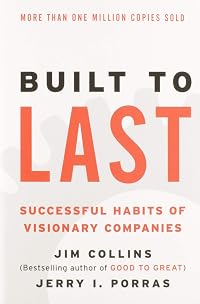
Starts out criticizing "Built To Last" by saying that companies are not the proper "atom" to evaluate... H-P did well, but didn't even keep up with its market.
The proper "atom" to evaluate is initiatives. Initiatives allow you to see how to really prosper.
I think I agree with the assessment that this book is more of a description of how things *could* be than a how-to manual, but even that's a useful service since it adds another type of story to the "Business Narrative"
The proper "atom" to evaluate is initiatives. Initiatives allow you to see how to really prosper.
I think I agree with the assessment that this book is more of a description of how things *could* be than a how-to manual, but even that's a useful service since it adds another type of story to the "Business Narrative"
Blue Ocean Strategy really opened my eyes to a new way of looking at strategy. Although each of the companies highlighted in the book were not new information for me, I had never thought about what they've accomplished in terms of a Blue Ocean Strategy. This book takes something that any business person knows intuitively and puts it into a concrete methodology that can be applied in your own business.
One such methodology is the Eliminate-Reduce-Raise-Create grid. Since reading that chapter, I've been applying the grid to nearly everything I've come across. It is a great way to have a fresh look at just about every aspect of your business. Look at your competition and identify what they are doing that can be completely eliminated show more without damaging your value to customers. For Southwest Airlines, it was seat assignment. Then look at what you can reduce that will set you apart. Again, for Southwest, it was meals. Now, although serving peanuts instead of a full meal is common-place today, when Southwest started doing it, it was a completely new idea. Next, look at what you can raise. What is your competition doing that you can do better, but that will also raise the value for your customers? For Southwest, it was the level of service. Southwest is known for their great customer service. Finally, what can you create that your competition isn't doing? Southwest created the short point-to-point departure system that made shorter trips more affordable for everyone.
There are a lot of other tools in this book that any business owner or corporate department manager can quickly apply and improve in their own business. show less
One such methodology is the Eliminate-Reduce-Raise-Create grid. Since reading that chapter, I've been applying the grid to nearly everything I've come across. It is a great way to have a fresh look at just about every aspect of your business. Look at your competition and identify what they are doing that can be completely eliminated show more without damaging your value to customers. For Southwest Airlines, it was seat assignment. Then look at what you can reduce that will set you apart. Again, for Southwest, it was meals. Now, although serving peanuts instead of a full meal is common-place today, when Southwest started doing it, it was a completely new idea. Next, look at what you can raise. What is your competition doing that you can do better, but that will also raise the value for your customers? For Southwest, it was the level of service. Southwest is known for their great customer service. Finally, what can you create that your competition isn't doing? Southwest created the short point-to-point departure system that made shorter trips more affordable for everyone.
There are a lot of other tools in this book that any business owner or corporate department manager can quickly apply and improve in their own business. show less
This book had me for the first part and lost me for the second. The first half of the book explains Blue Ocean Strategies. Go where your competitors aren't sounds impossible. It is not. And being reminded in such a compelling and forceful way was well worth the price of admission. The implementation guide is clearly created by smart academics. It is too ivory tower and not nearly enough throw the computer on the ground and figure it out. Way too complicated, these are Harvard guys after all (LOL). I walked away thinking no way you could go through the exercise without a consultant (which may be the point), but it doesn't matter as there is plenty of useful, actionable stuff in the first half.
This is a classic business book about creating new markets rather than competing in existing markets. The core idea is simple, but the authors go through a fairly rigorous (for a business book) system, including how to accomplish this with existing teams and organizations. They provide solid examples of products, companies, and industries where this kind of innovation has happened. Especially since it is so short and clear, it is a good book for anyone in business. It probably would be less interesting to the mass market because it includes mostly “how to” vs colorful examples, though.
Members
- Recently Added By
Lists

My List
302 works; 1 member

Books recommended by Calgary Public Library staff
1,588 works; 4 members

Quant
8 works; 1 member
Author Information


3 Works 2,564 Members
Awards and Honors
Work Relationships
Is contained in
Common Knowledge
- Canonical title*
- A Estratégia do Oceano Azul - Edição Estendida
- Original title
- Blue Ocean Strategy: How to Create Uncontested Market Space and Make Competition Irrelevant
- Original publication date
- 2005
- Dedication
- To friendship and to our families,
who make our worlds
more meaningful - First words
- A one time accordion player, stilt-walker, and fire-eater, Guy Laliberté is now CEO of Cirque du Soleil,
one of Canada’s largest cultural exports. - Last words
- (Click to show. Warning: May contain spoilers.)A breakthrough in value is achieved for buyers, for the company, and for society at large.
- Original language
- English
*Some information comes from Common Knowledge in other languages. Click "Edit" for more information.
Classifications
Statistics
- Members
- 2,562
- Popularity
- 7,446
- Reviews
- 29
- Rating
- (3.75)
- Languages
- 16 — Chinese, Czech, Danish, Dutch, English, Finnish, French, German, Hungarian, Italian, Korean, Romanian, Spanish, Swedish, Portuguese (Portugal), Portuguese (Brazil)
- Media
- Paper, Audiobook, Ebook
- ISBNs
- 65
- UPCs
- 1
- ASINs
- 19