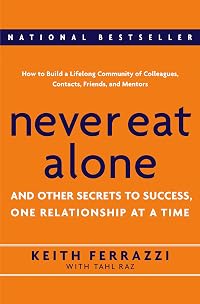
Never Eat Alone: And Other Secrets to Success, One Relationship at a Time
by Keith Ferrazzi
On This Page
Description
The bestselling business classic on the power of relationships, updated with in-depth advice for making connections in the digital world. Do you want to get ahead in life? Climb the ladder to personal success? The secret, master networker Keith Ferrazzi claims, is in reaching out to other people. As Ferrazzi discovered in early life, what distinguishes highly successful people from everyone else is the way they use the power of relationships-so that everyone wins. In Never Eat Alone, show more Ferrazzi lays out the specific steps-and inner mindset-he uses to reach out to connect with the thousands of colleagues, friends, and associates on his contacts list, people he has helped and who have helped him. And in the time since Never Eat Alone was published in 2005, the rise of social media and new, collaborative management styles have only made Ferrazzi's advice more essential for anyone hoping to get ahead in business. The son of a small-town steelworker and a cleaning lady, Ferrazzi first used his remarkable ability to connect with others to pave the way to Yale, a Harvard M.B.A., and several top executive posts. Not yet out of his thirties, he developed a network of relationships that stretched from Washington's corridors of power to Hollywood's A-list, leading to him being named one of Crain's 40 Under 40 and selected as a Global Leader for Tomorrow by the Davos World Economic Forum. Ferrazzi's form of connecting to the world around him is based on generosity, helping friends connect with other friends. Ferrazzi distinguishes genuine relationship-building from the crude, desperate glad-handing usually associated with "networking." He then distills his system of reaching out to people into practical, proven principles. Among them: Don't keep score: It's never simply about getting what you want. It's about getting what you want and making sure that the people who are important to you get what they want, too. "Ping" constantly: The ins and outs of reaching out to those in your circle of contacts all the time-not just when you need something. Never Eat Alone: The dynamics of status are the same whether you're working at a corporation or attending a social event-"invisibility" is a fate worse than failure. Become the "King of Content": How to use social media sites like LinkedIn, Twitter, and Facebook to make meaningful connections, spark engagement, and curate a network of people who can help you with your interests and goals. In the course of this book, Ferrazzi outlines the timeless strategies shared by the world's most connected individuals, from Winston Churchill to Bill Clinton, Vernon Jordan to the Dalai Lama. Chock-full of specific advice on handling rejection, getting past gatekeepers, becoming a "conference commando," and more, this new edition of Never Eat Alone will remain a classic alongside How to Win Friends and Influence People for years to come. show lessTags
Recommendations




Member Reviews
Swarmed around me at a cocktail reception stand men dressed up in suits, clean shaven, giving firm handshakes to their associates as they smirk maliciously ready to go in for the kill. After a warm welcome and a playful laugh, I see one man continue schmoozing in order to seal the deal before he walks away, smiling with success. However, in my eyes, this is not a success. I feel overcome with a sense of being demeaned, used, and just another name he gets to check off his list of target contacts. This is how I envisioned the concept of networking—before I read the book Never Eat Alone by Keith Ferrazzi.
The #1 New York Times Bestselling Author, Keith Ferrazzi, completely altered my perspective on networking, changing it from having an show more unwelcoming, negative connotation to a positive one associated with creativity and self-determination. It is an engaging read that targets young adults looking to expand their connections and build relationships. Throughout the book, he stresses how important this concept of networking is, however this brings up an interesting point in regards to his lingo. Notice how Ferrazzi titles his book Never Eat Alone, with the subtitle And Other Secrets to Success, One Relationship at a Time. He strategically does not use the word ‘networking’ due to its infamous way of bringing up shifty feelings that turn a potential reader off. Rather, both the title and the content of the novel offer a humane approach, which sets this book apart from many others as a guide to build socially healthy and mutually beneficial relationships in the business world.
Throughout the novel, Ferrazzi emphasizes the importance of relationship building, rather than just making acquaintances. In my opinion, the main idea of this novel can be summed up in a single sentence from one of the first few pages where he states, “I've come to believe that connecting is one of the most important business—and life—skill sets you'll ever learn. Why? Because, flat out, people do business with people they know and like" (6). He brings up an interesting point in this statement because it seems so simple and obvious, yet escapes your mind when actually interacting with people. This is one of Ferazzi’s strong suits; he writes bluntly and to the point, allowing his readers to process the information and relate it to themselves.
One of the most influential points that benefited me after reading this novel is that this process is about making friends and establishing relationships. Ferrazzi exclaims “Those who are best at it don't network - they make friends” (60). Notice how again he avoids using ‘networking’ as the primary objective. From an outsider perspective, this makes me feel more important and cherished, knowing that my time is not going to waste, but rather will be the foundation of a friendship for years to come. At this point, Ferrazzi notes that in choosing people to befriend, usefulness and diversity are necessities. He is very persuasive in this manner. He writes, “It’s not about mass, it’s about a real connection” (63). This means that your actual network will start small, and stay small for a while, which is a new idea to me. The goal is to find people he refers to as ‘connectors’, or people who have a lot of connections. This is the most efficient way to gain contacts effectively and can be further read about in the novel The Tipping Point by Malcolm Gladwell.
In Never Eat Alone, Ferrazzi writes that the focus in building relationships should be on what you can do for people, not what they can do for you. This strengthens a relationship and also ties into the idea that a network should remain small for some time in order to properly cater to others’ needs.
Another point Ferrazzi writes about is the timing of when these relationships should be established. It is important to befriend others before you actually need the connection. People are more willing to do things when they feel important and can mutually benefit, rather than just feeling used. Therefore, these connections take time and hard work to develop. They should also be sincere and genuine, and that "Contrary to popular business wisdom, there does not have to be a rigid line between our private and public lives" (103). Ferrazzi continues to explain that you cannot have a boring personality, but you still should stay true to yourself. This contradictory concept confuses me. He states that you should be yourself, but if yourself is not good enough, then change. Ferrazzi offers examples such as getting interested in higher class events and functions such as golf or politics, however I remain skeptical of this idea as he labels himself as an elitist in doing so.
This brings me to the major flaw that gets progressively worse throughout the novel. By the end of the book, Keith Ferrazzi comes across as an elitist, using the novel as an autobiography. He takes every opportunity to brag about his connections and achievements, which irritates me as the reader trying to merely learn about business. Extracting his bragging sections, the 379-page novel could probably be about 150 pages. If it were not for the content being so interesting, I would have stopped reading half way in.
Still, I learned a lot from the novel, and if you can get through the egotistical nature, so will you. I plan on actively using what I have learned from it not only in the business world, but in my daily life in creating and strengthening relationships with strangers and my friends alike. Ferrazzi stressed how connections take work and time, making me recognize the value in communication and relationships. Therefore, if you are interested in expanding your friendships and growing your network, this book is an effective tool to aid you, and I definitely recommend reading it. show less
The #1 New York Times Bestselling Author, Keith Ferrazzi, completely altered my perspective on networking, changing it from having an show more unwelcoming, negative connotation to a positive one associated with creativity and self-determination. It is an engaging read that targets young adults looking to expand their connections and build relationships. Throughout the book, he stresses how important this concept of networking is, however this brings up an interesting point in regards to his lingo. Notice how Ferrazzi titles his book Never Eat Alone, with the subtitle And Other Secrets to Success, One Relationship at a Time. He strategically does not use the word ‘networking’ due to its infamous way of bringing up shifty feelings that turn a potential reader off. Rather, both the title and the content of the novel offer a humane approach, which sets this book apart from many others as a guide to build socially healthy and mutually beneficial relationships in the business world.
Throughout the novel, Ferrazzi emphasizes the importance of relationship building, rather than just making acquaintances. In my opinion, the main idea of this novel can be summed up in a single sentence from one of the first few pages where he states, “I've come to believe that connecting is one of the most important business—and life—skill sets you'll ever learn. Why? Because, flat out, people do business with people they know and like" (6). He brings up an interesting point in this statement because it seems so simple and obvious, yet escapes your mind when actually interacting with people. This is one of Ferazzi’s strong suits; he writes bluntly and to the point, allowing his readers to process the information and relate it to themselves.
One of the most influential points that benefited me after reading this novel is that this process is about making friends and establishing relationships. Ferrazzi exclaims “Those who are best at it don't network - they make friends” (60). Notice how again he avoids using ‘networking’ as the primary objective. From an outsider perspective, this makes me feel more important and cherished, knowing that my time is not going to waste, but rather will be the foundation of a friendship for years to come. At this point, Ferrazzi notes that in choosing people to befriend, usefulness and diversity are necessities. He is very persuasive in this manner. He writes, “It’s not about mass, it’s about a real connection” (63). This means that your actual network will start small, and stay small for a while, which is a new idea to me. The goal is to find people he refers to as ‘connectors’, or people who have a lot of connections. This is the most efficient way to gain contacts effectively and can be further read about in the novel The Tipping Point by Malcolm Gladwell.
In Never Eat Alone, Ferrazzi writes that the focus in building relationships should be on what you can do for people, not what they can do for you. This strengthens a relationship and also ties into the idea that a network should remain small for some time in order to properly cater to others’ needs.
Another point Ferrazzi writes about is the timing of when these relationships should be established. It is important to befriend others before you actually need the connection. People are more willing to do things when they feel important and can mutually benefit, rather than just feeling used. Therefore, these connections take time and hard work to develop. They should also be sincere and genuine, and that "Contrary to popular business wisdom, there does not have to be a rigid line between our private and public lives" (103). Ferrazzi continues to explain that you cannot have a boring personality, but you still should stay true to yourself. This contradictory concept confuses me. He states that you should be yourself, but if yourself is not good enough, then change. Ferrazzi offers examples such as getting interested in higher class events and functions such as golf or politics, however I remain skeptical of this idea as he labels himself as an elitist in doing so.
This brings me to the major flaw that gets progressively worse throughout the novel. By the end of the book, Keith Ferrazzi comes across as an elitist, using the novel as an autobiography. He takes every opportunity to brag about his connections and achievements, which irritates me as the reader trying to merely learn about business. Extracting his bragging sections, the 379-page novel could probably be about 150 pages. If it were not for the content being so interesting, I would have stopped reading half way in.
Still, I learned a lot from the novel, and if you can get through the egotistical nature, so will you. I plan on actively using what I have learned from it not only in the business world, but in my daily life in creating and strengthening relationships with strangers and my friends alike. Ferrazzi stressed how connections take work and time, making me recognize the value in communication and relationships. Therefore, if you are interested in expanding your friendships and growing your network, this book is an effective tool to aid you, and I definitely recommend reading it. show less
http://nhw.livejournal.com/528431.html
This is a book about how to network effectively, and so for a compulsive networker like me was absolutely fascinating reading. What I found particularly striking is that the book is aimed at the thrusting, selfish young executive, and actually tells them to calm down, start doing little favours for other people - whoever they may be - and be generally nice to people because it is fun and good for you, and also will help your business and your career. It is an interesting combination of exhorting people to altruism by playing on their self-interest; being friendly doesn't cost you anything, in fact it can benefit you a lot.
Suggested tactics include such glories as the "deep bump" - how to conduct a show more meaningful but efficiently brief conversation with someone you meet at a conference or similar networking event (though Ferrazzi loathes the concept of "networking events"), ending with a concrete proposal of how you can be useful to each other.
There are some problems with the structure and repetitiveness of this book (which shows signs of an editor attempting to make sense of a stream-of-consciousness manuscript) but the other thing I liked was the occasional historical asides. I will think of Paul Revere and Benjamin Franklin in a new light now. A thought-provoking read. show less
This is a book about how to network effectively, and so for a compulsive networker like me was absolutely fascinating reading. What I found particularly striking is that the book is aimed at the thrusting, selfish young executive, and actually tells them to calm down, start doing little favours for other people - whoever they may be - and be generally nice to people because it is fun and good for you, and also will help your business and your career. It is an interesting combination of exhorting people to altruism by playing on their self-interest; being friendly doesn't cost you anything, in fact it can benefit you a lot.
Suggested tactics include such glories as the "deep bump" - how to conduct a show more meaningful but efficiently brief conversation with someone you meet at a conference or similar networking event (though Ferrazzi loathes the concept of "networking events"), ending with a concrete proposal of how you can be useful to each other.
There are some problems with the structure and repetitiveness of this book (which shows signs of an editor attempting to make sense of a stream-of-consciousness manuscript) but the other thing I liked was the occasional historical asides. I will think of Paul Revere and Benjamin Franklin in a new light now. A thought-provoking read. show less
This was an interesting look at lots of ideas on how to network with other people. Sometimes it seemed like the author was doing a job interview, talking about his accomplishments and people he knows (through networking, of course!). I think that if the book had been a little shorter (maybe by a CD or two on this audiobook), it wouldn't have felt that way. Still, I learned some good tips from it.
Many months ago, I received a free copy of Never Eat Alone through the Goodreads First Reads program. I took the book to work with me, reading a page or section or chapter each day with my co-workers, sharing the valuable insights I was gaining by reading Mr. Ferrazzi's advice.
The very beginning of the book was helpful. The very end off the book was helpful. The middle 200 or so pages? Not so much.
I honestly hope that I never have to work with someone who thinks that what Mr. Ferrazzi promotes in this book is acceptable behavior. It is not. Much of what he discusses is creepy, annoying, rude, or just downright inappropriate.
He suggests thoroughly researching the person you're looking to meet with, so that you can discuss your shared show more interests. I'm sorry, but if I've just met you three seconds ago, please do not let on that you know where I went to high school, the names of my pets, and that I enjoy reading and reviewing young adult novels, despite being in my mid-twenties. I will politely excuse myself from this potential stalker before things get out of hand.
He suggests throwing dinner parties with two waves of friends - one wave which is only invited to come after dinner, but that wouldn't be offended by not being good enough to attend your actual event. If you don't want them there for the full event, why are you bothering inviting them at all?
He suggests ranking your friends and contacts from 1-3, signifying how often you need to contact them. What if they films out that they're a 3 for you (meaning you contact them once a year), but to them, you're a 1 (frequent contact)? Feelings are bound to get hurt, and then that relationship you've spent so long curating goes right out the window.
There is some good advice in here, don't get me wrong. I particularly liked the advice on building your brand. But overall, the advice is questionable - I think only very specific personality types in very specific industries could pull off everything that's been suggested here - and a lot of the chapters seem to solely consist of Mr. Ferrazzi patting himself on the back for being successful, or firing off a string of people he considers friends.
Never Eat Alone isn't exactly a waste of time, but I wouldn't suggest running out to immediately buy a copy, either.
[see more of my reviews at The Bibliophagist] show less
The very beginning of the book was helpful. The very end off the book was helpful. The middle 200 or so pages? Not so much.
I honestly hope that I never have to work with someone who thinks that what Mr. Ferrazzi promotes in this book is acceptable behavior. It is not. Much of what he discusses is creepy, annoying, rude, or just downright inappropriate.
He suggests thoroughly researching the person you're looking to meet with, so that you can discuss your shared show more interests. I'm sorry, but if I've just met you three seconds ago, please do not let on that you know where I went to high school, the names of my pets, and that I enjoy reading and reviewing young adult novels, despite being in my mid-twenties. I will politely excuse myself from this potential stalker before things get out of hand.
He suggests throwing dinner parties with two waves of friends - one wave which is only invited to come after dinner, but that wouldn't be offended by not being good enough to attend your actual event. If you don't want them there for the full event, why are you bothering inviting them at all?
He suggests ranking your friends and contacts from 1-3, signifying how often you need to contact them. What if they films out that they're a 3 for you (meaning you contact them once a year), but to them, you're a 1 (frequent contact)? Feelings are bound to get hurt, and then that relationship you've spent so long curating goes right out the window.
There is some good advice in here, don't get me wrong. I particularly liked the advice on building your brand. But overall, the advice is questionable - I think only very specific personality types in very specific industries could pull off everything that's been suggested here - and a lot of the chapters seem to solely consist of Mr. Ferrazzi patting himself on the back for being successful, or firing off a string of people he considers friends.
Never Eat Alone isn't exactly a waste of time, but I wouldn't suggest running out to immediately buy a copy, either.
[see more of my reviews at The Bibliophagist] show less
Excellent, practical advise on how to network without seeming smarmy.
I agree with the previous reviews. Ferrazzi annoyed the sh*t out of me-- did he write this book to really help others out, or was it just an excuse to toot his own horn? As a middle-class minority woman in the education field, I really couldn't stomach anything he wrote at first. Let's get serious here. Minus the "I pulled my own boot-straps" stories, what's the likelihood that the average American can get even relatively close to sitting, much less conversing with any of these big-shots Ferrazzi claims he knows on a personal level?
At first, I thought that this book has no relevance to anyone unless they're majoring in business and marketing. After awhile though, I came back to reading the book and I have to admit that there were a few show more pieces of advice worth paying attention to. For one thing, I learned the hard way not to piss off an "administrative professional". Take the whole thing with a grain of salt-- don't get too upset at the snobbery, and write down the advice when it comes to social and communication skills. I may not have the same lists of celebs and CEOs on my cell-phone, but at least I can improve my people skills which is a must for every type of job anyway. show less
At first, I thought that this book has no relevance to anyone unless they're majoring in business and marketing. After awhile though, I came back to reading the book and I have to admit that there were a few show more pieces of advice worth paying attention to. For one thing, I learned the hard way not to piss off an "administrative professional". Take the whole thing with a grain of salt-- don't get too upset at the snobbery, and write down the advice when it comes to social and communication skills. I may not have the same lists of celebs and CEOs on my cell-phone, but at least I can improve my people skills which is a must for every type of job anyway. show less
Never Eat Alone by Keith Ferrazzi was one of the most interesting reads I’ve ever had. He goes into great depth on how to properly network and build relationships to get to the top. Ferrazzi does a fantastic job on breaking down each and every step of the networking process, from as small as setting goals to as big as going to conferences to get closer to people with decision making power. The most fascinating part of this book was the author’s take on branding. I found it interesting how he was talking about the person doesn’t have to brand a product to be successful but rather brand him/herself. One can accomplish this by getting their word out there and let people know what they want to accomplish and how can they separate show more themselves from the rest. Basically telling others what you have to bring to the table. The most important part of this process is making your behavior match your values and building a positive reputation to create trust. Ferrazzi’s main focus though is networking and making strong connections. One of his beginning points is very important. He talks about how you should want to help others because it also makes you more valuable. Most people do things for others to have someone “owe” them but the author emphasizes how one should naturally help others to build strong relationships and make both people more valuable. The first major step of networking is to set goals that match your passion and then connecting with people already in that field. Ferrazzi talks about how once you make these connections it’s vital to be up front and let them know what you’re there for and what you want to get out of it. After this you have to show why you’re different from a typical net worker. Some of the examples the author gives to demonstrate this is, making few strong connections rather than many weak, ignoring gossip, be willing to give something up and offer potential such as bloggers giving their readers content, don’t look down upon people (I agree with this one immensely because we’ve all had the self-centered boss that thinks they’re above everyone), be transparent and let people know if you want to meet with them and lastly make genuine connections such as handwriting thank yous instead of sending one mass email. Furthermore, Keith mentions if you don’t know someone that well do your homework or try to find one mutual friend. I believe this is very important because this information can be used as a conversation starter and make it more comfortable to talk to a person you’re not familiar with. Another point the author made that I thought was important was to stay on the positive side of the Administrative assistance. This is valuable because they’re the ones that will be able to give you connections to higher up people. Chapter 11 talks about how important eating with others is because it’s a nice way of building relationships which is smart because when you eat a meal with other people it’s only natural to have conversation with them. Another smart way of making connections is inviting someone you’re both passionate in whether it’s a concert, baseball game, or playing golf way. This a great way to get to know others because you’ll be spending hours with them so I strongly agree with Ferrazzi on this approach. The most important part of networking from this book is after making a connection, follow it up. These higher up people are talking with hundreds of others trying to connect with them, so it’s necessary to follow it up and show them that you actually care especially if it’s a personal thank you rather than something electronically. The next step to getting further up is building strong relationships with good connectors. Some examples of these type of people are restaurateurs, head hunters, people related to politics, and journalists. These are ones that are going to help you communicate with people who have a huge amount of power. Another good strategy Ferrazzi mentions is to merge your connections with someone else. This is a very smart idea because it only benefits you because now you have more contacts and this what the author was talking about when he was talking about how important it is to have a wide variety of connections because it makes you more knowledgeable about different type of people. The main point the writer made on character aspect is the fact that you’re never at the top and son’t change your attitude when you get there because it’s going to make you lose good connections once they see you lose control of your act. This goes off the chapter that talks about always keeping in touch with your contacts occasionally because it’s rude to lose connection and creates a poor reputation. The last major point Ferrazzi makes on the point of networking is it might be a good idea to throw a successful dinner party to build even better relationships and this also shows people you care be inviting them into your home. In conclusion Keith Ferrazzi provides a very thorough process on how to properly connect with people and get your name out that to become successful, definitely worth the read. show less
Members
- Recently Added By
Lists

Ash’s Wish List
9 works; 1 member

My List
302 works; 1 member
Author Information

12+ Works 2,407 Members
All Editions
Some Editions
Classifications
Statistics
- Members
- 2,051
- Popularity
- 10,234
- Reviews
- 27
- Rating
- (3.64)
- Languages
- 8 — Czech, English, German, Indonesian, Italian, Russian, Spanish, Portuguese (Portugal)
- Media
- Paper, Audiobook, Ebook
- ISBNs
- 34
- UPCs
- 1
- ASINs
- 11