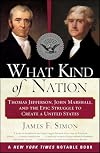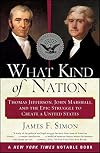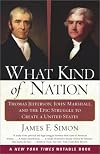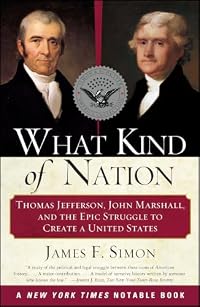
What Kind of Nation: Thomas Jefferson, John Marshall, and the Epic Struggle to Create a United States
by James F. Simon
On This Page
Description
"What Kind of Nation is an account of the bitter and protracted struggle between two titans of the early republic over the power of the presidency and the independence of the judiciary. The clash between fellow Virginians (and second cousins) Thomas Jefferson and John Marshall remains the most decisive confrontation between a president and a chief justice in American history. Fought in private as well as in full public view, their struggle defined basic constitutional relationships in the show more early days of the republic and resonates still in debates over the role of the federal government vis-a-vis the states and the authority of the Supreme Court to interpret laws." "More than 150 years after Jefferson's and Marshall's deaths, their words and achievements still reverberate in constitutional debate and political battle. What Kind of Nation is a dramatic rendering of a bitter struggle between two shrewd politicians and powerful statesmen that helped create a United States."--Jacket. show lessTags
Recommendations
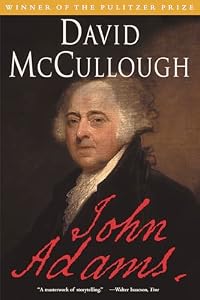
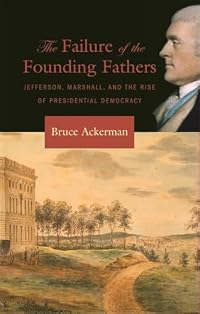
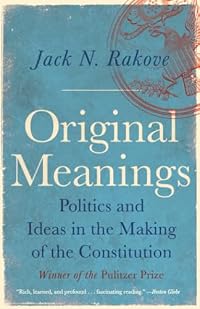

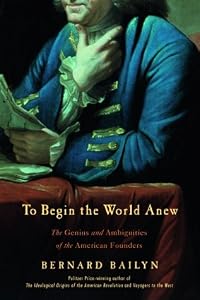




Member Recommendations
Member Reviews
The title does not fully reflect the author's priorities. This book focuses on John Marshall and three of his major decisions. As Thomas Jefferson happened to be president at that time and often took an opposing viewpoint to Marshall, the title is still merited, even if the two men's opinions were in far greater agreement than the author makes believe. The book is divided into eleven chapters, starting with the conflict between Adams and Jefferson before giving an excellent summary of the two protagonists' careers. The main part of the book is devoted to three decisions of Marshall: Marbury v. Madison, the impeachment of Justice Chase and the trial of Aaron Burr.
Despite their different political views, Jefferson and Marshall had a lot show more in common. After all, they were both Virginians, Marshall's mother being Thomas Jefferson's cousin, lawyers and brilliant thinkers, working to help the nascent United States of America and its government machine grow. Both played Calvinball with the Constitution. Marshall was, for over a month, both chief justice and secretary of state - a clear violation of the separation of powers principle and did not recuse himself from Marbury v. Madison despite having his and his brother's fingers all over the case. Jefferson acquired the Louisiana territory in an extra-constitutional manner. Together, they achieved to create some sort of balance between the judicial and executive service, shown in Marshall's elegant handling of America's dirty founding father, Aaron Burr. The checks, Marshall imposed on Jefferson, were just the sort the Adams presidency lacked - which might explain the difference of their long-term impact. show less
Despite their different political views, Jefferson and Marshall had a lot show more in common. After all, they were both Virginians, Marshall's mother being Thomas Jefferson's cousin, lawyers and brilliant thinkers, working to help the nascent United States of America and its government machine grow. Both played Calvinball with the Constitution. Marshall was, for over a month, both chief justice and secretary of state - a clear violation of the separation of powers principle and did not recuse himself from Marbury v. Madison despite having his and his brother's fingers all over the case. Jefferson acquired the Louisiana territory in an extra-constitutional manner. Together, they achieved to create some sort of balance between the judicial and executive service, shown in Marshall's elegant handling of America's dirty founding father, Aaron Burr. The checks, Marshall imposed on Jefferson, were just the sort the Adams presidency lacked - which might explain the difference of their long-term impact. show less
An account of the bitter and protracted struggle between two titans of the early republic over the power of the presidency and the independence of the judiciary. The clash between fellow Virginians (and 2nd cousins) Thomas Jefferson and John Marshall remains the most decisive confrontation between a president and a chief justice in American history. Fought in private as well as in full public view, their struggle defined basic constitutional relationships in the early days of the republic and resonates still in debates over the role of the federal government vis-a-vis the states and the authority of the Supreme Court to interpret laws."
5021. What Kind of Nation Thomas Jefferson, John Marshall, and the Epic Struggle to Create a United States, by James F. Simon (read 6 May 2013) This is a kind of popular history of the effort by John Marshall to make the Federal government stronger than Jefferson thought it should be. The history of the conflict between Jefferson's ideas as to the strength of the Federal Government and Marshall's views is well told. Since Marshall was on the Supreme Court from 1801 till he died in 1834 his views prevailed--I think to the benefit of the country. All the big Marshall cases, from Marbury v. Madison on, are discussed, as well as the Aaron Burr treason trial. I found the book made the events that it related easy to understand and full of show more interest. show less
Ratings
Members
- Recently Added By
Author Information

12 Works 919 Members
James F. Simon is the Martin Professor of Law and Dean Emeritus at New York Law School.
Common Knowledge
- People/Characters
- Thomas Jefferson; John Marshall, 4th Chief Justice of the United States
- Important places
- USA
- Important events
- American Revolution
Classifications
- Genres
- Politics and Government, History, Nonfiction, General Nonfiction, Biography & Memoir
- DDC/MDS
- 342.73029 — Society, Government, and Culture Law U.S. Constitution - Bill of Rights, Amendments North America Constitutional law--United States Basic instruments of Government, the US constitution Constitutional history
- LCC
- KF4541 .S53 — Law Law of the United States Law of the United States (Federal) Constitutional law Constitutional history of the United States
- BISAC
Statistics
- Members
- 381
- Popularity
- 81,857
- Reviews
- 3
- Rating
- (3.58)
- Languages
- English, Serbian
- Media
- Paper, Audiobook, Ebook
- ISBNs
- 8
- ASINs
- 4