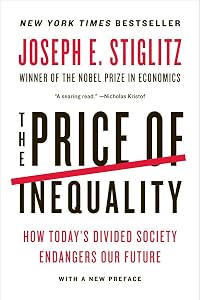
The Price of Inequality: How Today's Divided Society Endangers Our Future
by Joseph E. Stiglitz
On This Page
Description
Examines how the wealthy classes have contributed to growing inequality in society and explains how the quest to increase wealth has hindered the country's economic growth as well as its efforts to solve its most pressing economic problems.Tags
Recommendations
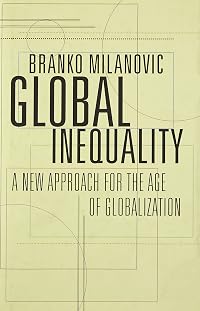
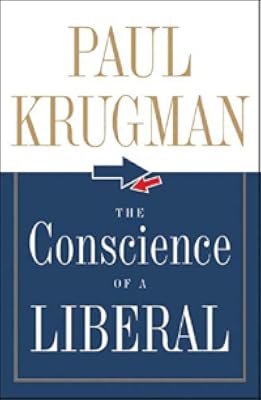
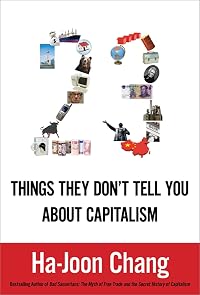
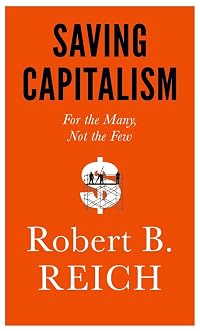
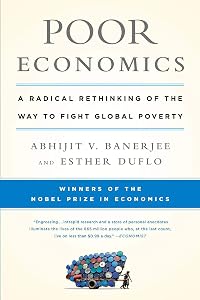
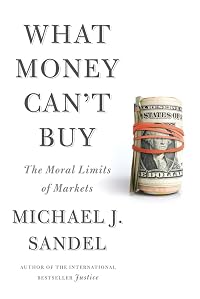
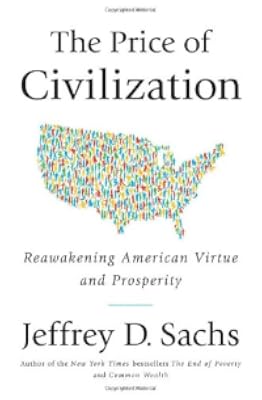
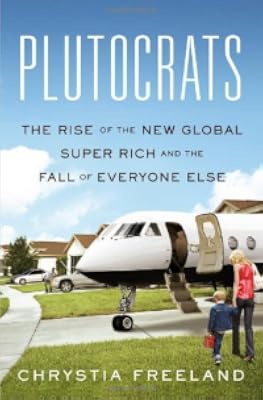
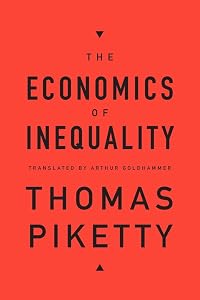

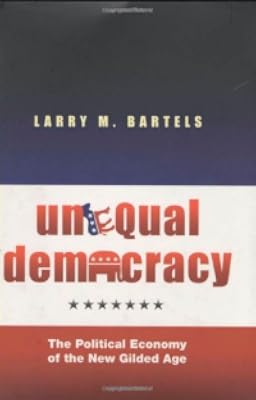
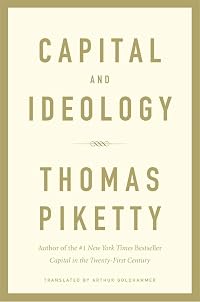
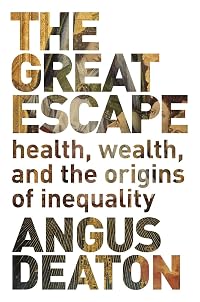

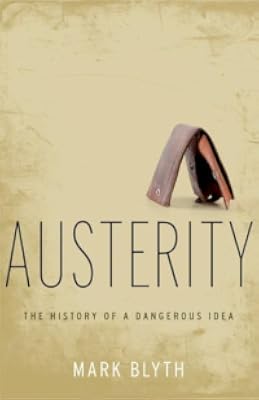
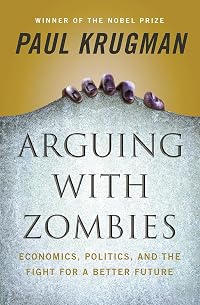
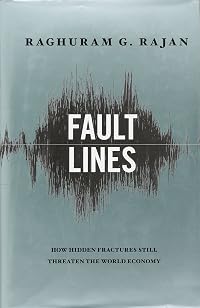
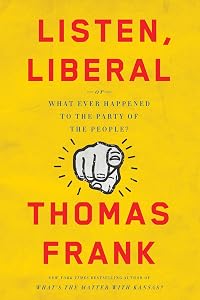
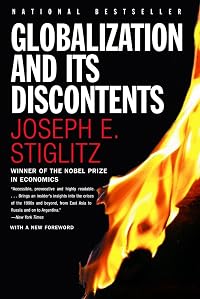
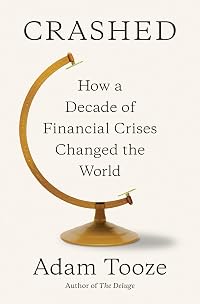
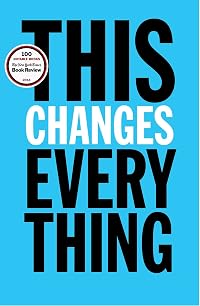
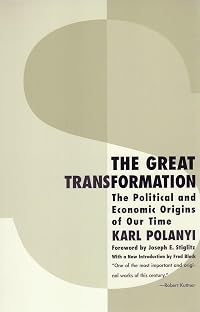
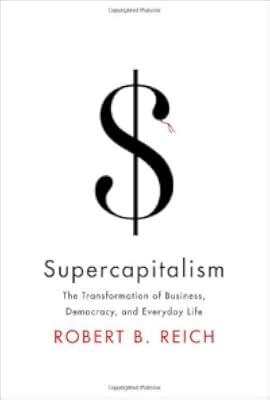
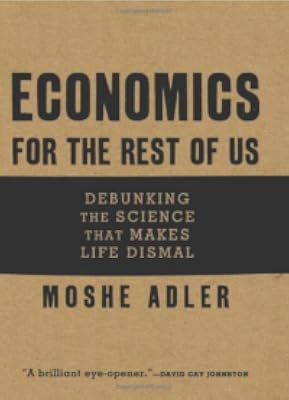
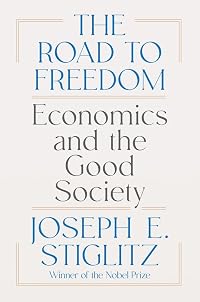
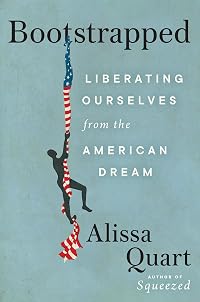
Member Recommendations
Member Reviews
Although I took only one economics class, in the 1970s, I am interested in the subject. After all I have to survive in whatever economy the United States has and for the last forty years the economics that politicians talk about is farther and farther from anything that Sorenson wrote about. Ohio’s Governor Kasich says that we need to give companies more money so they will hire more people. If I remember my lessons companies hire to expand their production capacity when the demand is larger than their current capacity. I don’t remember anything about hiring to relieve an over full bank account.
Obviously I need a refresher in economics. Milton Friedman is the current darling among politicians but, while studying history, I learned show more what happened when countries such as Chile adopted his ideas. Surely nobody in their right mind would want to do that to the United States? Studying history I learned that Adam Smith, yes, THAT Adam Smith, wrote that people worked hardest when it was for their own gain. I also read that many people complained that their slaves were lazy. It occurred to me that since slaves gained nothing from their hard labor there could be a connection between Smith’s theory and slave owners observations. When I went to find if anyone else had considered a correlation between the two ideas I found the name Joseph Stiglitz. He also was a winner of the 2001 Nobel Memorial Prize in Economics and an economic advisor to the last President to run a surplus. That was enough for me to decide to read his most recent book.
“The Price of Inequality” is written in plain language, mostly. Of the few economic terms that I had some difficulty with, mostly because they have meanings to economists slightly different than what they have in standard English, Stiglitz eventually got through even to me. “Rents” are bad because they add cost without adding value. My grandparents rented rooms but they had to maintain the buildings, which added value back to the buildings as they naturally depreciated over time. When my parents rented the family farm to someone else they added nothing. The farmer paying the rent also made all the investments in tools, seed, fertilizer, and labor. The land could have laid fallow and still maintained its value. “Rent” to an economist is income that comes not from work but from special situations such as possessing capital (my parents farm), monopolies, and subsidies.
Stiglitz is very good at explaining economic concepts. It seems that demand is out of fashion at the moment but it is still very important in the real world, as is most of what I learned from studying Sorenson 40 years ago. Friedman, in his day made some very important observations but when the data disputed his claims the Chicago School became more faith based than data driven. They adopt stands like “the market is right, but even when it’s wrong its not the market’s fault” and “the government is incapable of beneficial actions, even when they save our bacon”
One of the interesting topics Stiglitz examines is the question “is inequality necessary to provide incentives to work hard”. His answer seems to be a qualified yes with the stipulation that incentive pay has to be designed to be just that. As he pointed out bankers received what were originally called “incentive bonuses” even when they banks failed miserably. After some public outcry over millions of taxpayer dollars being paid out as bonuses for essentially mortally wounding the world economy the the only concession bankers made was to change the name of the payments to “retention bonuses”. Why anyone responsible for the meltdown was retained is beyond my imagination. In fact I agree with Stiglitz that many of them should have been detained in jails for the blatant fraud they perpetrated on their clients.
Every government policy has winners and losers. Adjusting government policy to assure that the top never lost, even when it failed, is what has created the massive inequality we face today. Stiglitz shows us how it came about and explains the dangers involved in allowing it to continue. His explanations are clear and he provides good foundations for his arguments but I do wish he had limited his use of“as we saw in a previous chapter” and the “now we will examine” but that is a minor point. The only real problem I have with Stiglitz is that he is so pessimistic. show less
Obviously I need a refresher in economics. Milton Friedman is the current darling among politicians but, while studying history, I learned show more what happened when countries such as Chile adopted his ideas. Surely nobody in their right mind would want to do that to the United States? Studying history I learned that Adam Smith, yes, THAT Adam Smith, wrote that people worked hardest when it was for their own gain. I also read that many people complained that their slaves were lazy. It occurred to me that since slaves gained nothing from their hard labor there could be a connection between Smith’s theory and slave owners observations. When I went to find if anyone else had considered a correlation between the two ideas I found the name Joseph Stiglitz. He also was a winner of the 2001 Nobel Memorial Prize in Economics and an economic advisor to the last President to run a surplus. That was enough for me to decide to read his most recent book.
“The Price of Inequality” is written in plain language, mostly. Of the few economic terms that I had some difficulty with, mostly because they have meanings to economists slightly different than what they have in standard English, Stiglitz eventually got through even to me. “Rents” are bad because they add cost without adding value. My grandparents rented rooms but they had to maintain the buildings, which added value back to the buildings as they naturally depreciated over time. When my parents rented the family farm to someone else they added nothing. The farmer paying the rent also made all the investments in tools, seed, fertilizer, and labor. The land could have laid fallow and still maintained its value. “Rent” to an economist is income that comes not from work but from special situations such as possessing capital (my parents farm), monopolies, and subsidies.
Stiglitz is very good at explaining economic concepts. It seems that demand is out of fashion at the moment but it is still very important in the real world, as is most of what I learned from studying Sorenson 40 years ago. Friedman, in his day made some very important observations but when the data disputed his claims the Chicago School became more faith based than data driven. They adopt stands like “the market is right, but even when it’s wrong its not the market’s fault” and “the government is incapable of beneficial actions, even when they save our bacon”
One of the interesting topics Stiglitz examines is the question “is inequality necessary to provide incentives to work hard”. His answer seems to be a qualified yes with the stipulation that incentive pay has to be designed to be just that. As he pointed out bankers received what were originally called “incentive bonuses” even when they banks failed miserably. After some public outcry over millions of taxpayer dollars being paid out as bonuses for essentially mortally wounding the world economy the the only concession bankers made was to change the name of the payments to “retention bonuses”. Why anyone responsible for the meltdown was retained is beyond my imagination. In fact I agree with Stiglitz that many of them should have been detained in jails for the blatant fraud they perpetrated on their clients.
Every government policy has winners and losers. Adjusting government policy to assure that the top never lost, even when it failed, is what has created the massive inequality we face today. Stiglitz shows us how it came about and explains the dangers involved in allowing it to continue. His explanations are clear and he provides good foundations for his arguments but I do wish he had limited his use of“as we saw in a previous chapter” and the “now we will examine” but that is a minor point. The only real problem I have with Stiglitz is that he is so pessimistic. show less
This book by Joseph Stiglitz is a challenging and important read. He has written the book with the United States of America in mind; however, the lessons are universal.
Inequality threatens our world in many ways and is not related only to economic matters. Inequality threatens the social fabric of society, the education system, mobility, national security, etc.
Joseph Stiglitz makes this plain in this excellent book. There are times when it seems he is repeating himself. But, it is a small price to pay!
Inequality threatens our world in many ways and is not related only to economic matters. Inequality threatens the social fabric of society, the education system, mobility, national security, etc.
Joseph Stiglitz makes this plain in this excellent book. There are times when it seems he is repeating himself. But, it is a small price to pay!
Joseph Stiglitz has a gift to make the world of economics understandable to the common man. His solutions seem so simple and reasonable, which render his conclusions all the more bittersweet : "The top 1 percent have the best houses, the best educations, the best doctors, and the best lifestyles, but there is one thing that money doesn't seem to have bought: an understanding that their fate is bound up with how the other 99 percent live. Throughout history, this has been something that the top 1 percent eventually do learn. Often, however, they learn it too late."
Great book, pretty good narration. Makes your blood boil, along with Joe Stiglitz, who lays out all the ways in which our society is unequal, to the advantage of "the 1 percent," and to the disadvantage of the 99%, particularly the poor. He also presents possible solutions.
It's dense, as you'd expect. But his argument is solid, and well worth familiarizing yourself with.
The text is dense and the writing occasionally dry but Stiglitz explains complex economic issues with great clarity and thoughtful analysis. Anyone seeking an understanding of the developments that lead to the economic collapse of 2008 and the "Great Recession" will find this book enlightening.
This is an excellent book on economics. I learned a lot and found it interesting. The author is highly knowledgeable and is good at explaining complex ideas in understandable language.
Members
- Recently Added By
Lists

LT picks: Blue Books
197 works; 44 members

TED 2013 Summer Reading List
190 works; 13 members

Top Five Books of 2016
795 works; 229 members

Works referenced in Capital in the Twenty-First Century by Thomas Piketty
62 works; 2 members

My List
302 works; 1 member

Books recommended in the history category on FiveBooks.com
329 works; 4 members
Author Information

108+ Works 8,601 Members
Joseph Stiglitz is professor of economics at Columbia University. Influential economist and Columbia University professor Joseph Eugene Stiglitz was born in Gary, Indiana on February 9, 1943. He received his undergraduate degree from Amherst College and his Ph.D. from MIT in 1967. He was awarded the John Bates Clark Medal in 1979 and the Nobel show more Memorial Prize in Economic Sciences in 2001. Stiglitz has taught at Yale University, Stanford University, Duke University, Oxford University, and Princeton University. In 2000, he founded the Initiative for Policy Dialogue. Stiglitz worked for the Clinton Administration beginning in 1993 and was the Chairman of the Council of Economic Advisers from 1995 to 1997. For the next three years he served as the World Bank's Senior Vice President and Chief Economist. Stiglitz chaired the Commission of Experts on Reforms of the International Monetary and Financial System in 2009. He has written several hundred articles and many books, including Making Globalization Work and Freefall: America, Free Markets, and the Sinking of the World Economy. His title The Price of Inequality made The New York Times Best Seller List for 2012. (Bowker Author Biography) show less
Some Editions
Awards and Honors
Awards
Common Knowledge
- Original publication date
- 2012-06-11
- Original language*
- Engels
*Some information comes from Common Knowledge in other languages. Click "Edit" for more information.
Classifications
- Genres
- Economics, Nonfiction, General Nonfiction, Politics and Government, History
- DDC/MDS
- 305.50973 — Society, government, & culture Social sciences, sociology & anthropology Social group - Age, Gender, Ethnicity People by social and economic levels History, geographic treatment, biography North America United States
- LCC
- HC110 .I5 .S867 — Social sciences Economic history and conditions Economic history and conditions By region or country
- BISAC
Statistics
- Members
- 1,326
- Popularity
- 18,185
- Reviews
- 23
- Rating
- (3.89)
- Languages
- 9 — English, French, German, Italian, Korean, Polish, Portuguese, Spanish, Turkish
- Media
- Paper, Audiobook, Ebook
- ISBNs
- 37
- ASINs
- 12