On This Page
Description
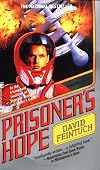
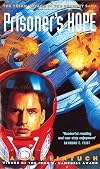
Captain Nick Seafort's previous encounter with aliens cost him nearly everything. Now, in the third installment of the Seaford Saga, the only way to save Hope Nation is to commit high treason. While recovering from the physical and emotional wounds he sustained in Challenger's Hope, Nick Seafort is named as the liaison between the wealthy planters of Hope Nation and the United Nations Navy. The lurking, acid-spewing, fish-shape aliens are a real threat, and everyone is on edge. When the show more fleet returns to Earth, dissent grows among the people of Hope Nation, who feel abandoned by the military and left at the mercy of the alien horde. The Seafort Saga continues as Nick Seafort takes on powerful rebels at home, the cold-blooded aliens, and his own self-doubt. He must make a choice that could save Hope Nation, but would also sentence him to death. show lessTags
Recommendations























Member Reviews
In a way it feels as though Feintuch is experimenting more in this book than in the previous books in the series. The majority of the plot takes place groundside, the politics of Earth, Hope Colony, & the Admiralty are explored in greater detail, and Seafort is more alone than ever as he faces his challenges without the help of his friends.
The novel is ~20-25% longer than its predecessors, and one wonders if the success of Feintuch's previous novels gave him a greater amount of leeway with his publisher/editor. The book is in many ways more introspective than previous offerings, and Seafort begins to display all of the mental breakdowns one would expect from the trauma endured in the previous work, and the additional pain he experiences show more in this one. show less
The novel is ~20-25% longer than its predecessors, and one wonders if the success of Feintuch's previous novels gave him a greater amount of leeway with his publisher/editor. The book is in many ways more introspective than previous offerings, and Seafort begins to display all of the mental breakdowns one would expect from the trauma endured in the previous work, and the additional pain he experiences show more in this one. show less
This is the first book in the Seafort Saga that I actually started to like Nick Seafort. He's a little older, more experienced, more jaded maybe. He is still the anguished scrupulous perfectionist, but he has finally started to apply the lesson that sometimes what an officer doesn't see is as important as what he sees.
This book follows the same structure as the others in the series, the first three-quarters of each book give Nick ample opportunity to alienate his friends, disrespect his superiors, and make new enemies, while providing the background for the enormity Nick will perpetrate at the end of the book when the fish return.
The backdrop for this story is the restive colony world of Hope Nation, an agrarian world dominated by a few show more powerful landowners. Since Nick cannot forswear his oath to duel the Admiral who abandoned him to die in the last book, he finds himself recuperating on shore duty, reluctantly appointed as the liaison to the landowners. Surprisingly, this is a duty he discharges well, without undue self-recriminations or creating personal enemies. Which isn't to say it goes well. Nick acquires enemies and his friends suffer, but it isn't personal. Of course, the rebellion of the colonists is complicated by the return of the fish, who care little for the twists of politics, other than perhaps in having a sense of tragic timing.
John Reilly noted this series is indelibly marked as a product of the 1990s.
Somehow, the best literary representations of a point in time are the futures imagined in science fiction. The aspect of Prisoner's Hope that struck me most strongly this way is the UN resolution banning so much as the mention of nuclear weapons. Unlike the somewhat nominal capital offense of blasphemy, this ban is enforced with deadly seriousness. Like bomb jokes in an airport, even using the phrase can end in the hangman's noose. When the Cold War was fresher in memory, everyone took this sort of thing more seriously, but after the spectacular failure to find any sort of nuclear program in Iraq after 9/11, public interest is waning.
Nick turns to the forbidden nuclear weapons out of desperation, both personal and professional, fully expecting to pay for his sins, personal and professional, with his life. Of course, it doesn't turn out that way. In a twist, Nick ends up covered in glory by trying to protect his friends from the [perceived] enormity of his crime. If he been more true to his iron code, the ultimate sacrifice he inspires in others could have been given its due. Providence never gives Nick a break. show less
This book follows the same structure as the others in the series, the first three-quarters of each book give Nick ample opportunity to alienate his friends, disrespect his superiors, and make new enemies, while providing the background for the enormity Nick will perpetrate at the end of the book when the fish return.
The backdrop for this story is the restive colony world of Hope Nation, an agrarian world dominated by a few show more powerful landowners. Since Nick cannot forswear his oath to duel the Admiral who abandoned him to die in the last book, he finds himself recuperating on shore duty, reluctantly appointed as the liaison to the landowners. Surprisingly, this is a duty he discharges well, without undue self-recriminations or creating personal enemies. Which isn't to say it goes well. Nick acquires enemies and his friends suffer, but it isn't personal. Of course, the rebellion of the colonists is complicated by the return of the fish, who care little for the twists of politics, other than perhaps in having a sense of tragic timing.
John Reilly noted this series is indelibly marked as a product of the 1990s.
On the other hand, there are many things about the Seafort Saga that mark it as a work of the 1990s. Some of these are scientific fashions, such as the notion that animal life in general and intelligent life in particular are so improbable that the human race is unique in the universe. (The alien menace, as we will see, leaves something to be desired.) The physics of faster-than-light travel may owe something to the theories of the cult-physicist, David Bohm. Aside from science, the series reflects the period of its composition in such matters as the relentlessly coed military and the fact that socialism is absent from the conceptual universe of the characters. Indeed, the most interesting difference from the science fiction of fifty years earlier is the change in the cultural trajectory of the future history the author imagines. Mid-century science fiction usually assumed that the alternative to secular modernity was barbarism. The world of the Seafort Saga, in contrast, really is postmodern in a way that will remind readers of Oswald Spengler’s forecast of the “Second Religiousness.”
Somehow, the best literary representations of a point in time are the futures imagined in science fiction. The aspect of Prisoner's Hope that struck me most strongly this way is the UN resolution banning so much as the mention of nuclear weapons. Unlike the somewhat nominal capital offense of blasphemy, this ban is enforced with deadly seriousness. Like bomb jokes in an airport, even using the phrase can end in the hangman's noose. When the Cold War was fresher in memory, everyone took this sort of thing more seriously, but after the spectacular failure to find any sort of nuclear program in Iraq after 9/11, public interest is waning.
Nick turns to the forbidden nuclear weapons out of desperation, both personal and professional, fully expecting to pay for his sins, personal and professional, with his life. Of course, it doesn't turn out that way. In a twist, Nick ends up covered in glory by trying to protect his friends from the [perceived] enormity of his crime. If he been more true to his iron code, the ultimate sacrifice he inspires in others could have been given its due. Providence never gives Nick a break. show less
Ratings
Members
- Recently Added By
Author Information

15 Works 4,764 Members
Some Editions
Series

Work Relationships
Common Knowledge
- Canonical title
- Prisoner's Hope
- Original title
- Prisoner's Hope
- Original publication date
- 1995-10
- People/Characters
- Nicholas Seafort; Tremain; Vax Holser; Derek Carr
- Dedication
- To
Rick Betsy,
John and Beth Grafting, friends
to Ardath Mayhar
For unstinting support
Betsy Mitchel
For her sagacity and nearly infinite patience
Don Maass
for helping a miracle come to pass
and as always Jettie,
especial thanks to the staff and musicians at Ragtime Rick's of Toledo, Ohio,
for serving and sustaining that odd character in the corner bench tapping at the keys of his commputer - First words
- Admiral Tremain drew himself up, jowls pursed indignation.
- Last words
- (Click to show. Warning: May contain spoilers.)Someday I'd know the rest.
- Blurbers
- Feist, Raymond E.; Allen, Roger MacBride; Cherryh, C. J.; Gerrold, David; Stirling, S. M.; Drake, David
- Original language
- English
Classifications
Statistics
- Members
- 654
- Popularity
- 44,198
- Reviews
- 2
- Rating
- (3.54)
- Languages
- Czech, English, German
- Media
- Paper, Ebook
- ISBNs
- 10
- ASINs
- 6