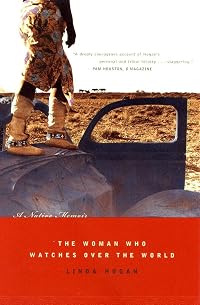
The Woman Who Watches Over the World: A Native Memoir
by Linda Hogan
On This Page
Description
In this book, the author recounts her difficult childhood as the daughter of an army sergeant, her love affair at age fifteen with an older man, the legacy of alcoholism, the troubled history of her adopted daughters, and her own physical struggles since a recent horse accident. She shows how historic and emotional pain are passed down through generations, blending personal history with stories of important Indian figures of the past such as Lozen, the woman who was the military strategist show more for Geronimo, and Ohiesha, the Santee Sioux medical doctor who witnessed the massacre at Wounded Knee. Ultimately, Hogan sees herself and her people whole again and gives an illuminating story of personal triumph. show lessTags
Recommendations


Member Reviews
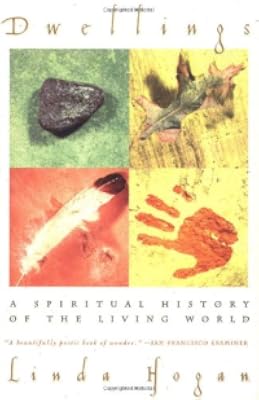
Not as cohesive as I remember her "Dwellings" essay collection.
Quite a bit of the book deals with historic abuse/disruption/dislocation experienced by Native Americans and how it still affects current generations. This concept is familiar to me as epigenetics--a new branch of medical science linking ancestral experiences in ways that are not simply DNA. In addition, I know Native American friends have lately been attending workshops on this, so the concept is being used to help people heal and move forward.
She also explores the meaning of the lives of her adopted daughters, and her response. These girls were so abused & neglected they have never been able to trust others, or even see others as other than objects. And all the love Hogan show more poured out for them was unable to change that early experience. They were violent and destructive, self-injurious growing up (fewer details were provided for their adult lives). Hopefully Hogan will be able to change that trajectory by helping raise the grandchildren.
A later chapter describes her experiences after a violent fall from a horse, how her brain damage and physical pain are affecting her life, and how she deals with it.
The final chapter tries to draw the book together but ends up feeling like too many disparate images are just tossed in a jumbled heap--kind of like she describes her current thought processes. I am so sad to see this eloquent writer losing the ability to communicate as effectively. She may have salvaged something, personally, from her current state of seeing things as others don't, but it is not something that I can connect with. show less
Quite a bit of the book deals with historic abuse/disruption/dislocation experienced by Native Americans and how it still affects current generations. This concept is familiar to me as epigenetics--a new branch of medical science linking ancestral experiences in ways that are not simply DNA. In addition, I know Native American friends have lately been attending workshops on this, so the concept is being used to help people heal and move forward.
She also explores the meaning of the lives of her adopted daughters, and her response. These girls were so abused & neglected they have never been able to trust others, or even see others as other than objects. And all the love Hogan show more poured out for them was unable to change that early experience. They were violent and destructive, self-injurious growing up (fewer details were provided for their adult lives). Hopefully Hogan will be able to change that trajectory by helping raise the grandchildren.
A later chapter describes her experiences after a violent fall from a horse, how her brain damage and physical pain are affecting her life, and how she deals with it.
The final chapter tries to draw the book together but ends up feeling like too many disparate images are just tossed in a jumbled heap--kind of like she describes her current thought processes. I am so sad to see this eloquent writer losing the ability to communicate as effectively. She may have salvaged something, personally, from her current state of seeing things as others don't, but it is not something that I can connect with. show less
I really liked the imagery invoked by much of this person's story. It pointedly identifies and confronts horrible atrocities endured by an entire continent of humans over many generations, set in motion by the immigration of others.
There is no doubt in my mind that a great deal of understanding and knowledge has been lost along with the Native American tribes destroyed over the past 500+ years, as Hogan describes. However, as a Choctaw descendant, I am deeply offended by the author's insinuation that present day destructive behaviors lingering in the Native American communities are still a result of the oppression and mass genocide endured generations before. There are plenty of examples throughout human history of similar situations show more where the survivors, though physically and emotionally scarred, pulled themselves up and pressed on without resorting to widespread alcoholism, drug abuse, physical and sexual child abuse, animal mutilation, and incest.
Additionally, the cliche' portrayal of our ancestors by Hogan is a tired concept. She clings to the idea that historic Native Americans had a mystical understanding of the world. This is an untruth. Just because they needed to use the resources of the land to survive did not provide deeper more worldly insight. Historic Native Americans were primarily nomadic, depleting the resources in a given area and then moving to a place more suitable. The reason there was not as big of an impact on the overall landscape was that human population densities were so low compared to now.
The real disappointment of this book was that throughout, I was more and more deeply convinced that Hogan needs an explanation for the difficult life she has endured. Painting her past as a victimization of an oppressed people passing through the generations (as if it were now genetically-linked) is an easy solution. I was saddened by that choice. I think it would have been far more noble and interesting for her to have not made her own personal issues a subject of enduring racism. show less
There is no doubt in my mind that a great deal of understanding and knowledge has been lost along with the Native American tribes destroyed over the past 500+ years, as Hogan describes. However, as a Choctaw descendant, I am deeply offended by the author's insinuation that present day destructive behaviors lingering in the Native American communities are still a result of the oppression and mass genocide endured generations before. There are plenty of examples throughout human history of similar situations show more where the survivors, though physically and emotionally scarred, pulled themselves up and pressed on without resorting to widespread alcoholism, drug abuse, physical and sexual child abuse, animal mutilation, and incest.
Additionally, the cliche' portrayal of our ancestors by Hogan is a tired concept. She clings to the idea that historic Native Americans had a mystical understanding of the world. This is an untruth. Just because they needed to use the resources of the land to survive did not provide deeper more worldly insight. Historic Native Americans were primarily nomadic, depleting the resources in a given area and then moving to a place more suitable. The reason there was not as big of an impact on the overall landscape was that human population densities were so low compared to now.
The real disappointment of this book was that throughout, I was more and more deeply convinced that Hogan needs an explanation for the difficult life she has endured. Painting her past as a victimization of an oppressed people passing through the generations (as if it were now genetically-linked) is an easy solution. I was saddened by that choice. I think it would have been far more noble and interesting for her to have not made her own personal issues a subject of enduring racism. show less
I found Linda Hogan's memoir to be a thought provoking insight into a human being trying to get in touch with the world we live in and what it means to be a part of it. In trying to come to grips with her own physical and spiritual pain she reaches out to the world of plants and animals for guidance. The simple fact that all living things are connected has eluded many. Hogan's realization of that fact, I believe, has helped her through difficult times and brought her to a certain kind of peace. I met her a couple of months ago and she exuded an easy calm that I found quite compelling.
Hogan's memoir reads as an attempt at understanding a journey wrought with pain and loneliness. Moments of poetry and insight are diminished by a somewhat confusing narrative trajectory. We get the impression as readers that Hogan has succeeded somewhat in creating understanding for herself, but that understanding is often lost to the reader. Her attempts to frame her own experience within a greater historical context, the narrative often veering off into quasi-essays, is interesting but not fully realized. When we are given her personal history, its narrative fragmentation leaves many holes that the reader has to fill in. We get a partial sense of how Hogan sees herself and her tribal history, but we are given even less of her own show more lived history. show less
This book is a lot. A confluence of emotions and cultures and wonderous healing in the face of a lifetime’s worth of wounds.
A friend suggested that I read this as she felt it would assist me in my battle with chronic pain.
Since I try everything, I immediately ordered it without researching the content.
I put all other books on hold.
While the sections that deal with pain are extremely profound and on target, you can count them on one hand. I probably had myself set up for a book that was not to be, and therefore was disappointed.
I found the writing choppy and disjointed (maybe from residual of the authors accident) and very difficult to make thoughts flow.
Since I try everything, I immediately ordered it without researching the content.
I put all other books on hold.
While the sections that deal with pain are extremely profound and on target, you can count them on one hand. I probably had myself set up for a book that was not to be, and therefore was disappointed.
I found the writing choppy and disjointed (maybe from residual of the authors accident) and very difficult to make thoughts flow.
she has had a difficult life which she is trying to, i don't know, understand but there is no understanding much of what happens, we can accept and/or try to improve our attitude to it but mostly it's very confusing. certainly life is not fair.
Members
- Recently Added By
Lists

Top 100 books by Indigenous Masters
134 works; 7 members
Author Information

23+ Works 2,342 Members
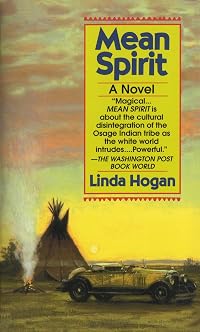
Linda Hogan--a Chickasaw writer whose work draws heavily on Native American culture--was born in Denver, Colorado, in 1947. A poet, novelist, screenwriter, and playwright, Hogan writes about topics related to the experiences of Native Americans as well as the relationship between humans and the environment. Her acclaimed first novel, Mean Spirit, show more focused on violence in the Osage Indian community during the Oklahoma oil boom of the 1920s. She has also published volumes of poetry and essays. Hogan has received grants from the National Endowment for the Arts and the Guggenheim Foundation and has taught at University of Colorado, University of Denver, and the University of Minnesota. (Bowker Author Biography) Linda Hogan has published several books of poetry, essays, and fiction. She lives in Colorado. (Bowker Author Biography) Linda Hogan is the recipient of an American Book Award. Her novel, "Mean Spirit," was a finalist for the Pulitzer Prize. She lives in Idledale, Colorado. (Bowker Author Biography) show less
Awards and Honors
Common Knowledge
- Original publication date
- 2001
- Epigraph
- All over the earth faces of all living things are alike. MOther Earth has turned these faces out of the earth with tenderness. --Standing Bear
A vast similitude interlocks all,
All shperes, grown, ungrown, small, large, suns, moons, planets,
All distances of place however wide,
All distances of time, all inanimate forms...
All gaseous, watery, vegetable,... (show all) mineral processes, the fishes, the brutes...
--Walt Whitman, Leaves of Grass - Dedication
- I come from warriors yet I can hardly speak. That's why I write this.
- First words
- As an Indian woman, I have always wondered why others want to enter our lives, to know the private landscape inside a human spirit, the map existing inside tribal thoughts and traditional knowledge.
- Last words
- (Click to show. Warning: May contain spoilers.)When our beliefs settle down to sleep and the streetlights come on, if we said matter was holy, would we then love and be joyous?
- Blurbers
- Silko, Leslie Marmon
Classifications
- Genres
- Biography & Memoir, Fiction and Literature
- DDC/MDS
- 818.5409 — Literature & rhetoric American literature in English American miscellaneous writings in English 20th Century 1945-1999
- LCC
- PS3558 .O34726 .Z47 — Language and Literature American literature American literature Individual authors 1961-
- BISAC
Statistics
- Members
- 158
- Popularity
- 207,385
- Reviews
- 8
- Rating
- (3.60)
- Languages
- English
- Media
- Paper
- ISBNs
- 3
- ASINs
- 2