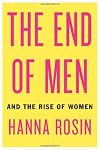
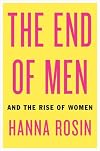
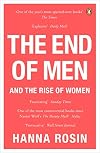
The End of Men: And the Rise of Women
by Hanna Rosin
On This Page
Description
Men have been the dominant sex since the dawn of mankind. But the author has noticed that this long-held truth is, astonishingly, no longer true. At this unprecedented moment, by almost every measure, women are no longer gaining on men: they have pulled decisively ahead. And "the end of men", the title of her Atlantic magazine cover story on the subject, has entered the lexicon as dramatically as Betty Friedan's "Feminine Mystique," Simone de Beauvoir's "Second Sex," Susan Faludi's show more "Backlash," and Naomi Wolf's "Beauty Myth" once did. In this book, the author reveals how this new state of affairs is radically shifting the power dynamics between men and women at every level of society, with profound implications for marriage, sex, children, work, and more. With wide-ranging curiosity and insight unhampered by assumptions or ideology, the author shows how the radically different ways men and women today earn, learn, spend, couple up, even kill, has turned the big picture upside down. show lessTags
Recommendations










Member Reviews
I had a real problem with this book. Not just its premise, though that bothered me; it was the technique. This book purports to be journalism on social science research, but it isn't. The author has a weird agenda based in an outlook on gender relations that is inherently combative, as though civil rights are a zero sum game. She identifies as feminist but this is not a point of view expressed by any modern feminists I know or read. The combativeness, as though it would be impossible to move toward a feminist world without hurting men, permeates and makes this hard to read.
In addition, I have a real problem with the way that Rosin describes much of the research summarized in this book. She briefly cites Armstrong & Hamilton as evidence show more of the lack of harm and power of women in so-called college hookup culture, but Armstrong & Hamilton's work -- both articles and their book, Paying for the Party -- is much more complex and nuanced than here. They would not subscribe to the views Rosin espouses. Similarly, Edin's work on marriage values and childbearing among low-income women is so much more complex than the short shrift it's given here. Anyone familiar with the literature on this topic will find Rosin's book far from compelling in its presentation, much less get to her very problematic conclusion.
Meanwhile there are random comments that simply don't make sense. She offhandedly dismisses that the Christian Right wants to restrict women's reproductive rights. Perhaps she is unaware how many states have passed restrictions on this in recent years? This is not something that can simply be dismissed.
I would have enjoyed interacting with a cogent opinion to which I don't subscribe, but this was so poorly argued that it just doesn't get there. Anyone with more than a passing familiarity with the sociology literature will be especially appalled. show less
In addition, I have a real problem with the way that Rosin describes much of the research summarized in this book. She briefly cites Armstrong & Hamilton as evidence show more of the lack of harm and power of women in so-called college hookup culture, but Armstrong & Hamilton's work -- both articles and their book, Paying for the Party -- is much more complex and nuanced than here. They would not subscribe to the views Rosin espouses. Similarly, Edin's work on marriage values and childbearing among low-income women is so much more complex than the short shrift it's given here. Anyone familiar with the literature on this topic will find Rosin's book far from compelling in its presentation, much less get to her very problematic conclusion.
Meanwhile there are random comments that simply don't make sense. She offhandedly dismisses that the Christian Right wants to restrict women's reproductive rights. Perhaps she is unaware how many states have passed restrictions on this in recent years? This is not something that can simply be dismissed.
I would have enjoyed interacting with a cogent opinion to which I don't subscribe, but this was so poorly argued that it just doesn't get there. Anyone with more than a passing familiarity with the sociology literature will be especially appalled. show less
I recognize and have experienced the shift in American society that Rosin writes about. There is a real question about how we construct our relationships and the role women can select, at any age. I am a divorced, 50-something mother of two who has a wonderful partner and a very fulfilling life (the ex immediately got remarried, as men do very quickly after claiming marriage "isn't right for them"). Truthfully, the marriage wasn't that great for me (career-wise and certainly emotionally, though I have two gorgeous children), and I see no point in the future when my new partner and I will marry. I have an almost visceral rejection of the "obligation" of caring for yet another human, as my children become independent (and the shadow of my show more mother's and other's care looms). I have to cook more, clean more, entertain more, curtail the "wearing of the comfy pants," etc.
Maybe it is dropping estrogen, but I feel newly empowered to choose -- what do I want -- what works for me? I know men need women more (see above about cooking, cleaning and entertaining). My relationship is not built on economic inequality -- my partner is stable, a great dad, etc. But do I really want to put on the old coat of "marriage," with all that implies? Not that he has brought it up -- but I know that if I said I wanted this, it would happen. I am the one in control (for a long while I ascribed this to the "not head over heels in love" issue, but I think this question goes much deeper).
That said, there is a core of this book which I think is deeply wrong -- sure, women have different skills than men, and perhaps we are more collaborative, intuitive, and can "sit still and focus," as Rosin puts it (5). BUT that is a very dangerous road and one that I am exploring in a YA trilogy I am writing. That doesn't lead to "women are more peaceful, ecofriendly, collaborative, "good." That means they are humans who use a different skill set, but can still end up in an awfully dangerous place. Rosin gets around to this eventually:
So, she cites zero evidence for a "new breed" or murderers (I think this has always been there). But the point is valid -- "traditional" roles has a place in space and time that has changed. So what works now?
Rosin quotes someone who foresaw a dystopia of mass-produced boys that would "lock women into second-class status." (12) My Trilogy has exactly the opposite scenario -- mass-produced girls who have locked men into containments and plan to eliminate them all together.
But there is lots of weird stuff in this book:
1. Feminist progress is largely dependent on hook-up culture" (21) Wha???? Not at Duke, where sexual assault is epidemic and retains the disgusting rot of male privilege and violence.
2. I don't buy that male privilege and abusive porn culture is something women just shrug at -- it is pervasive, determined and shapes what young women think sex looks like (or what they should expect from sex -- anal, cum on face, multiple simultaneous partners, etc.) See Make Love Not Porn .
3. Women may have "hearts of steel" (29) but they are still woefully underrepresented in the echelons of financial and political power Rosin writes about. Is having a heart of steel or an easy way with blow jobs really helping them or is it just another version of subservience?
It's a good topic, but I agree with other readers that too much of it is anecdotal or very superficial. As someone who teaches at one of the universities mentioned (Duke) I am horrified by what my students face (male and female, gay and straight, since the violent assault culture shapes all of their views of college and life). Times are changing but not fast enough; and a female-led society is no guarantee of fairness, sustainability or peace. show less
Maybe it is dropping estrogen, but I feel newly empowered to choose -- what do I want -- what works for me? I know men need women more (see above about cooking, cleaning and entertaining). My relationship is not built on economic inequality -- my partner is stable, a great dad, etc. But do I really want to put on the old coat of "marriage," with all that implies? Not that he has brought it up -- but I know that if I said I wanted this, it would happen. I am the one in control (for a long while I ascribed this to the "not head over heels in love" issue, but I think this question goes much deeper).
That said, there is a core of this book which I think is deeply wrong -- sure, women have different skills than men, and perhaps we are more collaborative, intuitive, and can "sit still and focus," as Rosin puts it (5). BUT that is a very dangerous road and one that I am exploring in a YA trilogy I am writing. That doesn't lead to "women are more peaceful, ecofriendly, collaborative, "good." That means they are humans who use a different skill set, but can still end up in an awfully dangerous place. Rosin gets around to this eventually:
A more female-dominated society does not necessarily translate into a soft feminine utopia. Women are becoming more aggressive and even violent in ways we once thought were exclusively reserved for men. This drive shows up in a new breed of female murderers, and also in a rising class of young female "killers" on Wall Street. Whether the shift can be attributed to women now being socialized differently, or whether it's simply an artifact of our having misunderstood how women are "hardwired" in the first place, is at this point unanswerable, and makes no difference. ... there is no "natural" order, only the way things are. (10)
So, she cites zero evidence for a "new breed" or murderers (I think this has always been there). But the point is valid -- "traditional" roles has a place in space and time that has changed. So what works now?
Rosin quotes someone who foresaw a dystopia of mass-produced boys that would "lock women into second-class status." (12) My Trilogy has exactly the opposite scenario -- mass-produced girls who have locked men into containments and plan to eliminate them all together.
But there is lots of weird stuff in this book:
1. Feminist progress is largely dependent on hook-up culture" (21) Wha???? Not at Duke, where sexual assault is epidemic and retains the disgusting rot of male privilege and violence.
2. I don't buy that male privilege and abusive porn culture is something women just shrug at -- it is pervasive, determined and shapes what young women think sex looks like (or what they should expect from sex -- anal, cum on face, multiple simultaneous partners, etc.) See Make Love Not Porn .
3. Women may have "hearts of steel" (29) but they are still woefully underrepresented in the echelons of financial and political power Rosin writes about. Is having a heart of steel or an easy way with blow jobs really helping them or is it just another version of subservience?
It's a good topic, but I agree with other readers that too much of it is anecdotal or very superficial. As someone who teaches at one of the universities mentioned (Duke) I am horrified by what my students face (male and female, gay and straight, since the violent assault culture shapes all of their views of college and life). Times are changing but not fast enough; and a female-led society is no guarantee of fairness, sustainability or peace. show less
In the event you've been in a media blackout since July 2010, Rosin originally wrote an article for The Atlantic under the same sensationalist title (a title which she apologizes for as the book dedication; perhaps that's when you should rethink your marketing strategy?). Said article was one of a rash of journalism-lite pieces proclaiming the 2008 recession a "he-cession" and suggesting that as male unemployment rose it was women who stood to gain in both economic opportunity and political and social power. "The End of Men" painted a bleak picture of a future "matriarchy" in which high-powered, controlling women run the world while their college dropout loser husbands hang out with soiled toddlers ignoring the responsibilities of show more grown-up life. The End of Men is essentially a book-length elaboration on this apocalyptic vision of an upturned gender binary that -- rather than creating space for more egalitarian, gender-independent relationships -- merely reverses the stark hierarchy of the most aggressive patriarchal society.
...The strange beings who populate The End of Men appear to have no inner life or motivation beyond fulfilling (or overcoming) the fact of their gender. Religious beliefs or social justice values? A sense of how, as an individual, the person wants to shape a meaningful life? What sort of parent they want to be, where their creative passion lies, none of this matters. The only value any being in Rosinland seems to possess is monetary, and whether their monetary fortunes go up or down seems to be a question of how skillfully they perform gender. The women who populate Rosinland are a breed of Amazonian high-achievers whose interest in people with penes seems wholly dependent on their material utility (and possibly their genetic matter and/or ability to provide fucks on a somewhat regular basis). She actually invokes Charlotte Perkins Gilman's embarrassingly racist Herland as a literary example of the world she believes we're charging toward.
And cites it as a victory for the feminist agenda. Once again, I failed to get that memo.
Because Rosin thinks women only want men for their economic assets, she is obviously puzzled by the couples she encounters where women are (for example) pursuing advanced degrees while their partners are content with a quieter life. In Rosinland, deliberately picking a low-key job in order to have time to go fishing with your buddies, play video games, or (gasp!) be a stay-at-home dad are sneer-worthy life choices.
Excuse me for living, but men are hardly the only ones to value friendships and leisure time, fandoms and family over a high-paying career that might bring in over $100k per year but demand eighty hours per week in return. I kept waiting for The End of Men to take me on a tour of hetero relationships that have found equitable footing (I know a number of them!), where the partners actually, you know, care about one another as people rather than monitoring their significant other for how well they're fulfilling a prescribed social role. Yet in Rosinland these relationships do not exist.
Read the rest at: http://annajcook.blogspot.com/2012/09/booknotes-end-of-men.html show less
...The strange beings who populate The End of Men appear to have no inner life or motivation beyond fulfilling (or overcoming) the fact of their gender. Religious beliefs or social justice values? A sense of how, as an individual, the person wants to shape a meaningful life? What sort of parent they want to be, where their creative passion lies, none of this matters. The only value any being in Rosinland seems to possess is monetary, and whether their monetary fortunes go up or down seems to be a question of how skillfully they perform gender. The women who populate Rosinland are a breed of Amazonian high-achievers whose interest in people with penes seems wholly dependent on their material utility (and possibly their genetic matter and/or ability to provide fucks on a somewhat regular basis). She actually invokes Charlotte Perkins Gilman's embarrassingly racist Herland as a literary example of the world she believes we're charging toward.
And cites it as a victory for the feminist agenda. Once again, I failed to get that memo.
Because Rosin thinks women only want men for their economic assets, she is obviously puzzled by the couples she encounters where women are (for example) pursuing advanced degrees while their partners are content with a quieter life. In Rosinland, deliberately picking a low-key job in order to have time to go fishing with your buddies, play video games, or (gasp!) be a stay-at-home dad are sneer-worthy life choices.
Excuse me for living, but men are hardly the only ones to value friendships and leisure time, fandoms and family over a high-paying career that might bring in over $100k per year but demand eighty hours per week in return. I kept waiting for The End of Men to take me on a tour of hetero relationships that have found equitable footing (I know a number of them!), where the partners actually, you know, care about one another as people rather than monitoring their significant other for how well they're fulfilling a prescribed social role. Yet in Rosinland these relationships do not exist.
Read the rest at: http://annajcook.blogspot.com/2012/09/booknotes-end-of-men.html show less
 This review was written for LibraryThing Early Reviewers.
I won this book through the LibraryThing Early Reviewers program.
This is a most thought-provoking book, one that's meant to be read and widely discussed - it is a serious research-based effort that evaluates how our society has changed in a remarkably small amount of time, not a man-bashing diatribe. In some quarters this book is being unfairly panned and it appears those critics did not even crack open the book before deciding it lacks merit.
The End of Men starts with an economic argument: that women are better at adapting in this economy and thus reaping the rewards while men lag behind. Based on the statistics Rosin cites, women comprise well more than half of the workforce, and these days women are outpacing men in just about every show more aspect of our society - in the United States and in many other parts of the world.
For instance, women are also performing better in school while male college enrollment and matriculation continue to decline. These factors, in turn, have a profound effect on marriage, the workplace, family life, etc. More and more women are marrying later or opting out of marriage altogether (although they do choose to have children), particularly among the working class.
Meanwhile, we've had recessions, the housing crisis, and a steady loss of manufacturing and other blue-collar jobs that typically employed men. The classic work we associate with men such as construction and factory work have dried up.
Is this why we have the angry white male we hear about in the media? It seems that these issues would definitely be a factor as men see their jobs/livelihoods fade away. Rosin also notes that the demands of the new economy - which rewards social intelligence and the ability to sit still and listen - favor women over men.
But the book is not all hopeless - while Rosin cannot fully explain why women have forged ahead so strongly she does cite examples of men who have changed with the times. For example, men whose wives outearn them and who are adapting to this new world - while they admit it's not always easy, these men are leading a real change in the family dynamic.
As we move forward, will more men gravitate to traditionally female jobs? Men seem to be reluctant to take jobs traditionally associated with women. But women are part of the problem because many of them still look askance at men in "untraditional" roles.
Rosin does not try to offer any pat answers, and if anything, this book could be a great springboard to discuss some of these issues: why do gender roles still seem so ingrained in our society? Are our schools not serving men, and if not, what should we do? Highly recommended reading. show less
This is a most thought-provoking book, one that's meant to be read and widely discussed - it is a serious research-based effort that evaluates how our society has changed in a remarkably small amount of time, not a man-bashing diatribe. In some quarters this book is being unfairly panned and it appears those critics did not even crack open the book before deciding it lacks merit.
The End of Men starts with an economic argument: that women are better at adapting in this economy and thus reaping the rewards while men lag behind. Based on the statistics Rosin cites, women comprise well more than half of the workforce, and these days women are outpacing men in just about every show more aspect of our society - in the United States and in many other parts of the world.
For instance, women are also performing better in school while male college enrollment and matriculation continue to decline. These factors, in turn, have a profound effect on marriage, the workplace, family life, etc. More and more women are marrying later or opting out of marriage altogether (although they do choose to have children), particularly among the working class.
Meanwhile, we've had recessions, the housing crisis, and a steady loss of manufacturing and other blue-collar jobs that typically employed men. The classic work we associate with men such as construction and factory work have dried up.
Is this why we have the angry white male we hear about in the media? It seems that these issues would definitely be a factor as men see their jobs/livelihoods fade away. Rosin also notes that the demands of the new economy - which rewards social intelligence and the ability to sit still and listen - favor women over men.
But the book is not all hopeless - while Rosin cannot fully explain why women have forged ahead so strongly she does cite examples of men who have changed with the times. For example, men whose wives outearn them and who are adapting to this new world - while they admit it's not always easy, these men are leading a real change in the family dynamic.
As we move forward, will more men gravitate to traditionally female jobs? Men seem to be reluctant to take jobs traditionally associated with women. But women are part of the problem because many of them still look askance at men in "untraditional" roles.
Rosin does not try to offer any pat answers, and if anything, this book could be a great springboard to discuss some of these issues: why do gender roles still seem so ingrained in our society? Are our schools not serving men, and if not, what should we do? Highly recommended reading. show less
This review was written for LibraryThing Early Reviewers.Free LibraryThing early reviewer copy. The part behind the colon is only halfway accurate—Rosin is generally quite sensitive to the idea that big changes in the economy, in the US and the world, are changing gender relations in ways that aren’t zero-sum. Her basic thesis, again focused on the US with some comparative bits (including a chapter on “Asia” that is really a chapter on South Korea), is that women have been more flexible than men in response to tectonic social and economic changes. Women have entered the workforce, retrained for new jobs, gotten college degrees; meanwhile, men have been much less willing to change, whether that’s to do more child care or to enter historically feminized job categories like nursing show more where there’s job growth. As a result, women are more likely to decide that they don’t need a man who is neither a provider nor a homemaker, the basic reasoning being “I already have X kids, I don’t need X+1”—and even when X = 0, women are busy trying to establish themselves and don’t necessarily want to spend the time tending to a relationship that could otherwise be spent on career or school. While Rosen mentioned the theorists of “innate” male and female qualities, she repeatedly pointed out just how much socialization mattered, as evidenced by the rapid change we’ve seen recently. And for upper-class women who can navigate the still-strong bias against aggressive women, there is a cadre of men who are happy to live in new ways, though Rosin includes some accounts of high-flying women who were surprised to find that their partners weren’t among that cadre.
While it’s full of provocative statistics and anecdata that certainly spoke to my particular situation, the book could have used a much greater focus on class: it’s not just that manufacturing jobs are disappearing, it’s that lots and lots of jobs are hard to support a family on, and that’s a social choice, not just a phenomenon of lots of individual choices. US politics is also almost absent; while Rosen talks about changes in high-end businesses making it easier for women at the top to raise children, she doesn’t talk about government policy like mandatory leave for new parents. Nor does she discuss government employment, which (at lower levels) has historically been good for women but means the recession has hit them extra hard as states shed employees and (at higher levels) remains male-dominated in the US to the extent that we are still, somehow, talking about whether using contraception is your employer’s business. The “rise of women” has a long way to go, especially as long as it is framed as a comparative one. Red Families, Blue Families would be a good book to read this one to emphasize that, while Rosin does look at women and men across the economic spectrum, the meanings and long-term implications of these changes may be very different across that spectrum. show less
While it’s full of provocative statistics and anecdata that certainly spoke to my particular situation, the book could have used a much greater focus on class: it’s not just that manufacturing jobs are disappearing, it’s that lots and lots of jobs are hard to support a family on, and that’s a social choice, not just a phenomenon of lots of individual choices. US politics is also almost absent; while Rosen talks about changes in high-end businesses making it easier for women at the top to raise children, she doesn’t talk about government policy like mandatory leave for new parents. Nor does she discuss government employment, which (at lower levels) has historically been good for women but means the recession has hit them extra hard as states shed employees and (at higher levels) remains male-dominated in the US to the extent that we are still, somehow, talking about whether using contraception is your employer’s business. The “rise of women” has a long way to go, especially as long as it is framed as a comparative one. Red Families, Blue Families would be a good book to read this one to emphasize that, while Rosin does look at women and men across the economic spectrum, the meanings and long-term implications of these changes may be very different across that spectrum. show less
This review was written for LibraryThing Early Reviewers.No book trying to describe gender is going to be perfect, and Rosin seems to embrace that from the start with a title so off-putting I was worried what her perspective would be.
What I found was a thoughtful, well-written, primary-source-referencing summary of where she things we are, in regards to gender and relationships. I can’t tell you how much of this book helped me understand the sociological patterns that I’ve been immersed in. This has absolutely helped me understand why I’m conditioned the way I am, and what struggles men are facing as women become more and more active outside of the defined roles of the past.
What I found was a thoughtful, well-written, primary-source-referencing summary of where she things we are, in regards to gender and relationships. I can’t tell you how much of this book helped me understand the sociological patterns that I’ve been immersed in. This has absolutely helped me understand why I’m conditioned the way I am, and what struggles men are facing as women become more and more active outside of the defined roles of the past.
I approached reading this book with a lot of distain for Hanna Rosin - comments she and other members of Slate's Double X have been appallingly judgmental and sometimes downright unfeminist - but the arguments she presents are great food for thought. Most of the book I found palatable and interesting, but parts of the chapter "The Top" really rubbed me the wrong way - at points it came off as feeling like women just needed to accept that they have to cow tow to sexist expectations of feminine softness to get to the top, and that that was somehow acceptable. Hanna Rosin's feminism can at times be a little (or a lot) dated, but the unique perspective she presents here makes "The End of Men" worth the read.
Members
- Recently Added By
Author Information
8+ Works 562 Members
Common Knowledge
- Original title
- The end of men
Classifications
- Genres
- Sexuality and Gender Studies, Sociology, Nonfiction, General Nonfiction, Economics
- DDC/MDS
- 305.42 — Social sciences Social sciences, sociology & anthropology Groups of people Women Social role and status of women
- LCC
- HQ1155 .R67 — Social sciences The family. Marriage, Women and Sexuality The Family. Marriage. Women Women. Feminism
- BISAC
Statistics
- Members
- 303
- Popularity
- 104,842
- Reviews
- 28
- Rating
- (3.41)
- Languages
- 6 — English, French, German, Italian, Korean, Swedish
- Media
- Paper, Audiobook, Ebook
- ISBNs
- 13
- UPCs
- 1
- ASINs
- 6