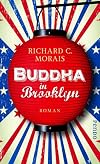
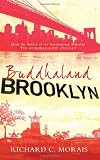
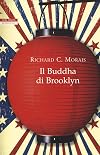
Buddhaland Brooklyn: A Novel
by Richard C. Morais
On This Page
Description
From the writer whose debut novel, The Hundred-Foot Journey, continues to charm readers around the world comes a modern fairy tale about a man who finds his true calling in a foreign land. Featuring rich descriptions and a cast of eccentric characters, this is a contemporary fable about a Japanese Buddhist priest who ends up finding himself in the unlikeliest of places. Growing up in a quaint mountainside village in Japan, Seido Oda spent his boyhood fishing in clear mountainside streams and show more helping his parents run their small inn. At the age of eleven, Oda is sent to study with the monks at a nearby Buddhist temple. This peaceful, quiet refuge in the remote mountains of Japan becomes home for the introverted monk--until he approaches his fortieth birthday and is ordered by his superior to cross the ocean and open a temple in Brooklyn. Ripped from the isolated, serene life of his homeland temple, Oda receives a shock to his system in New York--a motley crew of American Buddhists whose misguided practices lead to a host of hilarious cultural misunderstandings. It is only when Oda comes to appreciate the Americans, flaws and all, that he sees his own shortcomings and finally finds that sense of belonging he has always sought. show lessTags
Recommendations






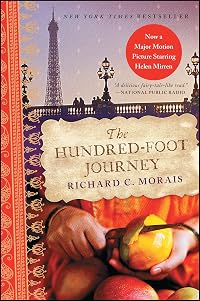


































Member Reviews
Buddhaland Brooklyn is the story of a Japanese Buddhist priest, raised in a strict monastery there, who is asked to head up a new Buddhist temple under construction in Brooklyn. Reverend Seido Oda had a tragic experience when young, with his mentally ill father and family. Through entry into the rural priesthood at age 11, he gains his bearings, particularly in creating and teaching Buddhist art. When many years later his beloved superior asks him to go to America, he feels he can't refuse, but he also doesn't feel he's qualified.
His experience in Brooklyn with the informal, tradition-scoffing Americans who are sect members is funny and frustrating at the same time (they like to call him "Rev" or "Reverend O"). He wants to teach them in show more the strict way he was taught, and they want him to be more "personal" and accessible.
I'm not a chanting Buddhist, but Morais makes it sound appealing (the Lotus Sutra is the principal source). This sect can marry and have sex, and those issues come up for the reverend. Maintaining his equanimity is a challenge. He learns a lot, and finds his new, chaotic locale actually brings him to a far greater understanding than his placid life in rural Japan.
I thoroughly enjoyed this one. show less
His experience in Brooklyn with the informal, tradition-scoffing Americans who are sect members is funny and frustrating at the same time (they like to call him "Rev" or "Reverend O"). He wants to teach them in show more the strict way he was taught, and they want him to be more "personal" and accessible.
I'm not a chanting Buddhist, but Morais makes it sound appealing (the Lotus Sutra is the principal source). This sect can marry and have sex, and those issues come up for the reverend. Maintaining his equanimity is a challenge. He learns a lot, and finds his new, chaotic locale actually brings him to a far greater understanding than his placid life in rural Japan.
I thoroughly enjoyed this one. show less
This book went from 4 stars down to two. I was actually thinking of giving it only one. It is the story of a Japanese Buddhist priest called Oda. He is transferred to Brooklyn New York to build a temple.
The book started well. But as soon as the action moved to USA it deteriorated. It sometimes reminded me of "Letters Back to Ancient China" by Herbert Rosendorfer where the main character also struggled with the modern culture. Only that Rosendorfer's book is a brilliant fascinating and funny novel. Buddhaland Brooklyn is none of this. It isn't even very funny.
What really put me off is the little knowledge the author has about Buddhism. More research would have done the book some good. He might then have avoided sentences like "The show more Buddhist gods have sent Michael to me..." There are no Buddhist gods. And "I whispered to Miss Laura that I would have to leave as I could not participate in a Catholic religious service." which is ridiculous. Buddhism is the one religion which accepts other religions and no Buddhist would think they couldn't participate in another religion's service.
The book tapers out at the end into the expected "All is good" happy ending. No surprises. Over all a very shallow story about religion, conflicts and the mandatory love story. show less
The book started well. But as soon as the action moved to USA it deteriorated. It sometimes reminded me of "Letters Back to Ancient China" by Herbert Rosendorfer where the main character also struggled with the modern culture. Only that Rosendorfer's book is a brilliant fascinating and funny novel. Buddhaland Brooklyn is none of this. It isn't even very funny.
What really put me off is the little knowledge the author has about Buddhism. More research would have done the book some good. He might then have avoided sentences like "The show more Buddhist gods have sent Michael to me..." There are no Buddhist gods. And "I whispered to Miss Laura that I would have to leave as I could not participate in a Catholic religious service." which is ridiculous. Buddhism is the one religion which accepts other religions and no Buddhist would think they couldn't participate in another religion's service.
The book tapers out at the end into the expected "All is good" happy ending. No surprises. Over all a very shallow story about religion, conflicts and the mandatory love story. show less
Just days after his reluctant initiation into the Buddhist priesthood at eleven years old, Oda’s entire family is killed in a fire that razes their inn. Determined to honour his family, Oda dedicates his life to studying the principles of his religion and finds comfort in the quiet rituals of his existence. He is bewildered when, as Oda nears his fortieth birthday, he is sent to New York to oversee the establishment of the sect’s first Buddhist temple, certain his social awkwardness and conservative views render him ill equipped to deal with the assignment.
Oda is shocked on his arrival in New York, not only by the towering buildings and busy streets, which are an assault on the senses after a lifetime spent in a small mountain show more village, but also with the motley group of worshipers seeking spiritual enlightenment.
“You’ll be very impressed” he said “…I’ve been giving a series of lectures on the proper Buddhist practice, based on my extensive study. It’s very rigorous. Intellectually.”
“This is commendable. And the lectures are based on what study material?”
“Tons of books. The Reader’s Digest Encyclopedia of Religion, Tales of Siddhartha, Buddhism for Dummies. The list goes on and on.” p86
Reverend Oda is horrified, if not surprised, by this conversation with a member of the Temple board just days after his arrival. It seems to him that the American flock tend to pick and choose the most convenient principles of Buddhism to follow. Oda however is intent on imposing order and proper practice on the Believers, though with little hope of success.
Morais shares some astute commentary about the assumption of cultures, society and religions in Buddhaland Brooklyn. It begins when Oda is greeted by his spiky haired, gum chewing assistant, Jennifer, at the airport and makes assumptions about her intelligence, her commitment and even her sexual orientation based on his own prejudices, that later prove false. Oda judges the American Buddhist community incapable of true faith, annoyed by their resistance to the rituals of the faith. When challenged the Reverend says,
“I teach American Believers what they need to hear, Mrs Graham, not what they want to hear. This is the duty of the Priest. I am sorry but I cannot bend the Eternal teachings simply to accommodate current tastes” p174
in rebuttal he is asked,
“Tell me, have you ever honestly asked yourself what part of the Headwater Sect’s doctrine is genuinely the Buddha’s path to enlightenment and what part of this Buddhist practice is just Japanese cultural habits and biases masquerading as something profound?” p175
I was dismayed to learn that Morais took quite extensive liberties with the Buddhist doctrine in the novel ‘mangling’ it with mysticism and even American psychoanalysis theory. The Headwater Sect is entirely fictional, which I don’t mind, but the corruption of the Buddhist principles somehow dilutes the essence of the novel for me, though I’m not even sure entirely why.
The cultural and spiritual conflicts of Buddhaland Brooklyn are also an integral part of Oda’s journey from innocent boy, to pious acolyte to New York Chief Priest. Almost imperceptibly, as the months pass and Oda becomes entangled in the New York Buddhist community, his rigid views begin to soften. The death of Michael, and Mrs Colonese, plus Mrs Grahams challenge of his faith and his relationship with Jennifer precipitates a crisis that allows Oda to make peace with his place In New York, and his past.
Overall I enjoyed Buddhaland Brooklyn, more than I expected to, despite my disappointment in the fictionalisation of Buddhism. The characters are interesting, the cultural conflicts thought provoking and the writing fluid (though the Haiku a little pretentious) and I am willing to recommend Buddhaland Brooklyn to the curious. show less
Oda is shocked on his arrival in New York, not only by the towering buildings and busy streets, which are an assault on the senses after a lifetime spent in a small mountain show more village, but also with the motley group of worshipers seeking spiritual enlightenment.
“You’ll be very impressed” he said “…I’ve been giving a series of lectures on the proper Buddhist practice, based on my extensive study. It’s very rigorous. Intellectually.”
“This is commendable. And the lectures are based on what study material?”
“Tons of books. The Reader’s Digest Encyclopedia of Religion, Tales of Siddhartha, Buddhism for Dummies. The list goes on and on.” p86
Reverend Oda is horrified, if not surprised, by this conversation with a member of the Temple board just days after his arrival. It seems to him that the American flock tend to pick and choose the most convenient principles of Buddhism to follow. Oda however is intent on imposing order and proper practice on the Believers, though with little hope of success.
Morais shares some astute commentary about the assumption of cultures, society and religions in Buddhaland Brooklyn. It begins when Oda is greeted by his spiky haired, gum chewing assistant, Jennifer, at the airport and makes assumptions about her intelligence, her commitment and even her sexual orientation based on his own prejudices, that later prove false. Oda judges the American Buddhist community incapable of true faith, annoyed by their resistance to the rituals of the faith. When challenged the Reverend says,
“I teach American Believers what they need to hear, Mrs Graham, not what they want to hear. This is the duty of the Priest. I am sorry but I cannot bend the Eternal teachings simply to accommodate current tastes” p174
in rebuttal he is asked,
“Tell me, have you ever honestly asked yourself what part of the Headwater Sect’s doctrine is genuinely the Buddha’s path to enlightenment and what part of this Buddhist practice is just Japanese cultural habits and biases masquerading as something profound?” p175
I was dismayed to learn that Morais took quite extensive liberties with the Buddhist doctrine in the novel ‘mangling’ it with mysticism and even American psychoanalysis theory. The Headwater Sect is entirely fictional, which I don’t mind, but the corruption of the Buddhist principles somehow dilutes the essence of the novel for me, though I’m not even sure entirely why.
The cultural and spiritual conflicts of Buddhaland Brooklyn are also an integral part of Oda’s journey from innocent boy, to pious acolyte to New York Chief Priest. Almost imperceptibly, as the months pass and Oda becomes entangled in the New York Buddhist community, his rigid views begin to soften. The death of Michael, and Mrs Colonese, plus Mrs Grahams challenge of his faith and his relationship with Jennifer precipitates a crisis that allows Oda to make peace with his place In New York, and his past.
Overall I enjoyed Buddhaland Brooklyn, more than I expected to, despite my disappointment in the fictionalisation of Buddhism. The characters are interesting, the cultural conflicts thought provoking and the writing fluid (though the Haiku a little pretentious) and I am willing to recommend Buddhaland Brooklyn to the curious. show less
I loved reading this book! Although cultural conflict and Buddhism are themes throughout, Oda's personal growth, from a lonely outsider plagued by the death of his family to prickly, arrogant priest, overly confident of his knowledge and blinded by his Japanese "everyone is other and lesser" lens, is forced when he is transplanted to Brooklyn. He does not want to bend, adapt or open. He is an oyster, tightly closed to every foreign idea. His personal journey is difficult, even painful, as he fights to maintain what he thinks to be his essential Japaneseness and his devout Buddhism. He makes so many mistakes and misunderstands/misreads so many simply situation! America's heterogenous culture shocks him in so many ways! As he makes small show more changes and opens up to what the world has to teach, he realises how many opportunities he has missed, and that happiness, even joy, are within his reach. I loved the Haiku sprinkled throughout the novel and the imagery, described through Oda's eyes, reminded me of my years spent in Japan. It is a unique view of the world. show less
After long years of living in a land far away, my anticipated return to America two years ago was troubled by fear of cultural adjustments I knew were waiting on the horizon. I worried that America would turn out to be a society nearly foreign to my sensitivities. The fears all came to life once my feet were back on native soil. For months I thought the plane had set me down in the wrong place, dropped me in a land completely out of sync with what I remembered. Stranger in a strange land, a fish out of water, a square peg in a round hole, a hopeless misfit.
No surprise that time has softened the hard edges, and while occasional aspects of life here continue to baffle me, I’ve discovered my place and no longer thrash about out of water, show more ill-fitted to those around me.
Had the great good fortune last week to stumble upon a book that left me dazzled by its story of a middle-aged man suddenly uprooted from everything he knows and thrust suddenly into what seems to him at first a Martian landscape full of odd creatures. The book is Buddhaland Brooklyn by Richard C. Morais, published last month by Scribner.
Seido Oda is a thirty-nine year-old Buddhist priest who has lived and worked most of his life in a remote mountain temple in Fukushima Prefecture, Japan. Entering the temple as an acolyte at the age of eleven, he has known no other life, apart from a brief flirtation with the outside world during his time at college in Tokyo. Even within the temple precincts Seido manages to live in a world all his own, a world of books, painting and poetry, insulated within the idyllic setting of his leafy mething of thorn in the side of his superiors, and it is this prickly concern that prompts the Head Priest to send this cloistered soul to Brooklyn, New York with the task of overseeing the building and foundation of a Buddhist temple there.
Met, hugged and welcomed at JFK by what Reverend Oda imagines is a ‘militant American lesbian’ he finds himself bundled into a car and lurching onto the highway…‘She drove like she had just robbed a bank.’ Meeting an important member of the American Buddhist community a day later he is confronted with a startling sight. ‘The woman’s hair, and even the tinge of her skin, resembled the color of overripe oranges. She was short and plump, with numerous gold rings snaking around her fingers. She wore a tent-shaped dress of black and gold material that was light and diaphanous, so the overall impression I had was of someone wearing an expensive shower curtain…Mrs Symes insisted I call her Harriet.’ But Harriet is just the beginning. The baffled priest soon meets another of the American believers, one who has been guiding the weekly study group using The Reader’s Digest Encyclopedia of Religion and Buddhism for Dummies.
The culture-lagged priest is further beleaguered by a female member who lust after him, another who keeps a picture of Jesus on her Buddhist altar and one other devout believer who spends much of his time in a mental home. But amidst these oddities of life and work in Brooklyn, Reverend Oda begins to catch glimpses of something that is more human than anything he has known before, realizing as well that he is beginning to learn more about his own faith, opening doors and windows into long shuttered corners of his heart.
One reviewer of Buddhaland Brooklyn complained that Morais occasional goes overboard with purple prose, one particular criticism this reader is far from understanding. For a moment I thought I might have misunderstood the term (overly elaborate; ornate), but a moment later decided the critic had simply applied an erroneous label to what most others would call exquisite prose. The novel is full of poetry, art, a few basics of Buddhism and never faltering in its accuracy. Too often a writer chooses as his setting an unfamiliar place, an exotic culture and then proceeds to describe it all based upon poor research, ending with characters speaking odd phrases in settings imbued with the resonance of postcard photography. In this sense, Morais has provided an exemplary model of accuracy.
Buddhaland Brooklyn is undisputedly a feel-good fairy tale skillfully leavened with color, personality and laughter, but one including as well a wee dose of sad endings. Definitely a contender on my 2012 list of favorite books. First discovered in the library, after the first fifty pages I stopped reading long enough to order my own copy of the book, along with the writer’s earlier book, The Hundred-Foot Journey. show less
No surprise that time has softened the hard edges, and while occasional aspects of life here continue to baffle me, I’ve discovered my place and no longer thrash about out of water, show more ill-fitted to those around me.
Had the great good fortune last week to stumble upon a book that left me dazzled by its story of a middle-aged man suddenly uprooted from everything he knows and thrust suddenly into what seems to him at first a Martian landscape full of odd creatures. The book is Buddhaland Brooklyn by Richard C. Morais, published last month by Scribner.
Seido Oda is a thirty-nine year-old Buddhist priest who has lived and worked most of his life in a remote mountain temple in Fukushima Prefecture, Japan. Entering the temple as an acolyte at the age of eleven, he has known no other life, apart from a brief flirtation with the outside world during his time at college in Tokyo. Even within the temple precincts Seido manages to live in a world all his own, a world of books, painting and poetry, insulated within the idyllic setting of his leafy mething of thorn in the side of his superiors, and it is this prickly concern that prompts the Head Priest to send this cloistered soul to Brooklyn, New York with the task of overseeing the building and foundation of a Buddhist temple there.
Met, hugged and welcomed at JFK by what Reverend Oda imagines is a ‘militant American lesbian’ he finds himself bundled into a car and lurching onto the highway…‘She drove like she had just robbed a bank.’ Meeting an important member of the American Buddhist community a day later he is confronted with a startling sight. ‘The woman’s hair, and even the tinge of her skin, resembled the color of overripe oranges. She was short and plump, with numerous gold rings snaking around her fingers. She wore a tent-shaped dress of black and gold material that was light and diaphanous, so the overall impression I had was of someone wearing an expensive shower curtain…Mrs Symes insisted I call her Harriet.’ But Harriet is just the beginning. The baffled priest soon meets another of the American believers, one who has been guiding the weekly study group using The Reader’s Digest Encyclopedia of Religion and Buddhism for Dummies.
The culture-lagged priest is further beleaguered by a female member who lust after him, another who keeps a picture of Jesus on her Buddhist altar and one other devout believer who spends much of his time in a mental home. But amidst these oddities of life and work in Brooklyn, Reverend Oda begins to catch glimpses of something that is more human than anything he has known before, realizing as well that he is beginning to learn more about his own faith, opening doors and windows into long shuttered corners of his heart.
One reviewer of Buddhaland Brooklyn complained that Morais occasional goes overboard with purple prose, one particular criticism this reader is far from understanding. For a moment I thought I might have misunderstood the term (overly elaborate; ornate), but a moment later decided the critic had simply applied an erroneous label to what most others would call exquisite prose. The novel is full of poetry, art, a few basics of Buddhism and never faltering in its accuracy. Too often a writer chooses as his setting an unfamiliar place, an exotic culture and then proceeds to describe it all based upon poor research, ending with characters speaking odd phrases in settings imbued with the resonance of postcard photography. In this sense, Morais has provided an exemplary model of accuracy.
Buddhaland Brooklyn is undisputedly a feel-good fairy tale skillfully leavened with color, personality and laughter, but one including as well a wee dose of sad endings. Definitely a contender on my 2012 list of favorite books. First discovered in the library, after the first fifty pages I stopped reading long enough to order my own copy of the book, along with the writer’s earlier book, The Hundred-Foot Journey. show less
I’m so glad the movie “Hundred Foot Journey” led me to find other books by Richard Morais. Does culture shape religion or should religion adapt to a culture? When Seido Oda is sent to a Buddhist temple in Japan to begin his life as a priest, he finds himself adapting to the quiet, reflective lifestyle. He comes to see his temple environment as the Buddhaland where he is in the best environment to understand his faith. But as he ages, he becomes demanding and very conservative in his views. He is disappointed when he is assigned to open the new Brooklyn NY temple. He finds the American culture brash, unacceptable to practice his religion in. And yet, as he gets to know his neighbors and falls in love with a unorthodox free-spirited show more woman he finds that religion can adapt. His rigid religion begins to change and when offered the opportunity to go back to Japan, he ultimately decides to stay in Brooklyn. show less
This is a great story of a Japanese who lost his entire family as a teenager, shortly after joining a Prister School. The story is about his life, where he seems to be torn between the Buddhist faith and the worldly vices. The story starts in Japan and ends in New York. I have learned a lot about Buddhist thinking. It was very entertaining and amusing.
Members
- Recently Added By
Author Information

7 Works 1,751 Members
Richard C. Morais is the editor of Penta, a Barron's website and quarterly magazine. An American raised in Switzerland, Morais has lived most of his life overseas, returning to the United States in 2003. He is the author of The Hundred-Foot Journey, which is a New York Times Bestseller. He also wrote Buddhaland Brooklyn. (Bowker Author Biography)
Series
Belongs to Publisher Series
Piper (30595)
Common Knowledge
- Canonical title*
- Buddha in Brooklyn
- Original title
- Buddhaland Brooklyn. A Novel
- Original publication date
- 2012
- Original language*
- Amerikanisch
*Some information comes from Common Knowledge in other languages. Click "Edit" for more information.
Classifications
Statistics
- Members
- 112
- Popularity
- 290,974
- Reviews
- 11
- Rating
- (3.70)
- Languages
- English, German, Italian
- Media
- Paper, Audiobook, Ebook
- ISBNs
- 22
- ASINs
- 4