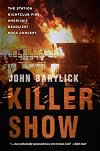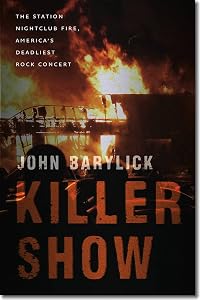
Killer Show: The Station Nightclub Fire, America's Deadliest Rock Concert
by John Barylick
On This Page
Description
The definitive book on The Station nightclub fire on the 10th anniversary of the disasterTags
Recommendations







Member Recommendations
Member Reviews
Ten years ago, pyrotechnics used by Great White ignited the sound-deadening foam at The Station nightclub. I'm sure with those details everyone can recall the first images they saw on the news, as well as the video shot by a cameraman who was covering a story there that night.
This book covers not only the first itself, but the history of the club (and the many, many illegal alternations made to it), the reasons leading to the using of the sound-deadening foam, as well as the legal aftermath for the victims and families. It's an excellent work, thoroughly researched yet neither dry in tone or edging into sensationalism. It's engaging and, most importantly, brings a humanity to not only the victims, but also to the other players involved. show more Appendices include the names and ages of the victims, as well as the corporations and people named in the lawsuit as well as the settlement awarded. The source list is massive and complete.
All in all, while this can be a difficult book at times to read, it is an excellent read of one of the worst nightclub fires to take place in the U.S. show less
This book covers not only the first itself, but the history of the club (and the many, many illegal alternations made to it), the reasons leading to the using of the sound-deadening foam, as well as the legal aftermath for the victims and families. It's an excellent work, thoroughly researched yet neither dry in tone or edging into sensationalism. It's engaging and, most importantly, brings a humanity to not only the victims, but also to the other players involved. show more Appendices include the names and ages of the victims, as well as the corporations and people named in the lawsuit as well as the settlement awarded. The source list is massive and complete.
All in all, while this can be a difficult book at times to read, it is an excellent read of one of the worst nightclub fires to take place in the U.S. show less
 This review was written for LibraryThing Early Reviewers.
I am an avid reader of disaster-related books, having read nearly 80 of them, and I have to say that this is among the very best, certainly top five, of such books I've ever read.
This is the gripping story of the February, 2003 Station nightclub fire in Rhode Island, which killed 100 people and injured many more. Initially, I was disappointed that only a relatively brief part of the book deals with the actual events unfolding during the fire that night--who was where and how they did, or didn't, get out. However, the coverage of the actual second-by-second events, though short, was quite interesting. In all other respects, including pre-fire goings on and, especially, the medical and legal aftermath, the book is excellent.
Not show more surprisingly, since it's written by one of the lead plaintiffs' attorneys, the portions dealing with post-fire legal issues are outstanding, as the author has a great knack of putting complex legal terminology into Plain English. I was especially struck by the portions dealing with whom the team decided sue, especially the nonobvious defendants such as Anheuser-Busch, and how the $176 million in settlements and later, victims payouts, were handled.
The author also does an excellent job explaining complex concepts in fire science.
Because both the criminal and civil legal matters were settled without trials, much of the information in the book has not been widely available, which makes this a completely fascinating read.
Highly, highly recommended!! One of my best books of the year, though obviously, a very painful book to read. show less
This is the gripping story of the February, 2003 Station nightclub fire in Rhode Island, which killed 100 people and injured many more. Initially, I was disappointed that only a relatively brief part of the book deals with the actual events unfolding during the fire that night--who was where and how they did, or didn't, get out. However, the coverage of the actual second-by-second events, though short, was quite interesting. In all other respects, including pre-fire goings on and, especially, the medical and legal aftermath, the book is excellent.
Not show more surprisingly, since it's written by one of the lead plaintiffs' attorneys, the portions dealing with post-fire legal issues are outstanding, as the author has a great knack of putting complex legal terminology into Plain English. I was especially struck by the portions dealing with whom the team decided sue, especially the nonobvious defendants such as Anheuser-Busch, and how the $176 million in settlements and later, victims payouts, were handled.
The author also does an excellent job explaining complex concepts in fire science.
Because both the criminal and civil legal matters were settled without trials, much of the information in the book has not been widely available, which makes this a completely fascinating read.
Highly, highly recommended!! One of my best books of the year, though obviously, a very painful book to read. show less
This review was written for LibraryThing Early Reviewers.The recent news of the fire at the club in Brazil reminded me of the fire at The Station in Rhode Island 10 years ago in February. 100 people died that night at a concert in a dive featuring the band, Great White. I remember following the story for months in the news. Each release of a burn victim from a Boston hospital was reported. And I remember not being sure why there were so few indictments and even less jail time.
Then I had the chance to read this excellent book by John Barylick. Barylick is an attorney who represented many of the victims and victim's families in their civil suits. Having worked on several civil rights cases with an attorney, I can appreciate the work that went into investigating and laying out their cases show more against the deep pockets that had potential liability. The fact that all settled shows just what kind of case was built. It also explains, in more detai than some will want, the law as well as the science of fire. The book is, unlike most true crime, printed by an academic press and heavily footnoted.
This book is not only a compassionate story of the victims, but also a legal brief for lay people. It is the story of greed and negligence and ultimately of courage. Barylick says he wrote this book to clear up the mysteries. He suceeds. show less
Then I had the chance to read this excellent book by John Barylick. Barylick is an attorney who represented many of the victims and victim's families in their civil suits. Having worked on several civil rights cases with an attorney, I can appreciate the work that went into investigating and laying out their cases show more against the deep pockets that had potential liability. The fact that all settled shows just what kind of case was built. It also explains, in more detai than some will want, the law as well as the science of fire. The book is, unlike most true crime, printed by an academic press and heavily footnoted.
This book is not only a compassionate story of the victims, but also a legal brief for lay people. It is the story of greed and negligence and ultimately of courage. Barylick says he wrote this book to clear up the mysteries. He suceeds. show less
This review was written for LibraryThing Early Reviewers.Disclaimer: I received a copy of this book from the publisher through the LT Early Reviewer program. This review is my honest opinion of the book.
On February 20, 2003, pyrotechnics used by the band Great White ignited a fire in The Station nightclub in West Warwick, Rhode Island, that killed 100 people, and seriously injured many more. This book attempts to explain (compellingly, IMO) the causes of the fire, how the disaster unfolded, why so many perished, and the aftermath (physical, emotional, and legal) of the conflagration.
In some ways, it's an all too familiar formula for disaster: flammable material + overcrowding + inadequate/blocked exits + inadequate enforcement of fire code. The famed 1943 Cocoanut Grove fire in Boston was show more attributed to the same toxic mix of elements. (Will people never learn?) Add in illegal and inappropriate pyrotechnics in a small club, and you have an even more potent prescription for disaster. Barylick breaks down the various elements in their infuriating details, then vividly describes the horror that resulted for people who were unfortunate enough to be in The Station on that fateful night in February 2003. He makes it clear how awful it was without resorting to sensationalism.
It's important to note that John Barylick was one of the attorneys representing victims and families in civil litigation following the fire, so his explanation of the legal aftermath of the fire is almost as fascinating as the details of the fire itself. If you're used to seeing those "personal injury" lawyer ads on TV late at night -- well, he has no use for those. Barylick explains the complexities of tort law as practiced by competent trial attorneys in the wake of complex tragedies (as opposed to the methods of what he calls "heavy-advertising settlement attorneys" who largely confine their efforts to easy-to-settle cases). He makes a good case for explaining why, for justice to be done for the victims, "peripheral" defendants with deeper pockets wound up paying more that those clearly-liable-but-cash-strapped folks most to blame for the fire. He also explains the process of arriving at a distribution formula among the many plaintiffs. It's all quite fascinating.
The book has extensive endnotes. Appendices include a sobering list of all 100 people killed by the fire and their ages; a summary of criminal court results; and a list of those defendants who contributed to the civil court settlement and the amount of money they placed in the victim compensation pool.
[Killer Show] is a well-written and knowledgeable account of a terrible tragedy, which I found difficult to put down -- though there were times when the facts were just so sobering that I had to put it down for a while to reflect. Highly recommended to anyone with an interest in fire prevention and/or public safety. show less
On February 20, 2003, pyrotechnics used by the band Great White ignited a fire in The Station nightclub in West Warwick, Rhode Island, that killed 100 people, and seriously injured many more. This book attempts to explain (compellingly, IMO) the causes of the fire, how the disaster unfolded, why so many perished, and the aftermath (physical, emotional, and legal) of the conflagration.
In some ways, it's an all too familiar formula for disaster: flammable material + overcrowding + inadequate/blocked exits + inadequate enforcement of fire code. The famed 1943 Cocoanut Grove fire in Boston was show more attributed to the same toxic mix of elements. (Will people never learn?) Add in illegal and inappropriate pyrotechnics in a small club, and you have an even more potent prescription for disaster. Barylick breaks down the various elements in their infuriating details, then vividly describes the horror that resulted for people who were unfortunate enough to be in The Station on that fateful night in February 2003. He makes it clear how awful it was without resorting to sensationalism.
It's important to note that John Barylick was one of the attorneys representing victims and families in civil litigation following the fire, so his explanation of the legal aftermath of the fire is almost as fascinating as the details of the fire itself. If you're used to seeing those "personal injury" lawyer ads on TV late at night -- well, he has no use for those. Barylick explains the complexities of tort law as practiced by competent trial attorneys in the wake of complex tragedies (as opposed to the methods of what he calls "heavy-advertising settlement attorneys" who largely confine their efforts to easy-to-settle cases). He makes a good case for explaining why, for justice to be done for the victims, "peripheral" defendants with deeper pockets wound up paying more that those clearly-liable-but-cash-strapped folks most to blame for the fire. He also explains the process of arriving at a distribution formula among the many plaintiffs. It's all quite fascinating.
The book has extensive endnotes. Appendices include a sobering list of all 100 people killed by the fire and their ages; a summary of criminal court results; and a list of those defendants who contributed to the civil court settlement and the amount of money they placed in the victim compensation pool.
[Killer Show] is a well-written and knowledgeable account of a terrible tragedy, which I found difficult to put down -- though there were times when the facts were just so sobering that I had to put it down for a while to reflect. Highly recommended to anyone with an interest in fire prevention and/or public safety. show less
This review was written for LibraryThing Early Reviewers.On February 20, 2003, a horrific fire swept through a small nightclub in Rhode Island, killing 100 and injuring hundreds more. John Barylick tells the story of that night, including the multiple missteps before and the courtroom aftermath. Despite being a lawyer (which many will agree is a profession seen as unsympathetic to victims and interested only in financial gain), the author brings humanity and compassion to the narrative without exploiting the victims and their families. It is a very well-written account of a terrible tragedy. I finished the book 5 days ago and I am still haunted by images and narrative, and I think I will be for some time to come.
This review was written for LibraryThing Early Reviewers.The Station nightclub fire in 2003 in Rhode Island was the tragic result of a Rube Goldberg-esque mixture of idiotic negligence and greed. 450+ people crammed into a fire trap of a nightclub to listen to a has-been heavy metal band that relied on antics, like illegal pyrotechnics, to draw people in. 100 people died when the extremely flammable “sound foam” covering the walls and ceiling of the stage caught fire from the show’s pyrotechnics, producing a rapidly spreading (due to no building sprinklers) and toxic fire, from which the excess of people (probably twice the number that should’ve been allowed in the building) had no chance of safely escaping.
The book is absolutely engrossing and informative. The linear story of the show more fire was broken up by chapters covering background of key characters or educational tidbits about the treatment of burns or the psychology behind evacuations. Ironically, there was a videographer in the club filming for a piece on fire safety and the video of before, during and after the fire can be watched on YouTube (an eerie and disturbing viewing experience). The book was written by one of the lawyers representing the victims in the civil case, but I didn’t realize this until he started discussing the legal aspects of the fire. This section of the book turned a bit dry and the tone became a little more subjective, but it was still interesting to read about the obstacles faced in the civil suit and the pains the lawyers made to overcome these and do their best for the victims (and therefore their own pockets).
I will say this lawyer can write and he had a great, dry sense of humor – like calling the lead singer for the Black Sabbath tribute band “ersatz-Ozzy” Osbourne. Or his comments on a snippet of a taped phone conversation concerning whether Beese, the nightclub manager, had Davidson do a pyrotechnic demonstration for him before the fire:
"Beese: Yeah, and what was that, like once, twice? You know what I mean?
Davidson: Yeah, twice.
Beese: You know what I’m saying?
Davidson: Right, right.
Beese: I mean, like what? Maybe, I don’t know, a year apart, eight months apart?
Davidson: Yeah.
Despite Davidson’s and Beese’s reliance upon stoner vernacular and non sequiturs, a common theme emerges from the call transcripts…"
This book was lent to me by a firefighter friend, but the fire is only part of the book. I’m going to recommend this to my law professor, my musician husband (although I don’t think his scene ever encounters pyrotechnics), and pretty much anybody that goes into a public building. It’s a real eye opener on how to look out for yourself when the greed and incompetence of others can put you into a dangerous spot. show less
The book is absolutely engrossing and informative. The linear story of the show more fire was broken up by chapters covering background of key characters or educational tidbits about the treatment of burns or the psychology behind evacuations. Ironically, there was a videographer in the club filming for a piece on fire safety and the video of before, during and after the fire can be watched on YouTube (an eerie and disturbing viewing experience). The book was written by one of the lawyers representing the victims in the civil case, but I didn’t realize this until he started discussing the legal aspects of the fire. This section of the book turned a bit dry and the tone became a little more subjective, but it was still interesting to read about the obstacles faced in the civil suit and the pains the lawyers made to overcome these and do their best for the victims (and therefore their own pockets).
I will say this lawyer can write and he had a great, dry sense of humor – like calling the lead singer for the Black Sabbath tribute band “ersatz-Ozzy” Osbourne. Or his comments on a snippet of a taped phone conversation concerning whether Beese, the nightclub manager, had Davidson do a pyrotechnic demonstration for him before the fire:
"Beese: Yeah, and what was that, like once, twice? You know what I mean?
Davidson: Yeah, twice.
Beese: You know what I’m saying?
Davidson: Right, right.
Beese: I mean, like what? Maybe, I don’t know, a year apart, eight months apart?
Davidson: Yeah.
Despite Davidson’s and Beese’s reliance upon stoner vernacular and non sequiturs, a common theme emerges from the call transcripts…"
This book was lent to me by a firefighter friend, but the fire is only part of the book. I’m going to recommend this to my law professor, my musician husband (although I don’t think his scene ever encounters pyrotechnics), and pretty much anybody that goes into a public building. It’s a real eye opener on how to look out for yourself when the greed and incompetence of others can put you into a dangerous spot. show less
This is a haunting book about the horrific fire that killed 100 people at The Station Nightclub in West Warwick, Rhode Island. A story about people doing anything to cut corners to make a buck and causing the "perfect storm" of fires. It is a book that I couldn't put down but yet had to walk away from at times because of the stupidity and obnoxious behavior of the people responsible and the gruesomeness of the fire on the victims affected. Anyone of the people who were responsible for this tragedy could have changed the outcome but unfortunately no one did. There are however, some heroes in this book. Mr. Braylick has done an excellent job of telling the story, a story that needed to be told. There are lessons here for everyone who show more reads this book and it may change or even save your life. I am sure that I will be aware of all the fire exit locations whenever I am somewhere in a large enclosed gathering of people. I highly recommend it you read this book. show less
This review was written for LibraryThing Early Reviewers.Members
- Recently Added By
Lists

Disaster Books
74 works; 19 members

Best History Books about Disasters
33 works; 19 members

Accidents, Disasters, and Tragedies
175 works; 7 members

Top Five Books of 2014
1,064 works; 397 members

Books Read in 2014
2,343 works; 89 members

New England Books
101 works; 10 members

Five star books
1,767 works; 110 members

Fires
9 works; 1 member
Author Information
1 Work 102 Members
For seven years John Barylick was a lead attorney investigating and prosecuting wrongful-death and personal-injury cases arising from the Station fire. He has practiced law in Rhode Island since 1977. His website is www.killershowbook.com.
Common Knowledge
- Original publication date
- 2012
- People/Characters
- Jack Russell; Dan Biechele; Michael Derderian; Jeffrey Derderian
- Important places
- West Warwick, Rhode Island, USA
- Important events
- The Station Nightclub Fire
- Epigraph
- "It's gonna be a killer show." Jack Russell, lead singer of Great White, February 20, 2003
killer adj. (orig. U.S.) 1 [1970s+] terrific, amazing, effective, 2 [1980s+] ghastly, terrible - Cassell's Dictionary of Slang, 1998 - Dedication
- For the victims
- First words
- February 21, 2003, dawned stunningly crisp and cold in New England.
- Quotations
- in 1977, the competitive landscape changed forever. The United States Supreme Court, in Bates v. State Bar of Arizona, invalidated state restrictions on lawyers’ advertising, declaring that such ads were protected commercia... (show all)l speech within the ambit of the First Amendment. And we have all been the poorer since. The Supreme Court, in its 5–4 Bates decision, considered, but dismissed, arguments that unfettered attorney advertising would tarnish the profession or be inherently misleading (to the extent that ads suggest superior results if one hires a particular advertiser). If only the high court could have seen today’s ads, perhaps its majority would have sided with dissenting justices Powell and Stewart, who predicted that the decision would threaten the character of what had been a “learned profession.” What no one could have predicted, however, is how attorney advertising would, by its debasement of the profession, taint jury pools against plaintiffs and fuel the insurance industry’s legislative efforts to limit victims’ access to the courts. The irony of lawyer advertising is that, while insurers may publicly cluck over it, they well know (and adore) that, because many jurors view such ads with disdain, it lessens the likelihood, and amount, of plaintiffs’ verdicts in all cases — a boon for defendants.
a Republican-controlled U.S. Congress dearly wanted to keep civil litigation arising from mass catastrophes out of state courts, which business-interest lobbyists saw as too plaintiff friendly. Instead, it wanted to steer suc... (show all)h cases into the federal system, which Congress regarded as more judicially conservative in matters of civil liability. So, on November 2, 2002, it enacted the Multiparty, Multiforum Trial Jurisdiction Act of 2002, which conferred federal court jurisdiction on cases arising from a single accident in which “at least 75 natural persons have died” (regardless of whether the parties have complete diversity of citizenship). The law became effective on January 31, 2003, just twenty-one days before the Station fire. It would see its first application in the civil suits arising from the fire.
a Republican-controlled U.S. Congress dearly wanted to keep civil litigation arising from mass catastrophes out of state courts, which business-interest lobbyists saw as too plaintiff friendly. Instead, it wanted to steer suc... (show all)h cases into the federal system, which Congress regarded as more judicially conservative in matters of civil liability. So, on November 2, 2002, it enacted the Multiparty, Multiforum Trial Jurisdiction Act of 2002, which conferred federal court jurisdiction on cases arising from a single accident in which “at least 75 natural persons have died” (regardless of whether the parties have complete diversity of citizenship). The law became effective on January 31, 2003, just twenty-one days before the Station fire. It would see its first application in the civil suits arising from the fire. - Blurbers
- Stewart O'Nan; John M. Barry; David Von Drehle; Vincent Bugliosi; Ralph Nader
- Canonical DDC/MDS
- 974.54
- Canonical LCC
- F89.W4
Classifications
- Genres
- Nonfiction, History, General Nonfiction, Music
- DDC/MDS
- 974.54 — History & geography History of North America Northeastern United States (New England and Middle Atlantic states) Rhode Island Kent County
- LCC
- F89 .W4 — Local History of the United States, Canada and Latin America United States local history Rhode Island
- BISAC
Statistics
- Members
- 102
- Popularity
- 317,065
- Reviews
- 13
- Rating
- (4.25)
- Languages
- English
- Media
- Paper, Ebook
- ISBNs
- 3
- ASINs
- 2