On This Page
Description
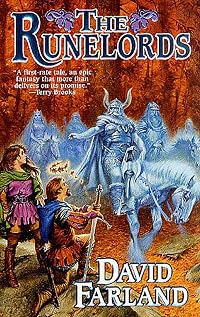
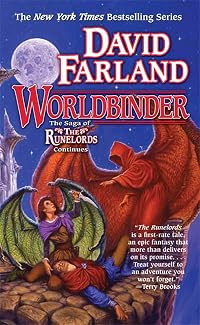
David Farland's acclaimed Runelords series introduces a world where the social structure is based upon the magical exchange of "endowments" such as stamina, grace, and wit. The Runelords are those who receive these endowments from their vassals, becoming superhuman in exchange for the responsibility of caring those they have deprived of strength, or beauty, or sight. Young Prince Gaborn of Mystarria is traveling in disguise on a journey to ask for the hand of the lovely Princess Iome of show more Sylvarresta. Armed with his gifts of strength and perception, the prince and his bodyguard stop at a local tavern, where they spot a pair of assassins who have their sights set on Princess Iome's father. As they race to warn the king, they realize that more than the royal family is at risk-the very fate of the Earth is in jeopardy. show lessTags
Recommendations
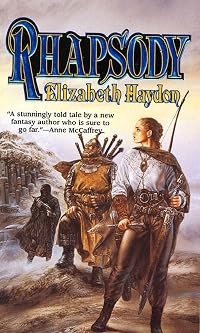

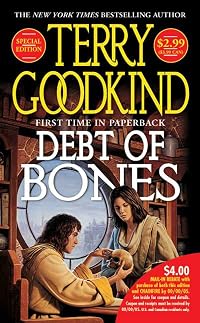
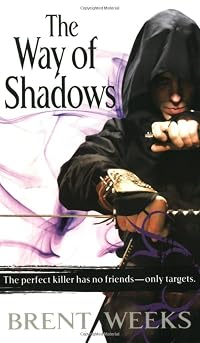
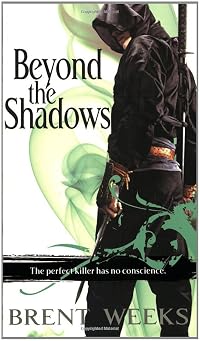
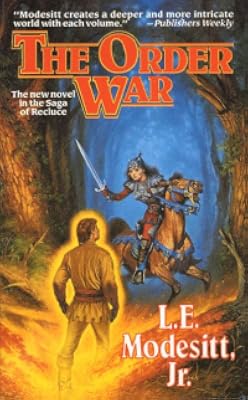
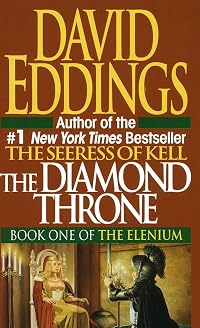
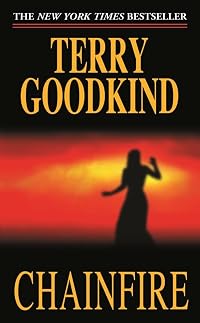
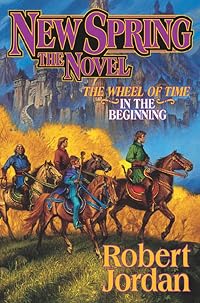
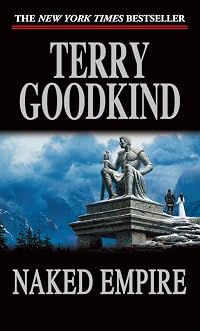
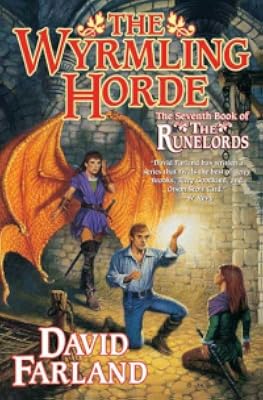
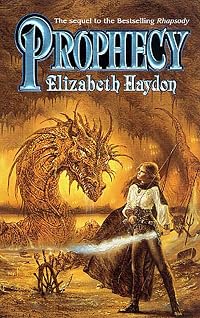
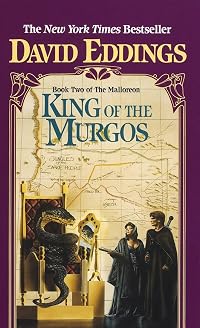
Member Recommendations

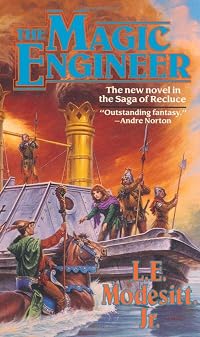
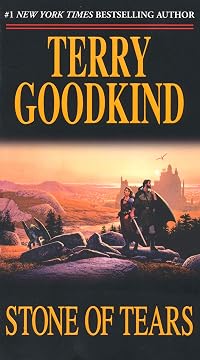
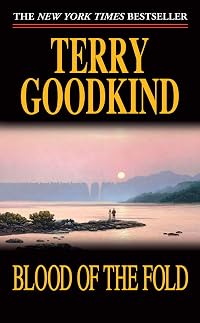
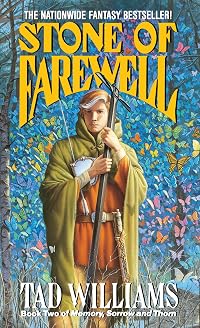
Cecrow Another fantasy in which magic is acquired by taking it from others.
Member Reviews
Man versus Nature. Writ large.
Or larger, if you consider we're dealing with whole armies concentrated into a single man or the Earth in the other.
This is an epic fantasy that's competent in characters if not in extensive worldbuilding. But more importantly, it runs with a very, very cool idea. And cool ideas are COOL.
The skinny? Attributes can be given or taken from people and added to other individuals. Use runes plus guile, absolute force, or desperate pleading, and then you've got some insanely powerful superheroes and supervillains. Think that Jet Li movie, One, but instead of sucking, make the possibilities unlimited for all characters. Want super eyesight? Take 100 the good eyesight from a hundred people, let them go blind, and show more become hawkeye. :) Same for Wit, Endurance, Metabolism, Glamour, or others.
Have the big bad become a god with all these attributes. He is the sum of all men. Now set the overmatched hero against him.
Cool, right? Simple, fun, and interesting. Not classic literature, but FUN. :) show less
Or larger, if you consider we're dealing with whole armies concentrated into a single man or the Earth in the other.
This is an epic fantasy that's competent in characters if not in extensive worldbuilding. But more importantly, it runs with a very, very cool idea. And cool ideas are COOL.
The skinny? Attributes can be given or taken from people and added to other individuals. Use runes plus guile, absolute force, or desperate pleading, and then you've got some insanely powerful superheroes and supervillains. Think that Jet Li movie, One, but instead of sucking, make the possibilities unlimited for all characters. Want super eyesight? Take 100 the good eyesight from a hundred people, let them go blind, and show more become hawkeye. :) Same for Wit, Endurance, Metabolism, Glamour, or others.
Have the big bad become a god with all these attributes. He is the sum of all men. Now set the overmatched hero against him.
Cool, right? Simple, fun, and interesting. Not classic literature, but FUN. :) show less
A unique magic system where Runelords transfer human attributes: brawn, wit, and grace, via runes, to become nearly invincible. Prince Gaborn Val Orden must stop the tyrannical Wolf Lord Raj Ahten, who is gathering these powers to conquer the world just as ancient monsters, the Reavers, threaten humanity.
Magic relies on endowments, where givers surrender attributes to a lord, often creating a shameful economy of dependency. Raj Ahten, the Wolf Lord of Indhopal, seeks to become the Sum of All Men by absorbing massive amounts of power, threatening to conquer the northern kingdoms.
Young Prince Gaborn, while attempting to court Princess Iome, finds himself thrust into leadership, eventually becoming the Earth King, a legendary defender. show more While humans fight amongst themselves, they face an existential threat from demonic monsters called Reavers. show less
Magic relies on endowments, where givers surrender attributes to a lord, often creating a shameful economy of dependency. Raj Ahten, the Wolf Lord of Indhopal, seeks to become the Sum of All Men by absorbing massive amounts of power, threatening to conquer the northern kingdoms.
Young Prince Gaborn, while attempting to court Princess Iome, finds himself thrust into leadership, eventually becoming the Earth King, a legendary defender. show more While humans fight amongst themselves, they face an existential threat from demonic monsters called Reavers. show less
I started reading this book excited that I had finally found something to read, something that would keep me occupied for a while. As always, it took me a while to adjust to the characters, names, and rules of magic, but once I got the hand of things I realized that I had stumbled upon a good story. This book would be more than just another book to add to my list of books I have read—it would be entertaining and diverting.
But it ended up being even more than that. Rare is the book that can entertain AND teach profound truths. This book has much to teach about humanity. As we watch Gaborn change and accept his status as Earth King, we learn things about the earth, too. Suddenly, it doesn't matter so much which side wins. Every life show more lost deserves to be mourned. It gave me a small glimpse of what it must be like for God, watching from heaven as his children slaughter each other. That is not the way it is supposed to be. Just like it is not right that one man becomes stronger as others become weak.
I'm interested to see what else Farland has to teach us in the next several novels. I'm excited to continue the adventure, and to learn more about myself as well. show less
But it ended up being even more than that. Rare is the book that can entertain AND teach profound truths. This book has much to teach about humanity. As we watch Gaborn change and accept his status as Earth King, we learn things about the earth, too. Suddenly, it doesn't matter so much which side wins. Every life show more lost deserves to be mourned. It gave me a small glimpse of what it must be like for God, watching from heaven as his children slaughter each other. That is not the way it is supposed to be. Just like it is not right that one man becomes stronger as others become weak.
I'm interested to see what else Farland has to teach us in the next several novels. I'm excited to continue the adventure, and to learn more about myself as well. show less
As I said in my review of [b:On My Way to Paradise|151618|On My Way to Paradise|Dave Wolverton|http://d202m5krfqbpi5.cloudfront.net/books/1225656791s/151618.jpg|146339], I don't know how I missed [a:Dave Wolverton|86137|Dave Wolverton|http://d202m5krfqbpi5.cloudfront.net/authors/1207167742p2/86137.jpg] back in the late 1990s, but I'm sure it had something to do with starting college, doing more homework and reading fewer novels, and, probably, girls.
Whatever it was that distracted me at the time, I've found Wolverton, or Dave Farland as he goes by for his fantasy novels (and which name I'll use from here on out since this is a fantasy novel), and I feel like I've discovered some kind of not-so-hidden local restaurant that, for whatever show more reason, no one ever told me had amazing sandwiches. And everyday, right about the same time, I can't help but want to trek back over to try a new sandwich.
Farland is just like that. I read [b:On My Way to Paradise|151618|On My Way to Paradise|Dave Wolverton|http://d202m5krfqbpi5.cloudfront.net/books/1225656791s/151618.jpg|146339], and loved it, but I couldn't help but ask: was it a one-hit wonder? Since it had been a while since I'd read any epic fantasy, I decided to pick up [b:The Sum of All Men|144127|The Sum of All Men (Runelords #1)|David Farland|http://d202m5krfqbpi5.cloudfront.net/books/1312049905s/144127.jpg|139049]. I finished the late-[a:Robert Jordan|6252|Robert Jordan|http://d202m5krfqbpi5.cloudfront.net/authors/1175475715p2/6252.jpg]'s Wheel of Time series back in January, and I hadn't touched the genre since. Books in epic fantasy tend to be door stoppers, and it takes some commitment to pick up a new series (just ask [a:George R.R. Martin|346732|George R.R. Martin|http://d202m5krfqbpi5.cloudfront.net/authors/1351944410p2/346732.jpg] fans who have endure not only long periods of time between installments in his Song of Fire and Ice series, but the very real possibility that the good guys just won't win in the end...or even in the middle, for that matter. But I digress). After putting it off to finish one thing and another, I finally dug in, started reading, and soon found myself lost between the pages.
A lot of reviewers and readers will note that [b:The Sum of All Men|144127|The Sum of All Men (Runelords #1)|David Farland|http://d202m5krfqbpi5.cloudfront.net/books/1312049905s/144127.jpg|139049] breaks new ground, manages to come up with a magic system that is fresh and original, and it's true. However, this isn't what I liked so much about [b:The Sum of All Men|144127|The Sum of All Men (Runelords #1)|David Farland|http://d202m5krfqbpi5.cloudfront.net/books/1312049905s/144127.jpg|139049], though it's clearly a clever system of magic. On the contrary, for me the magic system, something of a "shameful economy," as I think one of the characters calls it, creates conflicts and conundrums for Farland's protagonists while empowering their enemies. No, it isn't the magic that I find so interesting, though clever it may be, nor the fantastical creatures, bloody battles, or imaginative world. It's all very fascinating and contributory to a great tale, but clever ideas are a dime a dozen in fantasy.
Rather, what I like is Farland's writing and the way his characters resonate with me. Because although set in a land that has more in common with medieval Europe and crusade era Arabia, the characters face quandaries and decisions and complex relationships that are human and natural and believable. They act like real people, not pawns of a writer's pen, and whether it is the power of the story, the deft and gentle use of symbolism, or the interweaving of myth, [a:Joseph Campbell|20105|Joseph Campbell|http://d202m5krfqbpi5.cloudfront.net/authors/1201938763p2/20105.jpg]-style, by the time I had finished [b:The Sum of All Men|144127|The Sum of All Men (Runelords #1)|David Farland|http://d202m5krfqbpi5.cloudfront.net/books/1312049905s/144127.jpg|139049] I felt as much for the characters as I might for people I really know.
I even sympathized with the apparent villain. Yes, he was "the bad guy," but it wasn't so black and white why he was the villain. Not unlike [b:On My Way to Paradise|151618|On My Way to Paradise|Dave Wolverton|http://d202m5krfqbpi5.cloudfront.net/books/1225656791s/151618.jpg|146339], it was in the grey and difficult to see decisions that made the characters live on the page.
Ok, I know. It's silly to care about the fictional, ink on paper people that fill a novel. And there are a lot of good books out there that can make readers feel, so to speak. But what is good reading but a way to understand and see through the eyes of another for a while? It doesn't matter whether it's on a ship hurtling through space between the planets, a farmer trying to eek out a subsistence on a Depression era farm, or a bevy of sisters trying to catch the eye of the newly wealthy, and very handsome, Mr. Darcy: when a book can make you feel, believe in the imaginary characters, it's worth the time and it's worth finding more of it.
Farland is, for me, a newly discovered secret, and I can't wait to share the secret with others, not to mention read more. I've got his [b:Nightingale|13323485|Nightingale|David Farland|http://d202m5krfqbpi5.cloudfront.net/books/1351984685s/13323485.jpg|18164169], one of his more recent books, waiting next to the bed, and I've just put in an order from Amazon for [b:Brotherhood of the Wolf|144112|Brotherhood of the Wolf (Runelords, #2)|David Farland|http://d202m5krfqbpi5.cloudfront.net/books/1312232130s/144112.jpg|1166994], and I can't wait to start both. show less
Whatever it was that distracted me at the time, I've found Wolverton, or Dave Farland as he goes by for his fantasy novels (and which name I'll use from here on out since this is a fantasy novel), and I feel like I've discovered some kind of not-so-hidden local restaurant that, for whatever show more reason, no one ever told me had amazing sandwiches. And everyday, right about the same time, I can't help but want to trek back over to try a new sandwich.
Farland is just like that. I read [b:On My Way to Paradise|151618|On My Way to Paradise|Dave Wolverton|http://d202m5krfqbpi5.cloudfront.net/books/1225656791s/151618.jpg|146339], and loved it, but I couldn't help but ask: was it a one-hit wonder? Since it had been a while since I'd read any epic fantasy, I decided to pick up [b:The Sum of All Men|144127|The Sum of All Men (Runelords #1)|David Farland|http://d202m5krfqbpi5.cloudfront.net/books/1312049905s/144127.jpg|139049]. I finished the late-[a:Robert Jordan|6252|Robert Jordan|http://d202m5krfqbpi5.cloudfront.net/authors/1175475715p2/6252.jpg]'s Wheel of Time series back in January, and I hadn't touched the genre since. Books in epic fantasy tend to be door stoppers, and it takes some commitment to pick up a new series (just ask [a:George R.R. Martin|346732|George R.R. Martin|http://d202m5krfqbpi5.cloudfront.net/authors/1351944410p2/346732.jpg] fans who have endure not only long periods of time between installments in his Song of Fire and Ice series, but the very real possibility that the good guys just won't win in the end...or even in the middle, for that matter. But I digress). After putting it off to finish one thing and another, I finally dug in, started reading, and soon found myself lost between the pages.
A lot of reviewers and readers will note that [b:The Sum of All Men|144127|The Sum of All Men (Runelords #1)|David Farland|http://d202m5krfqbpi5.cloudfront.net/books/1312049905s/144127.jpg|139049] breaks new ground, manages to come up with a magic system that is fresh and original, and it's true. However, this isn't what I liked so much about [b:The Sum of All Men|144127|The Sum of All Men (Runelords #1)|David Farland|http://d202m5krfqbpi5.cloudfront.net/books/1312049905s/144127.jpg|139049], though it's clearly a clever system of magic. On the contrary, for me the magic system, something of a "shameful economy," as I think one of the characters calls it, creates conflicts and conundrums for Farland's protagonists while empowering their enemies. No, it isn't the magic that I find so interesting, though clever it may be, nor the fantastical creatures, bloody battles, or imaginative world. It's all very fascinating and contributory to a great tale, but clever ideas are a dime a dozen in fantasy.
Rather, what I like is Farland's writing and the way his characters resonate with me. Because although set in a land that has more in common with medieval Europe and crusade era Arabia, the characters face quandaries and decisions and complex relationships that are human and natural and believable. They act like real people, not pawns of a writer's pen, and whether it is the power of the story, the deft and gentle use of symbolism, or the interweaving of myth, [a:Joseph Campbell|20105|Joseph Campbell|http://d202m5krfqbpi5.cloudfront.net/authors/1201938763p2/20105.jpg]-style, by the time I had finished [b:The Sum of All Men|144127|The Sum of All Men (Runelords #1)|David Farland|http://d202m5krfqbpi5.cloudfront.net/books/1312049905s/144127.jpg|139049] I felt as much for the characters as I might for people I really know.
I even sympathized with the apparent villain. Yes, he was "the bad guy," but it wasn't so black and white why he was the villain. Not unlike [b:On My Way to Paradise|151618|On My Way to Paradise|Dave Wolverton|http://d202m5krfqbpi5.cloudfront.net/books/1225656791s/151618.jpg|146339], it was in the grey and difficult to see decisions that made the characters live on the page.
Ok, I know. It's silly to care about the fictional, ink on paper people that fill a novel. And there are a lot of good books out there that can make readers feel, so to speak. But what is good reading but a way to understand and see through the eyes of another for a while? It doesn't matter whether it's on a ship hurtling through space between the planets, a farmer trying to eek out a subsistence on a Depression era farm, or a bevy of sisters trying to catch the eye of the newly wealthy, and very handsome, Mr. Darcy: when a book can make you feel, believe in the imaginary characters, it's worth the time and it's worth finding more of it.
Farland is, for me, a newly discovered secret, and I can't wait to share the secret with others, not to mention read more. I've got his [b:Nightingale|13323485|Nightingale|David Farland|http://d202m5krfqbpi5.cloudfront.net/books/1351984685s/13323485.jpg|18164169], one of his more recent books, waiting next to the bed, and I've just put in an order from Amazon for [b:Brotherhood of the Wolf|144112|Brotherhood of the Wolf (Runelords, #2)|David Farland|http://d202m5krfqbpi5.cloudfront.net/books/1312232130s/144112.jpg|1166994], and I can't wait to start both. show less
I liked this book quite a bit more than I expected to. It's a quick read that offers pretty much non-stop action, with Farland throwing in several surprising plot developments. On the other hand, don't expect much in terms of character development (the main protagonist Gaborn is pretty much the only character with any hint of depth--I wished that we had gotten more of Myrrima).
The most interesting feature is an unusual magic system that raises challenging ethical questions. As to the subsequent books in the series, I found the second book to be a big letdown, but the third was a bit better. I suppose that someday I will get around to buying book four to see how the series concludes.
The most interesting feature is an unusual magic system that raises challenging ethical questions. As to the subsequent books in the series, I found the second book to be a big letdown, but the third was a bit better. I suppose that someday I will get around to buying book four to see how the series concludes.
The Runelords by David Farland
This also seems to be in print as The Sum of All Men by Dave Wolverton. (I wonder if I can count it as two books for the 75 Book Challenge?...)
The southern Wolf Lord, Raj Ahten, is marching north, having already taken the countries of the south under his sway. Two old friends, the Kings of Orden and Mystarria, both Runelords, find themselves defending their lands against him. At the same time, the long prophesied Earth King is anointed, whom it is said will arise at a time when the Earth is in dire need.
In explanation, a Runelord is a leader who is gifted endowments, such as strength or sight, from those under him (or her) in return for his protection. The endowment is literally transferred, leaving the show more donor permantly weak, blind etc, and lasts for the rest of the lifetime. A Wolf Lord is one who takes attributes from animals.
While I found this an interesting story, with some interesting concepts, I felt there were a lot of (small) gaps. Though this was quite a long book, at 600+ pages, there were a lot of places that were lacking in detail, so things didn't quite make sense, or characters' motivations were rather vague. But I seem to be in direct opposition in my opinion to the recommendations listed on the cover - so maybe it's just me! ★★½ show less
This also seems to be in print as The Sum of All Men by Dave Wolverton. (I wonder if I can count it as two books for the 75 Book Challenge?...)
The southern Wolf Lord, Raj Ahten, is marching north, having already taken the countries of the south under his sway. Two old friends, the Kings of Orden and Mystarria, both Runelords, find themselves defending their lands against him. At the same time, the long prophesied Earth King is anointed, whom it is said will arise at a time when the Earth is in dire need.
In explanation, a Runelord is a leader who is gifted endowments, such as strength or sight, from those under him (or her) in return for his protection. The endowment is literally transferred, leaving the show more donor permantly weak, blind etc, and lasts for the rest of the lifetime. A Wolf Lord is one who takes attributes from animals.
While I found this an interesting story, with some interesting concepts, I felt there were a lot of (small) gaps. Though this was quite a long book, at 600+ pages, there were a lot of places that were lacking in detail, so things didn't quite make sense, or characters' motivations were rather vague. But I seem to be in direct opposition in my opinion to the recommendations listed on the cover - so maybe it's just me! ★★½ show less
In some ways, Farland's first novel is pretty straightforward. Set in a pseudo-mediaeval world, it deals with a young prince, Gaborn, who is gifted with special powers- and must attempt to save the world. Hmm, we've heard that before.
The central plot isn't all that arresting either: Gaborn accompanies his father, King Orden of Mystarria to Heredon. Both Heredon and Mystarria are part of the Rofehavan Kingdoms, which are under threat from a southern King, Raj Ahten. As Gaborn reaches Heredon, all hell breaks loose. Ahten has sent assassins into Heredon. Soon, Ahten himself appears, backed by an army (yes, this is another of those "militaristic fantasies"). Besides having to repel Ahten, Gaborn must also try to win over the King show more Heredon's daughter, for whose hand he has come in the first place. Against this backdrop, a larger danger lurks in the background, as inhuman "Reavers" begin to stir, threatening all mankind.
What sets this book apart from others is that Farland has woven into his story a concept that permeates his entire world. In Farland's world, it is possible to physically transfer someone's strength, speed or other attributes (endowments) to some-one else by means of "forcibles".
Think, for example, about Raj Ahten (the bad guy). Given hundreds of endowments, he is immeasurably stronger, quicker and smarter than ordinary men. But in his wake he leaves hundreds of people from whom he has taken these attributes; a host of cripples. And he must keep these so-called "Dedicates" alive: if they die, the endowments they gave disappear. Conversely, if Ahten should die, his endowments are returned to those who gave them. So if you want to hurt Ahten, you might well try to do so by killing his Dedicates. But what if those Dedicates consist also of your own people - friend or family, even - who have been forced to give attributes to him? What do you do then?
To his credit, Farland has thought long and hard about the consequences of his idea. He has not shirked the moral dilemma it creates. In fact, that moral issue runs like a thread through the entire book.
However, while Farland does introduce some nice fantasy concepts, the characterisations are weak. Most disappointing however is the arbitrary way in which he disposes of characters that I had hoped would become the nucleus of the series. I read fantasy precisely because it is just that - fantasy. If I want reality, I'll read the newspaper. In eliminating so many of the potentially heroic core characters, I had no anchor because the main character isn't strong enough to fulfill this role alone.
Farland is a developing author and I will persist with this to see how the series develops. show less
The central plot isn't all that arresting either: Gaborn accompanies his father, King Orden of Mystarria to Heredon. Both Heredon and Mystarria are part of the Rofehavan Kingdoms, which are under threat from a southern King, Raj Ahten. As Gaborn reaches Heredon, all hell breaks loose. Ahten has sent assassins into Heredon. Soon, Ahten himself appears, backed by an army (yes, this is another of those "militaristic fantasies"). Besides having to repel Ahten, Gaborn must also try to win over the King show more Heredon's daughter, for whose hand he has come in the first place. Against this backdrop, a larger danger lurks in the background, as inhuman "Reavers" begin to stir, threatening all mankind.
What sets this book apart from others is that Farland has woven into his story a concept that permeates his entire world. In Farland's world, it is possible to physically transfer someone's strength, speed or other attributes (endowments) to some-one else by means of "forcibles".
Think, for example, about Raj Ahten (the bad guy). Given hundreds of endowments, he is immeasurably stronger, quicker and smarter than ordinary men. But in his wake he leaves hundreds of people from whom he has taken these attributes; a host of cripples. And he must keep these so-called "Dedicates" alive: if they die, the endowments they gave disappear. Conversely, if Ahten should die, his endowments are returned to those who gave them. So if you want to hurt Ahten, you might well try to do so by killing his Dedicates. But what if those Dedicates consist also of your own people - friend or family, even - who have been forced to give attributes to him? What do you do then?
To his credit, Farland has thought long and hard about the consequences of his idea. He has not shirked the moral dilemma it creates. In fact, that moral issue runs like a thread through the entire book.
However, while Farland does introduce some nice fantasy concepts, the characterisations are weak. Most disappointing however is the arbitrary way in which he disposes of characters that I had hoped would become the nucleus of the series. I read fantasy precisely because it is just that - fantasy. If I want reality, I'll read the newspaper. In eliminating so many of the potentially heroic core characters, I had no anchor because the main character isn't strong enough to fulfill this role alone.
Farland is a developing author and I will persist with this to see how the series develops. show less
Members
- Recently Added By
Author Information

140+ Works 14,685 Members
Some Editions
Series

Belongs to Publisher Series
Knaur Excalibur (70106)
Work Relationships
Common Knowledge
- Canonical title
- The Runelords
- Original title
- The Sum of All Men
- Original publication date
- 1998-12
- People/Characters
- Gaborn Val Orden, 18 year old Prince and Main Hero, The New Earth King; Bannerman, Loyal Bodyguard, love women; Raj Ahten; King Mendellas Draken Orden; Ivorian Borenson - Femaile lead and Gaborn love interested; Myrrima (show all 10); Iome Sylvarresta; King Jas Laren Sylvarresta; Chemoise Solette; Shostag
- Important places
- Rofehavan; Heredon; Castle Sylvarresta, Heredon; Castle Longmot, Heredon; The Seven Standing Stones, Dunwood, Heredon
- Related movies
- Runelords: The Sum of All Men (Currently In Production)
- Dedication
- Thanks are due to the many people who helped shape this book. Perhaps foremost among them are Jonathan and Laurel Langford, who not only read the book once, but twice, and made detailed notes. Beyond this, certainly I must th... (show all)ank my editors at Tor for their care and consideration-David Hartwell, Tad Dembinski and Tom Doherty. Others who gave valuable input include my writing group, Pilgrimage-Lee Allred, Russel Asplund, Virginia Baker, Scott Bronson, Michael Carr, grant Avery Morgan, Scott Parkin, Ken Rand, and Bruce Thatcher. Thanks are also due to Les Pardew, Paul Brown III, Sandy Stratton, John Myler, and Dave Hewitt.
I'm particularly grateful to my wife, Mary, and to my children, who had to live without a dad while I wrote. - First words
- Effigies of the Earth King festooned the city around Castle Sylvarresta.
- Quotations
- "I Choose you. I Choose you for the Earth. May the Earth heal you. May the Earth Hide you. May the Earth make you its own." - Gaborn Val Orden
- Last words
- (Click to show. Warning: May contain spoilers.)It was only the first.
- Blurbers
- Brooks, Terry; Drake, David; Budrys, Algis; Card, Orson Scott
- Original language
- English
- Disambiguation notice
- The original title of The Runelords was The Sum of All Men.
Classifications
Statistics
- Members
- 2,099
- Popularity
- 9,838
- Reviews
- 25
- Rating
- (3.58)
- Languages
- 7 — Chinese, Czech, English, French, German, Polish, Spanish
- Media
- Paper, Audiobook, Ebook
- ISBNs
- 29
- ASINs
- 9