On This Page
Description
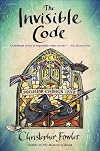
London’s craftiest and boldest detectives, Arthur Bryant and John May, are back in this deviously twisting mystery of black magic, madness, and secrets hidden in plain sight.When a young woman is found dead in the pews of St. Bride’s Church—alone and showing no apparent signs of trauma—Arthur Bryant assumes this case will go to the Peculiar Crimes Unit, an eccentric team tasked with solving London’s most puzzling murders. Yet the city police take over the investigation, and show more the PCU is given an even more baffling and bewitching assignment.
Called into headquarters by Oskar Kasavian, the head of Home Office security, Bryant and May are shocked to hear that their longtime adversary now desperately needs their help. Oskar’s wife, Sabira, has been acting strangely for weeks—succumbing to violent mood swings, claiming an evil presence is bringing her harm—and Oskar wants the PCU to find out why. And if there’s any duo that can deduce the method behind her madness, it’s the indomitable Bryant and May.
When a second bizarre death reveals a surprising link between the two women’s cases, Bryant and May set off on a trail of clues from the notorious Bedlam hospital to historic Bletchley Park. And as they are drawn into a world of encrypted codes and symbols, concealed rooms and high-society clubs, they must work quickly to catch a killer who lurks even closer than they think.
Witty, suspenseful, and ingeniously plotted, The Invisible Code is Christopher Fowler at the very top of his form.
Praise for The Invisible Code
“Delightful . . . priceless dialogue . . . Fowler’s small but ardent American following deserves to get much larger. . . . The Invisible Code has immense charm. . . . Fowler creates a fine blend of vivid descriptions, . . . quick thinking and artful understatement. . . . Best of all are the two main characters, particularly Bryant, whose fine British stodginess is matched perfectly by the agility of his crime-solving mind.”—Janet Maslin, The New York Times
“Excellent . . . In the light of the challenges that Fowler has given his heroes in prior books, it’s particularly impressive that he manages to surpass himself once again.”—Publishers Weekly (starred review)
Praise for the ingenious novels featuring the Peculiar Crimes Unit
“Witty, charming, intelligent, wonderfully atmospheric and enthusiastically plotted.”—The Times (UK)
“A series of narratives that exert an Ancient Mariner–like grip on the reader . . . Christopher Fowler is something of a British national treasure.”—Crime Time
“Quirky, ingenious and quite brilliant . . . If you haven’t indulged you are really missing out. . . . Wonderful, gently humorous stuff, so clever.”—The Bookseller
“A brilliant series of impossible crime novels.”—The Denver Post
“Grumpy Old Men does CSI with a twist of Dickens! Bryant and May are hilarious. I love this series.”—Karen Marie Moning
“An example of what Christopher Fowler does so well, which is to merge the old values with the new values—reassuring, solid, English, and traditional. He’s giving us two for the price of one here.”—Lee Child. show less
Tags
Recommendations
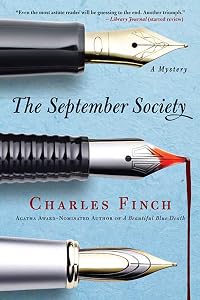
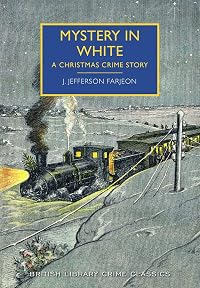
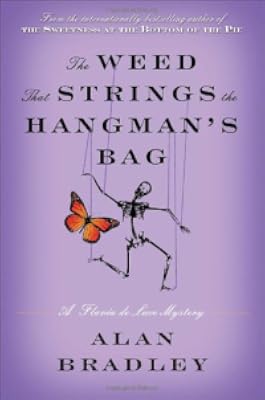
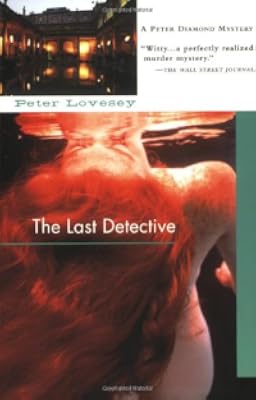

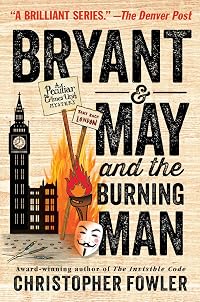

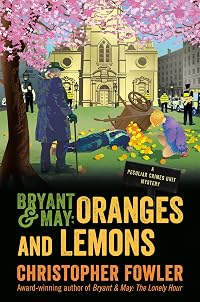
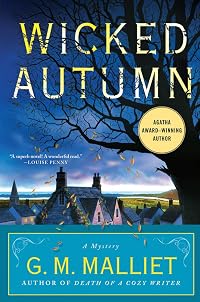
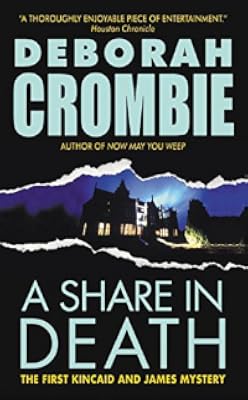

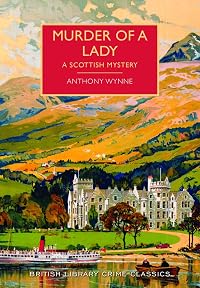
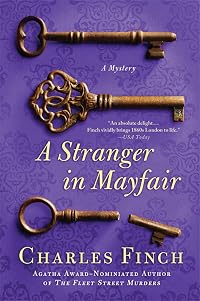
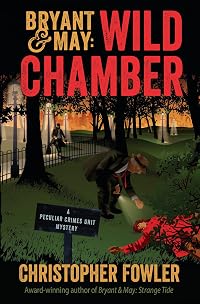

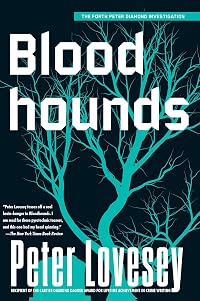
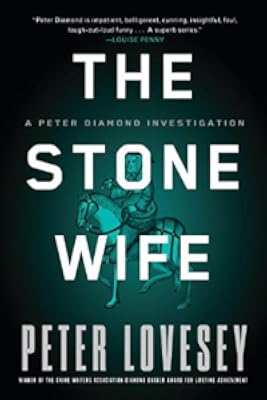
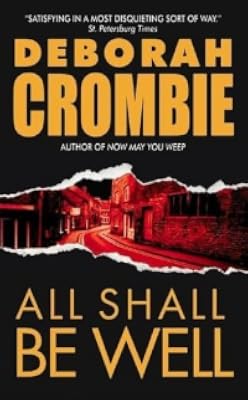
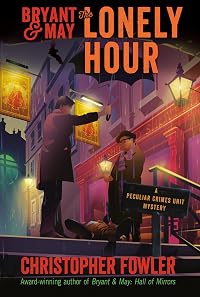





Member Recommendations

LongDogMom Both feature older detectives who are somewhat rebellious of authority and like to do things their own way.
LongDogMom Both feature older detectives who have no respect for authority and head up units that get results by being unconventional.

Member Reviews
I have come to love this series and always enjoy reading them. This one in particular kept me guessing and surprised, right until the very end! The character of Arthur Bryant is wonderful...so real and fully formed that I can hear his voice in my head when he refers to his boss Raymond Land as "Raymondo" and approaches their cases with his insatiably curiousity (something I can certainly relate to!). It's easy to picture him in his messy office - almost like a cabinet of curiosities full of weird and unusual artifacts asm well as books on a variety of subject matter, none of which would normally seem pertinent in any way to a police detective! And then there's his partner May - sauve and sophisticated, the Yin to Bryant's Yang, or as show more Bryant puts it "the other half of my brain."! Their unconventional methods in solving their cases, and the bits of historical trivia scattered throughout is always fascinating. I hope Christopher Fowler continues to write many more adventures featuring the wonderfully quirky Peculiar Crimes Unit show less
In the churchyard of London's St. Bride's Church, a young woman sits reading until, driven away by the annoyance of two young children, she enters the church's nave. Minutes later, she collapses and dies. The children report that they were playing a game of "witch hunter" and put a curse on her that killed her.
When the autopsy fails to identify a specific cause of death, Arthur Bryant of the Home Office's Peculiar Crimes Unit naturally wants the case. But the Metropolitan Police have jurisdiction and the PCU, being persona non grata in the Home Office, lack the power to take over.
Certainly their enemy-in-chief, the satanic Oscar Kasavian, isn't about to lift a finger to help them. He has vowed to wipe out the PCU and, particularly its show more beyond-retirement-age leads, Arthur Bryant and John May. Imagine Bryant and May's surprise, then, when Kasavian almost humbly asks them to help him with a problem involving his young wife.
As Bryant and May and the rest of the PCU team begin to investigate, the case takes on ever larger proportions. Government corruption, whistleblowers in private industry, mental illness and its history in London, private clubs, Russian gangsters, codes and ciphers and the supernatural are all thrown into the heady mix. On top of all that, there are disquieting revelations of how the British class system, cronyism and the complete disregard of commercial/government conflicts of interest conspire to ensure that a cabal of venal and ruthless men stay in power in British government.
But this is no grim, deadly serious police procedural. With the PCU, that's just not possible. Arthur Bryant is the absent-minded fellow with his latest meal evidenced down the front of his clothes and his cell phone made unusable by the melted sweets on it. He can't understand why people take exception to his conducting experiments at home and in the office involving things like pig carcasses and explosives. John May is Bryant's opposite: sartorially impeccable, careful to massage egos when necessary and a believer that the simplest answer is usually the right one. Despite their vast differences, Bryant and May make an effective team and, as always, they go right down to the wire in their investigation.
This tenth book in the Peculiar Crimes Unit series is notable for its use of London settings in the story. Descriptions of churches, museums, streets and history bring the city alive. This was a particularly satisfying story, one of my absolute favorites in the series. I laughed aloud several times but, as always with this series, I learned a lot and I was touched by the very human members of the team and the people they deal with.
This book can be read as a standalone, but I would suggest that at the very least, you read the previous book, The Memory of Blood: A Peculiar Crimes Unit Mystery (Peculiar Crimes Unit Mysteries), first. There are certain plot issues that come out of that book and it will make The Invisible Code that much more satisfying to know about them. Best of all, though, would be to read the whole series from the beginning, starting with Full Dark House: A Peculiar Crimes Unit Mystery. show less
When the autopsy fails to identify a specific cause of death, Arthur Bryant of the Home Office's Peculiar Crimes Unit naturally wants the case. But the Metropolitan Police have jurisdiction and the PCU, being persona non grata in the Home Office, lack the power to take over.
Certainly their enemy-in-chief, the satanic Oscar Kasavian, isn't about to lift a finger to help them. He has vowed to wipe out the PCU and, particularly its show more beyond-retirement-age leads, Arthur Bryant and John May. Imagine Bryant and May's surprise, then, when Kasavian almost humbly asks them to help him with a problem involving his young wife.
As Bryant and May and the rest of the PCU team begin to investigate, the case takes on ever larger proportions. Government corruption, whistleblowers in private industry, mental illness and its history in London, private clubs, Russian gangsters, codes and ciphers and the supernatural are all thrown into the heady mix. On top of all that, there are disquieting revelations of how the British class system, cronyism and the complete disregard of commercial/government conflicts of interest conspire to ensure that a cabal of venal and ruthless men stay in power in British government.
But this is no grim, deadly serious police procedural. With the PCU, that's just not possible. Arthur Bryant is the absent-minded fellow with his latest meal evidenced down the front of his clothes and his cell phone made unusable by the melted sweets on it. He can't understand why people take exception to his conducting experiments at home and in the office involving things like pig carcasses and explosives. John May is Bryant's opposite: sartorially impeccable, careful to massage egos when necessary and a believer that the simplest answer is usually the right one. Despite their vast differences, Bryant and May make an effective team and, as always, they go right down to the wire in their investigation.
This tenth book in the Peculiar Crimes Unit series is notable for its use of London settings in the story. Descriptions of churches, museums, streets and history bring the city alive. This was a particularly satisfying story, one of my absolute favorites in the series. I laughed aloud several times but, as always with this series, I learned a lot and I was touched by the very human members of the team and the people they deal with.
This book can be read as a standalone, but I would suggest that at the very least, you read the previous book, The Memory of Blood: A Peculiar Crimes Unit Mystery (Peculiar Crimes Unit Mysteries), first. There are certain plot issues that come out of that book and it will make The Invisible Code that much more satisfying to know about them. Best of all, though, would be to read the whole series from the beginning, starting with Full Dark House: A Peculiar Crimes Unit Mystery. show less
An enjoyable and intriguing story where, in a dramatic turnabout, the Peculiar Crimes Unit is engaged to help the unit's arch enemy Oskar Kasavian. His wife has started behaving erratically and his rivals at the Home Office will be all too willing to exploit the situation to ruin his career, but could it be an elaborate double bluff? Meanwhile, the case seems to connect with other mysterious deaths in earlier books and the unit is up against its most baffling case.
The only thing holding this back from a 5 star rating for me is the eleventh hour introduction of a new villain whose input breaks the deadlock. I assume he will be an important villain in future stories now Kasavian has been humanised, but I didn't find such a late addition show more to the story convincing. show less
The only thing holding this back from a 5 star rating for me is the eleventh hour introduction of a new villain whose input breaks the deadlock. I assume he will be an important villain in future stories now Kasavian has been humanised, but I didn't find such a late addition show more to the story convincing. show less
The Peculiar Crimes Unit is tasked with a most unusual case: their boss, Oskar Kasavian, who has made no secret of his dislike of the unit, is entrusting them with finding out what is wrong with his wife. Sabira has been acting erratically, and with her talk of an evil presence, it sounds like something right up the alley of Bryant and May and the gang. Meanwhile, the unit is also investigating the mysterious death of a young woman in St Bride's Church. If there's a connection to the Home Office mystery, they'd all better watch their steps…
Overall this was a good PCU book. The pace was a bit slow at first, or I just took a while to get into it, but it picked up halfway through. This time around I was really more involved in the show more details of the city of London, as furnished by Bryant (and at one point, either Dan or Colin, whose detail-laden commentary I didn't buy -- only Bryant can get away with monologues like that). It's not a book I'd suggest starting out with, but if you're already familiar with the gang, it's a pleasant diversion. show less
Overall this was a good PCU book. The pace was a bit slow at first, or I just took a while to get into it, but it picked up halfway through. This time around I was really more involved in the show more details of the city of London, as furnished by Bryant (and at one point, either Dan or Colin, whose detail-laden commentary I didn't buy -- only Bryant can get away with monologues like that). It's not a book I'd suggest starting out with, but if you're already familiar with the gang, it's a pleasant diversion. show less
The Invisible Code is a British police procedural novel with a twist. It is in fact, a part of a series called the Peculiar Crimes Mystery Unit. This is the 10th novel in the series, and I can hardly wait to delve backwards into the preceding mysteries.
Author Christopher Fowler has crafted witty dialog to go along with mysterious, sometimes bizarre plot lines. His two Senior detectives Arthur Bryant and John May, are older men who are accidentally hilarious, though fairly astute at cutting through the mystery to find resolution to the cases that come their way. In The Invisible Code, a young woman drops dead from unknown causes, but she had been reading Rosemary's Baby, and there were some children nearby playing witchcraft games at the show more time...
In a supposedly unrelated case, the Home Office politician that the two detectives disdain, Oskar Kasavian, calls them into his office to ask that they monitor and protect his stunningly beautiful Albanian wife, offering them "a permanent guarantee of official status within the City of London police structure," if they agree to take on this task. (See why I'm curious about what has happened in previous novels?) Mrs. Kasavian has apparently gotten mixed up with some witchcraft too.
I am happy to have discovered this author and this series, particularly since I see that one of Fowler's previous novels won the Crimefest's Last Laugh award for funniest mystery novel! show less
Author Christopher Fowler has crafted witty dialog to go along with mysterious, sometimes bizarre plot lines. His two Senior detectives Arthur Bryant and John May, are older men who are accidentally hilarious, though fairly astute at cutting through the mystery to find resolution to the cases that come their way. In The Invisible Code, a young woman drops dead from unknown causes, but she had been reading Rosemary's Baby, and there were some children nearby playing witchcraft games at the show more time...
In a supposedly unrelated case, the Home Office politician that the two detectives disdain, Oskar Kasavian, calls them into his office to ask that they monitor and protect his stunningly beautiful Albanian wife, offering them "a permanent guarantee of official status within the City of London police structure," if they agree to take on this task. (See why I'm curious about what has happened in previous novels?) Mrs. Kasavian has apparently gotten mixed up with some witchcraft too.
I am happy to have discovered this author and this series, particularly since I see that one of Fowler's previous novels won the Crimefest's Last Laugh award for funniest mystery novel! show less
I read this book in the series first, and I enjoyed it so much that I bought the rest of the series- I just finished the first, and am rapidly reading the second. This series is full of mystery, hilarity and cranky British detectives...
‘The Invisible Code’ is the 10 in a series of cozy mysteries featuring London-based detectives Arthur Bryant and John May of the oddly named Peculiar Crimes Unit (PCU). While I own two other PCU books that were highly recommended, I haven’t yet read them making The Invisible Code the first of the series that I have read. While this book does refer to other cases that the team has worked on, it doesn’t do so in a way that makes the reader regret reading the series out of order. Other reviewers have suggested that one should read the book immediately preceding this one. While it may be wise to do so, it is by no means necessary.
Arthur Bryant and John May make up a delightful pair of old codgers whose cases date back to World War show more II. It’s hard to read about them and not think about Peter Falk’s Lieutenant Columbo divided into two distinct halves, one left-brained and one right-brained, both with British accents. May’s thinking is more linear. He is the quintessential policeman. Bryant, on the other hand, seems to get more inspiration from a museum than a crime scene. His intuitive manner at looking at problems is often at odds with May’s belief in Occam’s razor add an impressive depth to the two characters.
In ‘The Invisible Code’, the PCU takes on two apparently unrelated cases. First is the unexplained death of a woman who dies in a church with two children claiming that the death is the result of an imaginative witch-hunter game they were playing. In the second case, May and Bryant are asked by a senior officer in the Home Office to investigate strange behavioral changes that his wife has been exhibiting. This latter case is sensitive as the official is in the middle of international trade negotiations that could be sidetracked by an embarrassing domestic scandal.
Bottom line: Bryant and May make up a delightful pair of investigators. The case is entertaining but not likely to make anyone’s top ten list.
*Quotations are cited from an advanced reading copy and may not be the same as appears in the final published edition. The review copy of this book was obtained from the publisher via the Amazon Vine Program. show less
Arthur Bryant and John May make up a delightful pair of old codgers whose cases date back to World War show more II. It’s hard to read about them and not think about Peter Falk’s Lieutenant Columbo divided into two distinct halves, one left-brained and one right-brained, both with British accents. May’s thinking is more linear. He is the quintessential policeman. Bryant, on the other hand, seems to get more inspiration from a museum than a crime scene. His intuitive manner at looking at problems is often at odds with May’s belief in Occam’s razor add an impressive depth to the two characters.
In ‘The Invisible Code’, the PCU takes on two apparently unrelated cases. First is the unexplained death of a woman who dies in a church with two children claiming that the death is the result of an imaginative witch-hunter game they were playing. In the second case, May and Bryant are asked by a senior officer in the Home Office to investigate strange behavioral changes that his wife has been exhibiting. This latter case is sensitive as the official is in the middle of international trade negotiations that could be sidetracked by an embarrassing domestic scandal.
Bottom line: Bryant and May make up a delightful pair of investigators. The case is entertaining but not likely to make anyone’s top ten list.
*Quotations are cited from an advanced reading copy and may not be the same as appears in the final published edition. The review copy of this book was obtained from the publisher via the Amazon Vine Program. show less
Members
- Recently Added By
Author Information

136+ Works 12,716 Members
Christopher Fowler was born in Greenwich, London, England in 1953. He is the author of the Bryant and May Mystery series, Rune, and Old Devil Moon, which won the Edge Hill Audience Prize in 2008. He also won the British Fantasy Society Award for best novella for Breathe in 2005. He also won The Dagger in the Library Award 2015 for his body of show more work. (Bowker Author Biography) show less
Some Editions
Awards and Honors
Awards
Series

Common Knowledge
- Canonical title
- The Invisible Code
- Alternate titles
- The Invisible Code
- Original publication date
- 2012-08-02
- People/Characters
- John May; Arthur Bryant
- Important places
- London, England, UK
- Epigraph
- Money can't buy friends, but it can get you a better class of enemy.
-- Spike Milligan
'It started with me, it ends with me.'
-- Unnamed teenager, when asked about the history of London - Dedication
- For Peter Chapman
(US edition) For Jennifer Siegel, smart cookie, good egg, hot tamale - First words
- There was a witch around here somewhere.
- Publisher's editor
- Miciak, Kate
- Original language
- English
Classifications
Statistics
- Members
- 409
- Popularity
- 76,072
- Reviews
- 24
- Rating
- (3.79)
- Languages
- English
- Media
- Paper, Audiobook, Ebook
- ISBNs
- 14
- ASINs
- 8