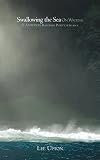
Swallowing the Sea: On Writing & Ambition, Boredom, Purity & Secrecy
by Lee Upton
On This Page
Description
Literary Nonfiction. This is an inspiring book about writing and—more unusually—a book that honors ambition, that idiosyncratic drive that compels writers and other artists to action despite every kind of obstacle. Upton explores forces that threaten our ability to fulfill the most daring aspirations, and she examines ambition's adjuncts, including failure, boredom, and purity, offering a provocative antidote: obsession. Ultimately Upton argues for a new perception of literary art as "a show more good secret" for our time, when our interior lives and our imaginations are under threat. show lessTags
Recommendations


Member Reviews
I relished Lee Upton's honest and idiosyncratic Swallowing the Sea. Interdisciplinary references--science as likely as science fiction--are pervasive. I reread most passages several times, enjoying and mulling over Upton's plainspoken yet freshly rendered insights. This rich conversation for writers has earned valuable real estate in my permanent collection.
 This review was written for LibraryThing Early Reviewers.
If you’re looking for a book on ‘craft’, Lee Upton’s Swallowing the Sea: On Writing won’t be what you’re looking for, but if you are curious about the hidden pleasures and torments of the writing life, you will find it refreshing. While to all appearances the titles of the essays: Ambition, Failure, Boredom, Purity, Bigamy and Secrecy, seem straightforward, the essays are wily, funny and provocative. Upton examines ambition from many angles, from the most crude to the subtle, making the point (among others) that without ambition not only would the books not get written, but the characters in the books wouldn’t have much to offer either. In “Failure” Upton examines the close relationship between ambition and failure, show more and the inevitability, in the long run, of failure. What’s more important is to grasp that it is not failing, but the quality of the failure that matters, a hard concept to accept in real life, but one that writers often choose as a subject of study. A new concept for me: Fail better. I like it. And then there is “Boredom” not only that inherent in being a writer (it’s true) but the ennui (fancy for boredom) that is often the catapult into catastrophe- think Emma Bovary think Anna K -- (citing, along the way how masterfully Jane Austen can make a boring character interesting and still so recognizable after all this time.) I was much taken, in this essay, by the apparently limitless number of books people appear to have written about boredom - here are the titles she mentions, the tip of the iceberg, no doubt: On Waiting Harold Schweitzer,Boredom: A Literary History of a State of Mind Patricia Meyer Spacks,Experience Without Qualities: Boredom and Modernity Elizabeth S. Goodstein, Boredom: A Lively History Peter Toohey, A Philosopy of Boredom Lars Svendsen. That is just one tidbit, for it would be spoiling to mention any more of the delightful points Upton makes here, in this my favorite of all the essays. “Purity” and “Bigamy” did not resonate particularly with me, seeming to be almost silly, self-conscious, hair-splitting nonsense, although I have no doubt those issues may matter to others for reasons I can’t fathom, particularly poets. Novelists are, in the eyes of poets, lazy and a bit sloppy, you know; I don’t ever think about being pure, and although I don’t ‘cross-genre’ that much I can’t imagine why anyone would care if I did. I play several musical instruments, some better than others, and the fact is, they all make me a better musician, combined. The last essay on “Secrecy” may be the best of all, it sneaks up on you and ends with in a shocking revelation that gives one of the best reasons art and story-telling are essential for human well-being. Tangentially it also contains the best explanation for the existence of vampire fiction that I’ve encountered. A last takeaway is that writers, in every generation, uncover ‘new’ secrets, new things we are ‘ready’ to hear and learn about ourselves, formerly buried. This is also one of those sly books that mentions so many other books that you find yourself grabbing a pen. You won’t learn how to write anything here, but your booklist will get longer and you will learn about what makes writers go and why you read. ***** show less
Lee Upton’s Swallowing the Sea engulfs the reader in an ocean bursting with inspiration and literary delights. For the writer, this book stimulates, tweaks and spurs an overwhelming urge to write. It immerses the reader in a sea of literary allusion and gives insight into the process of writing.
Upton divides Swallowing the Sea into six chapters that examine aspects of a writer’s emotions that are rarely discussed in standard volumes on writing. The first chapter, ambition, confronts what drives a writer to sit down and put pen to paper or fingers to a keyboard. Whether recognized or not, ambition lurks behind every novel, essay, or poem that eventually sees the light of day or languishes in the desk drawer.
The other chapters, show more Failure, Boredom, Purity, Bigamy for Beginners, and Secrecy address dilemmas that writers frequently confront. The chapters suggest not only solutions, but provide different prisms through which to view the light. The prose is exquisite, the pace relentless and when the reader has finished, he will feel that he has indeed swallowed the sea. Nevertheless, both writer and reader will be inspired to write more and read more as a result of this fantastic small book.
A treasure! show less
Upton divides Swallowing the Sea into six chapters that examine aspects of a writer’s emotions that are rarely discussed in standard volumes on writing. The first chapter, ambition, confronts what drives a writer to sit down and put pen to paper or fingers to a keyboard. Whether recognized or not, ambition lurks behind every novel, essay, or poem that eventually sees the light of day or languishes in the desk drawer.
The other chapters, show more Failure, Boredom, Purity, Bigamy for Beginners, and Secrecy address dilemmas that writers frequently confront. The chapters suggest not only solutions, but provide different prisms through which to view the light. The prose is exquisite, the pace relentless and when the reader has finished, he will feel that he has indeed swallowed the sea. Nevertheless, both writer and reader will be inspired to write more and read more as a result of this fantastic small book.
A treasure! show less
This review was written for LibraryThing Early Reviewers.I savored Lee Upton's Swallowing the Sea, a collection of refreshingly candid and nuanced musings on writing and the faculties demanded of writers—ambition and discipline, intimacy and distance, convention and transgression, secrecy and revelation, obsession, imagination, willingness to fail. This is a book for passionate readers. Upton's fine critical faculties are inseparable from her relationship to writing and reading. She is committed to "what might be called the inner life," at home in an ongoing internal discourse with a great variety of writers.
Her frank and easy tone makes her a wonderful host. She considers ambition as being "in service to a conception of enhanced possibilities...extraordinarily alive," and boredom as "a show more stalled form of ambition: ambition to be elsewhere, and to be otherwise." Flashing through these essays are pithy and perceptive observations: "For many of us, writing is a spectacular form of gambling"; "We are vast to ourselves, but miniature to others."
Upton also generously invites the reader under the hood of her own writing process—particularly interesting when she is discussing her different approaches to writing poetry and prose. I was perhaps most taken with the section called "Bigamy for Beginners," in which she considers writing across genres—not a topic I've found much approached.
(And by the way, the book as object, with its crisp typography and velvety cover, gives as much pleasure to read and hold as a paperback can. Thank you, Tupulo Press, for making such fine books.) show less
Her frank and easy tone makes her a wonderful host. She considers ambition as being "in service to a conception of enhanced possibilities...extraordinarily alive," and boredom as "a show more stalled form of ambition: ambition to be elsewhere, and to be otherwise." Flashing through these essays are pithy and perceptive observations: "For many of us, writing is a spectacular form of gambling"; "We are vast to ourselves, but miniature to others."
Upton also generously invites the reader under the hood of her own writing process—particularly interesting when she is discussing her different approaches to writing poetry and prose. I was perhaps most taken with the section called "Bigamy for Beginners," in which she considers writing across genres—not a topic I've found much approached.
(And by the way, the book as object, with its crisp typography and velvety cover, gives as much pleasure to read and hold as a paperback can. Thank you, Tupulo Press, for making such fine books.) show less
This review was written for LibraryThing Early Reviewers.I was captivated by the title and also by the cover of this book. The cover design was contemplative in a churning, stormy, and mysterious way. But kudos to Tupelo Press for creating such a tactile cover. It feels like petting a suede cat, and - believe it or not - this feel under the fingertips actually adds to the reading experience of Lee Upton's philosophic musings on ambition, boredom, purity, and secrecy in writing. I found myself stroking the cover time and time again while quietly processing Upton's words and thoughts.
This is not a book to read for excitement, escape, or entertainment. This is a book to linger in and to think about. Much of it reflects on the author's own reading life. Her favorite writers are quoted throughout show more - sometimes at the expense of Upton's own words. Although many of the quotes are excellent and make the reader think hard and reflect, there are times when we would like to hear more from Upton herself and less about/from the writers she admires. In some ways her book seems like a very sophisticated version of a critical thesis in an MFA program which leads one to wonder why and when Upton wrote it.
There is meat for thought between the attractive covers, however; it is just that the reader will have to take his or her days and actually spend time with the book. This is no fast read. There are many excellent ideas here, but one needs to think about them, twirl the words and thoughts around in one's head, relate them to one's own writing and life. It is not just a book for writers. Artists and philosophers will also find some provocative thought here. Give it a chance: you will feel a bit achy when you finally finish, but in a good way - the way you feel when you know you've written something good. show less
This is not a book to read for excitement, escape, or entertainment. This is a book to linger in and to think about. Much of it reflects on the author's own reading life. Her favorite writers are quoted throughout show more - sometimes at the expense of Upton's own words. Although many of the quotes are excellent and make the reader think hard and reflect, there are times when we would like to hear more from Upton herself and less about/from the writers she admires. In some ways her book seems like a very sophisticated version of a critical thesis in an MFA program which leads one to wonder why and when Upton wrote it.
There is meat for thought between the attractive covers, however; it is just that the reader will have to take his or her days and actually spend time with the book. This is no fast read. There are many excellent ideas here, but one needs to think about them, twirl the words and thoughts around in one's head, relate them to one's own writing and life. It is not just a book for writers. Artists and philosophers will also find some provocative thought here. Give it a chance: you will feel a bit achy when you finally finish, but in a good way - the way you feel when you know you've written something good. show less
This review was written for LibraryThing Early Reviewers.Lee Upton's essays explore the sequence of emotions that torment every writer. It is more a book of writers' therapy by way of intelligent reflection than a book of advice for writers, which I found rather refreshing. Don't most of us prefer commiseration over being preached at? Upton's tone throughout is humorous and sympathetic and commonsensical. Swallowing the Sea is also full of fun literary references, so you always feel you are in good company.
This review was written for LibraryThing Early Reviewers."Swallowing the Sea" gave me the feeling that the author was sitting up late one evening, pondering the subtle nuances of her craft, while mumbling to herself about this and that on ambition and boredom. Her work is liberally sprinkled with asides and quotes.
I did find myself actually understanding and agreeing with her observations in the section on cross genre writing. I have been disappointed/annoyed when a favorite writer skewed off into a different genre with no warning. On the other hand, I do understand the value of challenging one's mind to stretch and grow, bringing a freshness of view and spirit to the writing craft.
However, I was hard pressed to get through this book. Normally, I do read, study and enjoy books on show more writing--perhaps because it is easier to think about and talk about writing than actually doing it. If I can understand an author's perspective and thereby learn from it, then the book is well worth the reading. show less
I did find myself actually understanding and agreeing with her observations in the section on cross genre writing. I have been disappointed/annoyed when a favorite writer skewed off into a different genre with no warning. On the other hand, I do understand the value of challenging one's mind to stretch and grow, bringing a freshness of view and spirit to the writing craft.
However, I was hard pressed to get through this book. Normally, I do read, study and enjoy books on show more writing--perhaps because it is easier to think about and talk about writing than actually doing it. If I can understand an author's perspective and thereby learn from it, then the book is well worth the reading. show less
This review was written for LibraryThing Early Reviewers.Members
- Recently Added By
Author Information
21+ Works 111 Members
Lee Upton is a professor of English and the Writer in Residence at Lafayette College.
Common Knowledge
- Original publication date
- 2012-07
- Dedication
- —in memory of Lana Upton Kaltz
- First words
- The first story of panic: In Tomas Tranströmer's prose poem "The Name," a man pulls his car off the road, crawls into the backseat, and falls alseep.
- Quotations
- Ambition seems to prove that, if nothing else, we are in service to a conception of enhanced possibilities. To be ambitious may even mean that we are extraordinarily alive, summoning energy, will, and resonant presence, even ... (show all)while so much that we experience conspires to to make all but very few people believe their lives are smaller than they actually are or need to be.
All happy writers aren't alike. But more unhappiness comes from inflated expectations of approval and understanding thatn from inflated visions. - Last words
- (Click to show. Warning: May contain spoilers.)Except that this one deserves to be true.
Classifications
- Genres
- Literature Studies and Criticism, Fiction and Literature
- DDC/MDS
- 808.02 — Literature & rhetoric Literature, rhetoric & criticism Rhetoric and collections of literary texts from more than two literatures Rhetoric and anthologies Authorship techniques, plagiarism, editorial techniques
- LCC
- PN149 .U68 — Language and Literature Literature (General) Literature (General) Authorship
- BISAC
Statistics
- Members
- 26
- Popularity
- 1,037,024
- Reviews
- 12
- Rating
- (3.40)
- Languages
- English
- Media
- Paper
- ISBNs
- 2