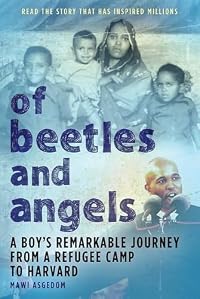
Of Beetles and Angels: A Boy's Remarkable Journey from a Refugee Camp to Harvard
by Mawi Asgedom
On This Page
Description
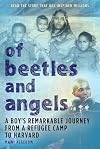
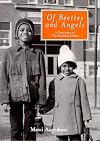
Read the remarkable true story of a young boy's journey from civil war in east Africa to a refugee camp in Sudan, to a childhood on welfare in an affluent American suburb, and eventually to a full-tuition scholarship at Harvard University. Following his father's advice to "treat all people-even the most unsightly beetles-as though they were angels sent from heaven," Mawi overcomes the challenges of language barriers, cultural differences, racial prejudice, and financial disadvantage to build show more a fulfilling, successful life for himself in his new home. Of Beetles and Angels is at once a harrowing survival story and a compelling examination of the refugee experience. With hundreds of thousands of copies sold since its initial publication, and as a frequent selection as one book/one school/one community reads, this unforgettable memoir continues to touch and inspire readers. This special expanded fifteenth anniversary edition includes a new introduction and afterword from the author, a discussion guide, and more. show lessTags
Recommendations

















Member Reviews
3.5 This book was recommended by my son's HS principal, so I was eager to check it out. It is an inspiring tale that broadens a world view and is uber-relevant today as a testimony to the immigrant experience. Mawi came to the US from Ethiopia -- remember "We are the World?" First his family (mother, sister and brother) spent 3 years in a refugee camp in Sudan when they left quickly to escape fighting between Eritrea and Ethiopia. His father had already departed to avoid military conscription. Miraculously the family was reunited and then accepted into the US when policy was more friendly to those in desperate need. They were settled in the white-collar suburb of Wheaton, IL and sponsored by a local church. There Mawi grew up with both show more opportunity and obstacles. The vast difference between his homeland and his new home in culture, climate and comportment was mind-boggling, though probably harder on his parents. Mawi experienced prejudice and bullying but was a formidable opponent when paired with his brother and their camp survival tactics. He also had some bad behavior choices, but nothing too far beyond the realm of boyish pranks and once he got serious about school and had some success he straightened out and set goals. His mantra: "Don't give up. You are smart enough. All you have to do is work hard and believe." (111) His father was very instrumental in promoting education and what was achievable in America, though he himself suffered many set-backs in his ability to assimilate. Sadly, both he and his older son were killed by drunk drivers on separate occasions -- a commentary perhaps on our country's hazards, but this was not pursued in the memoir. Instead Mawi anecdotally recounts how he adjusted to his new country and ultimately achieved a pinnacle of success: graduating from Harvard. His commencement address is also included here. The title refers to those Angels along the way that helped him and his family -- church members, teachers, volunteers, sponsors and the Beetles -- the lowlife feeling of not fitting in, of doubting yourself and not having your worth translated to a new land, once you are dispossessed of your native country. His father felt this acutely. It is a worthwhile read to gain some empathy and perspective on problems much bigger than what to have for dinner or what to wear or where to go to school. His inspirational reflection on his experience: "True power comes from focusing on what we can give, not just on what we take. Of the gifts that we can give, the greatest is to see beauty in each other -- in essence, to give beauty to each other. We we give that beauty, we prepare our hearts to receive it back." (134) show less
Recommended Ages: Gr. 5-12
Plot Summary: Half Eritrean and half Ethiopian, Mawi Asgedom shares his family's experience as they settled into the United States after leaving a refugee camp in Sudan.
Setting: Eritrea, Ethiopia, Sudan, Wheaton, IL
Characters: Mawi - main character
Tewolde - Mawi's older brother (killed by drunk driver senior year of high school)
Tsege - Mawi's mother
Haileab - Mawi's father (doctor in homeland, janitor in US until lost eyesight, killed by drunk driver)
Mehret - Mawi's younger sister
Recurring Themes: family, bullies, refugees, violence, value of education, "angels" - being kind to others
Controversial Issues: As Mawi explains in the Author's Note, he tried to leave politics out of his story. Instead, he focused on show more his experiences and the facts. After reading this story, I didn't learn much about the political turmoil besides the fact that it happened but I did learn how it affected one family. Violence is minor.
Mawi shares the advice given to him by his father: Don't have sex. You'll get AIDS, get a girl pregnant, lose your future. No supporting details are provided at the end of the book about the AIDS epidemic or sexual health education.
Personal Thoughts: Mawi and his siblings definitely became successful because of their parents. Tsege and Haileab offered valuable advice which their children dutifully followed. Sometimes they were clear and direct with their expectations (stop fighting) and other times they taught a lesson by telling a story (probably a traditional folktale). Their passion, hard work, perseverance, and intelligence definitely helped Mawi to become a Harvard graduate.
I really like the ideas expressed in this book and I think it is well-written for the most part. However, I disliked the organization and the use of different fonts to express different voices. The book did not have a narrative arc. Instead, each chapter covered a different part of Mawi's life, for example, there was a chapter on his fighting and stealing as a child, and later a chapter explaining the details of his mother and father's experiences as a refugee.
When his father was talking, he talked in CAPITAL letters. When his mother talked, the font was italicized. It took me a while to realize this. When his father talked, it was written in broken English. show less
Plot Summary: Half Eritrean and half Ethiopian, Mawi Asgedom shares his family's experience as they settled into the United States after leaving a refugee camp in Sudan.
Setting: Eritrea, Ethiopia, Sudan, Wheaton, IL
Characters: Mawi - main character
Tewolde - Mawi's older brother (killed by drunk driver senior year of high school)
Tsege - Mawi's mother
Haileab - Mawi's father (doctor in homeland, janitor in US until lost eyesight, killed by drunk driver)
Mehret - Mawi's younger sister
Recurring Themes: family, bullies, refugees, violence, value of education, "angels" - being kind to others
Controversial Issues: As Mawi explains in the Author's Note, he tried to leave politics out of his story. Instead, he focused on show more his experiences and the facts. After reading this story, I didn't learn much about the political turmoil besides the fact that it happened but I did learn how it affected one family. Violence is minor.
Mawi shares the advice given to him by his father: Don't have sex. You'll get AIDS, get a girl pregnant, lose your future. No supporting details are provided at the end of the book about the AIDS epidemic or sexual health education.
Personal Thoughts: Mawi and his siblings definitely became successful because of their parents. Tsege and Haileab offered valuable advice which their children dutifully followed. Sometimes they were clear and direct with their expectations (stop fighting) and other times they taught a lesson by telling a story (probably a traditional folktale). Their passion, hard work, perseverance, and intelligence definitely helped Mawi to become a Harvard graduate.
I really like the ideas expressed in this book and I think it is well-written for the most part. However, I disliked the organization and the use of different fonts to express different voices. The book did not have a narrative arc. Instead, each chapter covered a different part of Mawi's life, for example, there was a chapter on his fighting and stealing as a child, and later a chapter explaining the details of his mother and father's experiences as a refugee.
When his father was talking, he talked in CAPITAL letters. When his mother talked, the font was italicized. It took me a while to realize this. When his father talked, it was written in broken English. show less
Of Beetles & Angels is a contemporary autobiography of a young man's journey to success. When he was four years old, Asgedom's family left their war-ravaged home in Ethiopia and spent three years in a Sudanese refugee camp before coming to the U.S. in 1983. He later earned a full scholarship to Harvard where in 1999 he delivered the commencement address. Told from Mawi's point of view as a teenager, he describes the conditions in Ethiopia, their escape to Sudan's refugee camp and finally their emigration to America. Once in the United States, things don't immediately fall into place. Mawi is faced with many trials and tribulations, hardships and pain. Nonetheless, he follows his fathers advice to "treat all people- even the most show more unsightly beetles - as though they were angels sent from heaven," Mawi overcomes racial prejudice, language barriers and financial disadvantage, eventually realizing his dream. Not the best writing in the world, but the story is very good. Mawi is now a motivational speaker. show less
A desperate, cold and hungry mother and her small children determined to reach their father continue down the dark and miserable journey from war torn Ethiopia to the Sudan.
This is recounted in the non-fiction story of Beetles and Angels by Mawi Asgedom where the struggles of an immigrant family are told by their son, Selamawi. His rise out of poverty and discrimination by hard work and dedication is the point of the story. The family consists of: the father Haileab, a doctor and pharmacist in his native Ethiopia and Eritrea; the mother who raised the family of four by herself for several years while Haileab had to escape to Sudan to avoid being drafted or killed in the civil war raging in their homeland; the four young children show more including the author Mawi, known as Selamawi, and his older brother Tewolde. Overcoming the challenges of their predicament while still giving as much as they could to others is a reoccurring theme in this book. This is proven when Tewolde and his brother Selamawi came upon a shivering and hungry old man “We should give him our sandwiches,”(p.64) said Tewolde. These two boys came from a family of nothing but each other yet were taught to be generous to all they encountered.
The fierce civil war forced this poor family to go off into the unknown with nothing but the clothes on their back. They ended up in America. This however turned out to be a great blessing that they had fled. Thirty years later Haileab went back to his homeland of Ethiopia where all of his friends and relatives were dead from the war. The struggle of being black, poor and uneducated is demonstrated by the father screaming at his sons not to fight back when they were attacked by school bullies as they were almost daily. "In the Sudan we had to fight everyday or they would keep beating you. We are not in Sudan anymore. From now on, let them hit you. Come home beaten and bruised. Do not ever fight back”(p.40). This was part of their adjusting to a new world and new culture. The story contains many such culture clashes. The author narrates his growth through persistence and hard work from being a poor, illiterate native immigrant to a stunningly successful end result.
The way the author described his struggle was easy to identify with and be inspired by. He shows that through persistence all things are possible! This is a valuable lesson for me as well as for Selamawi. The spiritual aspect of the immigrant’s dream was also inspiring “As long as you remember, you’ll share the spirit of the two who dreamed it”(p.134).-J.A. show less
This is recounted in the non-fiction story of Beetles and Angels by Mawi Asgedom where the struggles of an immigrant family are told by their son, Selamawi. His rise out of poverty and discrimination by hard work and dedication is the point of the story. The family consists of: the father Haileab, a doctor and pharmacist in his native Ethiopia and Eritrea; the mother who raised the family of four by herself for several years while Haileab had to escape to Sudan to avoid being drafted or killed in the civil war raging in their homeland; the four young children show more including the author Mawi, known as Selamawi, and his older brother Tewolde. Overcoming the challenges of their predicament while still giving as much as they could to others is a reoccurring theme in this book. This is proven when Tewolde and his brother Selamawi came upon a shivering and hungry old man “We should give him our sandwiches,”(p.64) said Tewolde. These two boys came from a family of nothing but each other yet were taught to be generous to all they encountered.
The fierce civil war forced this poor family to go off into the unknown with nothing but the clothes on their back. They ended up in America. This however turned out to be a great blessing that they had fled. Thirty years later Haileab went back to his homeland of Ethiopia where all of his friends and relatives were dead from the war. The struggle of being black, poor and uneducated is demonstrated by the father screaming at his sons not to fight back when they were attacked by school bullies as they were almost daily. "In the Sudan we had to fight everyday or they would keep beating you. We are not in Sudan anymore. From now on, let them hit you. Come home beaten and bruised. Do not ever fight back”(p.40). This was part of their adjusting to a new world and new culture. The story contains many such culture clashes. The author narrates his growth through persistence and hard work from being a poor, illiterate native immigrant to a stunningly successful end result.
The way the author described his struggle was easy to identify with and be inspired by. He shows that through persistence all things are possible! This is a valuable lesson for me as well as for Selamawi. The spiritual aspect of the immigrant’s dream was also inspiring “As long as you remember, you’ll share the spirit of the two who dreamed it”(p.134).-J.A. show less
This slim memoir is snipets from Mawi Asgedom's life and lessons learned. Born in Ethiopia, his family was separated and fled to Sudan. Eventually coming to U.S., Asgedom explores what life was like in a new country and the treatment he received at school. There are large bits about his parents and brother. Mawi was determined to make the most of his opportunities and went on to Harvard.
The book is conversational in style.
We're using it for a all school read project this year.
The book is conversational in style.
We're using it for a all school read project this year.
A straightforward narrative, not very well written, with a moralizing tone I found tedious. I enjoyed learning about his life, but wasn't sure that, as told, it warranted a publication.
Mawi tells the story of his childhood, fleeing Ethiopia with his family as a young child and then he tells of his growing up years outside of Chicago. Struggling at the poverty level, the family perseveres, always pursuing excellence in education. Mawi is there as a teenager when his older brother dies from an unecessary car accident shortly before his high school graduation and again when his father dies just a few short months later. After high school Mawi wins a full scholarship to Harvard. Mawi's persistence towards excellence pays off and he begins to tell his story publicly.
I read this story this spring as part of a workshop training in ELL offered at my school. We do have a multicultural population at our urban school and I show more found this story to be relevant. Just this morning one little first grade girl shared that her father had been murdered. This is true, it's reality for many families here. This was eye opening to me.
In the classroom this month we are circling the globe. We are learning a song about the 7 continents and we're looking at one country a week. This week it's Italy. Next week India. After that Vietnam. Then Africa. I have a parent volunteer lined up to share their country. An appreciation for our heritage, no matter where we are from, matters. show less
I read this story this spring as part of a workshop training in ELL offered at my school. We do have a multicultural population at our urban school and I show more found this story to be relevant. Just this morning one little first grade girl shared that her father had been murdered. This is true, it's reality for many families here. This was eye opening to me.
In the classroom this month we are circling the globe. We are learning a song about the 7 continents and we're looking at one country a week. This week it's Italy. Next week India. After that Vietnam. Then Africa. I have a parent volunteer lined up to share their country. An appreciation for our heritage, no matter where we are from, matters. show less
Members
- Recently Added By
Author Information
7+ Works 502 Members
Mawi Asgedom graduated from Harvard University and delivered his class commencement address in 1999. Now 25 years old, he is a successful inspirational speaker at schools, community groups, churches, and businesses. He lives in Chicago.
Awards and Honors
Classifications
Statistics
- Members
- 397
- Popularity
- 78,153
- Reviews
- 12
- Rating
- (3.86)
- Languages
- English
- Media
- Paper, Audiobook, Ebook
- ISBNs
- 14
- UPCs
- 2
- ASINs
- 6