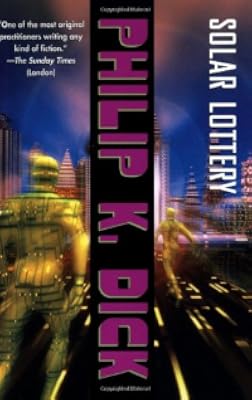
Solar Lottery
by Philip K. Dick
On This Page
Description
In 2203 anyone can become the ruler of the solar system. There are no elections, no interviews, no prerequisites whatsoever -- it all comes down to the random turns of a giant wheel. But when a new Quizmaster takes over, the old one still keeps some rights, namely the right to hire an unending stream of assassins to attempt to kill the new leader. In the wake of the most recent change in leadership, employees of the former ruler scurry to find an assassin who can get past telepathic guards. show more But when one employee switches sides, troubling facts about the lottery system come to light, and it just might not be possible for anyone to win. show lessTags
Recommendations
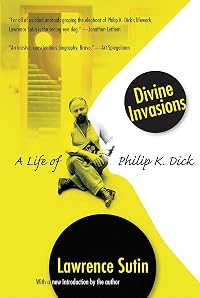


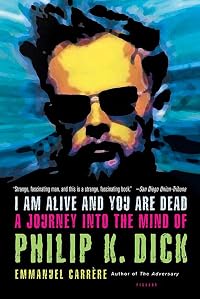
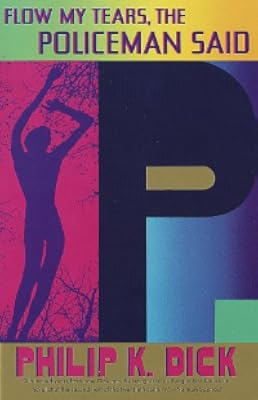













Member Recommendations
Member Reviews
What a mess.
There’s rather an interesting publishing history detailed on Wikipedia which I will paraphrase for your edification. Dick wrote the novel and submitted it to publishers in the UK and US. The UK publisher edited out the adjectives and published it as World of Chance. The US publisher asked for substantial re-writes. Thousands of words out and thousands new in. This was published as Star Lottery. Star Lottery seems to be the version that was used for translations and is now the only version in print in the UK too. I can only assume it’s better. It can’t be any worse. I just can’t believe that anyone could launch a writing career off World of Chance. What am I saying?! James Patterson.
Anyway, World of Chance has a show more problem with characterisation. There is none. You could switch out any name for another and it wouldn’t make a blind bit of difference. And there are a lot of names so every time there’s a change of scene you need to try to remember the context you last heard that name in. It’s impossible to know who you’re supposed to be rooting for. It destroys any tension the action scenes might have had.
Another problem is that critical information is not given prior to plot changing moments happening. Suddenly something will happen and you first have to work out what it is that’s happened. There goes any remaining tension. There’s no question of wondering if this or that attempt by some name will be successful. It’s already worked or not by the time you’ve worked out what it is they were trying to do.
If I didn’t have the book right here I wouldn’t have believed that anyone would waste time taking the adjectives out of this. If I were a publisher and someone submitted this to me I’d block their number. show less
There’s rather an interesting publishing history detailed on Wikipedia which I will paraphrase for your edification. Dick wrote the novel and submitted it to publishers in the UK and US. The UK publisher edited out the adjectives and published it as World of Chance. The US publisher asked for substantial re-writes. Thousands of words out and thousands new in. This was published as Star Lottery. Star Lottery seems to be the version that was used for translations and is now the only version in print in the UK too. I can only assume it’s better. It can’t be any worse. I just can’t believe that anyone could launch a writing career off World of Chance. What am I saying?! James Patterson.
Anyway, World of Chance has a show more problem with characterisation. There is none. You could switch out any name for another and it wouldn’t make a blind bit of difference. And there are a lot of names so every time there’s a change of scene you need to try to remember the context you last heard that name in. It’s impossible to know who you’re supposed to be rooting for. It destroys any tension the action scenes might have had.
Another problem is that critical information is not given prior to plot changing moments happening. Suddenly something will happen and you first have to work out what it is that’s happened. There goes any remaining tension. There’s no question of wondering if this or that attempt by some name will be successful. It’s already worked or not by the time you’ve worked out what it is they were trying to do.
If I didn’t have the book right here I wouldn’t have believed that anyone would waste time taking the adjectives out of this. If I were a publisher and someone submitted this to me I’d block their number. show less
My reactions on reading this novel in 1989 -- spoilers are definitely here.
Given all of Dick's own statements and complaints about the supposed bad quality of this novel, I was expecting a bad read. I was pleasantly surprised. Dick creates an intriguing society ruled by lottery, social Darwinism, and the economics of conspicous consumption. Dick postulates economic depression eroding people's faith in natural law and a political system based entirely on chance emerging. People also become absurdly superstitious (the omens at the novel's beginning are very Roman-like as is the social feature of patronage mentioned in passing. The application of von Neumann's game theory to society was interesting. Dick's political order is randomness and show more survival of the fittest incarnate.
Even at this state of his career, Dick's ear for dialogue was good though his characterization was not quite as developed as it was to become but it's still good. The book's plot whizzes along enough to qualify for Dick's term of "potboiler". The characters are every bit as mercurial and illrational as ever in Dick's work, a trait that accounts for his very believeable characters. The book's big fault, though, is in the details of his society. There's really only about two pages of social exposition, and Dick leaves many questions unanswered: How do quizzes fit in to the order? Why is the chief official the Quizmaster? How are classifications changed? What is the relation between the classified and unclassified? Under what conditions does the bottle twitch and slect a new leader? How do the p-cards work? Dick leaves a lot unexplained.
I was intrigued by the idea of publically sanctioned assassination as an answer to tyranny and incompotence -- though I wouldn't want to live in such a society. I also liked Dick's use of Heisenberg's Uncertainity Principle in political and philosophical terms. The figure of Moore and his contradictary, scheming, pontifical nature reminded me of Joseph Goebbels. And Dick, with the Pellig machine, introduces, in a muted form, his concern with reality's nature and appearance in novel form.
Read enough Dick work and material about him and you begin to notice possible personally relevant things in his fiction. Here it is one remark by Ted Benteley, "And I hate fathers.". A possible clue to Dick's own feelings about his father and genesis of his distrust for authority figures. And even in this first published novel, the deceitful neurotic female (of course, there are plenty of neurotic males in Dick's works) -- as characterized by Eleanor Stevens -- makes an appearance. She is a pathetic, startling, always interesting. Her death is poignant. show less
Given all of Dick's own statements and complaints about the supposed bad quality of this novel, I was expecting a bad read. I was pleasantly surprised. Dick creates an intriguing society ruled by lottery, social Darwinism, and the economics of conspicous consumption. Dick postulates economic depression eroding people's faith in natural law and a political system based entirely on chance emerging. People also become absurdly superstitious (the omens at the novel's beginning are very Roman-like as is the social feature of patronage mentioned in passing. The application of von Neumann's game theory to society was interesting. Dick's political order is randomness and show more survival of the fittest incarnate.
Even at this state of his career, Dick's ear for dialogue was good though his characterization was not quite as developed as it was to become but it's still good. The book's plot whizzes along enough to qualify for Dick's term of "potboiler". The characters are every bit as mercurial and illrational as ever in Dick's work, a trait that accounts for his very believeable characters. The book's big fault, though, is in the details of his society. There's really only about two pages of social exposition, and Dick leaves many questions unanswered: How do quizzes fit in to the order? Why is the chief official the Quizmaster? How are classifications changed? What is the relation between the classified and unclassified? Under what conditions does the bottle twitch and slect a new leader? How do the p-cards work? Dick leaves a lot unexplained.
I was intrigued by the idea of publically sanctioned assassination as an answer to tyranny and incompotence -- though I wouldn't want to live in such a society. I also liked Dick's use of Heisenberg's Uncertainity Principle in political and philosophical terms. The figure of Moore and his contradictary, scheming, pontifical nature reminded me of Joseph Goebbels. And Dick, with the Pellig machine, introduces, in a muted form, his concern with reality's nature and appearance in novel form.
Read enough Dick work and material about him and you begin to notice possible personally relevant things in his fiction. Here it is one remark by Ted Benteley, "And I hate fathers.". A possible clue to Dick's own feelings about his father and genesis of his distrust for authority figures. And even in this first published novel, the deceitful neurotic female (of course, there are plenty of neurotic males in Dick's works) -- as characterized by Eleanor Stevens -- makes an appearance. She is a pathetic, startling, always interesting. Her death is poignant. show less
I cast about quite a while for a book to fill the "first book by a favourite author" square. I kept thinking of authors whose first works I'd already read, before finally settling on Philip K. Dick. Then it was a matter of finding a copy. I visited several bookstores (in multiple states) before finally giving up and checking this out at the library,
This is very recognizably a Dick novel, most notably for the giant, all-encompassing system of governance designed to outsmart human failings (most specifically, our grasping for power), but which, in reality, mostly inspires cheating and superstition and does absolutely nothing for the vast majority of humanity. Also, something which may or may not be the presence of a non-human intelligence show more at the fringes of the solar system, but could also just be the ravings of one deluded crackpot. Perhaps a little bit less "What is reality? What is human?" than the normal Dickian novel.
The female characters are pretty standard 1950s sci-fi fare, but what can you do?
Some praise this book for being less prone to the deluded paranoia of Dick's later years, but personally, I have always liked that about him. This book feels more consistent with sci-fi of the time and less uniquely PKD.
As I was thinking about what I wanted to write about this book, I realized this would be a great choice for a movie adaptation. We all know how much Hollywood loves Dick, and this one comes pre-loaded with action: a robot assassin, flights to the moon, high speed chases, people getting shot in the face, etc., etc. Of course, not I'm going to spend the rest of the day obsessing over who should play Leon Cartwright. show less
This is very recognizably a Dick novel, most notably for the giant, all-encompassing system of governance designed to outsmart human failings (most specifically, our grasping for power), but which, in reality, mostly inspires cheating and superstition and does absolutely nothing for the vast majority of humanity. Also, something which may or may not be the presence of a non-human intelligence show more at the fringes of the solar system, but could also just be the ravings of one deluded crackpot. Perhaps a little bit less "What is reality? What is human?" than the normal Dickian novel.
The female characters are pretty standard 1950s sci-fi fare, but what can you do?
Some praise this book for being less prone to the deluded paranoia of Dick's later years, but personally, I have always liked that about him. This book feels more consistent with sci-fi of the time and less uniquely PKD.
As I was thinking about what I wanted to write about this book, I realized this would be a great choice for a movie adaptation. We all know how much Hollywood loves Dick, and this one comes pre-loaded with action: a robot assassin, flights to the moon, high speed chases, people getting shot in the face, etc., etc. Of course, not I'm going to spend the rest of the day obsessing over who should play Leon Cartwright. show less
A dying economy and a world population dependent on a lottery is what you will find in the year 2023. The economy is so bad, quizzes helped the many people struggling. But if you had the right p-card and your number came up you could win cars, refrigerators, toys for the kids and any other type of merchandise you wouldn't be able to afford otherwise. The “Bottle” which pumps out numbers randomly, supposedly, could even help a lucky winner gain power and prestige. And if you could get either of those you could possibly become a Quizmaster. This system was created as a method of surviving the Minimax, a way of surviving the 20th century, by a group of mathematicians including John Preston, the creator of this system. This system was show more put in place instead of having government. Ted Bentley who is now released from his contract with Oiseau-Lyre, sets out to become an 8-8 biochemist for the current Quizmaster, Reese Verrick. As he gets deeper in and his facts are skewed about how the operation is run it's too late to back out. He has already pledged to serve Verrick even after he finds out that Verrick is no longer the Quizmaster. Verrick implements a plan to assassinate the newest Quizmaster Leon Cartwright. As the new Quizmaster, Cartwright is protected by the Corp, a group of telepaths no assassin could get past. In order to achieve his goal, Verrick plans to use Keith Pellig, his species is unique, in that his body is a vessel that can house many minds, in order to manipulate the Corp. The action starts when Ted and Leon cross paths. Together they share an idea to change the current system that could give people a better chance of winning. But with Verrick and his crew on their trail they face the biggest challenge of their lives. Dick has created a riveting futuristic tale that has lots of twists and turns. The cities and system are a brilliant idea. Young readers will love the characters and the adventure. A great fast read for anyone. show less
Set in the year 2203, it depicts a satirical, feudalistic society ruled by chance, game theory, and corporate monopolies, where the supreme leader, the Quizmaster, is chosen by a random, nationwide lottery.
Earth is controlled by a Minimax system, where government and economic life are governed by random selection and game theory. The Quizmaster holds absolute power but can be legally deposed, prompting an assassination game where any citizen can try to kill them.
Ted Benteley, a technician, loses his job and pledges loyalty to Reese Verrick, the former Quizmaster recently deposed by the lottery. Verrick, refusing to lose control, utilizes a legal loophole to hire assassins to kill the new Quizmaster, Leon Cartwright.
Verrick's team show more struggles against the Telepathic Corps protecting Cartwright. They develop an android named Keith Pellig, utilizing a unique, fluctuating mental control system to evade detection. Cartwright is eventually killed by Verrick, and in a twist, Ted Benteley becomes the new, unexpected Quizmaster, revealing that Cartwright had hacked the lottery system to control the succession.
A parallel plot involves a group searching for a legendary tenth planet, the Flame Disc, to find a mythic figure named John Preston, aiming to escape the rigid societal structure. show less
Earth is controlled by a Minimax system, where government and economic life are governed by random selection and game theory. The Quizmaster holds absolute power but can be legally deposed, prompting an assassination game where any citizen can try to kill them.
Ted Benteley, a technician, loses his job and pledges loyalty to Reese Verrick, the former Quizmaster recently deposed by the lottery. Verrick, refusing to lose control, utilizes a legal loophole to hire assassins to kill the new Quizmaster, Leon Cartwright.
Verrick's team show more struggles against the Telepathic Corps protecting Cartwright. They develop an android named Keith Pellig, utilizing a unique, fluctuating mental control system to evade detection. Cartwright is eventually killed by Verrick, and in a twist, Ted Benteley becomes the new, unexpected Quizmaster, revealing that Cartwright had hacked the lottery system to control the succession.
A parallel plot involves a group searching for a legendary tenth planet, the Flame Disc, to find a mythic figure named John Preston, aiming to escape the rigid societal structure. show less
Another short, thrill-filled ride by Philip K. Dick. The prose is sharp and the action is quick and unpredictable. Everything that most readers like about Dick is here and he keeps the reader entertained throughout the duration of the ride. A good read.
Again, I don't want to give too much away with this book, I like going into PKD's books with as little knowledge about them as possible. To sumarize a little, the leader of Earth and it's colonies is elected by a random lottery system. Though the previous leader has the chance to take back the position. We start this book with one such change in power occuring.
I wasn't aware of how much earlier this book was written in comparison to other PKD books when I bought it and read through most of it. I really, really enjoyed it and how I wasn't sure what would happen next. By the time I finished it I was a bit sad it hadn't been made in to a film yet. I would love to see this on the big screen, especially the character of Mr. Pellig. I hope show more it's something I can see in my lifetime. After reading this book I'm definitely more curious about PKD's earlier novels. show less
I wasn't aware of how much earlier this book was written in comparison to other PKD books when I bought it and read through most of it. I really, really enjoyed it and how I wasn't sure what would happen next. By the time I finished it I was a bit sad it hadn't been made in to a film yet. I would love to see this on the big screen, especially the character of Mr. Pellig. I hope show more it's something I can see in my lifetime. After reading this book I'm definitely more curious about PKD's earlier novels. show less
Members
- Recently Added By
Lists

Books Read in 2020
4,379 works; 124 members

Books Read in 2023
5,547 works; 145 members

Books Read in 2024
4,623 works; 126 members
Author Information

669+ Works 146,521 Members
Phillip Kindred Dick was an American science fiction writer best known for his psychological portrayals of characters trapped in illusory environments. Born in Chicago, Illinois, on December 16, 1928, Dick worked in radio and studied briefly at the University of California at Berkeley before embarking on his writing career. His first novel, Solar show more Lottery, was published in 1955. In 1963, Dick won the Hugo Award for his novel, The Man in the High Castle. He also wrote a series of futuristic tales about artificial creatures on the loose; notable of these was Do Androids Dream of Electric Sheep?, which was later adapted into film as Blade Runner. Dick also published several collections of short stories. He died of a stroke in Santa Ana, California, in 1982. (Bowker Author Biography) show less
Some Editions
Series
Belongs to Publisher Series
Work Relationships
Common Knowledge
- Canonical title
- Solar Lottery
- Original title
- Solar Lottery
- Alternate titles
- World of Chance
- Original publication date
- 1955
- People/Characters
- Ted Bentley; Reese Verrick; Leon Cartwright; John Preston; Eleanor Stephens; Peter Wakeman (show all 15); Rita O'Neill; Keith Pellig; Herb Moore; Major Shaeffer; Sam Oster; Eleanor Stevens; Al Davis; Laura Davis; Captain Groves
- Important places
- Batavia
- First words
- There had been harbingers.
- Last words
- (Click to show. Warning: May contain spoilers.)To keep moving on...
- Blurbers
- Le Guin, Ursula K.
- Original language
- English
Classifications
Statistics
- Members
- 1,458
- Popularity
- 15,988
- Reviews
- 18
- Rating
- (3.33)
- Languages
- 13 — Czech, Dutch, English, French, German, Hungarian, Italian, Japanese, Polish, Portuguese, Spanish, Swedish, Turkish
- Media
- Paper, Audiobook, Ebook
- ISBNs
- 50
- ASINs
- 39