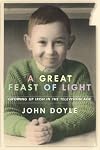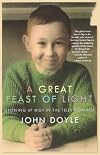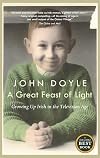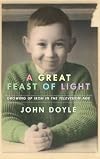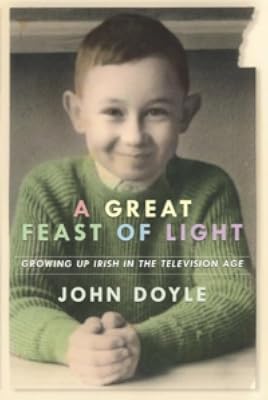
A Great Feast of Light: Growing Up Irish in the Television Age
by John Doyle
On This Page
Description
When John Doyle was born in a remote part of Tipperary the Catholic church was all-powerful in Ireland, suspicious of the outside world and enjoining its citizenry to piety. And then in 1961, television arrived, bringing Westerns, hilarious American sitcoms like I Love Lucy, advertisements for gleaming cars and barbecues. Soon Gay Byrne's Late Late Show was hosting outspoken discussions on sex and religion and even, unthinkably, criticism of the church. Suddenly, the outside world, with its show more glamour, its violence, its fun, laughter and liberation, had come to Ireland. Then when Doyle and his family moved nearer the border with Northern Ireland they could pick up the BBC, the broadcasting institution of what he and his fellow Irish had always thought of as the hateful English oppressors - but who now, he discovered, were responsible for such revelatory programmes as Monty Python, and brought live football with the peerless George Best. This is a touching story of how TV caused nothing less than a social revolution, and enabled one man to enter the modern world. show lessTags
Recommendations












Member Reviews
I always have great hopes and butterflies in my stomach when I find an Irish writer. Swayed by the $2 price tag (Borders going under sale) and the Malachy McCourt blurb on the cover I snapped it up. Malachy said he laughed "hysterically", and I thought that would cinch the deal for me - although it didn't make it sweet enough for me - barely raised a chuckle thoughout, but I did learn things - so it wasn't a complete loss.
John Doyle is a television critic born in Ireland though he emigrated to Canada after university (UCD), so I've never come across his work before & didn't know what to expect. He frames his life growing up in Ireland around the advent of television and how television changed Ireland and himself in the process. There's show more history as he learns it - the book starts off when his father brings home a television, and the tone of the narrative or voice is somewhere between a child and himself now looking back and the tone gets more diffuse as the years roll on. I tried to bond with it, but in the end I couldn't connect to the John Doyle of now. I pretty much lost who John Doyle became - I found more ties to the younger Doyle and to Ireland and to certain aspects of Irish Catholicism and conservatism that were embedded in Australia at that same time.
Be that as it may, he gives a fairly o.k. rendition of the way television changed Ireland's society and how it affected him, his family and friends. It's not a critical analysis but one that everyday people can understand. I think it's a stretch to say it was the main reason change happened in Ireland, the world was changing everywhere, they would have eventually heard about it even without television - eventually. But as in Australia, television was definitely a moving force for the people to "see" change in other countries and thus demand it in their own. Books banned in Ireland in the 50's & 60's were banned here too.
Some of the Irish history he talks about I particularly connected with, where he wondered while watching the Man from U.N.C.L.E what Irish rebels like Patrick Sarsfield, (from James II's time) would do in certain situations on the show. Although that may sound strange to some an uncle of mine born in Ireland would be constantly saying similar thoughts when we were all watching tv. The Irish past always seemed to be ever present. That kind of thought process rubbed off on me too.
I only recently discovered that two of my Irish ancestor aunts came to Australia originally from Cavan - which was one of the areas hardest hit by the 1840's famine, and my research was a bit stalled. Doyle and his family moved from Nenagh to Carrick-on-Shannon, near Cavan and the Leitrim hills. So hearing about Cavan was eye-opening to me. There as a young boy he hears about the wailing on the roads, and ghosts in the area. He writes an eerie and moving account of Carrick during the famine that really hit home to me one that no other account had done nor made me so profoundly sad. The population was around 66,000, including Cavan and the Leitrim hill country. They flooded into Carrick to the workhouse (poorhouse) for food and help. Carrick being a tiny village, the workhouse held but a few hundred, the rest were locked out having already been thrown off their land. For 3 years the streets, lanes and ditches around Carrick were filled with the dead and wandering dying and that the English refused to help. The countryside around is still apparently desolate and lonely & some still hear the wailing.
My research about my aunts (actually, great, great, great aunts), told me they were sent here for theft. (minor articles; a scarf, shoes, and fruit). They apparently were caught a couple of times before being transported. I discovered that it was mostly young people transported from Cavan at that time, and I suspect it was because they were young and strong enough to attempt to go looking for food or clothing to steal. AND they stole on purpose, to get arrested so that they would get sent to Australia, so that they could survive. They had heard there was food and warmth down here. Most other accounts tell of the Irish being afraid of being sent here, but when you actually look at the alternative - death from starvation in a Carrick ditch, you realise it was pretty much their last chance at life. You realise that in a lot of cases transportation down under wasn't the dreadful thing it's been made out to be.
Doyles' account mentions that many famine victims in Carrick were wearing rags - their clothes traded for food or fallen apart and of course, imagine being thrown out of your home in what you are wearing and living rough in the fields for 3 years. This kind of information just doesn't get taught at school in Australia, was never taught when I was at school and the years before when having a convict ancestor was shameful, certainly none of this was ever taught. Yet my uncle constantly referred to it with added expletives about the English, the past was ever present for him. Thankfully times have changed - or have they? The Irish and their descendants are all over the globe, having left for so many reasons...and so many of those that have left have written about Ireland. It seems maybe the past is still present.
Does it get embedded in the genes? I've never been there but I get angry about things that have happened there and wonder what if?
Perhaps Doyle is right about other things, that television had more of an effect that we think, but the Pope still bans contraceptives - they are however now available in Ireland, and Northern Ireland is still - well - Northern Ireland. Perhaps both Doyle and my uncle were right about the Leitrim Hills having a stash of guns buried there from the first Uprising - maybe we will find that out one day. I can't say that Doyle's book was that funny but others might find his thoughts on some of the 60's tv shows hilarious. While Doyle talked a lot about The Troubles as he experienced them and saw on television, I was slightly disappointed there was not more detail - although there are other books about with that information. In the early 70's my school & the Brigidine Nuns were heavily invested in helping Irish Catholic families from Northern Ireland find sponsors & billets in Australia. There were endless fetes and charity events to raise money for their trip here. Doyle doesn't mention anything about Catholics leaving Northern Ireland at all.But then maybe it was all a bit hush hush. I don't know.
I'm thankful I found out about Cavan and Carrick-on-Shannon and the wailing ghosts. His book goes some way to explain and enlighten me on my family and how I think and for that I am glad I read it.
**********************************************************************************************************-bought today $2 in the last Borders sale. show less
John Doyle is a television critic born in Ireland though he emigrated to Canada after university (UCD), so I've never come across his work before & didn't know what to expect. He frames his life growing up in Ireland around the advent of television and how television changed Ireland and himself in the process. There's show more history as he learns it - the book starts off when his father brings home a television, and the tone of the narrative or voice is somewhere between a child and himself now looking back and the tone gets more diffuse as the years roll on. I tried to bond with it, but in the end I couldn't connect to the John Doyle of now. I pretty much lost who John Doyle became - I found more ties to the younger Doyle and to Ireland and to certain aspects of Irish Catholicism and conservatism that were embedded in Australia at that same time.
Be that as it may, he gives a fairly o.k. rendition of the way television changed Ireland's society and how it affected him, his family and friends. It's not a critical analysis but one that everyday people can understand. I think it's a stretch to say it was the main reason change happened in Ireland, the world was changing everywhere, they would have eventually heard about it even without television - eventually. But as in Australia, television was definitely a moving force for the people to "see" change in other countries and thus demand it in their own. Books banned in Ireland in the 50's & 60's were banned here too.
Some of the Irish history he talks about I particularly connected with, where he wondered while watching the Man from U.N.C.L.E what Irish rebels like Patrick Sarsfield, (from James II's time) would do in certain situations on the show. Although that may sound strange to some an uncle of mine born in Ireland would be constantly saying similar thoughts when we were all watching tv. The Irish past always seemed to be ever present. That kind of thought process rubbed off on me too.
I only recently discovered that two of my Irish ancestor aunts came to Australia originally from Cavan - which was one of the areas hardest hit by the 1840's famine, and my research was a bit stalled. Doyle and his family moved from Nenagh to Carrick-on-Shannon, near Cavan and the Leitrim hills. So hearing about Cavan was eye-opening to me. There as a young boy he hears about the wailing on the roads, and ghosts in the area. He writes an eerie and moving account of Carrick during the famine that really hit home to me one that no other account had done nor made me so profoundly sad. The population was around 66,000, including Cavan and the Leitrim hill country. They flooded into Carrick to the workhouse (poorhouse) for food and help. Carrick being a tiny village, the workhouse held but a few hundred, the rest were locked out having already been thrown off their land. For 3 years the streets, lanes and ditches around Carrick were filled with the dead and wandering dying and that the English refused to help. The countryside around is still apparently desolate and lonely & some still hear the wailing.
My research about my aunts (actually, great, great, great aunts), told me they were sent here for theft. (minor articles; a scarf, shoes, and fruit). They apparently were caught a couple of times before being transported. I discovered that it was mostly young people transported from Cavan at that time, and I suspect it was because they were young and strong enough to attempt to go looking for food or clothing to steal. AND they stole on purpose, to get arrested so that they would get sent to Australia, so that they could survive. They had heard there was food and warmth down here. Most other accounts tell of the Irish being afraid of being sent here, but when you actually look at the alternative - death from starvation in a Carrick ditch, you realise it was pretty much their last chance at life. You realise that in a lot of cases transportation down under wasn't the dreadful thing it's been made out to be.
Doyles' account mentions that many famine victims in Carrick were wearing rags - their clothes traded for food or fallen apart and of course, imagine being thrown out of your home in what you are wearing and living rough in the fields for 3 years. This kind of information just doesn't get taught at school in Australia, was never taught when I was at school and the years before when having a convict ancestor was shameful, certainly none of this was ever taught. Yet my uncle constantly referred to it with added expletives about the English, the past was ever present for him. Thankfully times have changed - or have they? The Irish and their descendants are all over the globe, having left for so many reasons...and so many of those that have left have written about Ireland. It seems maybe the past is still present.
Does it get embedded in the genes? I've never been there but I get angry about things that have happened there and wonder what if?
Perhaps Doyle is right about other things, that television had more of an effect that we think, but the Pope still bans contraceptives - they are however now available in Ireland, and Northern Ireland is still - well - Northern Ireland. Perhaps both Doyle and my uncle were right about the Leitrim Hills having a stash of guns buried there from the first Uprising - maybe we will find that out one day. I can't say that Doyle's book was that funny but others might find his thoughts on some of the 60's tv shows hilarious. While Doyle talked a lot about The Troubles as he experienced them and saw on television, I was slightly disappointed there was not more detail - although there are other books about with that information. In the early 70's my school & the Brigidine Nuns were heavily invested in helping Irish Catholic families from Northern Ireland find sponsors & billets in Australia. There were endless fetes and charity events to raise money for their trip here. Doyle doesn't mention anything about Catholics leaving Northern Ireland at all.But then maybe it was all a bit hush hush. I don't know.
I'm thankful I found out about Cavan and Carrick-on-Shannon and the wailing ghosts. His book goes some way to explain and enlighten me on my family and how I think and for that I am glad I read it.
**********************************************************************************************************-bought today $2 in the last Borders sale. show less
Ratings
Members
- Recently Added By
Lists

John Carey's Sunday Best
82 works; 3 members
Author Information
2 Works 103 Members
John Doyle has been a critic for The Globe and Mail since 1997 and has written the paper's daily television column since 2000.
Common Knowledge
- Important places
- Ireland
Classifications
- Genres
- Nonfiction, Biography & Memoir, History, Religion & Spirituality
- DDC/MDS
- 070.92 — Computer science, information & general works News media, journalism & publishing Documentary media, educational media, news media; journalism; publishing Biography And History Biographies
- LCC
- PN4913 .D69 .A3 — Language and Literature Literature (General) Literature (General) Journalism. The periodical press, etc. By region or country
- BISAC
Statistics
- Members
- 52
- Popularity
- 584,102
- Reviews
- 1
- Rating
- (3.79)
- Languages
- English
- Media
- Paper
- ISBNs
- 5