La jeune Parque
by Paul Valéry
On This Page
Description
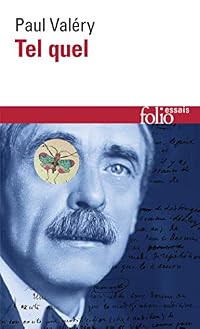
Paul Valery (1871-1945) was a poet and essayist, and along with Verlaine and Mallarme is regarded as one of the most important Symbolist writers, and an influence on poets from Eliot to Ashbery. He had a quiet life by many standards, but in one respect it was exemplary, even legendary; he made an early reputation in little magazines, decided to stop writing verse when still only 20, kept his silence for 20 years, then began again; and his first book of verse, published when he was 45, was show more his masterpiece La Jeune Parque.'A poem should not mean, but be,' said Archibald MacLeish. La Jeune Parque ('the goddess of Fate as a young woman') certainly exists: she's beautiful and makes great gestures. And as for what she means, there's a substantial amount of argument about that, so La Jeune Parque is a poem by either definition. It's a classic, by general agreement, written to the full 17th-century recipe for alexandrine couplets, and it's modern, with every word pulling its weight in more than one direction. Alistair Elliot's translation with notes is aimed at making this rewarding but difficult long poem accessible enough for bafflement to turn into admiration. He attempts to clarify its small puzzles and also trace the overall narrative line of Paul Valery's poem: it does have a story (what should a young woman do?) and does struggle towards a resolution. He also provides an introduction which deals with the interesting circumstances of the poem's four-year composition (1913-17), which resulted in Valery's instantly becoming a famous poet at the age of 45, after having written no poetry for 20 years. show lessTags
Recommendations










Member Reviews
A déclamer à haute voix pour la sonorité.
Jun 11, 2025French
Ratings
Members
- Recently Added By
Lists

First published in 1917
132 works; 3 members

Favourite Books
1,817 works; 316 members

Books Read in 2017
4,249 works; 129 members

Favourite Poems
34 works; 1 member

1910s
90 works; 16 members

20th Century Literature
1,161 works; 54 members
Author Information

386+ Works 3,675 Members
Harry T. Moore has written in Twentieth Century French Literature to World War II: "Paul Valery, who published his most important verse between 1917 and 1922, is the greatest French poet the twentieth century has so far produced... .Few modern poets.. .have presented richer experience through their verses. Valery.. .could handle abstractions with show more a living and always poetic concreteness, and put them into comparable verse-music." He was also a critic and aesthetic theorist, interested in art, architecture, and mathematics. His skepticism, malice, and learning brought him both admiration and hostility. Valery had been a member of the Mallarme circle in the 1890s and wrote much symbolist poetry at that time, but an unhappy love affair caused him to fall poetically silent (he earned his living as a journalist) until Gide and others persuaded him, 20 years later, to publish some of his youthful work. He had thought to add a short new poem and instead wrote La Jeune Parque (The Young Fate) (1917), several hundred lines in length. It won him instant recognition in poetic circles. Several collections of his earlier poems were published in the 1920s, as well as the great Cimetiere Marin (Graveyard by the Sea), a powerful meditation on time and mortality. From then until his death in 1945, he wrote chiefly aesthetic theory, criticism, and an unfinished play about Faust. He helped to revive lively interest in the symbolists and had a pervading influence on French culture generally, though his poetry is not easy for the casual reader. His criticism and aesthetic theory had an important influence on the structuralist critics of the 1960s. He was elected to the French Academy in 1925. His Collected Works (1971--75) have been published in expert translations by the Bollingen Foundation. (Bowker Author Biography) show less
Awards and Honors
Series
Belongs to Publisher Series
Work Relationships
Is contained in
Common Knowledge
- Canonical title*
- La jove parca
- Original language*
- Francès
*Some information comes from Common Knowledge in other languages. Click "Edit" for more information.
Classifications
Statistics
- Members
- 100
- Popularity
- 321,820
- Reviews
- 1
- Rating
- (3.81)
- Languages
- 7 — Catalan, English, French, German, Italian, Multiple languages, Spanish
- Media
- Paper
- ISBNs
- 8
- ASINs
- 1