On This Page
Description
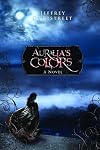
When thieves find an abandoned child lying in a monster’s footprint, they have no idea that their wilderness discovery will change the course of history.Cloaked in mystery, Auralia grows up among criminals outside the walls of House Abascar, where vicious beastmen lurk in shadow. There, she discovers an unsettling—and forbidden—talent for crafting colors that enchant all who behold them, including Abascar’s hard-hearted king, an exiled wizard, and a prince who keeps dangerous show more secrets. When Auralia’s gift opens doors from the palace to the dungeons, she sets the stage for violent and miraculous change in the great houses of the Expanse.
Auralia’s Colors weaves literary fantasy together with poetic prose, a suspenseful plot, adrenaline-rush action, and unpredictable characters sure to enthrall ambitious imaginations. show less
Tags
Recommendations





Member Reviews
This smart, lively cautionary tale chronicles the strange history of a kingdom destroying itself over a fundamental misunderstanding about the purpose of Beauty. The first volume in a new epic, Overstreet's novel often feels like a fantasy counterpart to Fahrenheit 451. And in terms of storytelling, it reads like a surprising intersection between the styles of Bradbury, Patricia McKillip, and Kate DiCamillo. - Adam
For my full review visit www.paperbackgoddess.blogspot.com
Auralia's Colors is an inventive story, unlike anything I had ever read before. It creates a vivid picture of a great land, called the Expanse, and of the different types of people who inhabit this land. The descriptions are very detailed, to the point where a creative mind could envision themselves walking along the banks of the River Throanscall or wandering amongst the Gatherers' huts.
The number of named characters was so massive that it is possible to become confused, or forget some altogether, so that when they are later mentioned, you have to stop and think to remember what you already learned about them. When you combine this with the extravagant descriptions, the story show more does have its moments where it seems long-winded and it causes you to lose interest.
I find myself with mixed emotions for Auralia's Colors. It was a good story, but I sometimes wondered if it fell into the category of "too much of a good thing." show less
Auralia's Colors is an inventive story, unlike anything I had ever read before. It creates a vivid picture of a great land, called the Expanse, and of the different types of people who inhabit this land. The descriptions are very detailed, to the point where a creative mind could envision themselves walking along the banks of the River Throanscall or wandering amongst the Gatherers' huts.
The number of named characters was so massive that it is possible to become confused, or forget some altogether, so that when they are later mentioned, you have to stop and think to remember what you already learned about them. When you combine this with the extravagant descriptions, the story show more does have its moments where it seems long-winded and it causes you to lose interest.
I find myself with mixed emotions for Auralia's Colors. It was a good story, but I sometimes wondered if it fell into the category of "too much of a good thing." show less
I was excited to read this book based on the reviews I had read. It is written in a lush and poetic style; which I usually love. However somehow this book managed to make the characters and setting somehow seem stiff and unreal despite the delicate prose of the book.
Aurelia was found as a toddler by a river. She is raised by the Gatherers, people who have been thrown out of the walls of the city for various crimes. Many years ago the Queen forbade colors; all color belongs only to the upper class. Unfortunately for Aurelia she excels in finding color in everything and the palace wants her for the their own. Will Aurelia succeed in giving the commonfolk back their colors?
As I said the writing is beautifully done. The story unfortunately show more did not grab me. The writer constantly switches viewpoint between tons of different characters and I found that very distracting. It was hard to get involved or really care about any of the characters. The writing style, despite its beauty, did little to bring the scenes in the book alive for me. I also found the story in general to be a very dull read, it moved forward at a very deliberate pace. I had a lot of trouble getting through this book.
The imagine my shock (not knowing Overstreet is a Christian writer) when the whole story drops any pretense of creativity and becomes just another retelling of the story of Christ. The parallels between the story of Christ and Aurelia were painfully transparent and the ending of the book had my eyeballs rolling as the characters and story were pushed aside to pull everything together into a perfect retelling of the classic religious story.
In summary, the story starts out beautifully written but the writing and characters are dry, the plot creeps along and is a bit schizophrenic because of the multitude of viewpoints it is told from. I had a lot of trouble getting through this book. Then when the whole pretense of a creative story was dropped to re-deliver a story of Christ that has been delivered a million times before it just added to my ire. I won't be reading anymore of Overstreet's books; they are just too boring and preachy for me. show less
Aurelia was found as a toddler by a river. She is raised by the Gatherers, people who have been thrown out of the walls of the city for various crimes. Many years ago the Queen forbade colors; all color belongs only to the upper class. Unfortunately for Aurelia she excels in finding color in everything and the palace wants her for the their own. Will Aurelia succeed in giving the commonfolk back their colors?
As I said the writing is beautifully done. The story unfortunately show more did not grab me. The writer constantly switches viewpoint between tons of different characters and I found that very distracting. It was hard to get involved or really care about any of the characters. The writing style, despite its beauty, did little to bring the scenes in the book alive for me. I also found the story in general to be a very dull read, it moved forward at a very deliberate pace. I had a lot of trouble getting through this book.
The imagine my shock (not knowing Overstreet is a Christian writer) when the whole story drops any pretense of creativity and becomes just another retelling of the story of Christ. The parallels between the story of Christ and Aurelia were painfully transparent and the ending of the book had my eyeballs rolling as the characters and story were pushed aside to pull everything together into a perfect retelling of the classic religious story.
In summary, the story starts out beautifully written but the writing and characters are dry, the plot creeps along and is a bit schizophrenic because of the multitude of viewpoints it is told from. I had a lot of trouble getting through this book. Then when the whole pretense of a creative story was dropped to re-deliver a story of Christ that has been delivered a million times before it just added to my ire. I won't be reading anymore of Overstreet's books; they are just too boring and preachy for me. show less
this was a complete surprise. A queen is jealous of the other three great Houses of the land. She convinces the king that to make their House they must collect all art, and indeed everything containing color, to themselves. The people are relegated to giving up their treasures and wearing only whites, grays, and browns, with badges of honor for their sacrifices being the only color in their lives. An orphan girl, found as an infant in the wilderness by outlaws, has a talent for crafting colors that do more than look beautiful. This innate talent unsettles the imposed order and sets in train a violent change for the king and his people.
There is no way I can adequately describe this book except to say that what sounds like most outrageous show more fantasy is actually grounded in the underlying hard reality of those "truths" recognized by all great storytellers. I am loathe to say too much for fear of deriving readers of the pleasure of discovering these underlying themes for themselves. I read this book in three days because every time I picked it up I simply could not put it down.
Author Jeffrey Overstreet gives credit to many recognized great authors for being his inspiration but I think it is fair to say that this is not derivative. He has crafted something completely new that shows us those old realities of which we all need to be reminded through art. Probably my highest tribute is to say that this book can be enjoyed by everyone, whether simply lovers of fiction or those who look for, as Overstreet says, "a glimmer of his [the Great Artist] glory in these pages." I eagerly look forward to the next installment of this trilogy. show less
There is no way I can adequately describe this book except to say that what sounds like most outrageous show more fantasy is actually grounded in the underlying hard reality of those "truths" recognized by all great storytellers. I am loathe to say too much for fear of deriving readers of the pleasure of discovering these underlying themes for themselves. I read this book in three days because every time I picked it up I simply could not put it down.
Author Jeffrey Overstreet gives credit to many recognized great authors for being his inspiration but I think it is fair to say that this is not derivative. He has crafted something completely new that shows us those old realities of which we all need to be reminded through art. Probably my highest tribute is to say that this book can be enjoyed by everyone, whether simply lovers of fiction or those who look for, as Overstreet says, "a glimmer of his [the Great Artist] glory in these pages." I eagerly look forward to the next installment of this trilogy. show less
I received The Ale Boy's feast (4th in the series) in the Early Reviewers. Because it is the 4th in the series I decided I wanted to read the ones before it. So while I read all 4 books directly after each other I'm going to review all 4.
The first book is Auralia's Colors. I only sort of liked this first book. While a lot of the descriptions were quite lovely I found it a bit shallow. It was only meh.
The second book is Cyndere's midnight. As I read this one I realized how wrong I was about Auralia's colors. The author has in no way created a shallow world. The farther I got into the story the more impressed I was at how he dropped subtle tid-bits into the first book that were developed more in the second book. Here I began to truly show more develop an attachment to the characters and their stories and struggles.
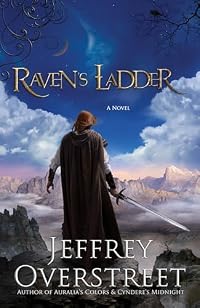
The third book is Raven's Ladder... again, I was floored at how complex and compelling this story has become. The history and myth of everything evolves in such an organic way. The characters define themselves more and more as the story goes along. It's like I got to know them as one would in real life... not how many stories are where everything is laid out before you right away. I never would have believed as I was reading Auralia's colors that this story could become so rich and complex.
And finally is the ale boy's feast. The conclusion of the books... not necessarily the conclusion of the story. (Which I always love.) 80 pages from the end I had no idea how the author was going to give me the satisfying ending that I wanted. I had so many questions that needed to be answered, I was terrified I was going to be massively disappointed that he has created bit off more than he could chew and he had tangled this story so tightly that there was no way he could connect all the pieces back together in the end... well I should have known... it was perfect. Beautiful even.
I loved these books. It was a rich, compelling, suspenseful, beautiful, and enlightening world. I'm happy I was able to spend some time there.
I'm glad I know how Krawg's story ended. :) show less
The first book is Auralia's Colors. I only sort of liked this first book. While a lot of the descriptions were quite lovely I found it a bit shallow. It was only meh.
The second book is Cyndere's midnight. As I read this one I realized how wrong I was about Auralia's colors. The author has in no way created a shallow world. The farther I got into the story the more impressed I was at how he dropped subtle tid-bits into the first book that were developed more in the second book. Here I began to truly show more develop an attachment to the characters and their stories and struggles.
The third book is Raven's Ladder... again, I was floored at how complex and compelling this story has become. The history and myth of everything evolves in such an organic way. The characters define themselves more and more as the story goes along. It's like I got to know them as one would in real life... not how many stories are where everything is laid out before you right away. I never would have believed as I was reading Auralia's colors that this story could become so rich and complex.
And finally is the ale boy's feast. The conclusion of the books... not necessarily the conclusion of the story. (Which I always love.) 80 pages from the end I had no idea how the author was going to give me the satisfying ending that I wanted. I had so many questions that needed to be answered, I was terrified I was going to be massively disappointed that he has created bit off more than he could chew and he had tangled this story so tightly that there was no way he could connect all the pieces back together in the end... well I should have known... it was perfect. Beautiful even.
I loved these books. It was a rich, compelling, suspenseful, beautiful, and enlightening world. I'm happy I was able to spend some time there.
I'm glad I know how Krawg's story ended. :) show less
The Story
One day, a few thieves find an abandoned baby girl on the side of a river in the middle of the footprint of a monster. With no idea where this girl came from, they bring her back to their village to raise her. Over the years, Auralia grows into an adventurous and almost magical girl with the ability to create things. These things that she makes seem to have powers of their own, and the colours in them enchant and even change people. Are these colours what the kingdom of Abascar needs to bring about the change that it needs to save it from itself?
The Thoughts
I’m torn about this one. Really torn.
It had a lot going for it, but it also had a few things that I really don’t think worked too well. And I’m going to touch on those show more first, because they’re the things that are most prominent in my mind at the moment.
Firstly, I will admit that most of the time I was reading this, I was thinking about how the publisher is a Christian publisher, and I was keeping my eyes open to see what it was that made this a Christian children’s fantasy book. I can happily say that there weren’t many really overt Christian moments, and people who weren’t looking for the Christianity may not have noticed them. There were a few times where you can see hints of it. For example, the Keeper. The people of Abascar say that the Keeper is something children dream about, but that they will grow out of it. They do not like the thought of the Keeper. These people believe the Keeper is a nightmare figure and makes people feel guilty in their dreams, blah blah blah. I don’t know if the author meant it like this, or if I was just reading into it because I was looking for it, but it sounded a lot to me like how some Christians I’ve run across think of those who aren’t Christians – they think people avoid religion because it makes them feel guilty about themselves and their lives. Hmm.
The other thing that bothered me about this book was how the first third of the book was really slow and didn’t give much chance to get to know the characters or to see how they grow from chapter to chapter. The first third takes up the first sixteen years of Auralia’s life – so all you really get are snapshots of what is going on in specific times. You don’t even really get to know her or the other characters until about halfway through the book. So I totally wasn’t emotionally invested in what happened to anyone for the majority of the book. Even when the characters started developing, the only ones I actually cared about were the ale boy and Prince Cal-raven.
Okay, speaking of the ale boy, I’m now reminded of something else that bothered me – there was this whole mystery bit as to who he was, where he came from, and why he wasn’t given to the Gatherers to raise him like every other orphan… and in the end, the reasoning seemed a little bit of a cop-out to me. (Trying to make this next bit as non-spoilery as possible…) Okay, if your good friend and his wife died in a fire and you were able to save their baby from the same fire, wouldn’t you treat said child with more than contempt whenever you cross paths with him?
But! Other than those things, I did enjoy the book. As I said, I really liked the ale boy and Prince Cal-raven. I think they were great characters who had depths that were revealed throughout the book. They were completely believable.
And there was the narration, which was positively beautiful. Completely made me really visualize what was going on in the story. Here’s my favourite passage:
The child became twigs and burnt autumn leaves, thin and fisty fingers clutching acorns and seeds as though they were stolen jewels. Her hair hung in tangles, silver and brown like the bark of apple trees. Her smile sealed off secrets. Each day she made a hurried journey to see as much of the world as she could bear and to harvest a small gallery of souvenirs.
Doesn’t that just sound so lovely? Can’t you see what the author’s describing as you’re reading it? There are little jewels like this interspersed throughout the whole book.
And what drives me nuts with most books in series was totally not apparent in this one. I didn’t even realize it was the first in a series until the last page when the next book was mentioned. In other words, there was closure! It works as a standalone, but if I wanted to, I could read more of the story. How often does that happen? Rarely. The book ended with hope that the future will get better, that the people have overcome some great obstacle, it doesn’t leave you right in the middle of the darkest part of the story. And a book that ends with hope? I don’t think there’s anything that I enjoy more.
The Bottom Line
On one hand, I wouldn’t hand anyone this book telling them that they had to read it. On the other, I also wouldn’t take it away from them telling them to skip it. (Unless they could only read one more book in their life and it was a choice between this one and one of Catherine Webb’s Horatio Lyle books or Arthur Slade’s Jolted.) It was good, but not good enough to seek out the rest in this series. show less
One day, a few thieves find an abandoned baby girl on the side of a river in the middle of the footprint of a monster. With no idea where this girl came from, they bring her back to their village to raise her. Over the years, Auralia grows into an adventurous and almost magical girl with the ability to create things. These things that she makes seem to have powers of their own, and the colours in them enchant and even change people. Are these colours what the kingdom of Abascar needs to bring about the change that it needs to save it from itself?
The Thoughts
I’m torn about this one. Really torn.
It had a lot going for it, but it also had a few things that I really don’t think worked too well. And I’m going to touch on those show more first, because they’re the things that are most prominent in my mind at the moment.
Firstly, I will admit that most of the time I was reading this, I was thinking about how the publisher is a Christian publisher, and I was keeping my eyes open to see what it was that made this a Christian children’s fantasy book. I can happily say that there weren’t many really overt Christian moments, and people who weren’t looking for the Christianity may not have noticed them. There were a few times where you can see hints of it. For example, the Keeper. The people of Abascar say that the Keeper is something children dream about, but that they will grow out of it. They do not like the thought of the Keeper. These people believe the Keeper is a nightmare figure and makes people feel guilty in their dreams, blah blah blah. I don’t know if the author meant it like this, or if I was just reading into it because I was looking for it, but it sounded a lot to me like how some Christians I’ve run across think of those who aren’t Christians – they think people avoid religion because it makes them feel guilty about themselves and their lives. Hmm.
The other thing that bothered me about this book was how the first third of the book was really slow and didn’t give much chance to get to know the characters or to see how they grow from chapter to chapter. The first third takes up the first sixteen years of Auralia’s life – so all you really get are snapshots of what is going on in specific times. You don’t even really get to know her or the other characters until about halfway through the book. So I totally wasn’t emotionally invested in what happened to anyone for the majority of the book. Even when the characters started developing, the only ones I actually cared about were the ale boy and Prince Cal-raven.
Okay, speaking of the ale boy, I’m now reminded of something else that bothered me – there was this whole mystery bit as to who he was, where he came from, and why he wasn’t given to the Gatherers to raise him like every other orphan… and in the end, the reasoning seemed a little bit of a cop-out to me. (Trying to make this next bit as non-spoilery as possible…) Okay, if your good friend and his wife died in a fire and you were able to save their baby from the same fire, wouldn’t you treat said child with more than contempt whenever you cross paths with him?
But! Other than those things, I did enjoy the book. As I said, I really liked the ale boy and Prince Cal-raven. I think they were great characters who had depths that were revealed throughout the book. They were completely believable.
And there was the narration, which was positively beautiful. Completely made me really visualize what was going on in the story. Here’s my favourite passage:
The child became twigs and burnt autumn leaves, thin and fisty fingers clutching acorns and seeds as though they were stolen jewels. Her hair hung in tangles, silver and brown like the bark of apple trees. Her smile sealed off secrets. Each day she made a hurried journey to see as much of the world as she could bear and to harvest a small gallery of souvenirs.
Doesn’t that just sound so lovely? Can’t you see what the author’s describing as you’re reading it? There are little jewels like this interspersed throughout the whole book.
And what drives me nuts with most books in series was totally not apparent in this one. I didn’t even realize it was the first in a series until the last page when the next book was mentioned. In other words, there was closure! It works as a standalone, but if I wanted to, I could read more of the story. How often does that happen? Rarely. The book ended with hope that the future will get better, that the people have overcome some great obstacle, it doesn’t leave you right in the middle of the darkest part of the story. And a book that ends with hope? I don’t think there’s anything that I enjoy more.
The Bottom Line
On one hand, I wouldn’t hand anyone this book telling them that they had to read it. On the other, I also wouldn’t take it away from them telling them to skip it. (Unless they could only read one more book in their life and it was a choice between this one and one of Catherine Webb’s Horatio Lyle books or Arthur Slade’s Jolted.) It was good, but not good enough to seek out the rest in this series. show less
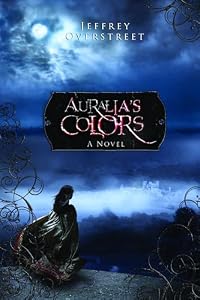
Auralia's Colors, published by Waterbrook Press, is the first fantasy released by a specifically Christian publisher that I have read in quite some time. However, I kept hearing good things about it, so when I came across it accidentally while browsing through Chapters a couple of months ago, I decided to pick it up.When I started reading the book I could tell right off the bat, even if I hadn't heard rumors of this already, that author Jeffrey Overstreet shares some of my own favorite books and influences -- specifically Patricia A. McKillip and Mervyn Peake's Gormenghast books. The rich, lyrical tone of the language Overstreet uses is definitely McKillipesque, and the world he creates blends the transcendent, the mysterious, the show more humble and the grotesque in a way that's reminiscent of Peake. Still, even if the influences are evident I was pleased to note that the setup of Overstreet's fantasy world didn't strike me as overly derivative of other classic fantasy works -- Overstreet does have his own fertile imagination and his book reflects that.The problem is, even though I finished the book a couple of days ago, I'm still undecided as to how I feel about it. If you've ever tried to get a book published, you know how agents and editors sometimes give you that deadly phrase, "I liked it, but I didn't love it"? I think that's how I feel about Auralia's Colors. I really wanted to love it wholeheartedly, but it didn't quite happen for me. The omniscient narration and the constantly shifting focus of the story kept me from being able to latch onto any of the characters and really come to know or love them the way I'd hoped. The beautiful language sometimes served to obscure what was going on rather than to illuminate it (which is also a problem I've sometimes had with McKillip), and the emphasis on external narration rather than action, dialogue or internal monologue made it difficult for me to connect emotionally to the characters. There's one scene where Auralia experiences a shattering realization about her destiny, a pivotal point in the book, where I truly did feel connected to her and involved in her inner life for the first time... but soon that feeling was gone again as the narrative went elsewhere.On the other hand, though the story was anything but predictable or straightforward, the various seemingly unconnected threads of the narrative did weave themselves together neatly (but not too neatly) at the end. There were a couple of characters (specifically Cal-raven and the ale boy) that I did want to know more about, and find what would happen to them. There were some moments of breathtaking beauty, and a longing for goodness (true, potent goodness, not some saccharine substitute) that reminded me of the writings of George MacDonald. And I am curious to know how the next two "strands" of the trilogy will tie the whole narrative together. So I am not sure that if I come across Cyndere's Midnight, I won't pick it up after all, and give Jeffrey Overstreet a second chance to fully win me over. Especially as it promises to be a bit of a "Beauty and the Beast" tale, and I'm a big sucker for those...Oh, and one last thing in the books' favor: the covers are utterly gorgeous. And they're trade paperbacks, so not that expensive if you feel like giving them a try. show less
Members
- Recently Added By
Author Information

7 Works 919 Members
Awards and Honors
Awards
Series

Common Knowledge
- Canonical title
- Auralia's Colors
- People/Characters
- Auralia; Cal-raven
- Important places
- the Expanse
- First words
- Auralia lay still as death, like a discarded doll, in a burgundy tangle of rushes and spineweed on the bank of a bend in the River Throanscall, when she was discovered by an old man who did not know her name.
- Last words
- (Click to show. Warning: May contain spoilers.)And so it was that Jaralaine's open eyes opened, and she basked in the mysterious ways of Auralia's colors.
Classifications
Statistics
- Members
- 376
- Popularity
- 83,035
- Reviews
- 20
- Rating
- (3.80)
- Languages
- English, French
- Media
- Paper, Ebook
- ISBNs
- 5
- ASINs
- 2