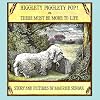
Higgledy Pigglety Pop! or, There Must Be More to Life
by Maurice Sendak (Author, Illustrator)
On This Page
Description
"Higglety pigglety pop! The dog has eaten the mop! The pig's in ahurry. The cat's in a flurry. Higglety pigglety pop! From these lines of a Mother Goose nursery rhyme, Maurice Sendak has elaborated a modern fairy tale of multiple themes. Its comic surface is the tale of Jennie the Sealyham terrier, who packs her black leather bag with the gold buckles and goes out into the world to look for something more than everything. The World Mother Goose Theater is preparing a new production, and they show more are looking for a leading lady--but experience is needed. The masterful pen and ink drawings transform Jennie'sstory in a manner that is typically Sendakian. Higglety Pigglety Pop! Or There Must Be More to Life can be compared, in its complexity,humor, and depth of feeling, only with Sendak's own Where the Wild Things Are."-- show lessTags
Recommendations















Member Reviews
Maurice Sendak provides an elaborate and absurd backstory for the classic Mother Goose nursery rhyme.
The lead character, Jennie the dog, is actually rude and annoying, but I had a fun time following her silly quest for something she does not have. I'm glad I do not suffer the misery of discontentment.
The lead character, Jennie the dog, is actually rude and annoying, but I had a fun time following her silly quest for something she does not have. I'm glad I do not suffer the misery of discontentment.
Jennie is a Sealyham terrier who has everything. "...a round pillow upstairs and a square pillow downstairs...her own comb and brush, two different bottles of pills, eyedrops, eardrops, a thermometer, and for cold weather a red wool sweater. There were two windows for her to look out of and two bowls to eat from. She even had a master who loved her."
But as is so often the case--in real life almost as often as in fairy tales--everything just isn't enough for Jennie. And so, clutching her black leather bag with gold buckles, she sets off one morning in search of that elusive something more.
Along the way Jennie meets a pig offering free sandwiches and the chance to become the leading lady for the World Mother Goose Theater..if she gains show more some experience before the full moon. Leading lady being a title that appeals to a little dog as bossy and spoiled as Jennie, she now has a goal. Kind of a quest, actually.
Along the way Jennie meets all sorts of interesting people who help propel her onward, and in the end she proves herself to be a very brave little dog and gets the job.
Like all the best fairy tales Higglety Pigglety Pop! has a certain surreal quality to it. In addition to the talking animals (and plants!), there's Baby, who won't eat, whose name nobody remembers. Jennie's story also has in common with classic fairy tales a layer of foreboding that sits just beneath the surface; Baby's parents left for the Castle Yonder and never returned and there's a Lion in the cellar who eats the Nurses who can't get Baby to eat. But the ending is joyous and the foreboding is forestalled. Maurice Sendak's humor and the sly lessons he sneaks in are in abundance, and his obvious adoration of his subject shines through in every one of his exquisite illustrations. As with all of the best children's literature this one will be savored as much by adults as by the children in their lives. show less
But as is so often the case--in real life almost as often as in fairy tales--everything just isn't enough for Jennie. And so, clutching her black leather bag with gold buckles, she sets off one morning in search of that elusive something more.
Along the way Jennie meets a pig offering free sandwiches and the chance to become the leading lady for the World Mother Goose Theater..if she gains show more some experience before the full moon. Leading lady being a title that appeals to a little dog as bossy and spoiled as Jennie, she now has a goal. Kind of a quest, actually.
Along the way Jennie meets all sorts of interesting people who help propel her onward, and in the end she proves herself to be a very brave little dog and gets the job.
Like all the best fairy tales Higglety Pigglety Pop! has a certain surreal quality to it. In addition to the talking animals (and plants!), there's Baby, who won't eat, whose name nobody remembers. Jennie's story also has in common with classic fairy tales a layer of foreboding that sits just beneath the surface; Baby's parents left for the Castle Yonder and never returned and there's a Lion in the cellar who eats the Nurses who can't get Baby to eat. But the ending is joyous and the foreboding is forestalled. Maurice Sendak's humor and the sly lessons he sneaks in are in abundance, and his obvious adoration of his subject shines through in every one of his exquisite illustrations. As with all of the best children's literature this one will be savored as much by adults as by the children in their lives. show less
This is my favorite of Sendak's books. The story is both sad and humorous. Sendak's illustrations are precise and charming. Higglety Pigglety Pop! can be read as a metaphor for death or leaving home (or simply an odd, lovely, and surreal tale to be enjoyed); regardless, it's a wonderful children's classic for readers of all ages.
A dog named Jennie has everything she wants, but it's not enough. She packs up her belongings and leaves one day in search of adventure. When she sees a sign advertising a spot for a leading lady in a new play, she wants that but is disappointed to learn she needs experience. She continues along her way looking for experiences, and some madcap adventures ensue.
If I recall correctly, Sendak wrote this book after the death of his beloved dog (also named Jennie). As an adult, it's easy to see this book as an allegory for death and the afterlife. For a child, however, it seems that it will just appear that Jennie is a bit selfish -- she has everything yet she wants more. That is a big downfall to the book for me. Again, for adults, it's a show more charming story envisioning a happy end for a much-loved pet. It just doesn't seem to work as a well as a children's book, in my opinion.
The rest of the book reads like a fairy table, with obscure riddles, talking animals, and mysterious castles. The final play at the end is a fun and clever twist on the titular rhyme. Sendak's black-and-white illustrations clearly show artistic talent and mostly serve as visuals that replicate the text, with the big exception being that final performance in which the illustrations add humor. show less
If I recall correctly, Sendak wrote this book after the death of his beloved dog (also named Jennie). As an adult, it's easy to see this book as an allegory for death and the afterlife. For a child, however, it seems that it will just appear that Jennie is a bit selfish -- she has everything yet she wants more. That is a big downfall to the book for me. Again, for adults, it's a show more charming story envisioning a happy end for a much-loved pet. It just doesn't seem to work as a well as a children's book, in my opinion.
The rest of the book reads like a fairy table, with obscure riddles, talking animals, and mysterious castles. The final play at the end is a fun and clever twist on the titular rhyme. Sendak's black-and-white illustrations clearly show artistic talent and mostly serve as visuals that replicate the text, with the big exception being that final performance in which the illustrations add humor. show less
Now I remember why I never liked fairy tales -- they are spooky and complicated -- and so is this book.
Sendak wrote the book after his beloved dog Jennie died. Taking lines from a Mother Goose poem, Sendak created a fairy tale of multifaceted layers.
Jennie is bored and has everything a dog or man could want. Leaving her abode of comfort, she travels and meets members of The World Mother Goose Theatre.
Longing to be a lead star, she is told experience is necessary.
When Jennie becomes a nanny to a spoiled baby who refuses to eat, she longs to find the parents who live in Castle Yonder.
When the baby destroys Jennies possessions, the dog that had everything now has nothing.
When the lion in the basement eats the baby, Jennie no longer has a show more mission.
Leaving the home of the baby, Jennie is re-united with the World Mother Goose Theatre members and because she now has experience, becomes a star.
While highly creative, I'm left feeling like I missed something.
While Sendak laughs, I ponder the meaning of it all.
The illustrations seemed spooky and surreal.
The face of the baby was adult like and haunting. show less
Sendak wrote the book after his beloved dog Jennie died. Taking lines from a Mother Goose poem, Sendak created a fairy tale of multifaceted layers.
Jennie is bored and has everything a dog or man could want. Leaving her abode of comfort, she travels and meets members of The World Mother Goose Theatre.
Longing to be a lead star, she is told experience is necessary.
When Jennie becomes a nanny to a spoiled baby who refuses to eat, she longs to find the parents who live in Castle Yonder.
When the baby destroys Jennies possessions, the dog that had everything now has nothing.
When the lion in the basement eats the baby, Jennie no longer has a show more mission.
Leaving the home of the baby, Jennie is re-united with the World Mother Goose Theatre members and because she now has experience, becomes a star.
While highly creative, I'm left feeling like I missed something.
While Sendak laughs, I ponder the meaning of it all.
The illustrations seemed spooky and surreal.
The face of the baby was adult like and haunting. show less
"Higglety Pigglety Pop!" is an exceptional story that is so simplistic and yet is filled with so much truth. The author Maurice Sendak does a fantastic job at taping into the human spirit. He did this by showing that even when people have everything they are still not satisfied with their lives. He shows this by having the dog say that she has everything, but for some reason she is not happy with her life. She sets out on a journey with all of her belongings in search of something more. Then in the story everything she has gets destroyed and she is left with nothing, and even after loosing everything the dog still went in search of something more. Sendak uses this to show that no matter what we are given/ have in the life we will always show more be unhappy and always be in search of something that we may never attain. show less
Last September I saw the Sendak on Sendak exhibition at the Rosenbach Museum and Library in Philadelphia. I was drawn to some black and white illustrations of a dog with a suitcase. Sendak wrote this book after the death of his sealyham terrier Jennie. In the book Jennie decides to pack up her belongings and leave home. Jennie had everything she wanted but thought there must be more to life than having everything. Jennie makes the acquaintance of various other characters, eats ALOT, gathers experience to become a baby nanny and eventually travels to The Castle Yonder. Jennie sends a letter home from the Castle Yonder to say "look for me when you get here". If you've ever lost a dog that you loved this book will touch your heart.
I gave show more this book five stars because of the beautiful black and white illustrations. They are unlike Sendaks other drawings. show less
I gave show more this book five stars because of the beautiful black and white illustrations. They are unlike Sendaks other drawings. show less
Members
- Recently Added By
Lists

Favorite Animal Fiction
359 works; 156 members

Honey For a Child's Heart
1,152 works; 25 members

Best Dog Stories
109 works; 13 members

Dogs -- children's/young adult fiction
1,317 works; 9 members

Written and Illustrated By
805 works; 1 member
Author Information

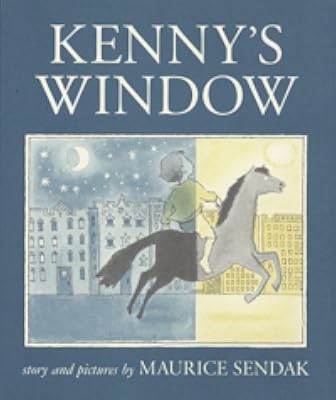
Maurice Sendak was born on June 10, 1928 in Brooklyn, New York. While in high school, he worked part time as an illustrator for All-American Comics adapting the Mutt and Jeff newspaper comic strip to a comic book format. His first professional illustrations were for a physics textbook, Atomics for the Millions, published in 1947. He later worked show more as a window-display director for F.A.O. Schwartz while attending night school at the Art Students League. In 1950, he illustrated his first children's book The Wonderful Farm by Marcel Aymé. He wrote his first children's book Kenny's Window in 1956 and went on to become a prolific author-illustrator. His works include Chicken Soup with Rice; In the Night Kitchen; Outside Over There; Higglety Pigglety Pop; The Sign on Rosie's Door; We Are All in the Dumps with Jack and Guy; Brundibar; Bumble Ardy; and My Brother's Book. He received numerous awards including the Caldecott medal for Where The Wild Things Are in 1964, the Hans Christian Andersen International Medal in 1970, the Laura Ingalls Wilder Award, and the National Medal of Arts in 1996. Characters from two of his books were the basis of an animated television special, Really Rosie, which first aired in 1975. He was also the set designer and lyricist for a subsequent off-Broadway musical of the same title. He was the lyricist, as well as the set and costume designer, for the original production of an opera based on Where The Wild Things Are in 1980. In addition, he has designed sets and costumes for performances of operas by Mozart, Prokofiev, and other classical composers. He died due to complications from a recent stroke on May 8, 2012 at the age of 83. (Bowker Author Biography) show less
Some Editions
Awards and Honors
Awards
Notable Lists
Series
Belongs to Publisher Series
Work Relationships
Common Knowledge
- Canonical title
- Higgledy Pigglety Pop! or, There Must Be More to Life
- Original title
- Higgelty Piggelty Pop or There must be more to life
- Original publication date
- 1967
- People/Characters
- Jennie; Mother Goose
- Related movies
- Higglety Pigglety Pop! (1985 | IMDb); Higglety Pigglety Pop! or There Must Be More to Life (2010 | IMDb)
- Dedication
- For Jennie
- First words
- Once Jennie had everything.
- Last words
- (Click to show. Warning: May contain spoilers.)But if you ever come this way, look for me. Jennie
- Original language*
- English
*Some information comes from Common Knowledge in other languages. Click "Edit" for more information.
Classifications
Statistics
- Members
- 922
- Popularity
- 28,842
- Reviews
- 21
- Rating
- (4.21)
- Languages
- 8 — Dutch, English, French, German, Japanese, Portuguese, Spanish, Swedish
- Media
- Paper, Audiobook
- ISBNs
- 27
- UPCs
- 2
- ASINs
- 11