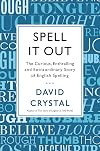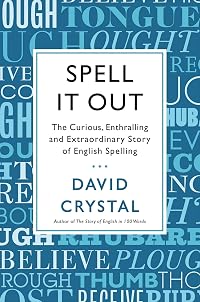
Spell It Out: The Curious, Enthralling and Extraordinary Story of English Spelling
by David Crystal
The Story of English Trilogy (2)
On This Page
Description
Presents a history of English spelling through chapters that cover such topics as the introduction of the Roman alphabet, each letter's origins, and the development of long and short vowels.Tags
Recommendations






Member Reviews
Good writing, as with the author's other books, but the subject is… quite aggravating. At times horrendously fascinating in its seemingly random convolutions, but it makes me feel for those learning English as a second language.
The book is highly thorough, with chapters about new vowel sounds, new consonant sounds, old vowels for new purposes, etc etc—super interesting to see (and, inevitably, as with most things about vocabulary and spelling, to mouth or whisper) the many examples of etymological origin or historical change littered throughout, but it began to feel a bit fatiguing toward the end.
Still, always here for some good linguistic descriptivism.
On that forward-looking note, I found the final chapters about the Internet's potential influence on language and the future of English spelling quite thought-provoking. He gives pairs such as rhubarb → rubarb, recommend → recomend, and minuscule → miniscule as examples of misspellings on the Internet potentially becoming accepted variant spellings. For minuscule/miniscule, this is the usage note in the Oxford Dictionary:
I think this is one of the themes of the book that I really enjoyed, the idea that language, especially one as open to foreign influences as English, is perpetually evolving. Perhaps the irregularity of English spelling sees some smoothing out over the course of history, as its users perceive existing patterns and warp language ever so slightly so it makes more sense to them, but foreign words and neologisms (most prominently, words introduced/influenced by technology) keep seeping in, and the river of linguistic variation narrows and widens thusly. show less
The book is highly thorough, with chapters about new vowel sounds, new consonant sounds, old vowels for new purposes, etc etc—super interesting to see (and, inevitably, as with most things about vocabulary and spelling, to mouth or whisper) the many examples of etymological origin or historical change littered throughout, but it began to feel a bit fatiguing toward the end.
Still, always here for some good linguistic descriptivism.
show more
Nor is staying with traditional attitudes towards spelling an option. We —
everyone, not just teachers — need to change the way we think about it. We have to stop cursing it in solely negative terms — as a daunting barrier, as a hostile mountain, as an apparently perpetual process of rote learning — and start thinking of it as a voyage of exploration.
On that forward-looking note, I found the final chapters about the Internet's potential influence on language and the future of English spelling quite thought-provoking. He gives pairs such as rhubarb → rubarb, recommend → recomend, and minuscule → miniscule as examples of misspellings on the Internet potentially becoming accepted variant spellings. For minuscule/miniscule, this is the usage note in the Oxford Dictionary:
The standard spelling is minuscule rather than miniscule. The latter form is a very common one (accounting for almost half of citations for the term in the Oxford English Corpus), and has been recorded since the late 19th century. It arose by analogy with other words beginning with mini-, where the meaning is similarly ‘very small’. It is now so widely used that it can be considered as an acceptable variant, although it should be avoided in formal contexts.
I think this is one of the themes of the book that I really enjoyed, the idea that language, especially one as open to foreign influences as English, is perpetually evolving. Perhaps the irregularity of English spelling sees some smoothing out over the course of history, as its users perceive existing patterns and warp language ever so slightly so it makes more sense to them, but foreign words and neologisms (most prominently, words introduced/influenced by technology) keep seeping in, and the river of linguistic variation narrows and widens thusly. show less
The history of English spelling is not the most thrilling of subjects. David Crystal takes this not-very-interesting topic and manages to craft a slightly-less-uninteresting book from it. Parts even rose to such dizzying heights that I thought “Huh, that's kind of interesting.”
It's easy and maybe even accurate to blame the book's mediocrity on the fact that David Crystal is on a mission. English spelling is difficult. Everyone knows this because we're forever being told that English spelling is difficult. I just said “English spelling is difficult” twice in two sentences, so it must be true. Thrice in three sentences now; I rest my case.
But it turns out that English spelling is only difficult because we're taught it wrong. David show more Crystal tells us this in the introduction and promises to show how spelling should be taught before the book is finished. And so you read on and realise the mortifying truth of his philosophy. Four-year-old kids shouldn't be taught the alphabet, then simple words, then harder words, then read and read and read till they kind of know how to spell. No, they should be thoroughly grounded in a millennium or so of linguistic history, roughly the same amount of British history, and have a decent knowledge of Latin, the Romance languages, and the Germanic languages. And then it's obvious why ‘through’ is spelt like ‘rough’ and ‘plough’, why ‘lieutenant’ doesn't have an f in it, and every other complication you can think of. And speaking of things that don't have an f in them: David Crystal's idea might work in a Brave New World future where knowledge is pumped into our brain and where ‘chance’ is spelt ‘chanfe’, but here in the real world there is no f in chance. show less
It's easy and maybe even accurate to blame the book's mediocrity on the fact that David Crystal is on a mission. English spelling is difficult. Everyone knows this because we're forever being told that English spelling is difficult. I just said “English spelling is difficult” twice in two sentences, so it must be true. Thrice in three sentences now; I rest my case.
But it turns out that English spelling is only difficult because we're taught it wrong. David show more Crystal tells us this in the introduction and promises to show how spelling should be taught before the book is finished. And so you read on and realise the mortifying truth of his philosophy. Four-year-old kids shouldn't be taught the alphabet, then simple words, then harder words, then read and read and read till they kind of know how to spell. No, they should be thoroughly grounded in a millennium or so of linguistic history, roughly the same amount of British history, and have a decent knowledge of Latin, the Romance languages, and the Germanic languages. And then it's obvious why ‘through’ is spelt like ‘rough’ and ‘plough’, why ‘lieutenant’ doesn't have an f in it, and every other complication you can think of. And speaking of things that don't have an f in them: David Crystal's idea might work in a Brave New World future where knowledge is pumped into our brain and where ‘chance’ is spelt ‘chanfe’, but here in the real world there is no f in chance. show less
The history of English spelling is not the most thrilling of subjects. David Crystal takes this not-very-interesting topic and manages to craft a slightly-less-uninteresting book from it. Parts even rose to such dizzying heights that I thought “Huh, that's kind of interesting.”
It's easy and maybe even accurate to blame the book's mediocrity on the fact that David Crystal is on a mission. English spelling is difficult. Everyone knows this because we're forever being told that English spelling is difficult. I just said “English spelling is difficult” twice in two sentences, so it must be true. Thrice in three sentences now; I rest my case.
But it turns out that English spelling is only difficult because we're taught it wrong. David show more Crystal tells us this in the introduction and promises to show how spelling should be taught before the book is finished. And so you read on and realise the mortifying truth of his philosophy. Four-year-old kids shouldn't be taught the alphabet, then simple words, then harder words, then read and read and read till they kind of know how to spell. No, they should be thoroughly grounded in a millennium or so of linguistic history, roughly the same amount of British history, and have a decent knowledge of Latin, the Romance languages, and the Germanic languages. And then it's obvious why ‘through’ is spelt like ‘rough’ and ‘plough’, why ‘lieutenant’ doesn't have an f in it, and every other complication you can think of. And speaking of things that don't have an f in them: David Crystal's idea might work in a Brave New World future where knowledge is pumped into our brain and where ‘chance’ is spelt ‘chanfe’, but here in the real world there is no f in chance. show less
It's easy and maybe even accurate to blame the book's mediocrity on the fact that David Crystal is on a mission. English spelling is difficult. Everyone knows this because we're forever being told that English spelling is difficult. I just said “English spelling is difficult” twice in two sentences, so it must be true. Thrice in three sentences now; I rest my case.
But it turns out that English spelling is only difficult because we're taught it wrong. David show more Crystal tells us this in the introduction and promises to show how spelling should be taught before the book is finished. And so you read on and realise the mortifying truth of his philosophy. Four-year-old kids shouldn't be taught the alphabet, then simple words, then harder words, then read and read and read till they kind of know how to spell. No, they should be thoroughly grounded in a millennium or so of linguistic history, roughly the same amount of British history, and have a decent knowledge of Latin, the Romance languages, and the Germanic languages. And then it's obvious why ‘through’ is spelt like ‘rough’ and ‘plough’, why ‘lieutenant’ doesn't have an f in it, and every other complication you can think of. And speaking of things that don't have an f in them: David Crystal's idea might work in a Brave New World future where knowledge is pumped into our brain and where ‘chance’ is spelt ‘chanfe’, but here in the real world there is no f in chance. show less
"Approached in the right way, spelling can be fun." That's how David Crystal ends this entertaining read on the spelling of the English language.
Of course, spelling isn't the most interesting subject to read about, especially when all of us have been confronted with it in school. Speaking of which, spelling and languages were among my favourite subjects.
As you can imagine, you must have a certain interest in language, spelling, and/or linguistics to read this nifty little reference work. There are more serious works about English, about spelling, but the purpose of this book was to keep it accessible, broadly themed and usable for a long time to come.
Crystal starts way back in time, with the Anglo-Saxon monks, when Old English was show more spoken and written and a proper alphabet was yet to be written down. Each chapter ends with an aspect that is the central subject for the next chapter. Or, Crystal sort of applied the same pattern as [a:Mark Forsyth|3234647|Mark Forsyth|https://d.gr-assets.com/authors/1354096280p2/3234647.jpg] did in his [b:The Etymologicon: A Circular Stroll through the Hidden Connections of the English Language|15956908|The Etymologicon A Circular Stroll through the Hidden Connections of the English Language|Mark Forsyth|https://d.gr-assets.com/books/1370514042s/15956908.jpg|18022434], for example. With each chapter he advanced on the time-line, into Middle English and finally into Modern English, although he goes back and forth on certain occasions.
You'll learn about the various influences from (mostly) Latin and French, but also about how letters changed (but sounds kept), how sounds changed (but letters kept), about doubling, singling, loanwords, accents, and more.
On a side note, I'm very proud to read that even the Flemish have had an influence, however small, on the English language and vice versa, I believe, as Crystal gave some examples of Old English words that are still in use - albeit not every one 100% written in the same way - in Dutch/Flemish.
Over the course of several centuries many people of influence (writers, printers, ...) tried to dominate the English spelling by imposing their vision, their way of writing. Sometimes it worked, sometimes it failed (for various reasons). How American English came to be and distanced itself from British English, is another happening that is described. The influence of the Internet was also included, as it has already had quite an impact on how English is treated on-line.
Crystal also wrote that, while English is a difficult language for which it is hard to lay down a fixed set of rules, knowing some historical background (etymology, for instance) can help a lot in detecting a word's meaning and why it is written they way it is. Also, the "i before e, except after c"-rule is bollocks, because there are too many exceptions to that rule that you could make a rule for every x number of words that are written in a certain manner.
While it's, in itself, a heavy subject, David Crystal managed to handle a light writing style, accessible and entertaining. In addition, several chapters were enhanced with anecdotes and examples from (very) old publications.
There also 'A teaching appendix', in which Crystal wrote about how spelling is taught to children (and adults) in school, how it could or should be and how, through the different approach (e.g. a linguistic perspective on the matter, which he explains in detail), be beneficial for everyone. Especially, as he wrote, when spelling "is the bridge between reading and writing."
Long story short: If you're into languages (and especially the English one), then this little book simply must be added to your collection.
--------------------
Some related works I can recommend (from what I've read so far on languages):
- [b:The Etymologicon: A Circular Stroll through the Hidden Connections of the English Language|15956908|The Etymologicon A Circular Stroll through the Hidden Connections of the English Language|Mark Forsyth|https://d.gr-assets.com/books/1370514042s/15956908.jpg|18022434] by [a:Mark Forsyth|3234647|Mark Forsyth|https://d.gr-assets.com/authors/1354096280p2/3234647.jpg] (see my review here)
- [b:The Horologicon: A Day's Jaunt Through the Lost Words of the English Language|18299397|The Horologicon A Day's Jaunt Through the Lost Words of the English Language|Mark Forsyth|https://d.gr-assets.com/books/1375884302s/18299397.jpg|21412078] also by Mark Forsyth (see my review here)
- [b:Is That a Fish in Your Ear? The Amazing Adventure of Translation|16001554|Is That a Fish in Your Ear? The Amazing Adventure of Translation|David Bellos|https://d.gr-assets.com/books/1347291100s/16001554.jpg|16364404] by [a:David Bellos|15926|David Bellos|https://d.gr-assets.com/authors/1311694554p2/15926.jpg] (see my review here)
- [b:The Language Instinct: How the Mind Creates Language|869681|The Language Instinct How the Mind Creates Language|Steven Pinker|https://d.gr-assets.com/books/1410763257s/869681.jpg|2422982] by [a:Steven Pinker|3915|Steven Pinker|https://d.gr-assets.com/authors/1235758085p2/3915.jpg] (see my review here, in Dutch, though) show less
Of course, spelling isn't the most interesting subject to read about, especially when all of us have been confronted with it in school. Speaking of which, spelling and languages were among my favourite subjects.
As you can imagine, you must have a certain interest in language, spelling, and/or linguistics to read this nifty little reference work. There are more serious works about English, about spelling, but the purpose of this book was to keep it accessible, broadly themed and usable for a long time to come.
Crystal starts way back in time, with the Anglo-Saxon monks, when Old English was show more spoken and written and a proper alphabet was yet to be written down. Each chapter ends with an aspect that is the central subject for the next chapter. Or, Crystal sort of applied the same pattern as [a:Mark Forsyth|3234647|Mark Forsyth|https://d.gr-assets.com/authors/1354096280p2/3234647.jpg] did in his [b:The Etymologicon: A Circular Stroll through the Hidden Connections of the English Language|15956908|The Etymologicon A Circular Stroll through the Hidden Connections of the English Language|Mark Forsyth|https://d.gr-assets.com/books/1370514042s/15956908.jpg|18022434], for example. With each chapter he advanced on the time-line, into Middle English and finally into Modern English, although he goes back and forth on certain occasions.
You'll learn about the various influences from (mostly) Latin and French, but also about how letters changed (but sounds kept), how sounds changed (but letters kept), about doubling, singling, loanwords, accents, and more.
On a side note, I'm very proud to read that even the Flemish have had an influence, however small, on the English language and vice versa, I believe, as Crystal gave some examples of Old English words that are still in use - albeit not every one 100% written in the same way - in Dutch/Flemish.
Over the course of several centuries many people of influence (writers, printers, ...) tried to dominate the English spelling by imposing their vision, their way of writing. Sometimes it worked, sometimes it failed (for various reasons). How American English came to be and distanced itself from British English, is another happening that is described. The influence of the Internet was also included, as it has already had quite an impact on how English is treated on-line.
Crystal also wrote that, while English is a difficult language for which it is hard to lay down a fixed set of rules, knowing some historical background (etymology, for instance) can help a lot in detecting a word's meaning and why it is written they way it is. Also, the "i before e, except after c"-rule is bollocks, because there are too many exceptions to that rule that you could make a rule for every x number of words that are written in a certain manner.
While it's, in itself, a heavy subject, David Crystal managed to handle a light writing style, accessible and entertaining. In addition, several chapters were enhanced with anecdotes and examples from (very) old publications.
There also 'A teaching appendix', in which Crystal wrote about how spelling is taught to children (and adults) in school, how it could or should be and how, through the different approach (e.g. a linguistic perspective on the matter, which he explains in detail), be beneficial for everyone. Especially, as he wrote, when spelling "is the bridge between reading and writing."
Long story short: If you're into languages (and especially the English one), then this little book simply must be added to your collection.
--------------------
Some related works I can recommend (from what I've read so far on languages):
- [b:The Etymologicon: A Circular Stroll through the Hidden Connections of the English Language|15956908|The Etymologicon A Circular Stroll through the Hidden Connections of the English Language|Mark Forsyth|https://d.gr-assets.com/books/1370514042s/15956908.jpg|18022434] by [a:Mark Forsyth|3234647|Mark Forsyth|https://d.gr-assets.com/authors/1354096280p2/3234647.jpg] (see my review here)
- [b:The Horologicon: A Day's Jaunt Through the Lost Words of the English Language|18299397|The Horologicon A Day's Jaunt Through the Lost Words of the English Language|Mark Forsyth|https://d.gr-assets.com/books/1375884302s/18299397.jpg|21412078] also by Mark Forsyth (see my review here)
- [b:Is That a Fish in Your Ear? The Amazing Adventure of Translation|16001554|Is That a Fish in Your Ear? The Amazing Adventure of Translation|David Bellos|https://d.gr-assets.com/books/1347291100s/16001554.jpg|16364404] by [a:David Bellos|15926|David Bellos|https://d.gr-assets.com/authors/1311694554p2/15926.jpg] (see my review here)
- [b:The Language Instinct: How the Mind Creates Language|869681|The Language Instinct How the Mind Creates Language|Steven Pinker|https://d.gr-assets.com/books/1410763257s/869681.jpg|2422982] by [a:Steven Pinker|3915|Steven Pinker|https://d.gr-assets.com/authors/1235758085p2/3915.jpg] (see my review here, in Dutch, though) show less
On LibraryThing I wrote: 'An approachable explanation of how and why English spelling has changed since it was first written by Anglo-Saxon clerics. Crystal is erudite, pragmatic, and witty. The book will not help the reader to spell better but it does indicate the tools needed to learn the skill and makes sensible suggestions about effective way to teach it.'
Don't be put off by Crystal's prissy introduction. I think he's just a bit annoyed because he's a serious academic and he's written something that's fun to read. There is a 'teaching appendix' but the bulk of the book is the history of English seen through the medium of its spelling. That may sound a bit dry, but really it's not. It's written for the layman with a minimum of technical language. I'm relatively well informed for a layman and I learnt loads. I liked the parts about Old and Middle English the most.
An approachable explanation of how and why English spelling has changed since it was first written by Anglo-Saxon clerics. Crystal is erudite, pragmatic, and witty. The book will not help the reader to spell better but it does indicate the tools needed to learn the skill and makes sensible suggestions about effective way to teach it.
Members
- Recently Added By
Author Information

103+ Works 14,169 Members
David Crystal is Honorary Professor of Linguistics at the University of Wales, Bangor.
Awards and Honors
Series

Classifications
- Genres
- Nonfiction, General Nonfiction, History
- DDC/MDS
- 421.52 — Language English & Old English languages Writing system, phonology, phonetics of standard English Phonology. phonetics, spelling Spelling and pronunciation
- LCC
- PE1141 .C79 — Language and Literature English language English Modern English
- BISAC
Statistics
- Members
- 347
- Popularity
- 90,945
- Reviews
- 7
- Rating
- (3.50)
- Languages
- English
- Media
- Paper, Ebook
- ISBNs
- 6
- ASINs
- 4