Dante's Inferno
by Hunt Emerson, Kevin Jackson
On This Page
Description
Hunt Emerson, the dazzlingly talented cartoonist, tackles the biggest literary name of them all: Dante. Emerson's Inferno delights on many levels: as an ingenious translation of classic verse; an effortlessly readable introduction to a complex poem; a delicious crib for anxious Dante students; and as a warm tribute from the master of one art form to the grand master of another. Hunt's cartoon is followed by Kevin Jackson's essay on Dante. Wildly clever and witty, but essentially reverent, it show more is a wonderful treat for anyone who already loves Dante. show lessTags
Recommendations


















Member Recommendations
Death_By_Papercut A different take on the Inferno.
Death_By_Papercut What the HELL?
Member Reviews
The latest in Hunt Emerson's cartoon retellings of classic works of literature, though the first I have read. Emerson professes his debt to MAD magazine in his author bio and the influence is obvious. His artistic style gifts the nightmare vision of Hell a suitably manic freneticism. On occasions, as when Dante and Virgil descend into the Pit, it even achieves an impressive grandiosity.
Each set of panels could be a separate cartoon drawn straight from a magazine, though the gags are of varying quality. The depiction of the Harpies as a group of delusional Margaret Thatchers seems to yearn for a time of happier political certainties. The feeling of being dated in its style extends through the piece and it's hard not to feel that Emerson show more really misses the Eighties.
The narrative and parody never quite fuse, but as an accessible precise of the original it works. Those most familiar with the text will get the most out of the subversion, but for the uninitiated Kevin Jackson's commentary offers an excellent crib. If you know the Inferno, are studying it or just want enough knowledge to keep with the literary conversation, you'll find a couple of friends in Emerson and Jackson. show less
Each set of panels could be a separate cartoon drawn straight from a magazine, though the gags are of varying quality. The depiction of the Harpies as a group of delusional Margaret Thatchers seems to yearn for a time of happier political certainties. The feeling of being dated in its style extends through the piece and it's hard not to feel that Emerson show more really misses the Eighties.
The narrative and parody never quite fuse, but as an accessible precise of the original it works. Those most familiar with the text will get the most out of the subversion, but for the uninitiated Kevin Jackson's commentary offers an excellent crib. If you know the Inferno, are studying it or just want enough knowledge to keep with the literary conversation, you'll find a couple of friends in Emerson and Jackson. show less
 This review was written for LibraryThing Early Reviewers.
This new graphic novel version of Dante's Inferno is ribald, gross, and often horrifying. And very, VERY funny it is too. You really get the sense of satire - unsubtle, political - with which Dante was infusing his text. The symbolism is hilariously banged over our heads; the religious themes are articulated with fire and torture (how apt for hell).
Accompanied by an intelligent essay guide to the original text and themes (by Kevin Jackson) that gently ticks off illustrator/author Hunt Emerson for his modern foibles - the drawn curvaceousness of the dead Beatrice, complete with gratuitous "PWOOAR" - the book as whole acts as both a wonderful primer for Dante novices and an entertaining revisioning of the most famous part of Dante's show more Divine Comedy.
Of course, it is only a couple of years ago that Seymour Chwast's Dante's Divine Comedy" came out in English. Hunt Ermerson's take is far more grotesque and perhaps all the enjoyable for it. Plus you have to love his desire to re-use his cartooning skills of Margaret Thatcher (Canto IX)
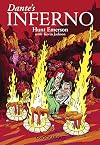
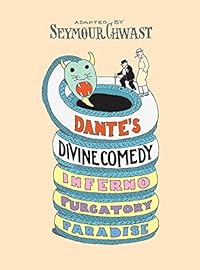
Where Chwast had a spare 1930s feel to his drawings - all detective fiction bowler hats and bow-ties (in homage to Dorothy L Sayer's English translation perhaps), Emerson uses a more MAD comic style to his imagery. The drawing is denser, more detailed and more vivid. Whereas readers wanted to gently colour in the open shapes and figures of Chwast's text to create a Keith Haring-esque pattern, colouring Emerson's version would probably make you crazy. Looking at the full-colour cover is enough burnt flesh and grumpy multi-coloured demons for one life-time! Chwast's is beautiful, elegant and creepy; Emerson's is ghoulishly funny.
Some readers will inevitably miss certain detail and nuance from the original Dante Alighieri text, and Emerson and Jackson sensibly avoid some of the more problematic elements (Jackson makes a wise point regarding Canto XXVIII). Nevertheless, the book captures far more than I thought possible of the original's purpose, message, and tone. What it lacks in subtlety it more than makes up for in capturing a modern audience for what remains a complex and demanding text.
And you don't chuckle at the meta- bits of page 70 (where Virgil speaks to the readers out of the frame and totally baffles poor Dante - "There's stuff going on here that I don't get...") then you truly have a heart of stone for humourous takes on classic texts.
Finally, if you want to really blow your mind, read it whilst listening to Andreas Ammer and FM Einheit's "Radio Inferno" (complete with John Peel as the narrator). Truly bonkers. Well done to Emerson and Jackson. show less
Accompanied by an intelligent essay guide to the original text and themes (by Kevin Jackson) that gently ticks off illustrator/author Hunt Emerson for his modern foibles - the drawn curvaceousness of the dead Beatrice, complete with gratuitous "PWOOAR" - the book as whole acts as both a wonderful primer for Dante novices and an entertaining revisioning of the most famous part of Dante's show more Divine Comedy.
Of course, it is only a couple of years ago that Seymour Chwast's Dante's Divine Comedy" came out in English. Hunt Ermerson's take is far more grotesque and perhaps all the enjoyable for it. Plus you have to love his desire to re-use his cartooning skills of Margaret Thatcher (Canto IX)
Where Chwast had a spare 1930s feel to his drawings - all detective fiction bowler hats and bow-ties (in homage to Dorothy L Sayer's English translation perhaps), Emerson uses a more MAD comic style to his imagery. The drawing is denser, more detailed and more vivid. Whereas readers wanted to gently colour in the open shapes and figures of Chwast's text to create a Keith Haring-esque pattern, colouring Emerson's version would probably make you crazy. Looking at the full-colour cover is enough burnt flesh and grumpy multi-coloured demons for one life-time! Chwast's is beautiful, elegant and creepy; Emerson's is ghoulishly funny.
Some readers will inevitably miss certain detail and nuance from the original Dante Alighieri text, and Emerson and Jackson sensibly avoid some of the more problematic elements (Jackson makes a wise point regarding Canto XXVIII). Nevertheless, the book captures far more than I thought possible of the original's purpose, message, and tone. What it lacks in subtlety it more than makes up for in capturing a modern audience for what remains a complex and demanding text.
And you don't chuckle at the meta- bits of page 70 (where Virgil speaks to the readers out of the frame and totally baffles poor Dante - "There's stuff going on here that I don't get...") then you truly have a heart of stone for humourous takes on classic texts.
Finally, if you want to really blow your mind, read it whilst listening to Andreas Ammer and FM Einheit's "Radio Inferno" (complete with John Peel as the narrator). Truly bonkers. Well done to Emerson and Jackson. show less
This review was written for LibraryThing Early Reviewers.i've been putting off reviewing this because - well... there's only so much you can say when you're in actual awe of someone. i've been aware of hunt emerson in one way or another ever since childhood, mainly because i was a comic and cartoon fan and could recognise differences in style and approach from a VERY early age. as such i knew emerson was one of those, um, slightly freewheeling artists like leo baxendale - but like baxendale it's adulthood that has made me appreciate their art so much more. just as baxendale has written and drawn the odd mature work, emerson's "other" career has been his regular comics for the fortean times. as a long time reader of the magazine, his is sometimes the most engaging and initially easy to grasp show more of the magazine's dabbles into the wild world of forteana - a strip that not only shows his erudition, but his wit and humour... and his great grasp of graphic art. i'm a dabbler in the world of comics these days, and it's looking at books like this - an extended essay as much as it is an adaptation - that makes me not only realise how much there is for me still to go in my chosen field... but why i want to get there. i want to make something this wonderful and funny and creative. and yes, timeless... show less
This review was written for LibraryThing Early Reviewers.The first time through, I read Hunt Emerson's depiction of Dante's Inferno as if it were a graphic novel - that is, I read it like a continuing narrative. But I enjoyed the book more the second time when I read each canto individually, then paused. Reading the Inferno this way allows one to savor the humor (sometime ribald, sometimes satirical, sometimes sarcastic, sometimes caustic) that Emerson brings to his retelling.
I have to wonder how well some of the humor will hold up. The references to contemporary figures (Margaret Thatcher, say), and the references to contemporary touchpoints (in Canto XXXI, when the giant Nimrod shouts gibberish it comes out "A-Wop-Bop-A-Loo-Mop--A-Lop-Bam-Boo") might or might not hold up.
The influence of show more Mad Magazine's Basil Wolverton is stronger in this book than any other that I've read by Emerson.
I very much liked the departures from the text that Emerson makes throughout his telling. For example, In Canto XXXIV Virgil addresses the reader directly, and Dante asks him "Who are you talking to". Virgil tries to explain that "there's this person 650 years in the future, reading something called a comic book..." and then Dante has this great interaction with the page where he taps on the pane of the reading panel, and sticks his head outside the panel frame.
In the graphic novel The Incal, artist Moebius gets to draw God. In the Inferno, Emerson gets to draw the Devil. I think he should have aspired to something more artistic and less cartoony.
All-in-all the book is really quite fine. Emerson's retelling, especially when added to Kevin Jackson's essay and exegesis at the end of the book, really nailed it for me. I recommend this very highly. show less
I have to wonder how well some of the humor will hold up. The references to contemporary figures (Margaret Thatcher, say), and the references to contemporary touchpoints (in Canto XXXI, when the giant Nimrod shouts gibberish it comes out "A-Wop-Bop-A-Loo-Mop--A-Lop-Bam-Boo") might or might not hold up.
The influence of show more Mad Magazine's Basil Wolverton is stronger in this book than any other that I've read by Emerson.
I very much liked the departures from the text that Emerson makes throughout his telling. For example, In Canto XXXIV Virgil addresses the reader directly, and Dante asks him "Who are you talking to". Virgil tries to explain that "there's this person 650 years in the future, reading something called a comic book..." and then Dante has this great interaction with the page where he taps on the pane of the reading panel, and sticks his head outside the panel frame.
In the graphic novel The Incal, artist Moebius gets to draw God. In the Inferno, Emerson gets to draw the Devil. I think he should have aspired to something more artistic and less cartoony.
All-in-all the book is really quite fine. Emerson's retelling, especially when added to Kevin Jackson's essay and exegesis at the end of the book, really nailed it for me. I recommend this very highly. show less
This review was written for LibraryThing Early Reviewers.Having long been a fan of Hunt Emerson's work (especially his Phenomenomix for Fortean Times, and his parody of Lady Chatterley's Lover), I was delighted to read this, his interpretation of the first book of Dante's Commedia. Dante's poem give Emerson plenty of opportunities to indulge in grotesquery. The highly structured nature of Dante's Hell lends itself to each Canto, and each circle of Hell, being depicted in one or two pages. As Kevin Jackson's excellent endnotes make clear, there is no basis in Dante's original for the sub-"Carry On" way in which every reference to Beatrice is accompanied by Sid James-style lustful cries of "Phwoar!", so it's baffling why Emerson chose to persist in this "gag". One unfortunate technical blunder show more is that Jackson's notes cross-reference pages of the comic as though these were numbered starting at page 1. Alas, the comic begins at page 3 of the book, so all Jackson's page references are out by two. All in all, a very enjoyable exercise in "classics as comics" - here's hoping Emerson gets around to Books 2 and 3 sometime. show less
This review was written for LibraryThing Early Reviewers.Hunt Emerson’s take on Dante’s Inferno is truly a divine COMEDY. The story is as good as ever with many an absurd, ribald twist. And while not all of the jokes had me rolling on the ground I did find my self thoroughly entertained throughout. Being a graphic novel the artwork has a fantastic cartoony quality fit for any issue of MAD or CRACKED. Emerson’s style is high on detail and sure to keep you looking far longer than the text balloons would require. Being black and white, it’s nice when the artist takes the time to flesh out the backgrounds. Be aware; this book does not shy away from minor nudity, but I don’t believe that anyone attracted to this book would be the type to get offended easily. As far as the physical book show more itself; the semi-rigid cover, printing and binding are all of surprisingly high quality. show less
This review was written for LibraryThing Early Reviewers.I haven’t read Dante’s Inferno, I am not well placed to comment on whether this is an accurate representation of the original but treating it as a graphic novel and a standalone tale I thoroughly enjoyed this sick, twisted and at time laugh out loud romp through Hell! I did try to read the notes at the end of the book, but started to find that I did not really care how accurate Hunt Emerson’s version was preferring to keep the comic fresh in my mind.
For someone who loves their comics I was extremely impressed with Hunt Emerson’s work and at the same time rather embarrassed that I had not encountered his work before now. The drawings are cartoons rather than what I would consider traditional comic art, there is no attempted show more realism in the drawing style and If I had to I would fit Hunt Emerson alongside Gilbert Shelton’s work (Fabulous Furry Freak Brothers etc) a fit that works in terms of the many detailed panels included in the book which warrant spending considerable time enjoying the incredibly detailed landscape and characters as there is nearly always some funny little character or amusing drawing to enrich the story unfolding in front of your eyes.
There really is so much to recommend this book and it has prompted me to read the book twice as well as search out more of Emerson’s work and some of the more cartoony works of graphic storytelling available. Just as I was thinking that I was starting to figure out what I did and didn’t like in the world of comics! show less
For someone who loves their comics I was extremely impressed with Hunt Emerson’s work and at the same time rather embarrassed that I had not encountered his work before now. The drawings are cartoons rather than what I would consider traditional comic art, there is no attempted show more realism in the drawing style and If I had to I would fit Hunt Emerson alongside Gilbert Shelton’s work (Fabulous Furry Freak Brothers etc) a fit that works in terms of the many detailed panels included in the book which warrant spending considerable time enjoying the incredibly detailed landscape and characters as there is nearly always some funny little character or amusing drawing to enrich the story unfolding in front of your eyes.
There really is so much to recommend this book and it has prompted me to read the book twice as well as search out more of Emerson’s work and some of the more cartoony works of graphic storytelling available. Just as I was thinking that I was starting to figure out what I did and didn’t like in the world of comics! show less
This review was written for LibraryThing Early Reviewers.Members
- Recently Added By
Author Information
35+ Works 275 Members
3 Works 28 Members
Work Relationships
Is an adaptation of
Classifications
Statistics
- Members
- 43
- Popularity
- 685,626
- Reviews
- 14
- Rating
- (4.07)
- Languages
- English, Finnish
- Media
- Paper, Ebook
- ISBNs
- 2
- ASINs
- 1