Encomium of Ptolemy Philadelphus
by Theocritus
On This Page
Description
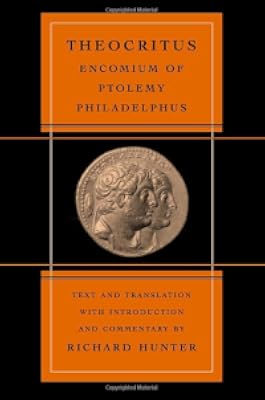
Under Ptolemy II Philadelphus, who ruled Egypt in the middle of the third century B.C.E., Alexandria became the brilliant multicultural capital of the Greek world. Theocritus's poem in praise of Philadelphus-at once a Greek king and an Egyptian pharaoh-is the only extended poetic tribute to this extraordinary ruler that survives. Combining the Greek text, an English translation, a full line-by-line commentary, and extensive introductory studies of the poem's historical and literary context, show more this volume also offers a wide-ranging and far-reaching consideration of the workings and representation of poetic patronage in the Ptolemaic age. In particular, the book explores the subtle and complex links among Theocritus's poem, modes of praise drawn from both Greek and Egyptian traditions, and the subsequent flowering of Latin poetry in the Augustan age. As the first detailed account of this important poem to show how Theocritus might have drawn on the pharaonic traditions of Egypt as well as earlier Greek poetry, this book affords unique insight into how praise poetry for Ptolemy and his wife may have helped to negotiate the adaptation of Greek culture that changed conditions of the new Hellenistic world. Invaluable for its clear translation and its commentary on genre, dialect, diction, and historical reference in relation to Theocritus's Encomium, the book is also significant for what it reveals about the poem's cultural and social contexts and about Theocritus' devices for addressing his several readerships. COVER IMAGE: The image on the front cover of this book is incorrectly identified on the jacket flap. The correct caption is: Gold Oktadrachm depicting Ptolemy II and Arsinoe (mid-third century BCE; by permission of the Museum of Fine Arts, Boston). show lessTags
Members
- Recently Added By
Author Information

82+ Works 1,057 Members
Regarded as the creator of pastoral poetry, Theocritus was a native of Syracuse and lived in Alexandria. About 30 idylls and a number of his epigrams are extant. His genuine love of the country lends freshness and great beauty to the idylls; his bucolic characters are realistic and alive. He is a master of dramatic presentation, description, and show more lyrical refinement. He has had many imitators, among them Virgil and Spenser. The surviving works of two other Greek pastoral poets are often included with those of Theocritus: Moschus of Syracuse, who lived in the second century b.c. and Bion, who is best known for his Lament for Adonis. The Andrew Lang translation in prose of these three poets is considered an English classic. (Bowker Author Biography) show less
Some Editions
Series
Belongs to Publisher Series
Classifications
- Genres
- Fiction and Literature, Poetry, Literature Studies and Criticism
- DDC/MDS
- 884.01 — Literature & rhetoric Classical & modern Greek literatures Classical Greek lyric poetry
- LCC
- PA4442 .C617 — Language and Literature Greek language and literature. Latin language and literature Greek literature Individual authors
- BISAC
Statistics
- Members
- 16
- Popularity
- 1,337,106
- Languages
- English
- Media
- Paper, Ebook
- ISBNs
- 4