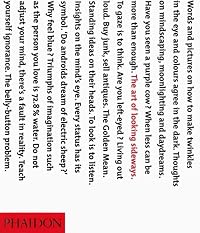
The Art of Looking Sideways
by Alan Fletcher
On This Page
Description
Describing himself as a visual jackdaw, designer Alan Fletcher has spent a lifetime collecting images, useless information, quotations and scraps. This work distills this collection into a quirky and entertaining feast for the eyes and the mind.Tags
Recommendations





















Member Recommendations

Katya0133 This 1980s book by Pentagram includes some of Alan Fletcher's designs.


Design by Accident: How To Create Design And Pattern by "Accidental Effects" by James Francis O'Brien
Sylak This book offers further reading to 155|CHANCE
Member Reviews
I was captivated by this huge book when I found it in a bookshop. Now I'm not so sure. It looked like fabulous design and clearly it is the work of a fabulous designer. But I noticed some other reviewer referred to it as a kind of "Jackdaw collection of bits and pieces. And I agree. It really seems to me that the author has used this book as a way of publishing his scrapbooks where he's gathered together all sorts of trivia and interesting facts. The real issue for the reader his whether they are captivated by the same sort of trivia as the author. Now, confession time. I haven't actually sat down and read this giant tome from cover to cover. I suspect nobody does that. It's more like something that you "dip into". but that means that show more if there is a theme of structure, then it's not obvious,.But I found stuff there that really did interest me and the title gives it away aslightly: .....thbe art of looking sideways. That is looking at things in a different way to normal. I guess this is the true skill of the great designers and this is what is being fed to us here. I'm now in the position of having to downsize my library and this book is one of the casualties. Pity but I won't be re-reading it. It's actually a lovely design book with all sorts of curious and interesting material. I'm really sad that I will no longer have the time to read it or even to dip into it. I give it four stars. show less
This is a disjointed somewhat mess of a book that made me think and wonder and gave me occasional headaches while it played with my perception.
Alan Fletcher was a designer, this is like his scrapbook of ideas and thoughts and cool findings, everything from an Indian tailors ruler to the musing (p411)
"Inventing a new alphabet doesn't carry the same inhibitions as adapting an old one. In the 1820s Cherokee Chief Sequoyah, impressed by white man's writing, designed an alphabet. Taking the letters he cannibalized them to make new ones adding curlicues and flourishes, and allocating them phonetic sounds. The Cherokee [who called white man's books 'talking leaves'] called Sequoyah's typographic font 'talking stones'
A thought: Here is an show more illiterate Native American in the early nineteenth century, appropriating Roman letters, which had been adopted from the ancient Greeks, who had in turn copied them from a rudimentary Phoenician script developed from pictograms used in ancient Sumer, which had originated in an even more ancient Egypt - long, long before the dynasties of Pharaohs."
It's full of this sort of thing, musings and facts and playing with typography and text direction and now I need a light book to heal my brain and allow some of the thinking to process fully. show less
Alan Fletcher was a designer, this is like his scrapbook of ideas and thoughts and cool findings, everything from an Indian tailors ruler to the musing (p411)
"Inventing a new alphabet doesn't carry the same inhibitions as adapting an old one. In the 1820s Cherokee Chief Sequoyah, impressed by white man's writing, designed an alphabet. Taking the letters he cannibalized them to make new ones adding curlicues and flourishes, and allocating them phonetic sounds. The Cherokee [who called white man's books 'talking leaves'] called Sequoyah's typographic font 'talking stones'
A thought: Here is an show more illiterate Native American in the early nineteenth century, appropriating Roman letters, which had been adopted from the ancient Greeks, who had in turn copied them from a rudimentary Phoenician script developed from pictograms used in ancient Sumer, which had originated in an even more ancient Egypt - long, long before the dynasties of Pharaohs."
It's full of this sort of thing, musings and facts and playing with typography and text direction and now I need a light book to heal my brain and allow some of the thinking to process fully. show less
This is simply an astonishing book that I suggest you should savour. In a sense I feel that there is little more to say than to advise you to obtain a copy.
This may not feel like much of a review, and for the left brained reader requiring logic with which to justify their purchase, I will try to oblige, superfluous though this feels.
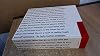
This is a large book with over 500 large format pages. It is described by Alan Fletcher as the work of a visual Jackdaw to produce an exploration of the workings of the eye, the hand, the brain and the imagination.
As he describes ‘The book attempts to open windows to glimpse views rather than dissect the pictures on the wall. To look at things from unlikely angles.... The book has no thesis, is neither a show more whodunit or a how-to-do-it, has no beginning middle or end. It’s a journey without a destination.... It is unlike most books, those that are concerned with the mechanics rather than the thoughts, with the match rather than the fire.’
The result is not a book to sit down and read sequentially from cover to cover, rather an environment of ideas and stimuli through which to journey, an exploration in which to become immersed.
Reading through reviews of the book on Amazon, all seem to come from graphic designers, indeed the author is a renown graphic designer himself. The result is a book that is a delight to hold. The different paper types and textures, intriguing layouts and inviting formats mean that every page turned leads to new discoveries even before their content is examined. Its merits as an exemplar of the art of design are clear, but this is much more than a role model for designers.
It is a book that in infinite ways serves as a catalyst for thinking. It has a multifaceted ability to present aspects of the world in new ways, that defy you seeing them the way you always have in the past.
Through the imaginative use of images and text, quotations, snippets of information, and a host of other approaches, this is a feast for the mind as well as the eye.
It’s not simply a book that I can’t stop dipping into, I can’t stop smiling at the fact that Alan Fletcher took the time, care and attention to detail to share it with me. It is quite simply a pleasure to hold.
If you obtain a copy I recommend a pack of post-it notes to catalogue the innumerable pages you will want to return to. show less
This may not feel like much of a review, and for the left brained reader requiring logic with which to justify their purchase, I will try to oblige, superfluous though this feels.
This is a large book with over 500 large format pages. It is described by Alan Fletcher as the work of a visual Jackdaw to produce an exploration of the workings of the eye, the hand, the brain and the imagination.
As he describes ‘The book attempts to open windows to glimpse views rather than dissect the pictures on the wall. To look at things from unlikely angles.... The book has no thesis, is neither a show more whodunit or a how-to-do-it, has no beginning middle or end. It’s a journey without a destination.... It is unlike most books, those that are concerned with the mechanics rather than the thoughts, with the match rather than the fire.’
The result is not a book to sit down and read sequentially from cover to cover, rather an environment of ideas and stimuli through which to journey, an exploration in which to become immersed.
Reading through reviews of the book on Amazon, all seem to come from graphic designers, indeed the author is a renown graphic designer himself. The result is a book that is a delight to hold. The different paper types and textures, intriguing layouts and inviting formats mean that every page turned leads to new discoveries even before their content is examined. Its merits as an exemplar of the art of design are clear, but this is much more than a role model for designers.
It is a book that in infinite ways serves as a catalyst for thinking. It has a multifaceted ability to present aspects of the world in new ways, that defy you seeing them the way you always have in the past.
Through the imaginative use of images and text, quotations, snippets of information, and a host of other approaches, this is a feast for the mind as well as the eye.
It’s not simply a book that I can’t stop dipping into, I can’t stop smiling at the fact that Alan Fletcher took the time, care and attention to detail to share it with me. It is quite simply a pleasure to hold.
If you obtain a copy I recommend a pack of post-it notes to catalogue the innumerable pages you will want to return to. show less
High-brow magic eye for "creative types." Chapters like imagination, ideas, inspiration. Some interesting things in here, like learning that anteaters don't dream, and other, pretty pedestrian stuff formatted to look like it's anything worthwhile. Paul McCartney wrote "Yellow Submarine" right before he went to bed, really, who would have guessed. I don't know. I feel like shit like this just flatters the idea that every one of us is a genius when really what it's doing is over-explaining the whole creative process and cramming a lot of out of context things into one feel good instant gratification coffee table book. It's like tumblr for grown-ups. It's a TED talk in print. I'm not trying to be overly cynical here; I think everyone has show more something of interest to do, make, or say. But that's only liberated through commitment and hard work and practice, not through catchphrases. Give me a 19th century tome on what-the-fuck ever over this garbage any day. show less
This is one of my favorite books but it's very hard to describe. Overall, it's about design, but it's also equal parts biography, philosophy, and quote book. If you love design and pick it up, you'll have a hard time putting it back down again.
This is a great and inspirational design book. It has some beautiful designs and interesting essays. It is something you can look at from time to time but not something you can sit down with for a long period.
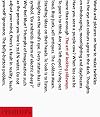
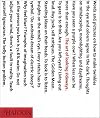
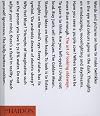
"Words and pictures on how to make twinkles in the eye and colours agree in the dark. Thoughts on mindscaping, moonlighting and daydreams. Have you seen a purple cow? When less can be more than enough. The art of looking sideways. To gaze is to think. Are you left-eyed? Living out loud. Buy junk, sell antiques. The Golden Mean. Standing ideas on their heads. To look is to listen. Insight on the mind's eye. Every status has its symbol. 'Do androids dream of electric sheep?' Why feel blue? Triumphs of imagination such as the person you love is 72.8% water. Do not adjust your mind, there's a fault in reality. Teach yourself ignorance. The belly-button problem. Visual charades. What has an ox to do with the letter A? The art of looking show more sideways. How to turn knots into bows. When does 1 and 1 add up to 3? Why sit with your back to the view? Notes on the Blue Tit Syndrome, letterplay and visual puns. Patterns of chaos. Kissin' cousins to camp. Half a word is enough for a quick ear. Some people think computers can't. Civilization is chaos taking a rest. Too far east is west. Writing is the geometry of the soul. Why look at things upside down? Squaring the circle. 'If you want the rainbow, you gotta put up with the rain.' The sympathy of things. How to think by jumping. Never wait for yourself. A word in your eye. The art of looking sideways. Beauty is a flavour of quark. Cerebral acrobatics. By the way, what's it like living with a paper bag over your head? Not referring to you of course - the uncommon exception to universal bondage."
Enough said. show less
Enough said. show less
Members
- Recently Added By
Published Reviews
ThingScore 63
[B]anality can neither be masked behind a thousand snippets of borrowed wisdom, nor redeemed by as many pages of smart-aleck typography.
added by Katya0133
[Fletcher] created a design reference book that's fun to read and a good place to get inspiration.
added by Katya0133
[T]his book will delight anyone who enjoys unexpected visual and verbal play, cultural and historical observations and insights, and staggering amounts of trivia and anecdotes.
added by Katya0133
Lists

Best Coffee Table Books
5 works; 6 members

Mind Expanding Books by hackerkid
581 works; 8 members
Author Information

8+ Works 1,171 Members
Awards and Honors
Common Knowledge
- Original publication date
- 2001
- People/Characters
- Oetzi; Cheddar Man; Andrien Jeftichew; Niels Bohr
- Important places
- Nazca, Peru
- Important events
- Acheulian hand axe
Classifications
Statistics
- Members
- 977
- Popularity
- 26,932
- Reviews
- 12
- Rating
- (4.30)
- Languages
- English
- Media
- Paper
- ISBNs
- 1
- ASINs
- 4