The Solarians
by Norman Spinrad
On This Page
Description
For 300 years the Solarians had isolated themselves from the galaxy with the promise to reappear one day to bring victory. With the human race at stake in a war with machine-like beings, can Jay Palmer accept them and their dangerous plan to surrender Earth?Tags
Recommendations


















Member Reviews
2.5/5
A short, adventurous, and mediocre space opera from Spinrad's early days. The plot, which takes up the large majority of the book, revolves around a centuries old war between humanity and the Duglarri, a calculating species of furry humanoids that value reason and logic above all else. The humans have been losing the war since the start due to a deficiency in numbers and an over reliance on computer analysis, but remain hopeful because of the humans that remain on Earth itself. They separated themselves during the onset of the war to work on a novel solution to war. Jay Palmer, a seasoned commander in the human confederation, witnesses the return of a group of the Solarians, and gets wrapped up in helping them enact their plan for show more victory.
If that sounds pretty basic and pulpy, it's because it is. It reads more as something from the golden ages of the pulp magazines than something published in 1966. This was Spinrad's first published work, so it makes sense that he would rely on the tried and true motifs of the genre, writing something that was similar in a lot of ways to the stuff he read when he was growing up. The plot itself is insanely predictable. I grew bored reading it, in spite of it's razor slim size, because you can see the way the plot is heading from the first 30 pages. I found myself just waiting around to see to what degree I was correct. The characters tend to be paper thin, serving mostly to emote about plot events and give lenghty soliloquies about Spinrad's cultural bugaboos. The obsession over why computers are bad feels extremely outdated.
Nevertheless there are some redeeming qualities here. While not the most novel story, Spinrad writes clearly and keeps a decent pace. He writes a good example of what would now be seen as a polyamorous relationship, something that he calls the 'organic group'. The relationship between the group of Solarians is surprisingly nuanced, especially for it's time. It doesn't feel like Spinrad writes it from a lecherous or gross perspective, which is an achievement for the time it was written. This was perhaps the one aspect that the book took from the new wave generation that surrounded it. I also enjoyed the concept of a psychotic dictator programming the mega-computer that runs an entire society to choose his successors based on how similar they are to him, ultimately turning everyone into carbon copies of himself. Just some weird schlocky fun.
Overall, pretty forgettable. While I enjoyed it enough to finish it, and there's nothing objectively awful about it, I can't see myself ever re-reading it. I really just don't have that much to say about it. It doesn't inspire a lot of critical thought or opinion. show less
A short, adventurous, and mediocre space opera from Spinrad's early days. The plot, which takes up the large majority of the book, revolves around a centuries old war between humanity and the Duglarri, a calculating species of furry humanoids that value reason and logic above all else. The humans have been losing the war since the start due to a deficiency in numbers and an over reliance on computer analysis, but remain hopeful because of the humans that remain on Earth itself. They separated themselves during the onset of the war to work on a novel solution to war. Jay Palmer, a seasoned commander in the human confederation, witnesses the return of a group of the Solarians, and gets wrapped up in helping them enact their plan for show more victory.
If that sounds pretty basic and pulpy, it's because it is. It reads more as something from the golden ages of the pulp magazines than something published in 1966. This was Spinrad's first published work, so it makes sense that he would rely on the tried and true motifs of the genre, writing something that was similar in a lot of ways to the stuff he read when he was growing up. The plot itself is insanely predictable. I grew bored reading it, in spite of it's razor slim size, because you can see the way the plot is heading from the first 30 pages. I found myself just waiting around to see to what degree I was correct. The characters tend to be paper thin, serving mostly to emote about plot events and give lenghty soliloquies about Spinrad's cultural bugaboos. The obsession over why computers are bad feels extremely outdated.
Nevertheless there are some redeeming qualities here. While not the most novel story, Spinrad writes clearly and keeps a decent pace. He writes a good example of what would now be seen as a polyamorous relationship, something that he calls the 'organic group'. The relationship between the group of Solarians is surprisingly nuanced, especially for it's time. It doesn't feel like Spinrad writes it from a lecherous or gross perspective, which is an achievement for the time it was written. This was perhaps the one aspect that the book took from the new wave generation that surrounded it. I also enjoyed the concept of a psychotic dictator programming the mega-computer that runs an entire society to choose his successors based on how similar they are to him, ultimately turning everyone into carbon copies of himself. Just some weird schlocky fun.
Overall, pretty forgettable. While I enjoyed it enough to finish it, and there's nothing objectively awful about it, I can't see myself ever re-reading it. I really just don't have that much to say about it. It doesn't inspire a lot of critical thought or opinion. show less
This starts off resembling a smart reinvention of Space Opera. The second half drifts off into melodrama, with the author constantly telegraphing plot twists that any intelligent reader will anticipate. Other reviews have mentioned the author didn't like this one; I can understand that.
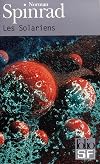
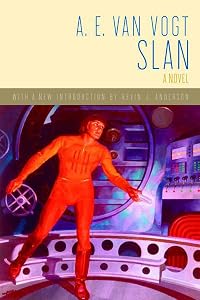
I picked this paperback up this evening. I'm always happy to encounter something from the earlier days, and this looked like his first book (which it is), first published in 1966. While I was holding it, I noticed another book with a mirror image of the cover, titled "Novelets of Science Fiction" (edited by Ivan Howard). Sadly, no credit is given to the artist in either publication, but I hope he got paid for both.
It's a great cover, both times.
It's notable that Spinrad wasn't fond of this book. I am, from the cover alone.
It's a great cover, both times.
It's notable that Spinrad wasn't fond of this book. I am, from the cover alone.
Spinrad describes this book as a failure that needlessly pulls its final punch. I've never read it, but I thought you should know that.
Il romanzo d’esordio di un venticinquenne a metà degli anni Sessanta: si spiegano in questa maniera con facilità le ingenuità nella costruzione della storia e gli sbandamenti idealistici che caratterizzano un libro che offre comunque un discreto intrattenimento contraddistinto da alcuni spunti brillanti. La Confederazione dei mondi abitati dagli umani sta combattendo un conflitto secolare e perdente contro i feroci Duglaari riponendo l’unica speranza nel sistema solare originario (cioè il nostro) che si è da un paio di secoli come estraniato dall’alleanza (nonché dalla lotta). Quando una piccola nave terrestre compare sostenendo di avere la chiave per la vittoria, sorgono spontanei i sospetti, ma allo striminzito equipaggio show more di sei persone viene concesso di provare un abboccamento col nemico. Li accompagna Palmer, comandante di flotta all’inizio dubbioso e poi sempre più affascinato dai compagni di viaggio e dal loro modo di vivere: il gruppetto giunge infine a sfidare i Dug a casa loro per trascinarseli quindi dietro fino al Sole in una conclusione che si intuisce già parecchi capitoli prima. Il finale un po’ telefonato appartiene al numero delle ingenuità sopra accennate assieme ai peana invero esagerati alla razza umana e a qualche eccesso nell’uso dei punti esclamativi (il che fa pensare che, almeno nelle intenzioni, l’opera fosse rivolta a un pubblico giovanile): sull’altro piatto della bilancia c’è però una visione molto ‘umanista’ del futuro, con il suggerimento che l’uomo deve fare più affidamento sulle proprie risorse nascoste che sulle macchine. Così le ostilità contro i Duglaari (che si rivelano essere una sorta di Vulcaniani che hanno volto la razionalità in ferocia) sono in pratica una guerra di posizione dominata dai computers e la soluzione proposta dai Solari è invece del tutto psicologica: d’altra parte, la loro nave è del tutto priva di cervelli elettronici, il che consente al libro di affrontare con meno difficoltà il gap tecnologico del mezzo secolo trascorso dalla prima pubblicazione. Interessante è anche il tipo di civiltà che Spinrad immagina per la Terra e per i pianeti a essa vicini, in cui l’empatia e le affinità elettive hanno rimpiazzato le strutture sociali imposte dall’esterno; è però inquietante il processo attraverso il quale si è approdati a una simile conquista. show less
Jan 16, 2016Italian
Los solarianos, que desde hace un tiempo viven aislados del resto de la galaxia, reaparecen para salvar a la raza humana de unas criaturas que quizá no son más que ingeniosas computadoras, aunque poderosas e implacables: los duglaari. Pero la solución que solarianos traen a los peligros y amenazas de la guerra no es un arma secreta ni un insólito plan táctico. La victoria que ellos prometen se conseguirá mediante una estrategia simple y terrible: ¡rendición incondicional!
Feb 13, 2023Spanish
Members
- Recently Added By
Author Information

Some Editions
Series
Belongs to Publisher Series
Common Knowledge
- Canonical title*
- La cività dei Solari
- Original title
- The Solarians
- Original publication date
- 1966
- Original language*
- Inglese
*Some information comes from Common Knowledge in other languages. Click "Edit" for more information.
Classifications
Statistics
- Members
- 259
- Popularity
- 125,706
- Reviews
- 7
- Rating
- (3.20)
- Languages
- English, French, Italian, Spanish
- Media
- Paper, Ebook
- ISBNs
- 9
- ASINs
- 20