On This Page
Description
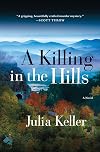
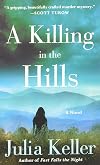
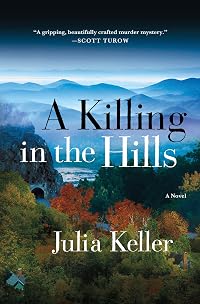
In this novel a mother and a daughter try to do right by a town and each other before it is too late. What is happening in Acker's Gap, West Virginia? Three elderly men are gunned down over their coffee at a local diner, and seemingly half the town is there to witness the act. Still, it happened so fast, and no one seems to have gotten a good look at the shooter. Was it random? Was it connected to the spate of drug violence plaguing poor areas of the country just like Acker's Gap? Or were show more Dean Streeter, Shorty McClurg, and Lee Rader targeted somehow? One of the witnesses to the brutal incident was Carla Elkins, teenaged daughter of Bell Elkins, the prosecuting attorney for Raythune County, West Virginia. Carla was shocked and horrified by what she saw, but after a few days, she begins to recover enough to believe that she might be uniquely placed to help her mother do her job. After all, what better way to repair their fragile, damaged relationship? But could Carla also end up doing more harm than good, in fact, putting her own life in danger? show lessTags
Recommendations




Member Reviews
A good if imperfect first mystery for the Pulitzer Prize winning journalist. Set in the fictional town of Ackers Gap, West Virginia, the descriptions of the setting and the lives of the people there are the strength of the book. I'm also intrigued by the protagonists. Belfa (a native of Acker's Gap with her own history & baggage), now divorced, has returned to her hometown with her teenage daughter, Carla, and become the district attorney. She and the sheriff are uncompromising in their fight to eliminate drug traffic in their community.
When Carla is present at the shooting of three old men at a local restaurant, no one has a clue who did it or why.
I don't like mysteries that put you inside of the head of the murderer, and this is one show more of them. We know from the start who 'dun it and why. I didn't find this character sympathetic at all, I would probably have enjoyed it more if he was drawn with more depth.
Carla's choices were also a bit suspect for me, though she isn't a cardboard character like the killer.
Finally, the reveal of the person responsible for ordering the killing came a bit out of left field. Again, I would have enjoyed it more if this character had been drawn with more depth, showing the financial and emotional pressure that provided the impetus for his involvement.
Drugs, small towns, and lack of financial opportunities are a rich source to draw from. I hope Julie Keller can take the time to create more nuanced villans the next time around show less
When Carla is present at the shooting of three old men at a local restaurant, no one has a clue who did it or why.
I don't like mysteries that put you inside of the head of the murderer, and this is one show more of them. We know from the start who 'dun it and why. I didn't find this character sympathetic at all, I would probably have enjoyed it more if he was drawn with more depth.
Carla's choices were also a bit suspect for me, though she isn't a cardboard character like the killer.
Finally, the reveal of the person responsible for ordering the killing came a bit out of left field. Again, I would have enjoyed it more if this character had been drawn with more depth, showing the financial and emotional pressure that provided the impetus for his involvement.
Drugs, small towns, and lack of financial opportunities are a rich source to draw from. I hope Julie Keller can take the time to create more nuanced villans the next time around show less
The twinned ravages of poverty and drug addiction are destroying the people of Acker’s Gap, West Virginia, a place that had always been hard-scrabble, but where there are now no jobs, not even ones that ended with black lung disease or a mine collapse, and where the once-tight bonds of family are coming unraveled. Bell Elkins got there first. Her family home went up in flames when she was ten years old, her sister sent to prison, the rest of her childhood spent in foster care. After marriage and escape from the mountains, she has returned with a daughter and a law degree to serve as the county attorney, prosecuting drug crimes with angry passion. Those crimes hit close to home when her sullen adolescent daughter witnesses a murder. show more Yet because she doesn’t want to tell her tightly-wound mother how she knows something about the crime, and because she resents the secrets her mother has kept from her, she decides to keep it to herself, a small bit of knowledge that she might be able to trade in someday for her mother’s respect.
Keller has created a vivid sense of place in Acker’s Gap, a place that shapes the people who live there. She provides so many visual cues and details of personality and characters’ relationships that at first I felt it was muffling the action like Kudzu vine, entangling and softening the edges of the tough subject matter. But I soon changed my mind. The place is part of the characters, and every one of the characters, however brief it seemed their appearance would be, turns out to be a part of the story. Here’s a taste of her style:
It was a shabby afterthought of a town tucked in the notch between two peaks of the Appalachian Mountains, like the last letter stuck in a mail slot after the post office has closed down for keeps. Acker’s Gap was situated within sight of the Bitter River, just over the ridge from the CSX Railroad tracks. It consisted of a half-dozen dusty, slanting downtown streets surrounded by several neighborhoods of older homes, two trailer parks, a tannery, a junkyard specializing in domestic auto parts, and a shut0down shoe factory ringed by a black-topped parking lot against which the weeds and the wadded-up Doritos bags and the crushed Camel packs were staging a hostile takeover . . . Just outside the city limits was a handful of played-out coal mines and, beyond and above them, the corrugated foothills of the Appalachians, their sides dense with sweet birch trees and scarlet oaks, the ground crowded with mountain laurel and black huckleberry.
That’s a lot of description (and I left some out); the post office simile is one of the little darlings that writing instructors often suggest should be murdered. But I began to appreciate this visual documentation as Keller’s way of honoring and preserving a place that is being changed for the worse. Her big, brooding mountain is a continual reference point in the book, but it’s the kind of landmark that is subject to the brutal economics of mountaintop removal, and the community in the mountain’s shadow is experiencing a new kind of poverty, one that has begun to consume the marrow of mountain life, family connections.
In a genre where tastes are often kept in neat boxes, with books designed from cover to contents to appeal to a particular audience, this novel is unusually approachable from many directions. Those who like character-driven stories in small town settings will find much to like, but those who want their crime fiction gritty and realistic, a fictional mirror of the times, will have that, too. Readers might be reminded of the Ballad books by Sharyn McCrumb, but I think a better likeness can be found in the novels of Denise Mina, which exhibit a similar refusal to confine themselves to the well-worn conventions of the genre’s niches or the easy comfort of larger-than-life villains. Keller finds all the material she needs in the reality of her native West Virginia, and where she excels is in bringing it to life on the page, with the beauty of the natural landscape, the sinewy strength of its history, and the squalid, sad, frustrating waste of so many lives. show less
Keller has created a vivid sense of place in Acker’s Gap, a place that shapes the people who live there. She provides so many visual cues and details of personality and characters’ relationships that at first I felt it was muffling the action like Kudzu vine, entangling and softening the edges of the tough subject matter. But I soon changed my mind. The place is part of the characters, and every one of the characters, however brief it seemed their appearance would be, turns out to be a part of the story. Here’s a taste of her style:
It was a shabby afterthought of a town tucked in the notch between two peaks of the Appalachian Mountains, like the last letter stuck in a mail slot after the post office has closed down for keeps. Acker’s Gap was situated within sight of the Bitter River, just over the ridge from the CSX Railroad tracks. It consisted of a half-dozen dusty, slanting downtown streets surrounded by several neighborhoods of older homes, two trailer parks, a tannery, a junkyard specializing in domestic auto parts, and a shut0down shoe factory ringed by a black-topped parking lot against which the weeds and the wadded-up Doritos bags and the crushed Camel packs were staging a hostile takeover . . . Just outside the city limits was a handful of played-out coal mines and, beyond and above them, the corrugated foothills of the Appalachians, their sides dense with sweet birch trees and scarlet oaks, the ground crowded with mountain laurel and black huckleberry.
That’s a lot of description (and I left some out); the post office simile is one of the little darlings that writing instructors often suggest should be murdered. But I began to appreciate this visual documentation as Keller’s way of honoring and preserving a place that is being changed for the worse. Her big, brooding mountain is a continual reference point in the book, but it’s the kind of landmark that is subject to the brutal economics of mountaintop removal, and the community in the mountain’s shadow is experiencing a new kind of poverty, one that has begun to consume the marrow of mountain life, family connections.
In a genre where tastes are often kept in neat boxes, with books designed from cover to contents to appeal to a particular audience, this novel is unusually approachable from many directions. Those who like character-driven stories in small town settings will find much to like, but those who want their crime fiction gritty and realistic, a fictional mirror of the times, will have that, too. Readers might be reminded of the Ballad books by Sharyn McCrumb, but I think a better likeness can be found in the novels of Denise Mina, which exhibit a similar refusal to confine themselves to the well-worn conventions of the genre’s niches or the easy comfort of larger-than-life villains. Keller finds all the material she needs in the reality of her native West Virginia, and where she excels is in bringing it to life on the page, with the beauty of the natural landscape, the sinewy strength of its history, and the squalid, sad, frustrating waste of so many lives. show less
Bell Elkins has moved back to Raythune County, West Virginia, to become the prosecuting attorney. She moved there with her teenaged daughter but not her husband. He never wanted to return to West Virginia and is happy with his life in Washington, DC.
Bell had a troubled childhood and was placed in the foster care system when she was ten and her older sister killed their abusive father and burned down the run-down trailer that was their home. Her sister, who is up for parole, refuses all contact with Bell.
Meanwhile, Bell is on a crusade because prescription bill abuse is running rampant in the county. She is also working on the case of a mentally retarded man killing his six-year-old playmate and also on a murder investigation when an show more unknown gunman entered a local diner and murdered three elderly men who were having coffee there.
Bell's daughter Carla was at the diner when the shooting occurred and thinks she recognizes the shooter. However, instead of telling her mother, she decides to investigate on her own which leads to her being kidnapped by the shooter.
The third viewpoint character is that of the shooter who sees himself as a badass superspy, but is actually just an impulsive, amoral punk.
This was an interesting story well narrated by Shannon McManus. I thought there might have been a little too much repetition about the chronic poverty, joblessness, and hopelessness in West Virginia but enjoyed the mystery. show less
Bell had a troubled childhood and was placed in the foster care system when she was ten and her older sister killed their abusive father and burned down the run-down trailer that was their home. Her sister, who is up for parole, refuses all contact with Bell.
Meanwhile, Bell is on a crusade because prescription bill abuse is running rampant in the county. She is also working on the case of a mentally retarded man killing his six-year-old playmate and also on a murder investigation when an show more unknown gunman entered a local diner and murdered three elderly men who were having coffee there.
Bell's daughter Carla was at the diner when the shooting occurred and thinks she recognizes the shooter. However, instead of telling her mother, she decides to investigate on her own which leads to her being kidnapped by the shooter.
The third viewpoint character is that of the shooter who sees himself as a badass superspy, but is actually just an impulsive, amoral punk.
This was an interesting story well narrated by Shannon McManus. I thought there might have been a little too much repetition about the chronic poverty, joblessness, and hopelessness in West Virginia but enjoyed the mystery. show less
"A Killing in the Hills" is a great book, a rare 5 stars from me, awarded so far this year to about 5 out of 60 books read. One of the real joys of reading these days is to be taken to so many new places, places the reader is not likely to visit much less become intimately acquainted with except through the words of a special author. But too often the reader is cheated, given casual references or brief descriptions of an obvious landmark. Take away those dozen passages and the story might take place in any one of a country's major cities. But one of the things that makes AKITH so appealing is that it grabs the reader and plunks him/her down in the middle of Acker's Gap, W Virginia. And we see the town and all its blemishes and all its show more glories - and we can see and hear the characters - many of whom the reader will like very much. We're in the hills of W Virginia! And it's November and you can feel the chill. The story starts with a brutal murder, and its witnessed by the daughter of the town's prosecutor. Too often, crime fiction today includes a desultory subplot that exists only to interject pauses in the main story. Not so with AKITH. The subplot here is about a very gut wrenching case involving the death of a young person. And it is the surprising and gradually building tension of this case that further distinguishes this book from the rest of the pack. Though a debut novel, this would certainly appear to become a series given that the status of Carla, heroine Bell's daughter, is unclear at the end, as is Bell's household electrical problem. Run out and get this book now - you won't be disappointed. show less
Set in the small, fictional town of Acker’s Gap, nestled among the Appalachian Mountains of West Virginia, A Killing in the Hills by Pulitzer Prize winning journalist, Julia Keller is a murder mystery that I fully expected to carry me away with it’s excellent writing and atmosphere. Unfortunately this wasn’t the book I was hoping for. This debut suffered from clichéd characters and a predictable plot. I actually preferred the side story to the main one.
There were more than a few holes in the plot, the book could have used some editing and the relationship between Bell and her daughter was to me, downright strange. Bell professes to care so much for her daughter, yet she couldn’t seem to make it home before 8:00 pm most show more evenings. Her daughter is a witness to a triple homicide, yet after finding someone to sit with her, Bell goes back to work that afternoon. This is a mother who doesn’t notice when her daughter has her nose pierced, yet we are asked to believe that the daughter was afraid to tell her mother about a party she attended because there were drugs there!
I found that once the relationships were called into question, the rest of the story was hard to swallow. I doubt whether I will pick up any more books in this series. show less
There were more than a few holes in the plot, the book could have used some editing and the relationship between Bell and her daughter was to me, downright strange. Bell professes to care so much for her daughter, yet she couldn’t seem to make it home before 8:00 pm most show more evenings. Her daughter is a witness to a triple homicide, yet after finding someone to sit with her, Bell goes back to work that afternoon. This is a mother who doesn’t notice when her daughter has her nose pierced, yet we are asked to believe that the daughter was afraid to tell her mother about a party she attended because there were drugs there!
I found that once the relationships were called into question, the rest of the story was hard to swallow. I doubt whether I will pick up any more books in this series. show less
I am in the middle of reading a critique of modern literary fiction for being too pretentious, too wordy, too boring. Perhaps if I weren't reading this other little book, I might not have found "A Killing in the Hills" quite so annoying. But it really reads as if the author tried to write a mystery but didn't want to be considered a genre hack and so added metaphors to every single stinking paragraph in the book. And not good metaphors, stupid ones. I gave the book back to the library yesterday so I can only remember one of them that annoyed me the most: in describing fall colors, the author referred to "...crazy reds, headstrong yellows...." Truly, how is red crazy? And how on earth does yellow get to be headstrong?
There are all manner show more of holes in the plot but the two worst are:
1. Daughter doesn't tell mom something critical because she is afraid mom will be mad at her for being at a party where there were drugs. Now nothing else, including a nose piercing, bothers this girl's mom so what makes daughter think mom is going to get upset about the party, considering how she ended up there? It's a contrivance created to keep the book going for another two hundred pages.
2. The big bad (not the actual killer - we know who he is fairly early on) is revealed out of the blue. There had been no indication whatsoever that he was the big bad; we were just all of a sudden told that he was. That, in murder-mystery land, is cheating.
So I'm completely mystified by the praise for this book. It's not a literary novel although it tries so hard to be one, but it's a lousy mystery because the author cheats. show less
There are all manner show more of holes in the plot but the two worst are:
1. Daughter doesn't tell mom something critical because she is afraid mom will be mad at her for being at a party where there were drugs. Now nothing else, including a nose piercing, bothers this girl's mom so what makes daughter think mom is going to get upset about the party, considering how she ended up there? It's a contrivance created to keep the book going for another two hundred pages.
2. The big bad (not the actual killer - we know who he is fairly early on) is revealed out of the blue. There had been no indication whatsoever that he was the big bad; we were just all of a sudden told that he was. That, in murder-mystery land, is cheating.
So I'm completely mystified by the praise for this book. It's not a literary novel although it tries so hard to be one, but it's a lousy mystery because the author cheats. show less
This is a book that you will either really like or really hate. I think it will depend on what type of story you enjoy. My advice is to read the book to decide. Borrow it from your library if you aren’t sure you want to invest.
I was invested in this book. It was an emotional book for me to read. My family has lived in Appalachia for centuries. My body is in Alaska now but my heart, my soul, my blood remain rooted there. In my opinion the author did an excellent job creating a realistic portrait of the people, the area, the poverty and the complicated drug problem. The characters might not all be readily likable. Sometimes people are flawed. Sometimes the way they were raised plays a big part in their public personality and things show more they do. You don’t know this about them when you first meet them. Most people don’t jump at the opportunity to tell acquaintances their deepest secrets.
The story broke my heart but I could not stop reading. I think one of the scariest things I took from this story was the knowledge that this story isn’t just playing out in Appalachia. I came to this small town ten years ago. The town reminded me of where my roots are but did not have the problem. Sadly, a few years ago, I stopped being able to say that. Drugs had arrived and it didn’t take long for my town to match my heart’s home. If you have an interest in drugs, crime, small towns and mysteries that take an unexpected turn, try this book.
This book is the first in a series. It ends complete yet has a cliffhanger. I know, that doesn’t make a lot of sense. But it is accurate. The mystery is complete yet, in my opinion, there is a cliffhanger. show less
I was invested in this book. It was an emotional book for me to read. My family has lived in Appalachia for centuries. My body is in Alaska now but my heart, my soul, my blood remain rooted there. In my opinion the author did an excellent job creating a realistic portrait of the people, the area, the poverty and the complicated drug problem. The characters might not all be readily likable. Sometimes people are flawed. Sometimes the way they were raised plays a big part in their public personality and things show more they do. You don’t know this about them when you first meet them. Most people don’t jump at the opportunity to tell acquaintances their deepest secrets.
The story broke my heart but I could not stop reading. I think one of the scariest things I took from this story was the knowledge that this story isn’t just playing out in Appalachia. I came to this small town ten years ago. The town reminded me of where my roots are but did not have the problem. Sadly, a few years ago, I stopped being able to say that. Drugs had arrived and it didn’t take long for my town to match my heart’s home. If you have an interest in drugs, crime, small towns and mysteries that take an unexpected turn, try this book.
This book is the first in a series. It ends complete yet has a cliffhanger. I know, that doesn’t make a lot of sense. But it is accurate. The mystery is complete yet, in my opinion, there is a cliffhanger. show less
Members
- Recently Added By
Published Reviews
ThingScore 100
At the start of Pulitzer Prize–winning journalist Keller's outstanding first novel, 17-year-old Carla Elkins is waiting for her divorced mother, Bell Elkins, Raythune County's prosecuting attorney, at the Salty Dawg, a chain restaurant in Acker's Gap, W.Va., when three old men are shot dead at a nearby table. Carla catches only a glimpse of the killer at the Salty Dawg's entrance before he show more flees. Bell, who's been crusading with the local sheriff against the growing illegal traffic in prescription drugs and the violence it spawns, investigates the triple slaying, as does rebellious Carla. Meanwhile, the drug boss orders the assassin to kill the meddling prosecutor. Keller does a superb job showing both the natural beauty of Appalachia and the hopeless anger of the people trapped there in poverty. Some characters turn out to be better than they appear, some much worse, but the ensemble cast is unforgettable. So is this novel. show less
added by ozzer
Author Information

26+ Works 2,017 Members
Julia Keller was a Nieman Fellow at Harvard University and has taught at Ohio State and Princeton universities.
Awards and Honors
Awards
Notable Lists
Series

Belongs to Publisher Series
Printers Row Journal (27)
Common Knowledge
- Original publication date
- 2012-08
- People/Characters
- Bell Elkins
- Blurbers
- Turow, Scott
Classifications
Statistics
- Members
- 522
- Popularity
- 57,280
- Reviews
- 34
- Rating
- (3.57)
- Languages
- Dutch, English, German, Italian
- Media
- Paper, Audiobook, Ebook
- ISBNs
- 23
- ASINs
- 5