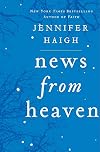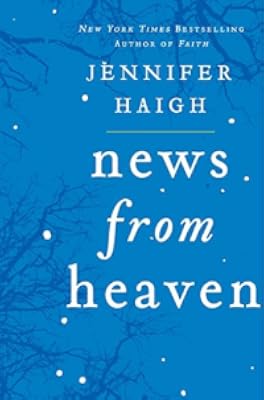
News from Heaven: The Bakerton Stories
by Jennifer Haigh
On This Page
Description
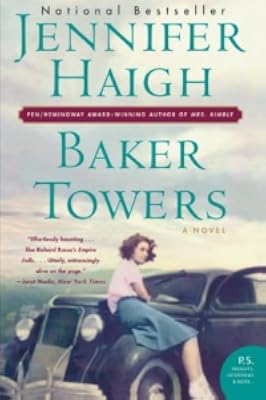
In News from Heaven, Jennifer Haigh—bestselling author of Faith and The Condition—returns to the territory of her acclaimed novel Baker Towers with a collection of short stories set in and around the fictionalized coal-mining town of Bakerton, Pennsylvania.Exploring themes of restlessness, regret, redemption and acceptance, Jennifer Haigh depicts men and women of different generations shaped by dreams and haunted by disappointments.
Janet Maslin of the New York Times has called Haigh's show more Bakerton stories "utterly, entrancingly alive on the page," comparable to Richard Russo's Empire Falls.
. show less
Tags
Recommendations






Member Recommendations
SqueakyChu A great sense of place in both books of short stories!
Member Reviews
I'm kinda running out of superlatives for Jennifer Haigh's ficton. I've just finished reading NEWS FROM HEAVEN (2013), her collection of intertwined, connected stories from her fictional town of Bakerton, a coal-mining town in western Pennsylvania which I first encountered in her novel, BAKER TOWERS (2005). In between these two books, I read Haigh's novel, FAITH (2011), a departure of sorts, in that it is about the scandals in the Church over clergy abuse of children. But I do have the third book of her Bakerton trilogy, HEAT AND LIGHT, standing by in my to-read pile. And I can't wait. Because Haigh has created her very own very memorable fictional territory with these Bakerton books. I mean, think Winesburg, Ohio, or Yoknapatawpha show more County. Because yes, Haigh's characters and her grim depictions of the coal-mining town with its company houses and company store, the cave-ins and the slow, painful deaths from black lung, as well as the gradual death of the town itself when the mines play out over the course of a few decades, are every bit as compelling and good as Anderson's Ohio town and Faulkner's Mississippi county. In fact Haigh's people and place may be even better than those old classics from the last century. The people of Bakerton and Saxon County come alive in these stories, and many them die too, as you follow the same families' rise and fall from the immigrant-filled forties up through the decades. Births, adolescence, marriages, divorces, deaths - all of it, as patterns are broken or repeated. Some stay, some escape, but these Bakerton lives will come to seem as real as your own. Enough said. If you love good fiction, these stories will catch you up. My very highest recommendation.
- Tim Bazzett, author of the memoir, BOOKLOVER show less
- Tim Bazzett, author of the memoir, BOOKLOVER show less
News from Heaven: The Bakerton Stories
by Jennifer Haigh
I have previously encountered some of these characters, at different stages of their lives, in Miss Haigh's novel Baker Towers. A novel about love and loss in a western Pennsylvania coal mining town, called Bakerton, in the years after World War II.
I possess an innate fascination with the elegiac, dare I say romantic, aspects of post World War II coal mine boomtowns. Various members of my family (my father in particular) were merchants in a southwest Virginia coal mining community. Apparently the coal was mined out earlier in southwest Virginia than it was in Bakerton, Pennsylvania, because by the mid 1950's my father had moved our family to Indiana and a new boomtown created by the show more automotive industry. My family returned for visits to southwest Virginia throughout the 1960's and I have fond memories of those summer vacations. But, the town's decline became increasingly obvious with each passing year throughout the decade. By 1969 little was left of a town which once was the second largest in the county.
As a result of my personal history I enjoyed the novel Coal Run by Tawni O'Dell and Homer Hickam's three memoirs set among coal mining communities in Pennsylvania and West Virginia. By mid 2004 the buzz began about Jennifer Haigh's new novel which would be set in a Pennsylvania coal town. I had greatly admired her debut (Mrs. Kimble) and I was aware that she had been raised in a western Pennsylvania coal mining town. I was sure that this novel, to be called Baker Towers, would prove to be the definitive novel on the subject and I couldn't wait for its publication. I read the novel and was disappointed. I couldn't seem to identify with the immigrant/first generation experience or the Catholicism, both of which I am sure existed in southwest Virginia, but completely out of my scope of experience. And, I am quite sure the Amish never moved into southwest Virginia coal country. I was also looking for a more vivid, descriptive setting than Miss Haigh chose to convey. Perhaps I merely wanted Miss Haigh's descriptions to confirm my memories. In my mind I see winding roads following winding creeks, the falling down company houses, the abandoned storefronts in the town area, slag heaps, numerous skinny, stray, barking dogs, the overriding smell of sulfur and rusted and/or abandoned railroad tracks and tipples. And today one cannot overlook the deplorable, abject poverty which has resulted from the closing of the mines. To most these images are not necessarily picturesque; however a significant number of these communities are located within the primeval forest areas of the Appalachians that are among the most beautiful scenic areas of the country. I am reminded of a line from a Rick Bragg book where he states, "It was as if God made them pay for the loveliness of their scenery by demanding everything else." Yet another reason, albeit aesthetic, to deplore and rail against mountaintop removal coal mining.
Consequently, despite the fact that News from Heaven:The Bakerton Stories was published early in 2013 I have just finished reading it. All this accomplished was to delay the pleasures of one of the most satisfying story collections that I have ever read. It stands along side Olive Kitteridge by Elizabeth Strout and Nothing Gold Can Stay by Ron Rash as one of the finest collections written over the past few years. Several reviewers have compared it favorably to Sherwood Anderson's Winesburg, Ohio.
The Bakerton Stories are wide ranging in both scope and time. The stories span nearly 70 years of the 20th century. Throughout the collection there is one dominant, overriding "character" and that is The Baker Brothers Coal Mines. Ultimately, the mines will impact every one of the stories in some manner. The town was named for the mines. "The mines brought the miners, the miners built the camps. Mining camps multiplied until someone called them a town". The mine boom times, mine accidents, mine closings all affect the inhabitants (and thus the stories) of Bakerton exponentially.
Most of the stories are connected in a unique manner. Miss Haigh will isolate the tiniest thread, usually a subtle reference to a name, or a family connection, and then proceed to weave that thread into the full tapestry of the next story. I delighted in discovering the connection of one story which leads into the next. And there are some poignantly vivid observations that I admired, such as:
*"For a certain kind of teenager, a small town is a prison. For another kind, it is a stage."
*A recent widower observes, "He'd rather spend the evening at home alone than drive up to an empty house."
*The collection's title reference, "We sat a long moment in the dark car. The white flakes landed like news from heaven: notes from elsewhere, fallen from the stars."
*On the decline of the coal town Bakerton, "At holidays, at school breaks, I came back to visit. Driving down Main Street was like visiting a beloved aunt in hospice, a breadth away from the grave."
*She had never admitted to anyone-why would she?-that books had brought her as much joy as her children have, and considerably less pain."
These ten stories of a dying town, gasping for breath, evoke vibrant images of a bygone era with exquisitely drawn characters and the humanity of a first rate author. Each and every story contains laudable aspects unto itself. As with all great fiction the stories address the human condition. The location really doesn't much matter. The stories are about what we each encounter on a daily basis. The Bakerton Stories are about hopes and dreams, guilt and failure, love and loss. My two favorite stories, without question, are "Broken Star", where a family secret comes to light too late to save a life, and "The Bottom of Things", where a successful businessman returns home to Bakerton for his parents 50th Anniversary, triggering memories of his troubled brother's death and his guilt over whether he could have personally prevented it. While these two are my personal favorites I assure you that there is not a slacker in the entire collection. This is a truly remarkable book and brought me one of the pleasantest reading experiences of my life. show less
by Jennifer Haigh
I have previously encountered some of these characters, at different stages of their lives, in Miss Haigh's novel Baker Towers. A novel about love and loss in a western Pennsylvania coal mining town, called Bakerton, in the years after World War II.
I possess an innate fascination with the elegiac, dare I say romantic, aspects of post World War II coal mine boomtowns. Various members of my family (my father in particular) were merchants in a southwest Virginia coal mining community. Apparently the coal was mined out earlier in southwest Virginia than it was in Bakerton, Pennsylvania, because by the mid 1950's my father had moved our family to Indiana and a new boomtown created by the show more automotive industry. My family returned for visits to southwest Virginia throughout the 1960's and I have fond memories of those summer vacations. But, the town's decline became increasingly obvious with each passing year throughout the decade. By 1969 little was left of a town which once was the second largest in the county.
As a result of my personal history I enjoyed the novel Coal Run by Tawni O'Dell and Homer Hickam's three memoirs set among coal mining communities in Pennsylvania and West Virginia. By mid 2004 the buzz began about Jennifer Haigh's new novel which would be set in a Pennsylvania coal town. I had greatly admired her debut (Mrs. Kimble) and I was aware that she had been raised in a western Pennsylvania coal mining town. I was sure that this novel, to be called Baker Towers, would prove to be the definitive novel on the subject and I couldn't wait for its publication. I read the novel and was disappointed. I couldn't seem to identify with the immigrant/first generation experience or the Catholicism, both of which I am sure existed in southwest Virginia, but completely out of my scope of experience. And, I am quite sure the Amish never moved into southwest Virginia coal country. I was also looking for a more vivid, descriptive setting than Miss Haigh chose to convey. Perhaps I merely wanted Miss Haigh's descriptions to confirm my memories. In my mind I see winding roads following winding creeks, the falling down company houses, the abandoned storefronts in the town area, slag heaps, numerous skinny, stray, barking dogs, the overriding smell of sulfur and rusted and/or abandoned railroad tracks and tipples. And today one cannot overlook the deplorable, abject poverty which has resulted from the closing of the mines. To most these images are not necessarily picturesque; however a significant number of these communities are located within the primeval forest areas of the Appalachians that are among the most beautiful scenic areas of the country. I am reminded of a line from a Rick Bragg book where he states, "It was as if God made them pay for the loveliness of their scenery by demanding everything else." Yet another reason, albeit aesthetic, to deplore and rail against mountaintop removal coal mining.
Consequently, despite the fact that News from Heaven:The Bakerton Stories was published early in 2013 I have just finished reading it. All this accomplished was to delay the pleasures of one of the most satisfying story collections that I have ever read. It stands along side Olive Kitteridge by Elizabeth Strout and Nothing Gold Can Stay by Ron Rash as one of the finest collections written over the past few years. Several reviewers have compared it favorably to Sherwood Anderson's Winesburg, Ohio.
The Bakerton Stories are wide ranging in both scope and time. The stories span nearly 70 years of the 20th century. Throughout the collection there is one dominant, overriding "character" and that is The Baker Brothers Coal Mines. Ultimately, the mines will impact every one of the stories in some manner. The town was named for the mines. "The mines brought the miners, the miners built the camps. Mining camps multiplied until someone called them a town". The mine boom times, mine accidents, mine closings all affect the inhabitants (and thus the stories) of Bakerton exponentially.
Most of the stories are connected in a unique manner. Miss Haigh will isolate the tiniest thread, usually a subtle reference to a name, or a family connection, and then proceed to weave that thread into the full tapestry of the next story. I delighted in discovering the connection of one story which leads into the next. And there are some poignantly vivid observations that I admired, such as:
*"For a certain kind of teenager, a small town is a prison. For another kind, it is a stage."
*A recent widower observes, "He'd rather spend the evening at home alone than drive up to an empty house."
*The collection's title reference, "We sat a long moment in the dark car. The white flakes landed like news from heaven: notes from elsewhere, fallen from the stars."
*On the decline of the coal town Bakerton, "At holidays, at school breaks, I came back to visit. Driving down Main Street was like visiting a beloved aunt in hospice, a breadth away from the grave."
*She had never admitted to anyone-why would she?-that books had brought her as much joy as her children have, and considerably less pain."
These ten stories of a dying town, gasping for breath, evoke vibrant images of a bygone era with exquisitely drawn characters and the humanity of a first rate author. Each and every story contains laudable aspects unto itself. As with all great fiction the stories address the human condition. The location really doesn't much matter. The stories are about what we each encounter on a daily basis. The Bakerton Stories are about hopes and dreams, guilt and failure, love and loss. My two favorite stories, without question, are "Broken Star", where a family secret comes to light too late to save a life, and "The Bottom of Things", where a successful businessman returns home to Bakerton for his parents 50th Anniversary, triggering memories of his troubled brother's death and his guilt over whether he could have personally prevented it. While these two are my personal favorites I assure you that there is not a slacker in the entire collection. This is a truly remarkable book and brought me one of the pleasantest reading experiences of my life. show less
Short stories are not generally my milieu but Jennifer Haigh's new collection of interconnected stories tied together both by character and place is magnificent. Her novels, Baker Towers and Faith were wonderfully done so it perhaps shouldn't be a surprise that this sort-of sequel to Baker Towers is also a thoughtful and beautifully rendered portrait of a town and a people.
The stories span the entire life of the town from the grand heights of the mine production to the slow, economically depressed strangling perseverance of the town after the mines are played out. And the characters in each of the stories, whether they are those who remain in Bakerton or those who leave are forever imprinted with the town of their birth, connected to show more the place no matter how far they roam. Although this is a sequel of sorts, revisiting characters and fleshing out other minor characters from the novel Baker Towers, the collection easily stands on its own, an homage to the blue collar workers and their struggles in a town defined and then abandoned by its industry. There is a sober tone to the tales, even in the boom years, foreshadowing the long decline to follow. The families portrayed in the stories, the immigrant stock and the sadly depleted, reclusive last remaining member of the founding family, are also on a slow decline, mirroring the fate of the town.
Haigh has rendered the place and the people so poignantly and beautifully that it is both very much specifically Bakerton, Pennsylvania with its Lubickis, Novaks, and Bakers and a universal mining town peopled with its real inhabitants. The stories build on each other and characters weave in and out of the narrative in much the same way that they do in real small town life. From the opening story of a young Polish girl in New York City working as a maid for a Jewish family to the final story with an elderly Joyce Novak Hauser deciding to keep her late husband's bike and learn to ride it, each of the stories is quietly introspective and exquisitely complete in and of itself. A finely wrought, well-written jewel of a book, the stories explore the life of a town on its downward slide, the ways in which we are all connected, and how we carry our roots within us always no matter the buffeting winds of life. show less
The stories span the entire life of the town from the grand heights of the mine production to the slow, economically depressed strangling perseverance of the town after the mines are played out. And the characters in each of the stories, whether they are those who remain in Bakerton or those who leave are forever imprinted with the town of their birth, connected to show more the place no matter how far they roam. Although this is a sequel of sorts, revisiting characters and fleshing out other minor characters from the novel Baker Towers, the collection easily stands on its own, an homage to the blue collar workers and their struggles in a town defined and then abandoned by its industry. There is a sober tone to the tales, even in the boom years, foreshadowing the long decline to follow. The families portrayed in the stories, the immigrant stock and the sadly depleted, reclusive last remaining member of the founding family, are also on a slow decline, mirroring the fate of the town.
Haigh has rendered the place and the people so poignantly and beautifully that it is both very much specifically Bakerton, Pennsylvania with its Lubickis, Novaks, and Bakers and a universal mining town peopled with its real inhabitants. The stories build on each other and characters weave in and out of the narrative in much the same way that they do in real small town life. From the opening story of a young Polish girl in New York City working as a maid for a Jewish family to the final story with an elderly Joyce Novak Hauser deciding to keep her late husband's bike and learn to ride it, each of the stories is quietly introspective and exquisitely complete in and of itself. A finely wrought, well-written jewel of a book, the stories explore the life of a town on its downward slide, the ways in which we are all connected, and how we carry our roots within us always no matter the buffeting winds of life. show less
I have one shelf on my many, many bookshelves devoted to my all-time favorite books. Jennifer Haigh's debut novel Mrs. Kimble holds a place of honor there. She is remarkable writer, and her last novel Faith just reaffirmed my belief that she is one of the best fiction writers out there.
She recently published a short story collection, News From Heaven: The Bakerton Stories, set in different eras in the coal mining town of Bakerton, Pennsylvania. Some of the characters were featured in her previous novel, Baker Towers.
Each of the ten stories is moving, and anyone who has lived in a small town with one major employer will recognize the people in these stories. Haigh's describes people in just a few sentences and you get them right away. show more Teenage Regina describes her mother this way in Broken Star:
"She greeted all presents this way- you shouldn't have- no matter how worthy the occasion or how trifling the gift. It was a habit born of embarrassment. No gift- even one she'd always wished for- was worth drawing attention to herself."
I feel like I know this woman because I know people just like her.
She also has such a sense of place, as with this sentence from the same story:
"Night was falling as we left the bus station, an amenity that, until then, I hadn't known the town possessed."
There are many people who live lives in a small box, and even those who live in a large city may contain themselves to just a few blocks.
There were a few stories that really moved me. A Place in the Sun is about Sandy Novak, one of the characters from Baker Towers. Sandy is handsome man who left Bakerton to head west. He ends up living hand-to-mouth, bartending here, working as short-order cook there. He sleeps with his boss' wife, then steals from the boss and takes off to Vegas with a younger woman. Life hasn't turned out the way he hoped, and he thinks he has one last chance for a big score.
Sandy's story continues back in Bakerton in To The Stars, where Sandy's siblings Joyce, Dorothy and George are left to deal with the fallout Sandy leaves behind. We see the family dynamic in this encounter about Joyce:
"She accepts condolences and prayers. It is her role, always: the public face of the family. Dorothy, whose backwardness is known and accepted, busies herself in the kitchen. George is nowhere to be found."
Again, in just a few sentences we know so much about this family and each sibling's place in it.
We see what happens to the high school football hero who can't make it in college in Favorite Son, which also has the best line in the book:
"For a certain kind of teenager, a small town is a prison. For another, it is a stage."
A lonely nurse meets a handsome younger man and her life changes in Thrift. What Remains tells the sad story of Sunny Baker, the last remaining descendant of the Baker family, the founders of the Bakerton.
The story that moves me most is The Bottom of Things, which features Ray, someone who made it out of Bakerton and ended up with a good life in Houston. Ray reluctantly goes home for his parents 50th anniversary party, and feels guilty for what he left behind. His has no relationship with his sons since he divorced their mother years ago. His brother Kenny has never gotten over his time in Vietnam; it is this relationship that seems to hurt the most.
News From Heaven is about family, relationships, loyalty, guilt, and the sacrifices people make. It's about the people who live in this decaying town and how that decay affects them. As I read this, I felt like I was peeking in the windows of these people's homes and watching them live their lives. The lyrical writing soars, and I wish I was reading this again for the first time. It's one of the best books so far in 2013. show less
She recently published a short story collection, News From Heaven: The Bakerton Stories, set in different eras in the coal mining town of Bakerton, Pennsylvania. Some of the characters were featured in her previous novel, Baker Towers.
Each of the ten stories is moving, and anyone who has lived in a small town with one major employer will recognize the people in these stories. Haigh's describes people in just a few sentences and you get them right away. show more Teenage Regina describes her mother this way in Broken Star:
"She greeted all presents this way- you shouldn't have- no matter how worthy the occasion or how trifling the gift. It was a habit born of embarrassment. No gift- even one she'd always wished for- was worth drawing attention to herself."
I feel like I know this woman because I know people just like her.
She also has such a sense of place, as with this sentence from the same story:
"Night was falling as we left the bus station, an amenity that, until then, I hadn't known the town possessed."
There are many people who live lives in a small box, and even those who live in a large city may contain themselves to just a few blocks.
There were a few stories that really moved me. A Place in the Sun is about Sandy Novak, one of the characters from Baker Towers. Sandy is handsome man who left Bakerton to head west. He ends up living hand-to-mouth, bartending here, working as short-order cook there. He sleeps with his boss' wife, then steals from the boss and takes off to Vegas with a younger woman. Life hasn't turned out the way he hoped, and he thinks he has one last chance for a big score.
Sandy's story continues back in Bakerton in To The Stars, where Sandy's siblings Joyce, Dorothy and George are left to deal with the fallout Sandy leaves behind. We see the family dynamic in this encounter about Joyce:
"She accepts condolences and prayers. It is her role, always: the public face of the family. Dorothy, whose backwardness is known and accepted, busies herself in the kitchen. George is nowhere to be found."
Again, in just a few sentences we know so much about this family and each sibling's place in it.
We see what happens to the high school football hero who can't make it in college in Favorite Son, which also has the best line in the book:
"For a certain kind of teenager, a small town is a prison. For another, it is a stage."
A lonely nurse meets a handsome younger man and her life changes in Thrift. What Remains tells the sad story of Sunny Baker, the last remaining descendant of the Baker family, the founders of the Bakerton.
The story that moves me most is The Bottom of Things, which features Ray, someone who made it out of Bakerton and ended up with a good life in Houston. Ray reluctantly goes home for his parents 50th anniversary party, and feels guilty for what he left behind. His has no relationship with his sons since he divorced their mother years ago. His brother Kenny has never gotten over his time in Vietnam; it is this relationship that seems to hurt the most.
News From Heaven is about family, relationships, loyalty, guilt, and the sacrifices people make. It's about the people who live in this decaying town and how that decay affects them. As I read this, I felt like I was peeking in the windows of these people's homes and watching them live their lives. The lyrical writing soars, and I wish I was reading this again for the first time. It's one of the best books so far in 2013. show less
People who have read Haigh's second novel, Baker Towers, will remember the wonderful sense of place and character she created with the western Pennsylvania mining town of Bakerton, and in particular may remember the Novak family who were the focus of the novel. In these stories, Haigh returns to Bakerton and the people who live there, including the Novaks; she structures the book loosely chronologically, with characters appearing in different stories at different times in their lives. The first story takes place on the eve of the second world war, outside Bakerton on the upper west side of New York City, where a young Bakerton girl, working as a live-in housekeeper for a Jewish family, is mystified by their customs and their worries; show more the last takes place more or less now.
Haigh is a wonderful writer, who I've been following since The Condition came out, and has a talent for compassionately exploring both individuals and families with deep psychological insight. In these stories, we see people who are constrained not only by the failing fortunes of Bakerton but by their own timidity or rigidity, by the secrets that they keep and that are kept from them, and, rarely, by their driving need to get out of Bakerton. We also see the vibrant, yet largely poor, life of the town when the mines are active; the apparently rarefied world in which the mine owners, the Baker brothers and their descendents, live; and the slow wearing away of community when the mines are closed and coal is no longer king.
But, for the most part, these are not depressing stories. Many of the character ultimately achieve some form of insight, even some form of redemption. As Joyce Hauser (née Novak), one of the most restrained and self-restricted characters in the stories, thinks at the end of the last story, in reference to Ed's, her recently dead husband's, failure to convince her to let him teach her how to ride a bicycle,
More than anything in life, she wishes that she'd let him. That she'd smiled for the camera. That she'd said yes. Life was gone before you knew it; how foolish she'd been to refuse any of it. In a couple of months Rebecca (her daughter) would arrive from Paris. they would rise before the neighbors and practice in the driveway, hidden by Ed's birches: fresh cool mornings, dew on the grass. Her daughter would get a kick out of that. It was just the kind of project she'd enjoy. p. 244 show less
Haigh is a wonderful writer, who I've been following since The Condition came out, and has a talent for compassionately exploring both individuals and families with deep psychological insight. In these stories, we see people who are constrained not only by the failing fortunes of Bakerton but by their own timidity or rigidity, by the secrets that they keep and that are kept from them, and, rarely, by their driving need to get out of Bakerton. We also see the vibrant, yet largely poor, life of the town when the mines are active; the apparently rarefied world in which the mine owners, the Baker brothers and their descendents, live; and the slow wearing away of community when the mines are closed and coal is no longer king.
But, for the most part, these are not depressing stories. Many of the character ultimately achieve some form of insight, even some form of redemption. As Joyce Hauser (née Novak), one of the most restrained and self-restricted characters in the stories, thinks at the end of the last story, in reference to Ed's, her recently dead husband's, failure to convince her to let him teach her how to ride a bicycle,
More than anything in life, she wishes that she'd let him. That she'd smiled for the camera. That she'd said yes. Life was gone before you knew it; how foolish she'd been to refuse any of it. In a couple of months Rebecca (her daughter) would arrive from Paris. they would rise before the neighbors and practice in the driveway, hidden by Ed's birches: fresh cool mornings, dew on the grass. Her daughter would get a kick out of that. It was just the kind of project she'd enjoy. p. 244 show less
Characters overlap in this collection of short stories in an affecting way, because the reader sees the effects of the passage of time on these people who live so close together in this increasingly dysfunctional town.
In the first story, a young girl is sent to Manhattan to be a live-in maid for an upper-class Jewish family; it is done to provide money for the family at home. An act of kindness is misinterpreted and her stay there is short.
Another story is about a 30 year old man named Sandy who moves away, but does not escape the pull of going home: "The town he'd fled, where mines had killed has father; the bleak small-town life worse than jail, a prison from which no one escaped. And yet he had considered it: driving back east with show more his bride beside him..."
Each portrait is lovingly rendered: a middle-age spinster who trusts her instincts against all odds and experiences love for the first time in her life...a one-time high-school football star who tastes the glory but harbors a secret that dooms him to eventual failure...a successful brother - dubbed "J.R" by the town after J.R. Ewing - who feels guilt about letting his younger brother fall through the cracks.
My favorite lines: From "Favorite Son" "We sat a long moment in the dark car. The white flakes landed like news from heaven: notes from elsewhere, fallen from the stars." show less
In the first story, a young girl is sent to Manhattan to be a live-in maid for an upper-class Jewish family; it is done to provide money for the family at home. An act of kindness is misinterpreted and her stay there is short.
Another story is about a 30 year old man named Sandy who moves away, but does not escape the pull of going home: "The town he'd fled, where mines had killed has father; the bleak small-town life worse than jail, a prison from which no one escaped. And yet he had considered it: driving back east with show more his bride beside him..."
Each portrait is lovingly rendered: a middle-age spinster who trusts her instincts against all odds and experiences love for the first time in her life...a one-time high-school football star who tastes the glory but harbors a secret that dooms him to eventual failure...a successful brother - dubbed "J.R" by the town after J.R. Ewing - who feels guilt about letting his younger brother fall through the cracks.
My favorite lines: From "Favorite Son" "We sat a long moment in the dark car. The white flakes landed like news from heaven: notes from elsewhere, fallen from the stars." show less
I generally avoid short stories; however, if they are written by Jennifer Haigh, I will read them as soon as possible. These inter-related, yet stand-alone, stories provide a rich perspective of life in a small mining town in western Pennsylvania in the middle of the 20th century. They encompass hope, despair, courage, cowardice, generosity and all the other qualities that define the human condition. I have been a fan of Jennifer Haigh's writing since reading Mrs. Kimble and her recent novel, Faith, is quite simply superb. She is a remarkably talented writer.
Members
- Recently Added By
Lists

Recommend the 20 best books you've read in the last five years
2,168 works; 606 members

Books That Deserve A Wider Audience
36 works; 1 member

Favorite Books Published in 2013
32 works; 10 members
Author Information

19+ Works 5,251 Members
Jennifer Haigh was born in Barnesboro, Pennsylvania. She attended Dickinson College in Carlisle, Pennsylvania and earned a Master of Fine Arts degree from the Iowa Writers' Workshop in 2002. Her novel, Mrs. Kimble, won the PEN/Hemingway Award for outstanding debut fiction in 2003. Her other works include Baker Towers, which won the 2006 PEN/L. L. show more Winship Award for outstanding book by a New England author, The Condition, and Faith. (Bowker Author Biography) show less
Awards and Honors
Awards
Distinctions
Common Knowledge
- Original publication date
- 2013
- People/Characters
- Sandy Novak; Vera Gold; Mitch Stanek
- Important places
- Bakerton, Pennsylvania, USA
- Dedication
- For my mother
- First words
- Every Sunday morning, at seven o’clock promptly, two Polish girls crossed the park and walked fifty blocks downtown to church.
- Quotations
- In New York the outdoors had furniture. The outdoors was just like the indoors. (Beast and Bird)
The lie is smooth in her mouth, blameless white, lustrous as a pearl. (To The Stars)
Foreign cars, in those days, were rare in Bakerton. Even now you don’t see them every day. (Desiderata)
Classifications
Statistics
- Members
- 173
- Popularity
- 189,506
- Reviews
- 21
- Rating
- (4.13)
- Languages
- English
- Media
- Paper, Audiobook, Ebook
- ISBNs
- 11
- ASINs
- 2