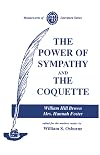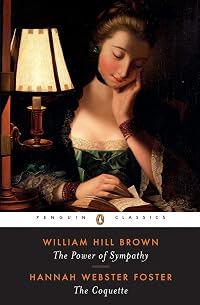
The Power of Sympathy and The Coquette
by William Hill Brown, Hannah Webster Foster
On This Page
Description
Written in epistolary form and drawn from actual events, Brown's The Power of Sympathy (1789) and Foster's The Coquette (1797) were two of the earliest novels published in the United States. Both novels reflect the eighteenth-century preoccupation with the role of women as safekeepers of the young country's morality.Tags
Recommendations














Member Reviews
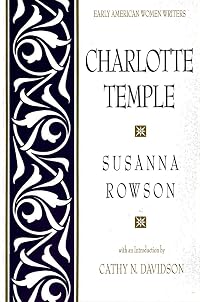
The dangers of sexual sin and improper conduct are the focus of the two early American novels contained in this volume. In The Power of Sympathy(1789), which, incidentally, is often mentioned as the first novel written by an American and published in the United States, the consequences of a long-ago seduction threaten the happiness of a man's daughter and son. The title character in The Coquette (1797) pays a steep price for listening to the honeyed words of a incorrigible rake. Like Charlotte Temple (1791), another novel of the same vintage, these two epistolary novels are wordy, didactic, and filled with crying, fainting, and fits of low spirits. Still, they are interesting for the light they shed on late eighteenth century mores.
Ratings
Members
- Recently Added By
Author Information

6+ Works 199 Members

5+ Works 718 Members
Some Editions
Series
Belongs to Publisher Series
Work Relationships
Common Knowledge
- Canonical title
- The Power of Sympathy and The Coquette
- Alternate titles
- The Power of Sympathy: or, The Triumph of Nature, Founded in Truth; The Coquette: or, The History of Eliza Wharton; a Novel; Founded on Fact; The Power of Sympathy and the Coquette (Penguin Classics) (Penguin Classics)
- Original publication date
- 1789; 1797
- People/Characters
- William Hill Brown; Hannah Webster Foster
- Epigraph
- Fain would he stew Life's thorny Way with Flowers, And open to your View Elysian Bowers; Catch the warm Passions of the tender Youth And win the Mind to Sentiment and Truth.
- First words
- The Power of Sympathy: You may now felicitate me- I have had an interview with the charmer I informed you of.
The Coquette: An unusual sensation possesses my breast; a sensation, which I once thought could never pervade it on any occasion whatever. - Last words
- (Click to show. Warning: May contain spoilers.)The Power of Sympathy: "O! may we never love as these have lov'd."
(Click to show. Warning: May contain spoilers.)The Coquette: I hope, madam, that you will derive satisfaction from these exertions of friendship, and that, united to the many other sources of consolation with which you are furnished, they may alleviate your grief; and while they leave the pleasing remembrance of her virtues, add the supporting persuasion, that your Eliza is happy. I am, &c. Julia Granby.
Classifications
- Genres
- Fiction and Literature, General Fiction
- DDC/MDS
- 813.2 — Literature & rhetoric American literature in English American fiction in English Post-Revolutionary 1776-1830
- LCC
- PS715 .B6 .P6 — Language and Literature American literature American literature Individual authors Colonial period (17th and 18th centuries)
- BISAC
Statistics
- Members
- 179
- Popularity
- 182,855
- Reviews
- 1
- Rating
- (3.57)
- Languages
- English
- Media
- Paper, Ebook
- ISBNs
- 7
- ASINs
- 3