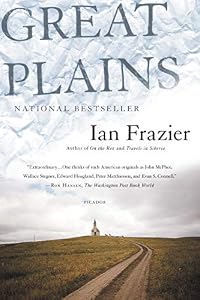
Great Plains
by Ian Frazier
On This Page
Description
National BestsellerMost travelers only fly over the Great Plains—but Ian Frazier, ever the intrepid and wide-eyed wanderer, is not your average traveler. A hilarious and fascinating look at the great middle of our nation.
With his unique blend of intrepidity, tongue-in-cheek humor, and wide-eyed wonder, Ian Frazier takes us on a journey of more than 25,000 miles up and down and across the vast and myth-inspiring Great Plains. A travelogue, a work of scholarship, and a western adventure, show more Great Plains takes us from the site of Sitting Bull's cabin, to an abandoned house once terrorized by Bonnie and Clyde, to the scene of the murders chronicled in Truman Capote's In Cold Blood. It is an expedition that reveals the heart of the American West.
. show less
Tags
Recommendations













Member Reviews
Had I not read Travels in Siberia first, I would have loved this book even more. As I noted in my review of that book, Frazier has a wonderful ability to talk to all sorts of people, tell their stories, and weave history, the natural world, and tales of the road together. In this book, he takes the reader to the least inhabited part of the North American continent and, as he travels from Montana in the north to Texas in the south, and from New Mexico in the west to Kansas in the east, the reader learns about the history of the Native Americans of the area (including the life and death of Crazy Horse), the stories of immigrants lured to the plains, the challenges of farming in such a dry region, the nuclear missile silos buried beneath show more concrete platforms in the middle of nowhere, and much more. What makes this so fascinating is Frazier's lively curiosity, readable style, and humanity. show less
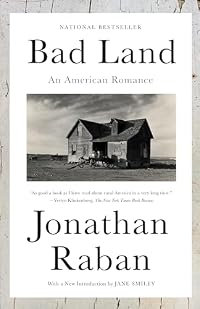
Having recently completed "Bad Lands" by Jonathan Raban, I found it impossible not to constantly compare the two works. Raban's work is much more focused on a particular time period, where Frazier seems to move (quite seamlessly) from Native American days to modern times to the early '20s to the era of westward expansion. I would describe Frazier as more "evocative" than Raban and, in that capacity, perhaps he is MORE successful at a style of writing that honors the horizontal vastness that is the Great Plains.
Really, I found Frazier at his best when he rambled...into the story of the death of Crazy Horse or of his visit to a Montana nuclear missile silo (and the attendant story of America's nuclear race with Russia) or of his discovery show more of the still-extant ghost-town of Nicodemus, Kansas.
As with most of the books I've read recently, I've been going at this by fits and starts with sizable time-gaps (sometimes weeks) between each rather brief encounter. But this is a book that rewards even that kind of intermittent reading and its easy rambling style almost best suits that sort of reading.
I picked up this book because it is about my home (born in Nebraska), and I am coming to realize more and more the formative impact of "place" upon who we are (this may also explain my fascination in my biblical studies with the effect of exile upon the national and spiritual identity of ancient Israel). I suppose the greatest recommendation I could give it is that, whenever I got the chance to pick it up again, within just a few minutes, I found myself transported again to a windswept rolling expanse of ruler-straight corn-rows, swaying grasses, and skies as blue and open as the wondering-eyes of a child. In other words, Frazier gave me the gift of home. show less
Really, I found Frazier at his best when he rambled...into the story of the death of Crazy Horse or of his visit to a Montana nuclear missile silo (and the attendant story of America's nuclear race with Russia) or of his discovery show more of the still-extant ghost-town of Nicodemus, Kansas.
As with most of the books I've read recently, I've been going at this by fits and starts with sizable time-gaps (sometimes weeks) between each rather brief encounter. But this is a book that rewards even that kind of intermittent reading and its easy rambling style almost best suits that sort of reading.
I picked up this book because it is about my home (born in Nebraska), and I am coming to realize more and more the formative impact of "place" upon who we are (this may also explain my fascination in my biblical studies with the effect of exile upon the national and spiritual identity of ancient Israel). I suppose the greatest recommendation I could give it is that, whenever I got the chance to pick it up again, within just a few minutes, I found myself transported again to a windswept rolling expanse of ruler-straight corn-rows, swaying grasses, and skies as blue and open as the wondering-eyes of a child. In other words, Frazier gave me the gift of home. show less
Great Plains is a well written collection of essays. Frazier draws on a wide array of naturalism as well as regional history to discuss different subjects, such as ruins andLawrence Welk or his personal experience at historic forts interspersed with the history. What bugged me about Frazier's writing is the manic curiosity, at some points driving the writing forward but also creating a kind of specter, tapping, pointing, jumping up and down and while some might attribute this to his excitement I would also venture its a result of a weak explanation or at least weak articulation of his research. At one location a park ranger/guide invites Frazier to participate in a sweat lodge ceremony, he declines saying he needs to get going, but then show more he spends an inordinate amount of time recounting his conversation with a Sioux man on the streets of New York. Surely actually experiencing a Native American ritual would have been more worthwhile for the purpose of this book. As the notes demonstrate, Frazier's done his homework but his actual writing of Native American history seems too glossed, too palatable due to the brevity of his writing. show less
I like the other things I've read by Ian Frazier, in large part because I'm generally a sucker for ruminations on American identity issues.
This one is focused on the Great Plains, obviously. Weirdly, I didn't know when it was published, but by the first 1/3 through, I was thinking to myself that it sounds, in my head, very 80s. It was 89, as it happens. I'm still not clear on what made it so obviously 80s to me.
Frazier is a New Yorker who as an adult transplanted himself to the middle of America and so has that observant and somewhat obsessive approach that people can get toward things they love but to which they are not native.
He covers a lot of historical periods, one of which is the Indian wars (although I liked these chapters, he show more was messing around with a weird stylistic thing which I think was supposed to be reminiscent of traditional native story-telling but didn't work very well), and in addition to being a New Yorker who is obsessed with the Great Plains, he's also a white guy obsessed by Indians (further covered in other books), but he's very self-aware about it and always puts it out there as something to be assessed. One of the topics he covers is the Cult of Crazy Horse, and in college I was full-blown into this, let me tell you. And it is a funky thing, I mean, why Crazy Horse when there were other Indians who were crazier, (come on, you know it's so tempting to follow up with "or horsier") or more successful, or more peaceful, or more not peaceful, or who had longer, more significant careers and more influential leadership roles. I especially liked this passage where Frazier articulates why Crazy Horse is so iconic:
Personally, I love Crazy Horse because even the most basic outline of his life shows how great he was; because he remained himself from the moment of this birth to the moment he died; because he knew exactly where he wanted to live and never left; because he may have surrendered, but he was never defeated in battle; because, although he was killed, even the Army admitted he was never captured; because he was so free that he didn't know what a jail looked like; because at the most desperate moment of his life he only cut Little Big Man on the hand; because, unlike many people all over the world, when he met white men he was not diminished by the encounter; because his dislike of the oncoming civilization was prophetic; because the idea of becoming a farmer apparently never crossed his mind; because he didn't end up in the Dry Tortugas; because he never met the President; because he never rode on a train, slept in a boardinghouse, ate at a table; because he never wore a medal or a top hat or any other thing that white men gave him; because he made sure that his wife was safe before going where he expected to die; because although Indian agents, among themselves, sometimes referred to Red Cloud as "Red" and Spotted Tail as "Spot," they never used a diminutive for him; because, deprived to freedom, power, occupation, culture, trapped in a situation where bravery was invisible, he was still brave; because he fought in self-defense, and took no one with him when he died; because, like the rings of Saturn, the carbon atom, and the underwater reef, he belonged to a category of phenomena which our technology had not then advanced far enough to photograph; because no photograph or painting or even sketch of him exists; because he is not the Indian on the nickel, the tobacco pouch, or the apple crate.
Grade: B, ish
Recommended: It's not the best by this author, but if you like him, or if you have a particular interest in the Great Plains (although really, who doesn't?) this is a pleasant read. show less
This one is focused on the Great Plains, obviously. Weirdly, I didn't know when it was published, but by the first 1/3 through, I was thinking to myself that it sounds, in my head, very 80s. It was 89, as it happens. I'm still not clear on what made it so obviously 80s to me.
Frazier is a New Yorker who as an adult transplanted himself to the middle of America and so has that observant and somewhat obsessive approach that people can get toward things they love but to which they are not native.
He covers a lot of historical periods, one of which is the Indian wars (although I liked these chapters, he show more was messing around with a weird stylistic thing which I think was supposed to be reminiscent of traditional native story-telling but didn't work very well), and in addition to being a New Yorker who is obsessed with the Great Plains, he's also a white guy obsessed by Indians (further covered in other books), but he's very self-aware about it and always puts it out there as something to be assessed. One of the topics he covers is the Cult of Crazy Horse, and in college I was full-blown into this, let me tell you. And it is a funky thing, I mean, why Crazy Horse when there were other Indians who were crazier, (come on, you know it's so tempting to follow up with "or horsier") or more successful, or more peaceful, or more not peaceful, or who had longer, more significant careers and more influential leadership roles. I especially liked this passage where Frazier articulates why Crazy Horse is so iconic:
Personally, I love Crazy Horse because even the most basic outline of his life shows how great he was; because he remained himself from the moment of this birth to the moment he died; because he knew exactly where he wanted to live and never left; because he may have surrendered, but he was never defeated in battle; because, although he was killed, even the Army admitted he was never captured; because he was so free that he didn't know what a jail looked like; because at the most desperate moment of his life he only cut Little Big Man on the hand; because, unlike many people all over the world, when he met white men he was not diminished by the encounter; because his dislike of the oncoming civilization was prophetic; because the idea of becoming a farmer apparently never crossed his mind; because he didn't end up in the Dry Tortugas; because he never met the President; because he never rode on a train, slept in a boardinghouse, ate at a table; because he never wore a medal or a top hat or any other thing that white men gave him; because he made sure that his wife was safe before going where he expected to die; because although Indian agents, among themselves, sometimes referred to Red Cloud as "Red" and Spotted Tail as "Spot," they never used a diminutive for him; because, deprived to freedom, power, occupation, culture, trapped in a situation where bravery was invisible, he was still brave; because he fought in self-defense, and took no one with him when he died; because, like the rings of Saturn, the carbon atom, and the underwater reef, he belonged to a category of phenomena which our technology had not then advanced far enough to photograph; because no photograph or painting or even sketch of him exists; because he is not the Indian on the nickel, the tobacco pouch, or the apple crate.
Grade: B, ish
Recommended: It's not the best by this author, but if you like him, or if you have a particular interest in the Great Plains (although really, who doesn't?) this is a pleasant read. show less
Half travelogue, half history book, I enjoyed it.
This book is romantic and elegiac. His accounts of Crazy Horse's life and death, the people he meets and the vast, unpeopled plains he travels across remain in the memory.
Written by someone with an obvious love for and facination with the geography, history and lore of the Great Plans, Frazier made me want to spend a year exploring its vastness.
Members
- Recently Added By
Lists

Manning's Prairie List
5 works; 1 member
Author Information

Writer and broadcaster Ian Frazier was born in Ohio and educated at Harvard University, where he wrote for the Harvard Lampoon. After his graduation he joined The New Yorker staff and frequently contributes to The Atlantic Monthly. His writing collections Dating Your Mom and Coyote V. Acme earned him a Thurber Prize for American Humor. The Great show more Plains won a 1990 Spur Award for Nonfiction from the Western Writers of America. Frazier has appeared on the National Public Radio Program A Prairie Home Companion and has acted in Smoke and Blue in the Face, both of which are Wayne Wang and Paul Auster films. (Bowker Author Biography) show less
Awards and Honors
Awards
Distinctions
Common Knowledge
- Canonical title
- Great Plains
- Original publication date
- 1989
- Important places
- The Great Plains
- First words
- Away to the Great Plains of America, to that immense Western short-grass prairie now mostly plowed under!
- Last words
- (Click to show. Warning: May contain spoilers.)They are the lodge of Crazy Horse.
Classifications
- Genres
- Travel, Nonfiction, General Nonfiction, Biography & Memoir
- DDC/MDS
- 917.80433 — History & geography Geography & travel Geography of and travel in North America Western U.S. Travel
- LCC
- F595.3 .F7 — Local History of the United States, Canada and Latin America United States local history The West. Trans-Mississippi Region. Great Plains
- BISAC
Statistics
- Members
- 901
- Popularity
- 29,676
- Reviews
- 12
- Rating
- (3.91)
- Languages
- Dutch, English
- Media
- Paper, Audiobook, Ebook
- ISBNs
- 11
- ASINs
- 10