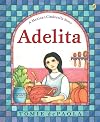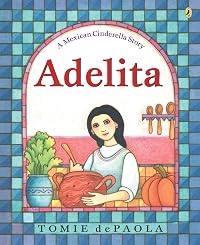
Adelita: A Mexican Cinderella Story
by Tomie dePaola
On This Page
Description
After the death of her mother and father, Adelita is badly mistreated by her stepmother and stepsisters until she finds her own true love at a grand fiesta.Tags
Recommendations



Member Reviews
Prolific American author/illustrator Tomie dePaola spins a Mexican variant of the Cinderella story in this lovely picture book. The beloved daughter of the merchant Francisco Mercado, Adelita was raised by this doting parents and by family servant Esperanza after the death of her mother. When her father remarries, bringing a stepmother and two stepsisters home with him, Adelita accepts it with good grace, although Esperanza has her doubts. The latter proves prophetic when Señor Mercado dies, and Adelita is reduced to a servant in her own home. Despite being banished from the house, Esperanza doesn't stop caring for Adelita, returning to help her prepare for and attend a fiesta held by a local landowner upon the return of his son, show more Javier. The two fall in love (naturally), but when Adelita flees, how can Javier find her...?
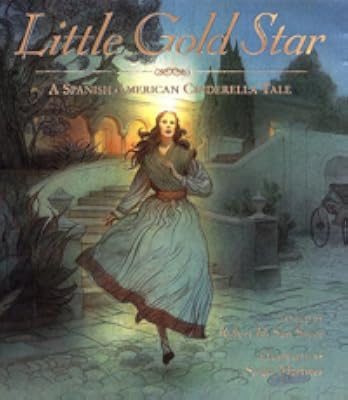
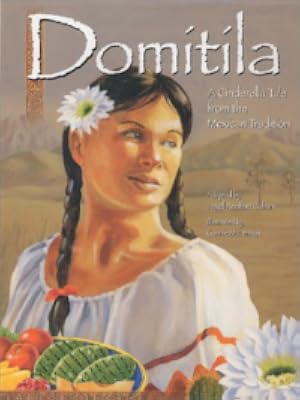
I have read a number of Mexican and Mexican-American variants of the Cinderella tale type, including Jewell Reinhart Coburn & Connie McLennan's Domitila: A Cinderella Tale from the Mexican Tradition and Robert D. San Souci & Sergio Martinez's Little Gold Star: A Spanish American Cinderella Tale, so I picked up Adelita: A Mexican Cinderella Story with some interest. It isn't actually clear to me whether it is dePaola's original creation or a retelling of a traditional variant of the story, as the front dust-jacket flap describes it as "an original and imaginary tale," but the colophon lists "Folklore — Mexico" as one of the subject headings. In any case, I found this one quite enjoyable, appreciating both the story and the colorful artwork. I've read quite a few dePaola books at this point, and I think the color palette he uses here may be the most vivid I have seen. I loved it, and I loved the decorative borders and flourishes. I liked the use of Spanish phrases, which are explained in the text and glossed at the rear, although I did sometimes feel there were too many of them. Perhaps it would have made better sense to make this one fully bilingual? Leaving that one critique aside, this is one I would recommend to young folk and fairy-tale lovers, and to those who enjoy various retellings of the Cinderella story. show less
I have read a number of Mexican and Mexican-American variants of the Cinderella tale type, including Jewell Reinhart Coburn & Connie McLennan's Domitila: A Cinderella Tale from the Mexican Tradition and Robert D. San Souci & Sergio Martinez's Little Gold Star: A Spanish American Cinderella Tale, so I picked up Adelita: A Mexican Cinderella Story with some interest. It isn't actually clear to me whether it is dePaola's original creation or a retelling of a traditional variant of the story, as the front dust-jacket flap describes it as "an original and imaginary tale," but the colophon lists "Folklore — Mexico" as one of the subject headings. In any case, I found this one quite enjoyable, appreciating both the story and the colorful artwork. I've read quite a few dePaola books at this point, and I think the color palette he uses here may be the most vivid I have seen. I loved it, and I loved the decorative borders and flourishes. I liked the use of Spanish phrases, which are explained in the text and glossed at the rear, although I did sometimes feel there were too many of them. Perhaps it would have made better sense to make this one fully bilingual? Leaving that one critique aside, this is one I would recommend to young folk and fairy-tale lovers, and to those who enjoy various retellings of the Cinderella story. show less
Tomie dePaola is hands-down one of my favorite children’s storyteller/illustrators. This retelling of Cinderella is one of his better books, in my opinion.
One thing I like about this story is that it includes Spanish phrases integrated into the text. For example, this is how it opens:
"Hace mucho tiempo - a long time ago - in a village in Mexico, there lived a merchant named Francisco and his beautiful young wife, Adela. One day, Adela said, ‘Francisco, estamos esperando un bebe - we are going to have a baby.”
These phrases, which don’t appear as frequently as in the first paragraph of the story, are also included in a glossary at the end of the book, along with a phonetic pronunciation guide (always very handy!)
The story is also show more very cute; the characters are aware they are in a Cinderella-like story. For example, after the ball at which the Adelita appears giving her name as “Cenicienta” (Cinderella), the stepmother and her daughters discuss what happened:
"‘I’m so glad no one knows who she is,’ Valentina said.
‘Or where she is,’ Dulce said.
‘And no zapatilla de cristal - glass slipper!’ Dona Micaela added.”
And of course at the end, Adelita, who, as in the original, forgives her evil step-family, says:
"‘And just like Cenicienta and her Principe - Prince - we shall live muy felices por siempre - happily ever after - too!’ Javier said.”
Evaluation: What a lovely way to learn Spanish! The story is fun and the vibrant acrylics by dePaola couldn’t be any better! The double page spreads, bordered with Mexican tiles, are bursting with warm colors and depictions of Mexican culture. The range of expressions that so ably reflect the text reveal the rich possibilities of Mexican folk art. show less
One thing I like about this story is that it includes Spanish phrases integrated into the text. For example, this is how it opens:
"Hace mucho tiempo - a long time ago - in a village in Mexico, there lived a merchant named Francisco and his beautiful young wife, Adela. One day, Adela said, ‘Francisco, estamos esperando un bebe - we are going to have a baby.”
These phrases, which don’t appear as frequently as in the first paragraph of the story, are also included in a glossary at the end of the book, along with a phonetic pronunciation guide (always very handy!)
The story is also show more very cute; the characters are aware they are in a Cinderella-like story. For example, after the ball at which the Adelita appears giving her name as “Cenicienta” (Cinderella), the stepmother and her daughters discuss what happened:
"‘I’m so glad no one knows who she is,’ Valentina said.
‘Or where she is,’ Dulce said.
‘And no zapatilla de cristal - glass slipper!’ Dona Micaela added.”
And of course at the end, Adelita, who, as in the original, forgives her evil step-family, says:
"‘And just like Cenicienta and her Principe - Prince - we shall live muy felices por siempre - happily ever after - too!’ Javier said.”
Evaluation: What a lovely way to learn Spanish! The story is fun and the vibrant acrylics by dePaola couldn’t be any better! The double page spreads, bordered with Mexican tiles, are bursting with warm colors and depictions of Mexican culture. The range of expressions that so ably reflect the text reveal the rich possibilities of Mexican folk art. show less
I really liked this book for a number of reasons. This is a much more realistic retelling of the classic Cinderella tale. The characters are believable and well developed.The author's lively text is heartwarming and engaging, and includes Spanish words and phrases. But it's his vibrant and expressive artwork that really make this picture book stand out. Each page is filled with warm colors, dazzling Mexican folk art designs, and marvelous eye-catching detail. The main theme of this book could be that hard work pays off.
Adelita is a good version of Cinderella. I thought it was really interesting to read a Mexican version of the story. I liked the colorful, geometric borders of the illustrations. I also liked the incorporation of Spanish phrases and translated to English, for example, “La casa Mercado se llenó de alegría – the Mercado house was full of happiness.” I also thought it was a good twist that the story was more realistic. Instead of having a fairy godmother, Adelita’s former cook and friend, Esperanza, helped her get to the fiesta to meet Javier. Esperanza was one of my favorite characters because she loved those around her. When Adelita was sad, she spent time with her. “Because she knew that Esperanza loved her, Adelita’s show more heart stayed as warm as the fire in the hearth.” I think the big idea of this story is love for others can go a long way, and to stay positive and hopeful even if your circumstances are negative. show less
Adelita is a twist on the classic fairytale Cinderella. Similar to Cinderella, Adelita becomes an orphan and has to live with her unpleasant step mother and her two step sisters. Adelita struggles to be accepted by them and is treated as a slave rather than a family member. When the opportunity arises for her to attend the fiesta, Adelita takes a risk and goes. She falls in love, but has to leave the party before she is identified. The prince goes out looking for her after the party and ends up finding her. They get married and live happily ever after. The theme of Adelita is to never give up on your dreams, and pursue them no matter who is against you. In doing so, one may find unexpected treasures. This story brings diversity into the show more classroom, combining Mexican culture into a classic tale. show less
This Mexican Cinderella story is wonderfully done with illustrations of this culture. There are bright, bold colors used on all the pages. The clothing, setting, artwork and even decorative papers at the fiesta are perfect for this culture. I love how the author using spanish in the text as well.
It is a Cinderella story, about a girl Adelita who becomes an orphan after her parents both leave her. She is left to care after her rude stepmother and stepsisters until she is saved by her prince who falls madly in love with her the moment he sees her at the fiesta.
It is a Cinderella story, about a girl Adelita who becomes an orphan after her parents both leave her. She is left to care after her rude stepmother and stepsisters until she is saved by her prince who falls madly in love with her the moment he sees her at the fiesta.
This was a very neat version of the famous Cinderella story. This would be a great book to read to children who are learning Spanish, or who speak Spanish and are learning English. Any child would enjoy this book, however, and it's great to expose children to other cultures they may not be too familiar with. The illustrations were true to common Spanish decor and colors and I liked the Spanish tiles/mosaic's featured on every page throughout the book. I like that this book offers a 'Spanish phrases' page in the back of the book with translations. The differentiations between the common Cinderella story and this one were refreshing, such as how this story involved Adelita hanging her rebozo outside her window as an indicator to Javier show more (her prince charming) instead of a glass slipper as his way of finding her. I also appreciated that the story didn't involve any magic or fairy godmother, but instead depended on real people like Adelita's Esperanza to help her get to the party beautifully in her mother's dress. show less
Members
- Recently Added By
Lists

A Child's Book Tour of Mexico
56 works; 2 members

Written and Illustrated By
805 works; 1 member
Author Information

242+ Works 98,277 Members
Tomie dePaola was born in Meriden, Connecticut on September 15, 1934. He received a B.F.A. from Pratt Institute in 1956, a M.F.A. from California College of Arts and Crafts in 1969, and a doctoral equivalency from Lone Mountain College in 1970. He has written and/or illustrated more than 270 books including 26 Fairmount Avenue, Strega Nona, Meet show more the Barkers, Nana Upstairs and Nana Downstairs, and Oliver Button Is a Sissy. He has received numerous awards for his work including the Caldecott Honor Award, the Newbery Honor Award and the New Hampshire Governor's Arts Award of Living Treasure. His murals and paintings can be seen in many churches and monasteries throughout New England. He has designed greeting cards, magazine and record album covers, and theater sets. His work is shown in galleries and museums. Tomie dePaola died on March 30, 2020 because of complications he had from surgery after a fall. (Bowker Author Biography) show less
Awards and Honors
Notable Lists
Common Knowledge
- Canonical title
- Adelita: A Mexican Cinderella Story
- Original title
- Adelita: A Mexican Cinderella Story
- Alternate titles
- Adelita
- Original publication date
- 2002
- People/Characters
- Adelita
- Important places
- Mexico
- First words
- Hace mucho tiempo -- a long time ago -- in a village in Mexico, there lived a merchant named Francisco and his beautiful young wife, Adela.
- Last words
- (Click to show. Warning: May contain spoilers.)And they did.
- Original language
- English; Spanish
Classifications
Statistics
- Members
- 934
- Popularity
- 28,490
- Reviews
- 117
- Rating
- (4.04)
- Languages
- English
- Media
- Paper, Ebook
- ISBNs
- 11
- ASINs
- 2