
Pericles, Prince of Tyre
by William Shakespeare
On This Page
Description
'Pericles' was one of the most popular plays in the Jacobean theatre, and it has regained much of that popularity in the modern theatre. In a wide-ranging introduction, Roger Warren draws on his experience of the play in rehearsal and performance to explore the reasons for this enduring popularity.Tags
Recommendations









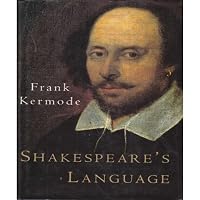


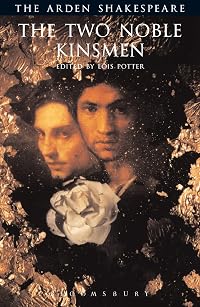





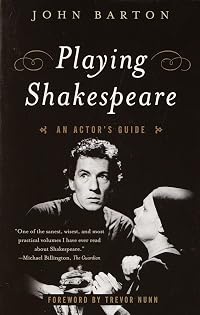



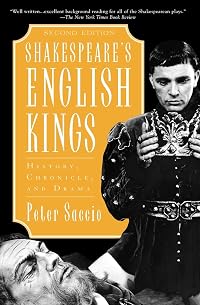
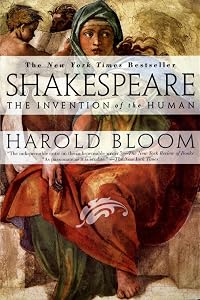


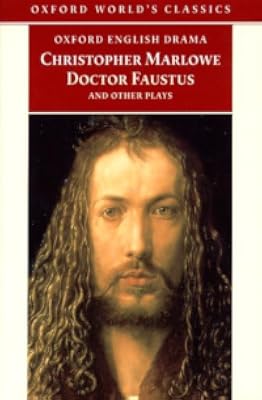



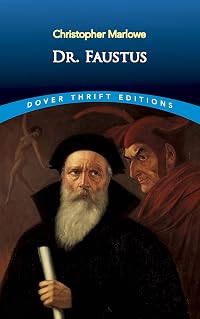




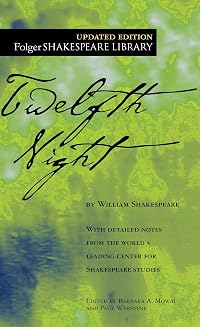



Member Recommendations
EerierIdyllMeme Two works in older forms of English which play with forms from even older forms of English.
Member Reviews
Pericles is a patchwork play that never quite irons itself out. It bolts together a strange incest story in Act One to a following tragedy of Pericles losing his wife and daughter before being reunited with them – a typically Shakespearean scenario that, in this iteration, is strangely unsounded in its depths. There are a few decent moments, such as when Pericles finally reunites with his daughter and then his wife ("O, come, be buried a second time within these arms" (pg. 85)), but the play as a whole is laden with peculiarities and contrivances. The incest couple of Act One are killed off by a heaven-sent meteor (which, in true "Poochie returned to his home planet" style, is related to us second-hand by another character), at one show more point some pirates just appear, and even the final Acts, which are otherwise markedly improved, throw Pericles' daughter into a brothel and find characters debating her rape and prostitution as she schemes, improbably, to retain her chastity. While there are one or two good beats, these sequential shambles are knitted together with what are called 'dumb shows', dialogue-free action scenes in which essential plot developments are hastily shown. These are, if you think about it, the antithesis of Shakespearean drama.
It is as though they had a half-decent idea and the right ingredients, but just could not get the bread to rise. I say 'they', for it is clear that the debate over whether Shakespeare was the sole author of Pericles is not a debate at all. He was not the sole author. The first Act in particular is clumsy beyond belief, and though Shakespeare has stumbled before, he has never been this. It is quite evidently not him, and the scholarship that Pericles was a collaboration is rather advanced. I usually see such discussions over disputed authorship in Shakespeare's plays as irrelevant (and, in the case of the Earl of Oxford, obnoxiously baseless), but it's staggeringly obvious in Pericles.
And, what's more, there's little else to discuss: the play is lacking in depth or coherence and what it does effectively has been done much better by Shakespeare elsewhere. The only interesting question Pericles really poses is why Shakespeare persevered with it. Whether a favour to a friend or peer, an example of the sunk cost fallacy, or an experiment that ended in an honest failure, the result is nevertheless the same: a failure. show less
It is as though they had a half-decent idea and the right ingredients, but just could not get the bread to rise. I say 'they', for it is clear that the debate over whether Shakespeare was the sole author of Pericles is not a debate at all. He was not the sole author. The first Act in particular is clumsy beyond belief, and though Shakespeare has stumbled before, he has never been this. It is quite evidently not him, and the scholarship that Pericles was a collaboration is rather advanced. I usually see such discussions over disputed authorship in Shakespeare's plays as irrelevant (and, in the case of the Earl of Oxford, obnoxiously baseless), but it's staggeringly obvious in Pericles.
And, what's more, there's little else to discuss: the play is lacking in depth or coherence and what it does effectively has been done much better by Shakespeare elsewhere. The only interesting question Pericles really poses is why Shakespeare persevered with it. Whether a favour to a friend or peer, an example of the sunk cost fallacy, or an experiment that ended in an honest failure, the result is nevertheless the same: a failure. show less
It's a retelling of an older story, as so often with Shakespeare, but he distills it down, then adds his own particular twist to the action. Pericles arrives at Antioch to pay court to the King's daughter, and is faced with a riddle that he has to solve in order to win the daughter. The answer is perilous and so he prevaricates, then runs away, pursued by a Lord of Antioch engaged to track him down & kill him (he doesn't try much beyond Act 1). Pericles leaves Tyre, to avoid pursuit, and arrives at Tarsus, bringing grain to the starving populace. From there he again sets sail and this time is shipwrecked. A group of fishermen save him and also drag ashore his armour form the sea. They tell him of a tournament being held by the local show more king and Pericles resolves to enter. He does and wins the daughter of the King, Thaisa.
They set sail again (sensing a theme here? Maybe the theatre had bought a job lot of blue material) and encounter a storm. Thaisa gives birth and seems to die. The sailors insist that the corpse be thrown overboard. From here on in it is a divergence before act 5 serves to tie the whole unlikely thing back together.
Thaisa isn't dead, drifts ashore, is found, revivied and, fearing Pericles dead, serves as a priestess to a temple to Diana.
(fast forward 14 odd years) Marina (the daughter) is left with Creon and his wife, only she outshines their daughter and so the resolves to send a man to kill her. He's foiled by a bunch of kidnapping pirates. Marina gets sold to a brothel owner, then manages to charm or cajole her way into keeping her virginity against all the odds. Creon & wife claim Marina is dead when Pericles visits (unclear quite what hes been up to all this time, Kinging in Tyre, we presume) he sets sail (again) in grief.
He arrives in Ephesus, mute in his grief, and is met by the local governor, who has previously been charmed by Marina (we'll gloss over the fact he was in a brothel and planning on deflowering a virgin. like you do). Marina is bought to Pericles and by telling their stories, they realise who the other is. After a dream sequence, where Diana appears to Pericles and tells him to go to the temple at Ephesus, Thaisa is also brought back into the fold.
There are plenty of characters and plenty of them are identikit. The ones that stand out are the common people, whose scenes have the feeling of the everyday, rather than the lords and ladies that populate the rest of the piece. The fishermen, the brothel keeper & his wife all feel like they are recognisable to the London of the time. They feel like a comic interlude to bring the tone back down to earth, they provide it with an earthiness.
This is a good listen. show less
They set sail again (sensing a theme here? Maybe the theatre had bought a job lot of blue material) and encounter a storm. Thaisa gives birth and seems to die. The sailors insist that the corpse be thrown overboard. From here on in it is a divergence before act 5 serves to tie the whole unlikely thing back together.
Thaisa isn't dead, drifts ashore, is found, revivied and, fearing Pericles dead, serves as a priestess to a temple to Diana.
(fast forward 14 odd years) Marina (the daughter) is left with Creon and his wife, only she outshines their daughter and so the resolves to send a man to kill her. He's foiled by a bunch of kidnapping pirates. Marina gets sold to a brothel owner, then manages to charm or cajole her way into keeping her virginity against all the odds. Creon & wife claim Marina is dead when Pericles visits (unclear quite what hes been up to all this time, Kinging in Tyre, we presume) he sets sail (again) in grief.
He arrives in Ephesus, mute in his grief, and is met by the local governor, who has previously been charmed by Marina (we'll gloss over the fact he was in a brothel and planning on deflowering a virgin. like you do). Marina is bought to Pericles and by telling their stories, they realise who the other is. After a dream sequence, where Diana appears to Pericles and tells him to go to the temple at Ephesus, Thaisa is also brought back into the fold.
There are plenty of characters and plenty of them are identikit. The ones that stand out are the common people, whose scenes have the feeling of the everyday, rather than the lords and ladies that populate the rest of the piece. The fishermen, the brothel keeper & his wife all feel like they are recognisable to the London of the time. They feel like a comic interlude to bring the tone back down to earth, they provide it with an earthiness.
This is a good listen. show less
Okay. For starters, thanks to Marjorie Garber and her interesting piece on the play in her “Shakespeare After All,” I enjoyed this more than I otherwise would have. She talks about how the play, a “dramatic romance,” needs to be seen not as a failed effort at the sort of play where the protagonist develops and shows psychological depth through monologues and all, but as a play where the character development and other “deep” aspects are illustrated through mythic and fairy tale motifs. …...
This really did help. When events in the play got particularly... goofy or illogical, I had something to think about other than, “Well, this is pretty dumb.” (Instead, I could think, “Well, this is dumb in a mythically symbolic” sort of way.”).
Anyway. So, her essay was great, and starting with her appreciation and a nice overview, I was prepared to be pleased by what the play has to offer. And I did find stuff to like. Some lovely lines and scenes, especially towards the end, and the situation with the brothel, where Marina converts all the guys who come in to virtue and the brothel owners are increasingly outraged, was funny. Until Lysimachus. The local governor comes in to the brothel looking for a virgin to deflower. So, ick. But... he sees the error of his ways, and I imagined I'd seen the last of that scumbucket. But NO. Rather than retreating to his palace or wherever he lives, he continues along with Marina, and is welcomed by Pericles as a wonderful future son-in-law. So, the fall out from being identified as a particularly loathsome sort of sexual predator is that he is welcomed into a royal family??? Not that this made me think of today's news or anything, but this Completely made me think of current events, with Roy Moore running in Alabama for the U.S. Senate, with a solidly documented record of having, in his 30's, dated young teenaged girls, and with the defense of supportive Evangelical pastors being that “only by dating young teenagers could he find girls who were really pure” (a paraphrase of the argument of Pastor Flip Benham). It's a truly twisted logic that argues that grown men chasing after young girls is a sign of high moral values. Gah. This illustration of the play's timelessness did Not increase my enjoyment.
Still, this isn't one I expect to ever return to, but I'm glad to have read it once. I listened to the ensemble recording from Librivox while reading, and, despite some truly jarring mispronunciations and silly accents, their recording features some excellent performances and did help me enjoy the play. Three stars. show less
”Some modern audiences – like some early modern ones – have found these plays deficient in realism, but, as we will see, what they actually do is shift the “real” to a different plane, one more aligned to dream, fantasy, andshow more
psychology, while retaining, at the same time, a topical relationship to historical event in Shakespeare's day.”
This really did help. When events in the play got particularly... goofy or illogical, I had something to think about other than, “Well, this is pretty dumb.” (Instead, I could think, “Well, this is dumb in a mythically symbolic” sort of way.”).
Anyway. So, her essay was great, and starting with her appreciation and a nice overview, I was prepared to be pleased by what the play has to offer. And I did find stuff to like. Some lovely lines and scenes, especially towards the end, and the situation with the brothel, where Marina converts all the guys who come in to virtue and the brothel owners are increasingly outraged, was funny. Until Lysimachus. The local governor comes in to the brothel looking for a virgin to deflower. So, ick. But... he sees the error of his ways, and I imagined I'd seen the last of that scumbucket. But NO. Rather than retreating to his palace or wherever he lives, he continues along with Marina, and is welcomed by Pericles as a wonderful future son-in-law. So, the fall out from being identified as a particularly loathsome sort of sexual predator is that he is welcomed into a royal family??? Not that this made me think of today's news or anything, but this Completely made me think of current events, with Roy Moore running in Alabama for the U.S. Senate, with a solidly documented record of having, in his 30's, dated young teenaged girls, and with the defense of supportive Evangelical pastors being that “only by dating young teenagers could he find girls who were really pure” (a paraphrase of the argument of Pastor Flip Benham). It's a truly twisted logic that argues that grown men chasing after young girls is a sign of high moral values. Gah. This illustration of the play's timelessness did Not increase my enjoyment.
Still, this isn't one I expect to ever return to, but I'm glad to have read it once. I listened to the ensemble recording from Librivox while reading, and, despite some truly jarring mispronunciations and silly accents, their recording features some excellent performances and did help me enjoy the play. Three stars. show less
In only a few minutes we’re in the midst of incest and attempted murder. There’s soap opera level drama from the start. There’s a storm at sea, shipwreck, a lost infant, lost wife, prostitutes, pirates, and so much more. Pericles escapes a dangerous situation, on the run for his life. He ends up in a new kingdom and falls in love with a princess there. In a plot straight out of The Tempest, Shakespeare has the princess’ father pretends to be against the pairing to encourage the two to fall even faster in love. There is a narrator who helps the reader navigate the many location and time changes in each act. Pericles’ lost wife plot is reminiscent of Winter’s Tale.
This is one of Shakespeare’s “romance” plays. Though the show more ending might be happy, the story is full of tragedy. Redemption doesn’t come until the characters are heartbroken by loss. The play is interesting, but it does feel like a pieced together effort that combines some of his better work. It was the very last of his plays that I read and I feel a huge sense of accomplishment that I've finally read ALL of his plays!
“Few love to hear the sins they love to act.”
“Tis time to fear when tyrants seem to kiss.” show less
This is one of Shakespeare’s “romance” plays. Though the show more ending might be happy, the story is full of tragedy. Redemption doesn’t come until the characters are heartbroken by loss. The play is interesting, but it does feel like a pieced together effort that combines some of his better work. It was the very last of his plays that I read and I feel a huge sense of accomplishment that I've finally read ALL of his plays!
“Few love to hear the sins they love to act.”
“Tis time to fear when tyrants seem to kiss.” show less
Controversy has surrounded Pericles for centuries, due to the fact that critics and editors have argued that much of the play was written between 1607 and 1608 by one of Shakespeare's inferior collaborators, and that it shows in both its style and content. However, Shakespeare was clearly the driving force behind the play, and it is important to remember that it was one of the most popular plays of its time. Famous for its resurrection of John Gower, the 14th-century English writer, who acts as the play's chorus, Pericles is a play which is obsessed with incest. The dramatic action begins in Antioch, where Pericles travels to solve the riddle of King Antiochus, who "to incest did provoke" his daughter. When Pericles realises Antiochus' show more terrible secret, he flees, wandering the seas, where he meets his wife Thaisa, who apparently dies whilst giving birth to her daughter Marina during a terrible storm. Pericles' grief is compounded by the apparent death of his daughter whilst staying at Tarsus some months later. She has in fact been sold into sexual slavery, and as Pericles resumes his wanderings, 16 years later Marina battles to retain her "peevish chastity". As with many of Shakespeare's later plays, or romances, recognition and reunion occurs in the most unlikely of circumstances. Despite questions of authorship and textual corruption, Pericles continues to fascinate audiences and critics with its dark and ambivalent account of the relations between fathers and daughters. --Jerry Brotton show less
I would guess this is a pretty obscure, rarely performed Shakespeare play these days, but back in his day it was really popular and it was revived quickly later in the 17th Century when the theatres re-opened after the plague had closed them. This shows a fairly big shift in taste, because Pericles is a pretty faithful adaptation of a prose Romance that is akin to Mediaeval Saintly Lives Romances, complete with preposterous plot with numerous ridiculous coincidences, exiled/orphaned/mistaken for dead characters, undeserved suffering and triumphant return home.
I like that kind of tale, just accepting the silliness, and was amused by the goings on; how many times can one person get shipwrecked? How many supposedly dead relatives can you show more be unexpectedly re-united with? Basically, it's a romp and I'm not surprised contemporary audiences loved it en mass; it's the equivalent of a bad "guilty pleasure" Hollywood movie nowadays.
There's some debate as to whether Shakespeare wrote all of it. Many have noted "marked improvement" after about ~2/5 the way through. Few argue that Shakespeare had no hand in it, these days.
Some people thought it was a very early play, because not very good but later scholarship suggests otherwise. I suspect that, given that it is actually a late play and very faithful to its source material, that Shakespeare, who was then by then very busy running a theatre company (admittedly jointly with others) and acting, had less time to write than in earlier years and needed a new play in a particular hurry.
I suspect modern audiences tolerate the preposterous plots of the comedies because they are too busy laughing but reject the same in Pericles because it's considered "serious" and they can't take it seriously, which conflict leaves them disliking it. But it's a Romance; it shouldn't be taken seriously. The preposterousness is part of the fun and a feel good ending makes one - feel good!
Not all of Shakespeare is profound... show less
I like that kind of tale, just accepting the silliness, and was amused by the goings on; how many times can one person get shipwrecked? How many supposedly dead relatives can you show more be unexpectedly re-united with? Basically, it's a romp and I'm not surprised contemporary audiences loved it en mass; it's the equivalent of a bad "guilty pleasure" Hollywood movie nowadays.
There's some debate as to whether Shakespeare wrote all of it. Many have noted "marked improvement" after about ~2/5 the way through. Few argue that Shakespeare had no hand in it, these days.
Some people thought it was a very early play, because not very good but later scholarship suggests otherwise. I suspect that, given that it is actually a late play and very faithful to its source material, that Shakespeare, who was then by then very busy running a theatre company (admittedly jointly with others) and acting, had less time to write than in earlier years and needed a new play in a particular hurry.
I suspect modern audiences tolerate the preposterous plots of the comedies because they are too busy laughing but reject the same in Pericles because it's considered "serious" and they can't take it seriously, which conflict leaves them disliking it. But it's a Romance; it shouldn't be taken seriously. The preposterousness is part of the fun and a feel good ending makes one - feel good!
Not all of Shakespeare is profound... show less
Not one of Bill's best plays, and often dismissed as being largely by other people, nonetheless, the play is included in the canon. Pericles, noble and virtuous, discovers his king Antiochus has an incestuous relationship with his own daughter. The king being aware of this, Pericles must flee home to tyre. However, after outliving Antiochus Pericles desires to return to court, but his family is shattered by a shipwreck. Years later they are at last reunited. This play has no connection with Hellenistic history other than the names of some of the principals. the play is usually dated to 1606 or thereabouts.
Members
- Recently Added By
Lists

Favorite Shakespeare plays?
37 works; 45 members

Plays I Like
230 works; 31 members
Stage Plays/Screenplays/Dialogues/Anything Dialogue-Storytelling Related
81 works; 2 members
Essential/Recognized Stage Plays
115 works; 4 members

'Books You Can't Live Without: The Top 100', The Guardian, 2007
156 works; 7 members
My Play Collection
769 works; 3 members
Author Information

6,134+ Works 442,991 Members
William Shakespeare, 1564 - 1616 Although there are many myths and mysteries surrounding William Shakespeare, a great deal is actually known about his life. He was born in Stratford-Upon-Avon, son of John Shakespeare, a prosperous merchant and local politician and Mary Arden, who had the wealth to send their oldest son to Stratford Grammar School. show more At 18, Shakespeare married Anne Hathaway, the 27-year-old daughter of a local farmer, and they had their first daughter six months later. He probably developed an interest in theatre by watching plays performed by traveling players in Stratford while still in his youth. Some time before 1592, he left his family to take up residence in London, where he began acting and writing plays and poetry. By 1594 Shakespeare had become a member and part owner of an acting company called The Lord Chamberlain's Men, where he soon became the company's principal playwright. His plays enjoyed great popularity and high critical acclaim in the newly built Globe Theatre. It was through his popularity that the troupe gained the attention of the new king, James I, who appointed them the King's Players in 1603. Before retiring to Stratford in 1613, after the Globe burned down, he wrote more than three dozen plays (that we are sure of) and more than 150 sonnets. He was celebrated by Ben Jonson, one of the leading playwrights of the day, as a writer who would be "not for an age, but for all time," a prediction that has proved to be true. Today, Shakespeare towers over all other English writers and has few rivals in any language. His genius and creativity continue to astound scholars, and his plays continue to delight audiences. Many have served as the basis for operas, ballets, musical compositions, and films. While Jonson and other writers labored over their plays, Shakespeare seems to have had the ability to turn out work of exceptionally high caliber at an amazing speed. At the height of his career, he wrote an average of two plays a year as well as dozens of poems, songs, and possibly even verses for tombstones and heraldic shields, all while he continued to act in the plays performed by the Lord Chamberlain's Men. This staggering output is even more impressive when one considers its variety. Except for the English history plays, he never wrote the same kind of play twice. He seems to have had a good deal of fun in trying his hand at every kind of play. Shakespeare wrote 154 sonnets, all published on 1609, most of which were dedicated to his patron Henry Wriothsley, The Earl of Southhampton. He also wrote 13 comedies, 13 histories, 6 tragedies, and 4 tragecomedies. He died at Stratford-upon-Avon April 23, 1616, and was buried two days later on the grounds of Holy Trinity Church in Stratford. His cause of death was unknown, but it is surmised that he knew he was dying. (Bowker Author Biography) show less
Some Editions
Series
Belongs to Publisher Series
Work Relationships
Is contained in
Has the adaptation
Inspired
Has as a study
Has as a student's study guide
Common Knowledge
- Canonical title
- Pericles, Prince of Tyre
- Original title
- Pericles, Prince of Tyre
- Alternate titles
- Pericles
- Original publication date
- 1609 (Quarto) (Quarto); 1611 (Quarto) (Quarto); 1619 (Quarto) (Quarto); 1663 (Folio) (Folio)
- People/Characters
- Pericles; John Gower
- Important places
- Antioch
- First words
- To sing a song that old was sung,
From ashes ancient Gower is come;
Assuming man's infirmities,
To glad your ear, and please your eyes.
It hath been sung at festivals,
On ember-eves and holy-ales;
And lords ... (show all)and ladies in their lives
Have read it for restoratives:
The purchase is to make men glorious;
Et bonum quo antiquius, eo melius. - Last words
- (Click to show. Warning: May contain spoilers.)Here our play has ending.
- Publisher's editor
- Giddens, Eugene (Penguin Shakespeare)
- Disambiguation notice
- This work is for the complete Pericles, Prince of Tyre only. Do not combine this work with abridgements, adaptations or "simplifications" (such as "Shakespeare Made Easy"), Cliffs Notes or similar study guides, or anyt... (show all)hing else that does not contain the full text. Do not include any video recordings. Additionally, do not combine this with other plays.
Classifications
Statistics
- Members
- 1,640
- Popularity
- 13,731
- Reviews
- 33
- Rating
- (3.35)
- Languages
- 20 — Catalan, Chinese, Czech, Dutch, English, Finnish, French, German, Greek, Hungarian, Italian, Japanese, Korean, Norwegian (Bokmål), Norwegian, Polish, Portuguese, Spanish, Swedish, Turkish
- Media
- Paper, Audiobook, Ebook
- ISBNs
- 158
- UPCs
- 2
- ASINs
- 52