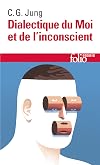
Jaget och det omedvetna
by C. G. Jung
On This Page
Description
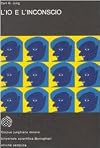
Pubblicato nel 1928, L'Io e l'inconscio è il primo tentativo compiuto da C. G. Jung di esporre in modo sistematico l'insieme di ipotesi sulla natura, struttura e dinamica della vita cui aveva dato il nome di psicologia analitica. Tappa fondamentale nel suo percorso di avanzamento teorico, è qui che Jung articola definitivamente i concetti di inconscio personale e collettivo, in queste pagine sono introdotti i concetti chiave di Animus e Anima, prendono forma le definizioni di archetipo e show more Ombra. Con questo libro Jung avvia il lungo dibattimento speculativo sull'individuazione che avr© come approdo finale la rivelazione dell'inconscio. show lessTags
Recommendations










Member Reviews
> Babelio : https://www.babelio.com/livres/Jung-Dialectique-du-moi-et-de-linconscient/86209
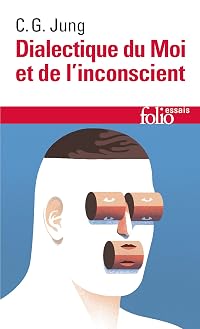
> DIALECTIQUE DU MOI ET DE L'INCONSCIENT, par C. G. Jung, présenté et annoté par Roland Cahen, Idées/Gallimard. 274 p.. — "Dialectique du moi et de l'inconscient", un classique de Jung qui avait d'abord paru en français sous le titre "Le moi et l'inconscient". On y retrouve l'essentiel des thèses personnalistes qui allaient opposer Jung au radicalisme de Freud, en particulier l'élaboration d'une dialectique particulière entre l'anima et l'animus dans la constitution de l'individualité et le fonctionnement de la psyché. (Jean-Claude DUSSAULT)
—La presse, 23 juin 1973, D. Arts et lettres, (p. 3)
> Besançon Alain. С G. Jung, L'homme à show more la découverte de son âme, Genève.
Id., Un mythe moderne.
Id., Dialectique du Moi et de l'Inconscient.
In: Annales. Economies, sociétés, civilisations. 22ᵉ année, N. 3, 1967. pp. 655-656. … ; (en ligne),
URL : https://www.persee.fr/doc/ahess_0395-2649_1967_num_22_3_421561_t1_0655_0000_2
> Ici, Jung présente les différentes étapes du processus d’individuation : rencontre avec l’ombre, différenciation d’avec la personne, découverte de l’anima ou de l’animus, sont autant de seuils dans la relation entre le moi et le soi, qui est à la fois le moteur et la finalité du processus d’individuation.
—Revue Française de Yoga, no. 13 (sept.-oct. 1990)
> Il n'y a pas d'expérience humaine — et aucune expérience n'est d'ailleurs possible — sans l'adjonction d'une disponibilité subjective. Mais en quoi consiste, et où réside cette disponibilité subjective à l'expérience ? Elle consiste en dernier recours en une structure psychique innée qui est le facteur permettant à l'homme, en toute généralité, de faire et de vivre une telle expérience. Ainsi, toute la nature de l'homme [la nature du sexe masculin] présuppose la femme et sa nature, aussi bien physiquement que psychiquement. Le système vivant appelé homme est a priori adapté à la femme, axé sur la femme, de la même façon qu'il est préparé à vivre dans un certain monde où se rencontrent l'eau, la lumière, l'air, le sel, les hydrates de carbone, etc.
—Jung : Dialectique du moi et de l'inconscient show less
> DIALECTIQUE DU MOI ET DE L'INCONSCIENT, par C. G. Jung, présenté et annoté par Roland Cahen, Idées/Gallimard. 274 p.. — "Dialectique du moi et de l'inconscient", un classique de Jung qui avait d'abord paru en français sous le titre "Le moi et l'inconscient". On y retrouve l'essentiel des thèses personnalistes qui allaient opposer Jung au radicalisme de Freud, en particulier l'élaboration d'une dialectique particulière entre l'anima et l'animus dans la constitution de l'individualité et le fonctionnement de la psyché. (Jean-Claude DUSSAULT)
—La presse, 23 juin 1973, D. Arts et lettres, (p. 3)
> Besançon Alain. С G. Jung, L'homme à show more la découverte de son âme, Genève.
Id., Un mythe moderne.
Id., Dialectique du Moi et de l'Inconscient.
In: Annales. Economies, sociétés, civilisations. 22ᵉ année, N. 3, 1967. pp. 655-656. … ; (en ligne),
URL : https://www.persee.fr/doc/ahess_0395-2649_1967_num_22_3_421561_t1_0655_0000_2
> Ici, Jung présente les différentes étapes du processus d’individuation : rencontre avec l’ombre, différenciation d’avec la personne, découverte de l’anima ou de l’animus, sont autant de seuils dans la relation entre le moi et le soi, qui est à la fois le moteur et la finalité du processus d’individuation.
—Revue Française de Yoga, no. 13 (sept.-oct. 1990)
> Il n'y a pas d'expérience humaine — et aucune expérience n'est d'ailleurs possible — sans l'adjonction d'une disponibilité subjective. Mais en quoi consiste, et où réside cette disponibilité subjective à l'expérience ? Elle consiste en dernier recours en une structure psychique innée qui est le facteur permettant à l'homme, en toute généralité, de faire et de vivre une telle expérience. Ainsi, toute la nature de l'homme [la nature du sexe masculin] présuppose la femme et sa nature, aussi bien physiquement que psychiquement. Le système vivant appelé homme est a priori adapté à la femme, axé sur la femme, de la même façon qu'il est préparé à vivre dans un certain monde où se rencontrent l'eau, la lumière, l'air, le sel, les hydrates de carbone, etc.
—Jung : Dialectique du moi et de l'inconscient show less
Oct 17, 2019 (Edited)French
Scannerizzato da 1-85
Oct 27, 2020Italian
Librería 3. Estante 2
Jul 25, 2019Spanish
Ratings
Members
- Recently Added By
Author Information

890+ Works 42,609 Members
Carl Gustav Jung was born in Switzerland on July 26, 1875. He originally set out to study archaeology, but switched to medicine and began practicing psychiatry in Basel after receiving his degree from the University of Basel in 1902. He became one of the most famous of modern psychologists and psychiatrists. Jung first met Sigmund Freud in 1907 show more when he became his foremost associate and disciple. The break came with the publication of Jung's Psychology of the Unconscious (1912), which did not follow Freud's theories of the libido and the unconscious. Jung eventually rejected Freud's system of psychoanalysis for his own "analytic psychology." This emphasizes present conflicts rather than those from childhood; it also takes into account the conflict arising from what Jung called the "collective unconscious"---evolutionary and cultural factors determining individual development. Jung invented the association word test and contributed the word complex to psychology, and first described the "introvert" and "extrovert" types. His interest in the human psyche, past and present, led him to study mythology, alchemy, oriental religions and philosophies, and traditional peoples. Later he became interested in parapsychology and the occult. He thought that unidentified flying objects (UFOs) might be a psychological projection of modern people's anxieties. He wrote several books including Studies in Word Association, Flying Saucers: A Modern Myth of Things Seen in the Skies, and Psychology and Alchemy. He died on June 6, 1961 after a short illness. (Bowker Author Biography) show less
Series
Belongs to Publisher Series
Common Knowledge
- Canonical title*
- O Eu e o Inconsciente
- Original title
- Die Beziehungen zwischen dem Ich und dem Unbewussten
*Some information comes from Common Knowledge in other languages. Click "Edit" for more information.
Classifications
Statistics
- Members
- 204
- Popularity
- 159,871
- Reviews
- 3
- Rating
- (4.27)
- Languages
- 11 — Danish, Dutch, English, French, German, Italian, Norwegian (Bokmål), Norwegian, Portuguese (Brazil), Spanish, Swedish
- Media
- Paper, Ebook
- ISBNs
- 23
- ASINs
- 4